The Real Test of Fire Restoration: Post-Restoration Evaluation Explained
How verification, documentation, and odor evaluation define your success in fire restoration
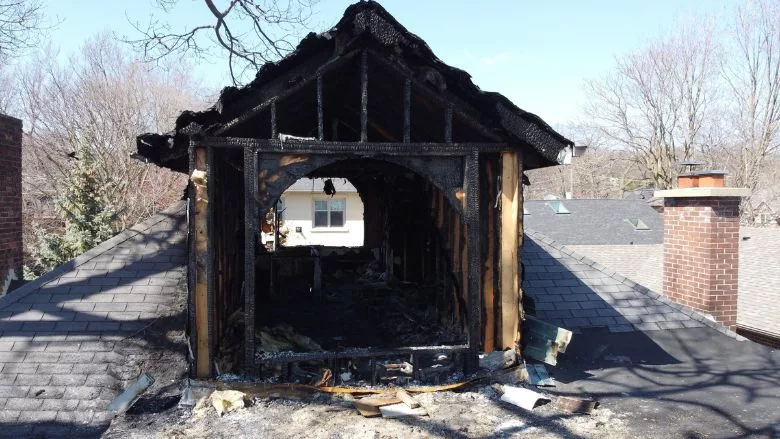
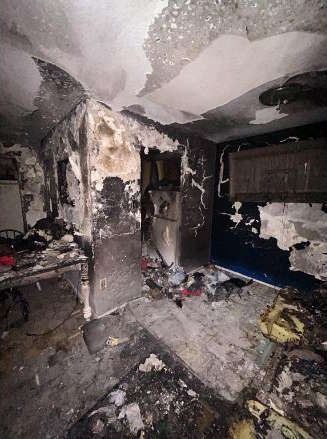
It came in just as many others do, early in the morning, with a feeling of urgency in the adjuster’s voice, and a homeowner standing in the driveway, surveying their life through a haze of soot and uncertainty. The fire had been put out quickly, but the damage, as is often the case, was not. The light smoke had traveled further than anyone could have anticipated, seeping into hidden crevices and cavities, and into the soft furnishings and mechanical devices of the home. Weeks later, after cleaning crews and equipment, and countless hours of labor on the site, the job is near complete. The surfaces are clean, and the structure is sound, but when I walk through the house with the homeowner, there is a pause—“I think I still smell it.” It is at that instant, more than in any other aspect of the demolition and restoration process, that the true test of our work is defined: how do we prove, objectively and professionally, that the job is done and done to an acceptable standard of care?
The post-restoration evaluation is arguably the most significant and often misinterpreted aspect of the fire and smoke damage restoration process. It is in this moment that the execution of the project, the client’s expectations, and the level of care converge and intersect in such a way that is unique to the fire and smoke damage restoration industry. To the restoration technician and project manager, the Post Restoration Evaluation (PRE) is not simply the last walkthrough of the property; it is a methodical and systematic process of validation to determine whether or not the Restoration Work Plan (RWP) has been successfully executed and whether or not the property has been restored to an acceptable condition.
Credit: Lorne McIntyre
While this article specifically discusses the issue of post-restoration evaluation within the context of the ANSI/IICRC S700 Standard for Professional Fire and Smoke Damage Restoration (1st Edition), it should be noted that a number of the underlying principles are very similar to those presented within the context of the ANSI/IICRC S500 Standard for Professional Water Damage Restoration (5th Edition). The key issue that both of these standards emphasize, and that both fire and water restoration specialists utilize, is verification, documentation, and the achievement of defined drying or cleaning objectives before progressing to the next phase of restoration. In both fields, the underlying principle is the same. The restoration of a structure or item does not occur until the defined objectives are verified. The ANSI/IICRC S700 standard simply builds on this principle and applies it to fire residues, smoke, and odor.
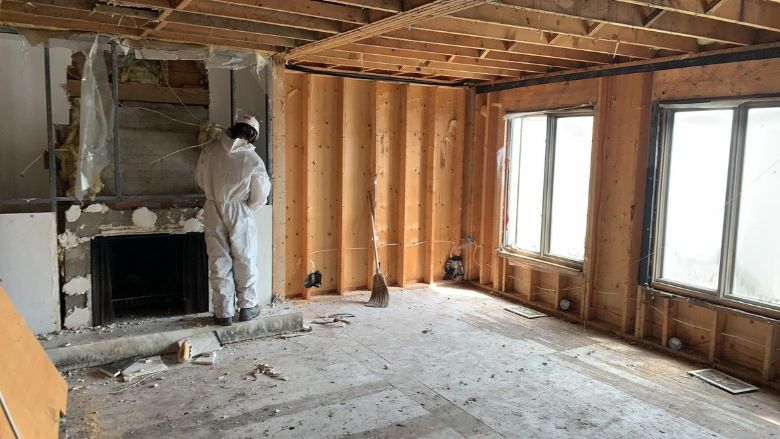
Effective evaluation of a restoration project, precisely within the context of the Post Restoration Evaluation, begins long before the restoration project is actually completed. One of the most important aspects of this, as a restoration professional, is to continually involve the client and the MIPs throughout the entire restoration project. This will help to prevent a number of issues that may arise within the final evaluation. It should be noted that, by the time that the restoration project reaches the final stages, there should be no misunderstanding as to what the desired outcomes are. Therefore, the final evaluation should not be a debate but, rather, a verification of the outcomes. When the restoration project reaches completion, it is necessary for the restorer to inspect all aspects of the restoration, including a review of all documentation, verification of the defined scope of work, and verification that all performance objectives have been met. This, of course, includes all of the supporting documentation, photographs, and any other records that may have been completed as part of the restoration. Once this verification of the RWP has taken place, then and only then should the restorer perform a site evaluation along with the client and all stakeholders.
Credit: Lorne McIntyre
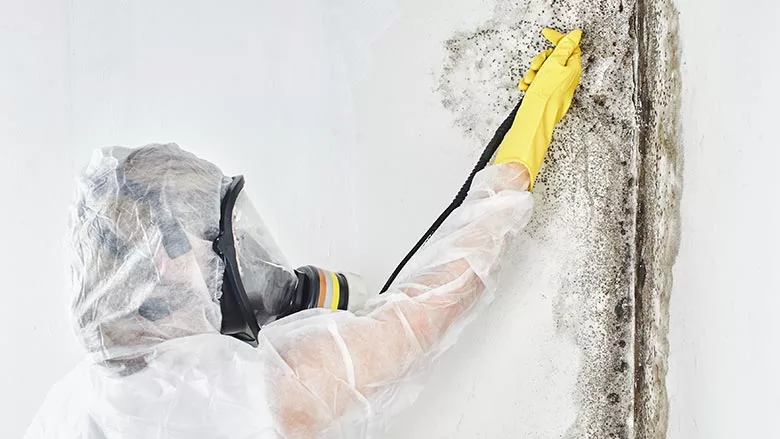
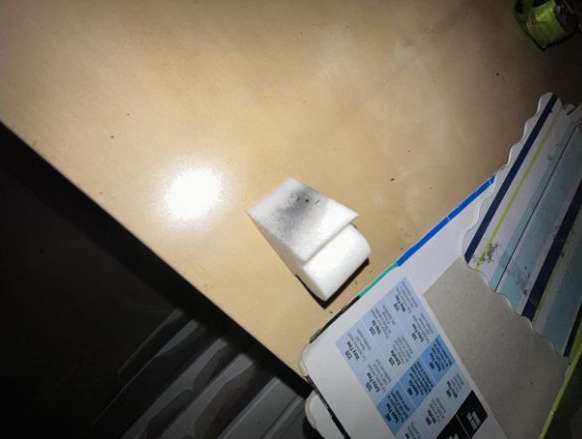
Another essential aspect of post-restoration evaluation is the confirmation of the effectiveness of the source removal process. Fire residues, which could include soot, char, and other by-products of incomplete combustion, are often microscopic in nature and irregularly distributed, permitting them to penetrate different materials. However, the evaluation of the effectiveness of the source removal process is not simply done by visual observation. The most commonly used method is still visual inspection, supplemented by other methods such as tactile verification, which is exemplified by the widely used and accepted ‘white glove test.’ The ‘white glove test,’ in this case, is done by wiping the surface with clean, dry, and absorbent materials and inspecting whether the materials pick up any of the fire residues.
From a technical standpoint, the criteria for evaluating the effectiveness of the source-removal process are straightforward. The presence of fire residues should not be visible on the surface materials. However, in practice, the evaluation process is not always easy or straightforward. It is not always true that surfaces will be restored to their original state after the source removal process. Sometimes, staining, discoloration, and other forms of shadowing remain in the surface materials, even after the source removal process has been performed effectively. It is in these instances when the distinction between ‘clean’ and ‘restored’ should be made very clear to the project manager and other people involved in the project. It should be made clear that the surface is clean but still requires cosmetic repair to make it look acceptable and presentable.
For project managers, this is an essential aspect of the communication process with clients who often consider visual perfection and cleanliness as one and the same thing. It is essential to establish and document the project’s goals and objectives from the very beginning of the project, including sample areas where necessary, in order to ground the evaluation process in objective criteria and not biased interpretations of the results of the project. The creation of representative sample sections of the surfaces that have already been restored and repaired is also an effective method of evaluation and communication of the results of the project, because it acts as a basis of comparison and is more tangible in nature.
Looking for quick answers on restoration, remediation and cleaning topics?
Try Ask R&R, our new smart AI search tool.
Ask R&R →
Another factor to be considered is the process sequencing. It is important that repair actions, which include the sealing or painting of the surface, are not undertaken before the completion of the post-source removal evaluation. This is because, if the process is not properly sequenced, the effectiveness of the cleaning process may be difficult to ascertain. Additionally, if there are still some odors remaining, the process sequencing may be complicated, requiring the removal of the coatings to access the potential sources of the odor.
If the process involves aggressive cleaning methods, such as media blasting, sanding, and scraping, there are considerations to take into account. Although the process is effective in the removal of residues and char, there is the potential for the alteration of the substrate material. For example, if the wood framing has been subjected to the process of media blasting, the wood may be altered, showing signs of roughening and discoloration. However, the criteria for the evaluation are slightly different. If the process is effective, there is no longer the presence of loose residues, charred materials, and peeling surfaces.
Odor evaluation is another complex step involved in verifying the effectiveness of the restoration process. This process is complicated and has many nuances. This process differs from visual inspection because odor evaluation is subjective. Each person has different sensitivities to smells, which are greatly affected by surrounding factors. As such, the process of odor evaluation must be undertaken with professionalism.
Throughout the process, there should be periodic odor checks by the technicians. This way, there is less likelihood of serious odor issues at the final stage.
For effective odor evaluation, there are two key stages: interim (ongoing quality control) and final (post-restoration). Throughout the process, there should be periodic odor checks by the technicians. This way, there is less likelihood of serious odor issues at the final stage. It should also be noted that the clients and MIPs should be encouraged to participate in the interim odor evaluations.
The final odor evaluation is done once all the restoration work is complete. Before the odor evaluation, the environment should be conditioned to resemble natural occupancy. This can be achieved by closing all windows, doors, air movement, and filtration. It should also include stabilizing the HVAC system. In some cases, such as in latent odor, the conditions can be manipulated to encourage the release of any odors remaining in the materials. This can be done by increasing the temperature and humidity levels.
The odor acceptance benchmark is the complete absence of detectable fire odors by an individual with normal sensitivity. When this benchmark is not achieved, a repetitive process ensues. The restorer should reassess all work performed, identify potential odor-emitting materials (OEM), and implement treatments to eliminate odors. This can be done by cleaning, deodorizing, or replacing materials.
The source of odor can be determined by using a number of techniques, including isolation, using a barrier, patch testing, or using specimens in a controlled environment. It should be noted that even isolated odors can permeate larger areas with time.
Credit: Lorne McIntyre
Issues of odor are not uncommon and need to be addressed professionally and objectively. The difference between odor detection and odor recognition needs to be understood. Evaluation of the issue, through blind testing and the inclusion of control groups or “placebos,” may help resolve the issue objectively. The involvement of a third party may also be necessary in such cases.
Additionally, restorers should understand there may be psychological and physiological factors that affect smoke odor perception. It is entirely possible that a client may be able to smell something that others are not. Such perceptions need to be taken seriously and not dismissed as nonsense. Instead, they need to be addressed through evaluation.
As a part of the structure, the evaluation of the restoration also involves the contents. The process for this is very similar to that of the structure. Verification of the removal of residue through visual inspection and wipe testing, and verification of odor removal through direct testing, are part of this. However, the restoration of the contents of a fire damage situation can be complex and varied.
Documentation of the situation is necessary for accurate evaluation. Before restoration, the contents need to be documented through photographs and written descriptions. It is not uncommon for clients to feel that items are “different” even if restoration of the item has been successful, especially if there was existing damage or wear that becomes more apparent after restoration.
Additionally, it is important to show what the expected results are. This may be done by giving samples or even sample treatments. In some instances, restoration may result in a better appearance of the item, so that it ends up looking different from how it looked before the loss occurred. Although this may be acceptable, it should always be communicated effectively so that there are no misconceptions.
As a matter of fact, the purpose of evaluation after restoration is validation. It helps to establish that the restoration work carried out was as expected and met the objectives. It also helps to establish that the standard of care met was not only that of the ANSI/IICRC S700, but also that of the entire ANSI/IICRC S500, where verification, documentation, and objective criteria are the very foundation of professional restoration practice.
So, that brief moment in the hallway, where the client pauses and takes a deep breath, is where our work is ultimately validated. Not by how busy the job site was, or how many machines we used, but by whether or not we can proudly stand behind what we have done, and rest on the shoulders of our process, documentation, and objective verification against industry-recognized standards. The evaluation that follows restoration is not simply the final step of a restoration project. It is the professional verification that the environment is clean, safe, and ready to go. When done correctly, it transforms uncertainty into assurance. And that, my friends, is what a true restoration professional does.
Looking for a reprint of this article?
From high-res PDFs to custom plaques, order your copy today!