Physical Removal in Restoration: The Science Behind Effective Cleaning
These 3 core steps drive contaminant removal and determine your cleaning outcome
Part One of this series established that disinfection reduces viability but does not remove material from the surface. A reader responded with a fair challenge: go deeper. Show the tools. Show the techniques. Cite the research.
This is that article.
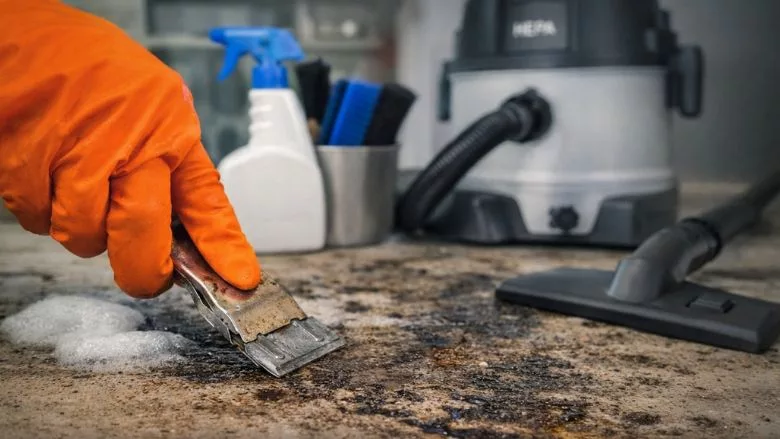
Physical removal is not a single action. It is a system of chemistry, mechanical disruption, and extraction that must be matched to the substrate, the soil, and the condition. When that system is understood, the restoration professional can select tools with precision, defend the scope with science, and produce outcomes that verification confirms.
A Three-Part System for Cleaning
Cleaning is a three-part system. Each component performs a specific function, and skipping any one changes the outcome.
Surfactant chemistry lowers surface tension so water can penetrate soil rather than bead on top of it. The surfactant molecule has a hydrophilic head that bonds to water and a hydrophobic tail that bonds to oil and organic material. This dual structure breaks the bond between contaminant and substrate, then holds the lifted material in suspension so it can be carried away instead of settling back onto the surface.
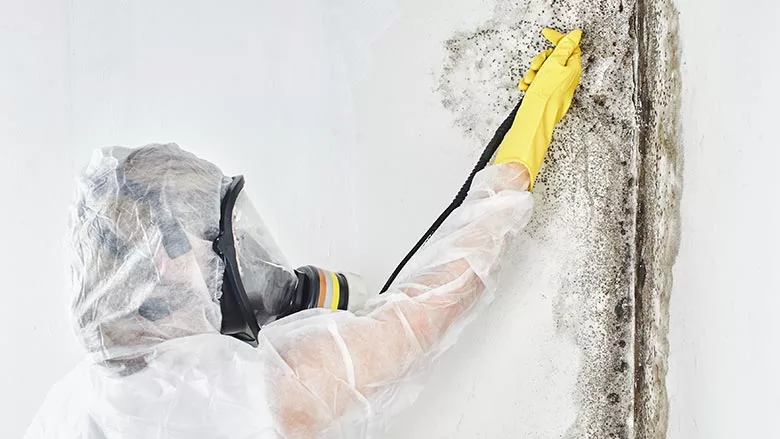
Mechanical action disrupts what chemistry alone cannot release. Scrubbing, brushing, and agitation physically break material loose from the surface it has bonded to. In biofilm-contaminated environments, this is the only intervention that fractures the protective matrix shielding microbial communities from chemical contact. Research published in Applied and Environmental Microbiology found that a single pass with water, soap, or low-concentration chlorine achieved comparable log reductions on contaminated stainless steel. The physical action drove the reduction. Not the product.
Extraction removes what the first two steps loosened. Without it, contamination stays in the environment. It just moved. HEPA vacuuming captures particulate down to 0.3 microns. Wet extraction pulls suspended soil out of porous materials. In certain medical device reprocessing studies referenced in the CDC Guideline for Disinfection and Sterilization in Healthcare Facilities, thorough cleaning alone reduced microbial burden by approximately 4 log10 prior to chemical disinfection. The principle translates: removal does the heavy lifting before chemistry ever enters the equation.
Looking for quick answers on restoration, remediation and cleaning topics?
Try Ask R&R, our new smart AI search tool.
Ask R&R →
Matching the Tool to the Surface
The tool has to match the surface. Selecting the wrong one does not just reduce effectiveness. It can drive contamination deeper, damage the substrate, or redistribute material across the space.
| Tool | Surface | Why It Works |
|---|---|---|
| Split microfiber | Smooth nonporous (countertops, metal, glass, sealed surfaces) | The split fiber structure traps particulate and bacteria within the cloth rather than pushing material across the surface. Studies published in the American Journal of Infection Control demonstrate substantial microbial reduction using microfiber systems, and disinfectant did not significantly improve reduction when effective mechanical action was performed. |
| Brush agitation | Textured surfaces, grout, rough concrete, wood grain | Bristles reach into recessed areas that flat tools cannot contact. Grout lines, textured tile, rough-poured concrete, and open-grain wood all harbor soil in surface variation that requires direct mechanical disruption. |
| HEPA vacuuming | Dry particulate on any surface | Captures particles down to 0.3 microns at 99.97% efficiency. Settled spores, dust, and microbial fragments are removed from the environment rather than reintroduced into the air. Non-HEPA vacuuming exhausts fine particulate back into the space. |
| Wet extraction | Saturated porous materials (carpet, pad, upholstery, concrete) | Pulls contaminated solution out of materials that absorb liquid. Surface cleaning cannot reach what has been absorbed. If the moisture carried contamination in, extraction has to carry it out. |
| Chemical sponge | Dry soot on porous surfaces (drywall, ceiling tile, raw wood) | Lifts soot through adhesion without introducing moisture. Wet cleaning dry soot drives carbon particulate deeper into the substrate and creates smearing that becomes exponentially harder to remove. Dry removal first. Always. |
| Damp microfiber | Post-HEPA pass on hard surfaces during mold remediation | Captures residual spores that vacuuming leaves behind. The dampness prevents reaerosolization during the pass. This is why the sequence is HEPA first, damp wipe second. Dry, then damp. |
| Enzymatic cleaners | Protein-based contamination (trauma, sewage, biological) | Proteases, lipases, and amylases break complex biological material into components that can then be suspended and extracted. Mechanical action alone cannot fully break down protein bonds. The enzyme does the chemistry. Extraction does the removal. |
| Abrasive media (soda blasting, dry ice) | Heavy contamination on structural substrates (joists, subfloor, masonry) | Delivers mechanical disruption at scale in areas where hand tools cannot produce sufficient force or reach. Particularly effective in crawl spaces and structural framing where brush access is limited. |
One point that does not fit neatly into a table but matters just as much: the tool that removes contamination can also spread it. Microfiber that is not changed between surfaces becomes a transfer vehicle. A HEPA vacuum with a compromised seal exhausts what it is supposed to capture. A mop bucket without solution changes becomes a contamination reservoir. The tool is only as effective as the discipline behind it. One cloth per surface. One direction per pass. Frequent solution changes. Equipment integrity verified before it enters the space. Physical removal fails when the tool works against the process instead of for it.
What the Research Shows and Where It Stops
The original reader comment asked for studies rating the efficacy of physical removal techniques. That is a fair ask, and the honest answer is that the research is limited. Peer-reviewed data exists for microfiber systems (American Journal of Infection Control: substantial microbial reduction where disinfectant did not significantly improve outcomes beyond effective mechanical action), for cleaning broadly in healthcare device reprocessing (CDC: approximately 4-log reduction prior to disinfection), and for the failure of chemical disinfection in the absence of mechanical cleaning. What does not exist, at least not in peer-reviewed form, is a comprehensive head-to-head comparison of physical removal techniques specific to restoration environments. The industry needs that research. Until it exists, the science we do have points in one consistent direction: mechanical action and extraction drive the reduction. The product selection matters less than the physical work.
Biofilm Requires Physical Disruption
Biofilm changes the math on all of this. On persistently wet surfaces, microbial communities begin forming structured biofilms. As they mature, they produce a protective extracellular matrix composed of polysaccharides, proteins, lipids, and extracellular DNA. This matrix anchors microbial communities to the surface and fundamentally changes how chemistry interacts with the contamination underneath.
Part One established that disinfection struggles in the presence of biofilm. The extracellular matrix reduces disinfectant susceptibility by limiting chemical access to organisms embedded within the structure. Physical disruption is the intervention that changes that equation. Scrubbing, agitation, and extraction fracture the matrix structure, expose the organisms, and remove both the microbial community and the material it produced. Without that step, any disinfectant applied afterward is working against the surface of the problem. Not the problem itself.
What Can Be Cleaned and What Must Be Removed
The substrate determines whether cleaning is sufficient or removal is required. Nonporous surfaces like metal, glass, and sealed stone can be cleaned because contamination sits on the surface where mechanical action can reach it. Wood and concrete present a more complex decision. Research from the University of Oregon's Institute for Health in the Built Environment confirms that wood is porous and fosters microbes that become sequestered into its pore structure. Whether these materials can be cleaned depends on saturation duration, depth of colonization, and structural integrity after contamination. That is a professional assessment, not a default assumption.
Porous materials do not get that assessment. The EPA states that mold will infiltrate porous substances and grow on or fill in empty spaces or crevices, making complete removal difficult if not impossible. Drywall, insulation, carpet pad, ceiling tile, and particleboard absorb moisture into their structure. Fungal hyphae become entwined in the matrix of the material itself. No amount of surface cleaning reaches what has colonized from the inside. Those materials come out.
Verification Measures What Remains
Because the goal of physical removal is to reduce the material present in the environment, verification must measure what is still there. Not what was treated. Not what was killed. What remains.
ATP testing measures organic presence on a surface, living or dead. It does not confirm disinfection. It confirms whether cleaning removed the material. Air sampling documents spore counts and particulate concentration. It does not confirm chemical performance. It confirms whether the space supports safe occupancy. Surface sampling identifies residue. These are presence-based tests. They answer the only question that matters after physical removal: is the material gone?
The Standard for Disinfection
This is the second article in a series. Part One addressed what disinfection cannot do. This article addresses what physical removal can. Parts Three and Four will cover sequencing, containment, and verification criteria in the depth each of those topics requires.
But the principle holds here: surfactant chemistry breaks the bond. Mechanical action dislodges and disrupts. Extraction carries the material out of the environment. The tool must match the surface. The discipline must match the tool. And the test that confirms the work measures presence, not kill.
Understanding what physical removal does is what makes disinfection possible. And it is what separates a treatment from a restoration.
Sources
Terpstra, F.G. et al. "Residual Viral and Bacterial Contamination of Surfaces after Cleaning and Disinfection." Applied and Environmental Microbiology, 2012.
"Comparing the microbial removal efficacy of new and reprocessed microfiber on health care surfaces." American Journal of Infection Control, 2022.
CDC. Guideline for Disinfection and Sterilization in Healthcare Facilities. Centers for Disease Control and Prevention.
University of Oregon, Institute for Health in the Built Environment. Materials + Microbes.
EPA. Mold Course Chapter 4: Mold Remediation in Schools and Commercial Buildings. U.S. Environmental Protection Agency.
Looking for a reprint of this article?
From high-res PDFs to custom plaques, order your copy today!