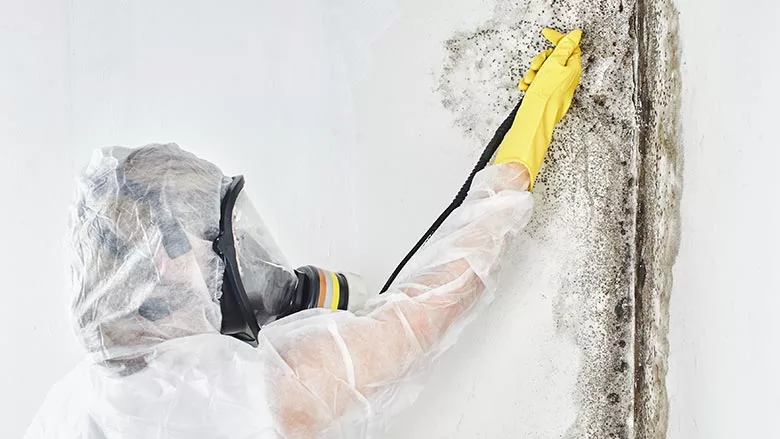
Disinfection: What It Does, What It Cannot Do, and How Restoration Gets It Wrong
A science-based inside look at disinfection limits, and why cleaning, not chemistry, is often overlooked
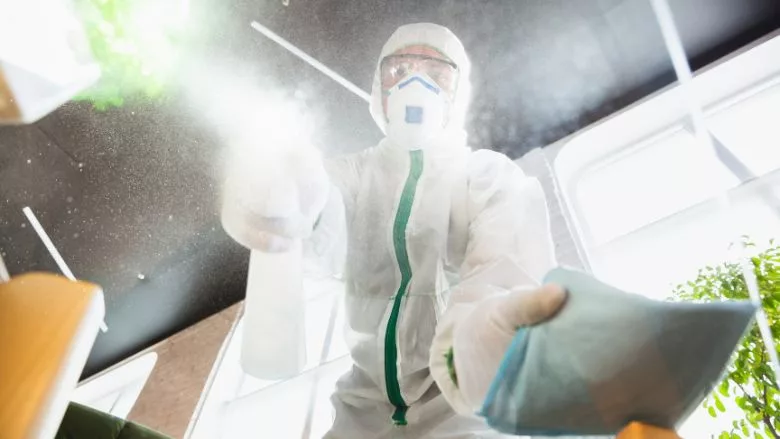
Disinfection is one of the most misunderstood processes in restoration. It is often treated as the primary intervention, the assurance step, the method that finishes the work. In regulatory language, however, disinfection has a single purpose: to reduce the viability of specific microorganisms under defined, controlled conditions. Those conditions rarely resemble the complexities of a water loss, fire scene, trauma event, or microbial remediation environment.
Understanding what disinfection does, and what it does not do, is essential for producing predictable outcomes, preventing callbacks, and maintaining scientific integrity in the field.
Disinfection Has a Regulatory Definition
EPA-registered disinfectants are tested under controlled laboratory conditions using specific organisms, specific contact times, specific temperatures, and specific soil conditions. This testing defines a kill claim. But EPA registration does not guarantee field performance unless those conditions are replicated.
Disinfection efficacy depends on correct dilution, correct application method, correct chemistry-to-soil compatibility, unobstructed surface contact, sufficient wet contact time, correct temperature, and appropriate surface porosity. If there are any variable shifts, the product no longer performs at its labeled level, even if it remains chemically active.
Organic Interference: The Largest Failure Point
EPA test protocols allow a small amount of standardized soil to mimic real-world conditions. Restoration environments do not resemble these conditions.
Organic material interferes with disinfection chemistry through multiple mechanisms: proteins consume active ingredients, lipids prevent surface contact, particles physically shield microorganisms, biofilm matrices block penetration, and porous surfaces absorb or neutralize actives before they reach target organisms.
A disinfectant cannot perform at its labeled efficacy unless the surface is free from the material that interferes with its chemistry. This is why disinfection is a secondary and conditional step in restoration, not the foundation of the work.
Looking for quick answers on restoration, remediation and cleaning topics?
Try Ask R&R, our new smart AI search tool.
Ask R&R →
Contact Time Is Rarely Achieved
Contact time is the period of which a disinfectant must remain visibly wet on a surface to perform at labeled efficacy. Restoration surfaces rarely allow this condition to remain stable.
Evaporation before minimum contact time. Run-off on vertical surfaces. Absorption into porous materials. Disruption by airflow, personnel movement, or temperature variation. If a disinfectant evaporates at minute three of a ten-minute requirement, the chemistry performed for three minutes, not ten.
This is not interpretation; it is a measurable variable that determines whether the kill claim is valid or void.
Surface Compatibility Determines Performance
Disinfectants interact with surfaces differently depending on porosity, absorption, pH, and surface energy. Restoration environments include drywall, wood, concrete, plaster, insulation, textiles, stone, and composites. No single chemistry is universally compatible.
| Chemistry | Surface Interaction |
|---|---|
| Hypochlorites | Oxidize organic surfaces; corrode metals; degrade with organic load |
| Quaternary Ammonium | Bind to cotton and cellulose, reducing active concentration |
| Hydrogen Peroxide | Destabilize in presence of metals; require stable pH |
| Phenolics | Effective on non-porous surfaces; lose penetration on textured substrates |
| Alcohols | Evaporate rapidly; ineffective on porous materials; require high concentration |
Selecting chemistry without matching it to substrate and condition leads to incomplete performance, regardless of what the label claims.
Biofilm Changes Everything
Biofilm is a polymeric matrix composed of polysaccharides, proteins, lipids, and extracellular DNA. It forms to wet building materials within 24 to 48 hours and anchors microbial communities to surfaces. Once established, biofilm prevents disinfectants from reaching the organisms embedded within it.
Disinfectants do not dissolve biofilm. They do not penetrate it. They do not remove it. Chemistry contacts the outer surface of the matrix while the organisms inside remain protected. Only physical disruption followed by removal changes the environment in which biofilms persist.
In water damage with extended saturation, biofilm is not a possibility; it is a certainty. Any disinfection strategy that does not account for biofilm removal is performing against only the organisms on the outer surface, not the colony.
Disinfection Cannot Remove Anything
This is the most important principle in this article.
Disinfection kills microorganisms. It does not remove ... [t]he material that triggers immune response, drives inflammation, and causes complaints.
Disinfection kills microorganisms. It does not remove spores, microbial fragments, mycotoxins, allergens, endotoxin, soot, cellulose dust, biofilm, or protein residues. Disinfection has zero mechanical effects. It alters viability but leaves the material present.
This is why treat-and-leave approaches fail. This is why symptoms persist after remediation. This is why callbacks return. This is why occupants still react. This is why clearance fails. The organisms may be dead. The material that triggers immune response, drives inflammation, and causes complaints remains exactly where it was.
Where Disinfection Matters
Disinfection, when used correctly, plays a critical role in reducing specific pathogens in Category 2 and 3 water events, reducing risk during trauma restoration, addressing sewage-impacted environments, and minimizing cross-contamination during remediation.
In these scenarios, disinfection is valuable: after cleaning has removed interference, and before final verification confirms the work. Disinfection is a tool with a specific, limited function. It is not the endpoint. It is not the guarantee.
Verification Measures Presence, Not Kill Claims
Because disinfection alters viability but does not remove material, verification must assess what remains. ATP testing measures organic presence, living or dead, not disinfection efficacy. Air sampling confirms reduction of particulate and spores, not chemical performance. Surface sampling documents residue presence, not kill rates.
The test that matters is the one that measures what is still there.
The Standard
Disinfection reduces viable microorganisms under controlled conditions. It does not remove the material that influences occupant exposure. Restoration environments require accuracy and restraint: correct chemistry, correct timing, correct sequencing, and correct expectations.
The restoration professional who understands these limits can:
- Explain why treatment-only approaches produce callbacks
- Justify cleaning scope with chemistry, not just protocol
- Select disinfection methods matched to surface and condition
- Verify outcomes by measuring presence, not assuming kill
Understanding what disinfection cannot do is what separates a treatment from a restoration.
Looking for a reprint of this article?
From high-res PDFs to custom plaques, order your copy today!