Zero Tolerance for Toxic Molds: Essential Steps for Successful Remediation
Identifying Target Spores as Part of a Post-Remediation Clearance Process
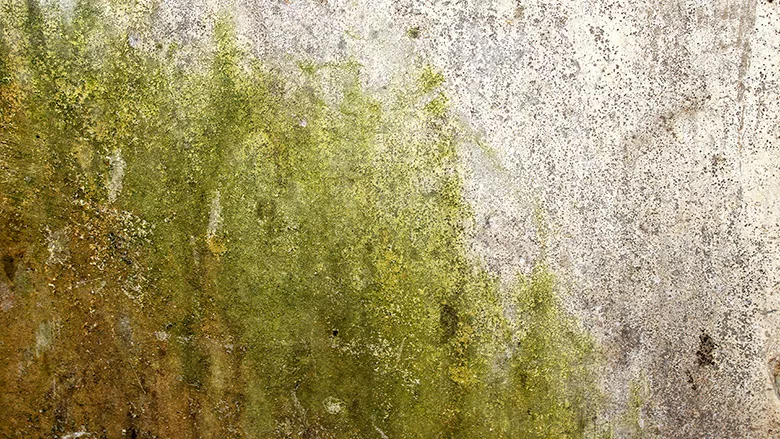
Credit: Agus Ahmad / iStock via Getty Images Plus
Abstract
Mold remediation is more than just a technical process—it’s a critical step in protecting the health and well-being of those living or working in mold-affected environments. The stakes are especially high when dealing with toxic molds that produce harmful mycotoxins. Testing for specific "target" spores during post-remediation is essential for determining whether a cleaned environment is truly safe. When taking expert experience and evidence-based practices into consideration, it becomes clear why zero tolerance for these dangerous molds should be standard procedure in any successful remediation effort.
The Question
Recently, Change the Air Foundation (CTAF), a nonprofit organization dedicated to helping people breathe safer indoor air, released a free Mold Remediation Mini Class Series. The goal of the series is to empower consumers by providing free, evidence-based, resources about mold contamination and safe removal, presented in clear, easy-to-understand language.
In 11 episodes that each run 25-65 minutes long, the specific steps for remediating mold are explained in interviews with mold experts. After watching the final episode, Mold Remediation Part 11: Post-Remediation Verification, a viewer reached out to the Foundation with a question. They asked whether the five “zero tolerance” molds are only useful for post-remediation air testing or if this criterion also applies to tape samples. Can the zero-tolerance mold list also apply to polymerase chain reaction (PCR) type testing, such as for Environmental Relative Moldiness Index (ERMI)1 and Health Effects Roster of Type-specific Formers of Mycotoxins and Inflammagens (HERTSMI-2)2 samples?
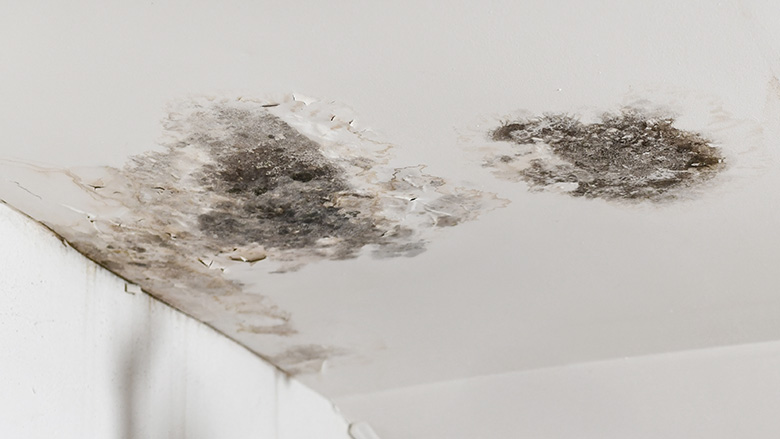
Credit: AleksandarGeorgiev / E+ via Getty Images
An Interesting Answer from The Expert
Change the Air Foundation staff took the question to Michael Pinto, the mold expert interviewed in Episode 11, for an answer. He started by restating his recommended five “target” spore types that result in a post-testing failure if even a single spore is recovered: Stachybotrys, Chaetomium, Memnoniella, Fusarium, and Trichoderma. These spores are considered unacceptable in post-remediation air sample results due to their potential toxicity and health risks. Michael also indicated that in his decades of work as a mold investigation and control expert, he always views the presence of target spores in cleaned environments as an indication that additional remediation, cleaning, and/or sanitization is necessary. Regardless of the sampling method, the discovery of a single target spore (or its DNA, in the case of ERMI/HERTSMI-2 samples) should constitute a failure.
An Answer with Supporting Logic
In conversations about the viewer’s question, Michael asked CTAF staff if they knew where the acceptable lower limits for the “target” spores originated. What well-researched scientific or medical study indicates that those spores, which produce mycotoxins, are safe to inhale in small quantities? He then answered his own question, noting that most of the early work regarding mold health effects and mycotoxins was based on animal studies from the 1980s related to the ingestion of contaminated feedstock.
Next, Michael Pinto posed a challenge for further consideration: If 24 spores per cubic meter of air (c/m³) of Stachybotrys is deemed acceptable—perhaps equivalent to one spore on the raw count—then what about 48 c/m³? If 48 c/m³ is acceptable, what about 96 c/m³? Where does it stop, and what is this allowable and acceptable guidance based on, given that such spores are almost never present in buildings without water damage?
Looking for quick answers on restoration, remediation and cleaning topics?
Try Ask R&R, our new smart AI search tool.
Ask R&R →
Credit: Animaflora / iStock via Getty Images Plus
Support from Multiple Directions
He then moved the conversation in another direction. Advocates for allowing low levels of target spores after remediation should think about the challenges this creates for clients. How can professionals in the mold remediation field justify leaving “toxic” spores behind? Further, how does this approach protect contractors or consultants from long-term liability, especially when no validated medical evidence defines a safe threshold of exposure?
Michael summarized his position in favor of requiring a zero tolerance for specific types of mold based on three key points:
- Target spores come from water-loving, slow-growing molds that produce mycotoxins as a defense mechanism; as a result, they present a greater risk to occupants than other types of molds. For additional details, see here.
- Few, if any, studies discussing normal or clean indoor air related to mold indicate that target spores were, or could be, present. Michael noted that he had read more than 50 studies over the years and had not found a single instance of any of the five spores being considered a normal occurrence if found inside a house. Such meta-data must impact the remediation industry’s understanding of Category 1—Normal Fungal Ecology.
- He concluded with the practical impact, noting that his experience over the past 26 years has shown that sensitized occupants do not recover as well, if at all, in environments where even small amounts of target spores are found after remediation.
Settling for a remediated environment where even small numbers of target spores are recovered from any sampling method is an outdated concept.
The emphasis point in the CTAF Part 11 video, and in real remediation situations, is that settling for a remediated environment where even small numbers of target spores are recovered from any sampling method is an outdated concept. A decade ago, it may have condemned contractors to multiple rounds of extensive cleaning to resolve the remaining contamination issue.
Today, advances in small particle cleaning protocols and sanitization3 chemistry provide quicker, more cost-efficient ways to resolve "stray" target spore issues that do not indicate a missed hidden mold source or poor remediation execution. When performing efficient and effective surface cleaning using a HEPA Pizza4 instead of the HEPA Sandwich technique, target spores on a Pre-Remediation Evaluation (PRE) or Post-Remediation Verification (PRV) should be absent. This is why top industry professionals view the presence of target spores in cleaned environments as an indication that additional remediation, cleaning, and/or sanitization is necessary.
Sources
- Environmental Relative Moldiness Index
- Health Effects Roster of Type-Specific Formers of Mycotoxins and Inflammagens – 2nd Version.
- According to the National Organization for Remediators and Microbial Inspectors (NORMI), sanitization is a process that supplements the careful removal of mold growth, it is not a substitute for physical removal under controlled conditions.
- The HEPA Sandwich cleaning technique for mold remediation was popularized in the early 2000’s by Rachel Adams. It consists of a three-step cleaning regimen where HEPA vacuuming of all surfaces is followed by damp wiping, and then a second round of HEPA vacuuming. In contrast, the HEPA Pizza was introduced to the restoration industry in 2022 by Stephen Leung and Michael Pinto. That cleaning approach starts with the same two first steps, HEPA vacuuming and damp wiping, but utilizes wiping with dry microfiber cloths as the final step.
Looking for a reprint of this article?
From high-res PDFs to custom plaques, order your copy today!