Containment: Controlling Contaminants During Remediation and Restoration Activities
A practical, science-based guide to building and managing effective negative-pressure containment systems
The function is the same, but the name changes depending on the industry, reason for use, or location. Whether they are called controlled hazmat hot zones, isolation tents, biohazard decontamination boxes, containment pods, quarantine cubes, airborne infection isolation rooms, the bubble, or simply “containment”; they are all terms for negative pressure enclosures. Because of their importance to many aspects of the restoration and remediation industry, a discussion of the isolated spaces being separated from nearby areas using temporary barriers and airflow through High Efficiency Particulate Air (HEPA) filters are of critical importance to all practitioners.
With their usage so common in many aspects of the remediation field, the best approach to learning, or refreshing, the key concepts of such an important safety process is to break the information into manageable portions. As such, this article is an introduction to a four-part series that covers:
- Containment Basics
- The Evolution of Containments for Remediation/Restoration Activities
- Improving Containments for Biological Contaminants
- Alternatives to Typical Containments
Start at the Beginning
In the context of this series of articles, the description of “containments” will be limited to those that are temporarily installed for a specific purpose. Although hospital rooms set up for high-risk infectious patients and manufacturing clean rooms use the same sorts of techniques to control the movement of dust and contaminants, the permanent nature of those structures make them different from the containments set up for a limited time to support some sort of restoration work. Therefore, containments are defined as areas separated from surrounding spaces by the use of temporary barriers.
The increased use of containments in the restoration field runs parallel to the growing use of dust control measures during routine construction activities. Whether it is isolating a bathroom for a general remodel or to control the spread of unhealthy spores while completing mold remediation under the sink, the installation of sheet plastic on the doorframe is a simple containment. Add a self-stick zipper and slice the barrier for an inexpensive yet effective dust control system that allows reasonable access for workers with little restriction yet keeps the dust inside the work area.
A Multitude of Ways to Build Containment Barriers
Roll plastic is by far the most typical material for temporary barriers. The wide range of thicknesses that are commonly available can match virtually any demand for containment strength and longevity. Quite often job specifications revert back to the 45-year-old industry guideline developed for asbestos abatement requiring a minimum of 4-mil plastic for wall barriers. Any potential significant stress on the temporary plastic isolating one area from another, such as more aggressive air movement and temperature changes in a mechanical room, pushes the minimum thickness to 6-mil. While plastic is relatively inexpensive, incredibly adaptable, and easily obtainable, it is always best to check local building codes before using it as material for an isolation barrier as many municipalities have restrictions. Mandating the use of sheet plastic treated with a fire retardant for any temporary isolation barriers is a restriction frequently found in local codes.
If plastic on a roll is used to separate two areas, the material has to be affixed to some rigid support. Taping the edge of the plastic around three sides of a door frame using a high-quality duct tape is one typical approach. In order to minimize damage to the support surfaces when it is time to remove the plastic wide painter’s tape is often applied to the solid surface before the plastic is secured with duct tape. This process also works well for affixing the plastic to walls and ceilings. Many contractors have found that additional longevity of the barriers can be achieved by using a staple gun to supplement the duct tape with mechanical fasteners. Another alternative is to use a controlled application of spray glue on the painter’s tape before layering in the plastic and covering duct tape.
For high ceilings, long runs, multiple corners, or other configuration challenges for the isolation barrier, the sheet plastic may need to be supplemented by some form of support posts. Because of the temporary nature of containment barriers constructing a traditional stud wall with base plate, header, and evenly spaced wooden 2” x 4”s is typically considered overkill (unless a hard barrier of gypsum board or plywood panels is required for the project to protect the plastic from being breached by occupants or damaged during the project). Wooden furring strips (2” x 2”) are an adequate substitute for the more substantial wall studs.
Looking for quick answers on restoration, remediation and cleaning topics?
Try Ask R&R, our new smart AI search tool.
Ask R&R →
Another alternative to wooden framing materials are expandable support poles. Originally load lockers were repurposed from the trucking industry, but these heavy-duty poles quickly gave way to products specifically designed for holding up containment plastic. Zip wall poles were one of the earliest iterations of support structures designed for the asbestos abatement industry. Today, there are plenty of competing products that all have their particular advantages for supporting containment walls.
Negative Pressure – A Key Component
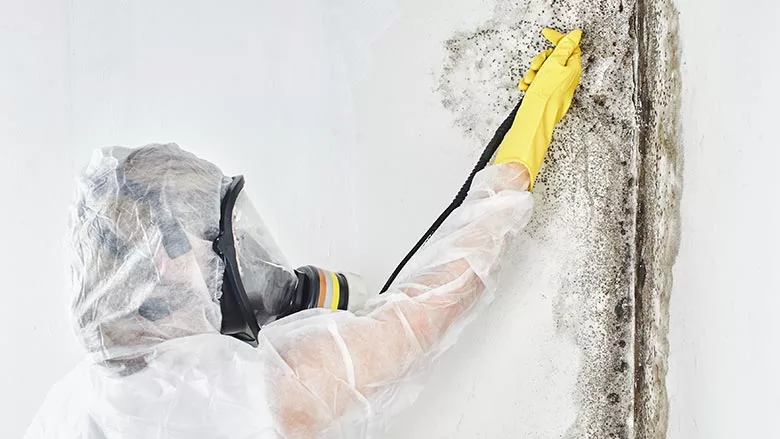
Regardless of how they are constructed, probably the biggest difference between a containment for construction activities and one for remediation efforts is that control of the air in and out of the work area is a critical factor when dealing with dangerous contaminants. Whether it is mold spores, bacteria, toxic metals like lead or mercury, or harmful particulates such as asbestos or silica; minimizing the possibility of contaminated air moving out from the containment to adjacent areas is critical. Workers inside the containment are using personal protective equipment to avoid exposure to the contaminants propelled airborne by the removal efforts, but occupants in nearby rooms are not wearing respirators or disposable suits.
In response to the threat to adjacent areas remediation containments utilize the concept of negative pressure. To create an effective pressure differential the contractor must control all sources of air movement inside the containment barriers. This starts with sealing off any HVAC supply and return vents. Fans can be used to exhaust air from the work area through accessible doors or windows. However, if the work involves the generation of some form of hazardous airborne contaminant, then exhausting such polluted air to the out-of-doors is ill-advised and likely against the law. That is why the use of HEPA-filtered exhaust units are so frequently associated with negative pressure containments.
The premise is simple. If the contractor removes more air from the contained area than is allowed in, the work space will be under negative pressure. This reduced air pressure is what prevents floating contaminants from moving out of the work area. The pressure differential on either side of the isolation barriers has to be substantial enough that dust will not migrate in the air currents that follow individuals as they move around or out of the containment.
The most effective contractors not only focus on how and where they are exhausting workplace air, they control the air entering the contained area. Setting up a single decontamination chamber is not only effective in controlling airborne dust from leaving the work area but it minimizing tracking of surface debris. Decontamination chambers are available as portable units or can be constructed with additional sheet plastic and support poles. Depending on the hazards faced inside the work area, the decontamination chamber can be expanded into two or three adjoining rooms. The use of sticky step-off pads outside the decontamination chamber is a supplemental method for minimizing tracking.
While there are many more details about the construction of negative pressure containments for remediation work, this basic overview should remind experienced practitioners of their importance and motivate those without practical experience to find one of the many classes teaching contaminant controls that incorporate hands-on experience in building containments.
The next part of this series will provide some details on the history of negative pressure containments and their evolution from their “birth” during the Second World War.
Looking for a reprint of this article?
From high-res PDFs to custom plaques, order your copy today!