Why the Restoration Industry Must Refocus on Cleaning and Remove the Chemical Crutch
Industry standards warn against us replacing proper cleaning with biocide misuse. Here’s why.
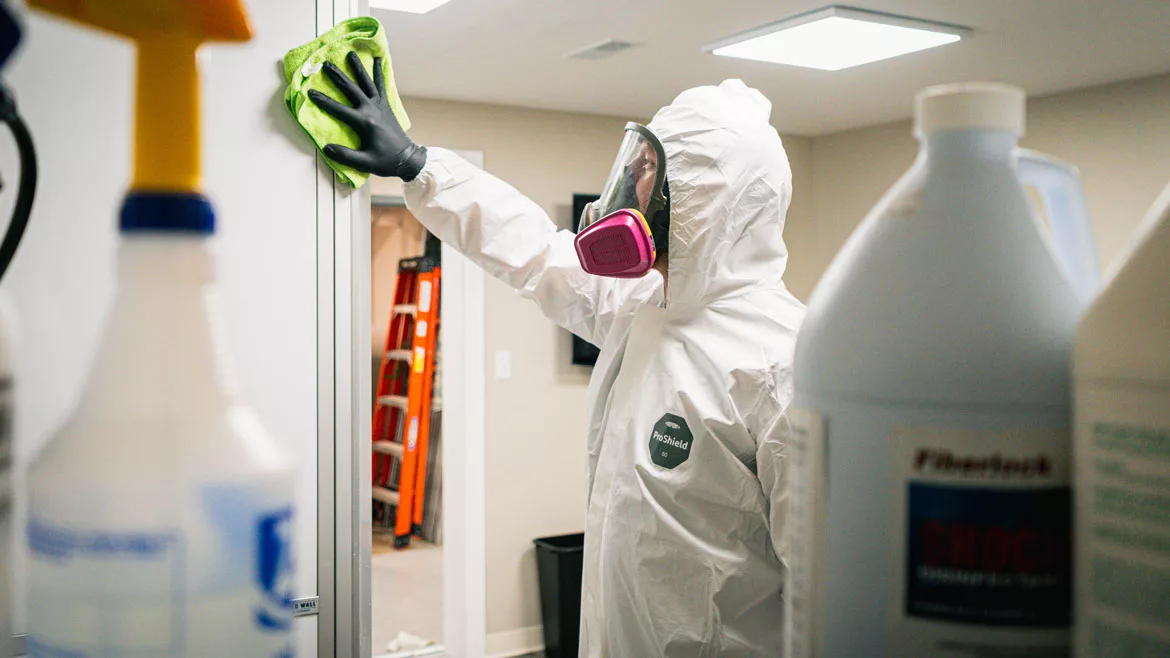
As an industrial hygienist specializing in indoor air quality, I’ve spent years walking through job sites with restoration contractors of every size and specialty, from mold remediation crews to duct cleaning companies, and the many outfits that try to be both. Across this wide landscape, one trend has become impossible to ignore. It’s the industry-wide habit of leaning on chemicals as a cure-all, often in place of the very cleaning practices that should define our work. There have been previous articles written on this subject; however, I hope this can provide additional context.
I’ve reviewed many safety orientations, training programs and chemical use policies across restoration firms. In far too many of them, new technicians are told the same thing: spray or fog a particular chemical on every job, no matter the conditions, simply because it can be billed. They are handed a bottle, instructed to fog a space and rarely taught what the product actually is, what risks it carries, or whether it’s even appropriate or even legal to use in that manner. All so the company can make another buck. The legal consequences only matter if you get caught, after all.
One example stands out clearly. A duct cleaning company performing work on a mold remediation project attempted to convince the client to let them fog “Shockwave” into interior fiberboard metal ducts. Shockwave is a well-known disinfectant, and it carries an impressive list of kill claims. But anyone who has taken the time to read its SDS knows the truth behind the label. It is a quaternary ammonium compound, a class of chemicals notoriously toxic to both humans and animals. Intentionally fogging a chemical like that into an HVAC system, where building occupants could inhale the lingering vapors or aerosols, should give any responsible professional pause.
NADCA (The National Air Duct Cleaners Association) is unambiguous about this point. In their FAQs within the “NADCA POSITION PAPER on Chemical Product Applications in HVAC Systems,” they state:
“Is sanitizing ductwork legal? NO. The EPA has not registered any products for sanitizing or disinfecting ductwork. Further, no fungicides are registered for use in ductwork. As noted earlier in this document, IT IS A VIOLATION OF FEDERAL LAW TO USE A PRODUCT IN A MANNER INCONSISTENT WITH ITS LABELING.”
The clarity of that statement should end the conversation. Yet biocide application inside duct systems is still widespread. In practice, many restoration companies train their technicians to apply disinfectants before, during and after water, mold or fire remediation work, regardless of the legal or health implications. It becomes part of the routine, where technicians press the trigger, fog the space, leave a chemical smell behind so the customer “knows we did something.”
But the authoritative bodies that shape our industry’s standards say something very different.
Looking for quick answers on restoration, remediation and cleaning topics?
Try Ask R&R, our new smart AI search tool.
Ask R&R →
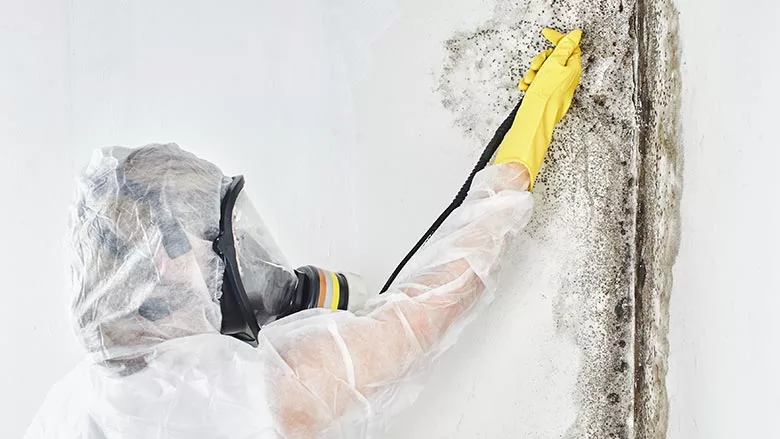
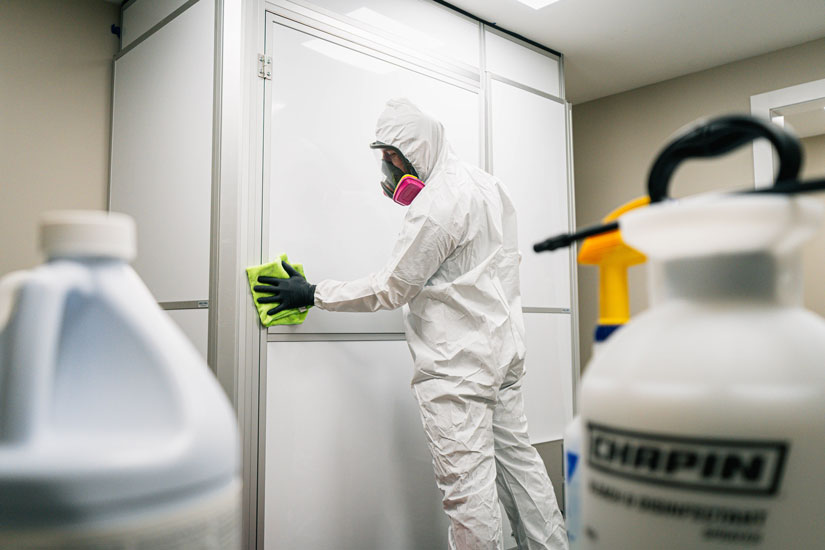
“[B]iocides or antimicrobials should never be used as a substitute for removal of microbial growth and contaminated materials or articles that cannot be easily and successfully cleaned.”
Credit: Amerestore
This statement from the ACGIH Bioaerosols: Assessment and Control, one of the most influential documents in our industry, cuts straight to the heart of the issue. Biocides are tools with specific applications. They were never meant to replace physical removal, mechanical action or proper cleaning techniques. And yet, when misused, that is precisely what they end up doing. I always refer to them as a “catch-all” or a “just-in-case I missed something.” Because with proper cleaning techniques, there should not be anything left to “kill.”
Section 7.1 of the ANSI/IICRC S500 fifth edition reinforces the corrective message:
“Many antimicrobials (biocides) are deactivated by organic matter in water or on surfaces; therefore, pre-cleaning is an essential first step.”
It’s impossible to misunderstand the intent of that statement. If a surface is dirty, if debris or soot or microbial residues are present, then the very chemicals so many technicians rely on simply stop working. They are chemically neutralized by the grime that proper cleaning was supposed to remove in the first place. The solution, according to the standard, is not another application of disinfectant. It is cleaning.
And that is the core problem in our industry. Somewhere along the way, the role of cleaning, including the physical act, the mechanical removal, the detail work, was overshadowed by a belief that chemicals could compensate for anything. That disinfectants could erase contamination without effort. That fogging a space was the same as decontaminating it. This was particularly apparent during the Covid-19 epidemic.
Let's look at mold specifically. "Using antimicrobials to kill or inactivate microorganisms such as mold does not remove their toxigenic, antigenic, or allergenic properties, so the treated fungal growth would still need to be removed (ACGIH Bioaerosols Assessment and Control)." Not only that, only about 20% of mold spores are viable anyway, so you're essentially trying to "kill" 80% non-viable spores. Yet if you breathe them in, they do the same damage. That's why source removal has always been the baseline of mold remediation.
Let’s talk more about how these products work. There are generally three categories of biocides: sanitizers, disinfectants and sterilizers. Each one performs the action of their namesake.
- Sanitize: To reduce the number of microorganisms on a surface to levels considered safe by public health standards. Sanitizers lower contamination to acceptable levels. Most EPA-registered sanitizers demonstrate around a 3-log (99.9%) microbial reduction under test conditions. An example would be applying Lysol to a counter after you clean it.
- Disinfect: To kill or inactivate most recognized pathogenic microorganisms (but not necessarily all microbial forms such as bacterial spores) on precleaned, non-porous surfaces. EPA-registered disinfectants must meet specific efficacy requirements and remain visibly wet for the full labeled contact time to achieve their claims. For the more difficult kill claims, it’s usually at least 10 minutes. An example is applying a disinfectant to a stainless-steel table that has already been cleaned with a mechanical action (wiping) in combination with a detergent/surfactant. Products like these usually have a 5-6 log kill rating (99.999 – 99.9999% microbial reduction).
- Sterilize: To kill or destroy 100% of all forms of microbial life, including bacteria, viruses, fungi, and spores. Sterilization is generally accomplished through physical or chemical processes such as steam under pressure (autoclaving), ethylene oxide, vaporized hydrogen peroxide, or EPA-registered liquid sterilants intended for medical devices. Products like these must have at least a 6-log kill rating, up to 12-log.
In our industry, we will likely never use a sterilizer. We should never use a sanitizer since they are often not strong enough to kill what we encounter. That leaves us with disinfectants.
Understanding the differences between disinfectants is crucial, because despite the wide variety of products available, they differ in only a few meaningful ways. The first distinction is their kill claims, the organisms they are legally proven to inactivate under EPA testing. Every disinfectant can only claim to kill what its label says it kills, and nothing else. Some products, like quaternary ammonium compounds, undergo extensive EPA efficacy testing and therefore carry long lists of approved organisms. Others, like thymol-based disinfectants, may be effective in practice but have fewer claims simply because fewer organisms were submitted for testing.
Credit: Amerestore
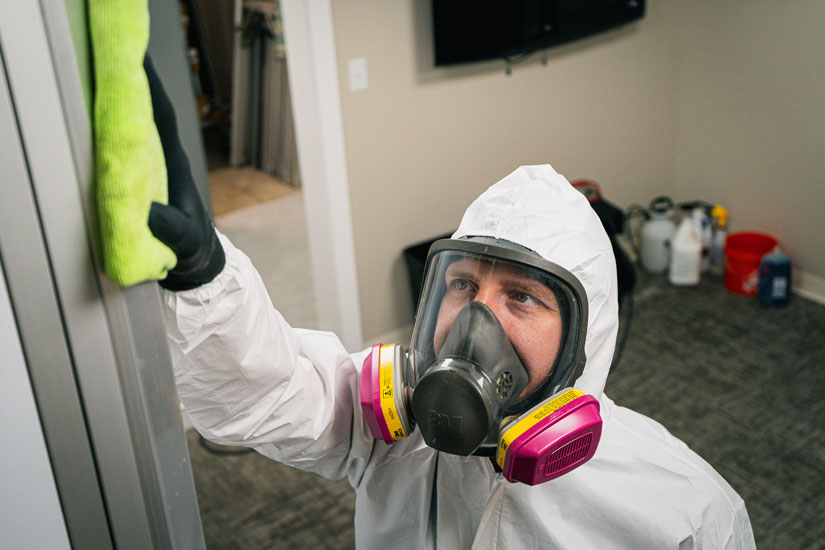
Their modes of action vary as well. Some disrupt cell membranes, others oxidize or denature proteins, and some (like alcohols) dissolve lipid structures. These mechanisms matter less for the technician’s day‑to‑day use but explain why certain chemistries outperform others in specific conditions. What does matter is soil‑load tolerance. Contrary to the myth, no disinfectant truly penetrates dirt or buried contamination. Instead, different chemistries fail at different speeds when organic matter is present. Quats, for example, tend to tolerate a higher soil load before being neutralized, while products like Benefect lose efficiency quickly when soil is present. This difference is often misinterpreted as "penetration,” but in reality, all disinfectants still require pre‑cleaning to ensure direct contact with the target surface.
Safety also varies across disinfectant categories, and this matters not just for regulatory compliance but for the health of both occupants and technicians. Quats can cause respiratory irritation and are toxic to humans and animals in sufficient concentrations, leaving residues that require careful handling. Bleach is corrosive and damaging to both surfaces and lungs. Hydrogen peroxide is safer but still requires proper ventilation and PPE. Thymol‑based products have low toxicity but are limited by soil‑load tolerance. None are benign, and each carries implications for training, PPE selection and post‑application verification.
Ultimately, when you remove marketing language and reputation, the real differences between disinfectants come down to four things: their kill claims, their mode of action, how well they tolerate soil load before failing, and the safety considerations that accompany their use. Everything else, like the idea of deep penetration, the belief that a stronger smell means stronger action, the assumption that more chemistry equals better cleaning, is a myth.
True restoration work has never been about chemicals. It has always been about removing what does not belong, controlling what remains and restoring an environment to a safe and habitable condition. Chemicals can support that work as a small part of our toolbelt, but they cannot replace our primary restorative techniques. When we forget this, when we choose the chemical shortcut over proper cleaning, we compromise safety, violate standards, ignore regulatory boundaries and erode the professionalism our industry depends on and desperately needs.
It’s time to return to fundamentals. Clean first. Clean thoroughly. Use chemicals only when appropriate, legal and necessary. And remember that no disinfectant, no matter how strong it is, can replace the skilled hands and disciplined techniques that have always defined true restoration & remediation.
Looking for a reprint of this article?
From high-res PDFs to custom plaques, order your copy today!