The Sound of Restoration: Why Hearing Protection Is Critical on Every Job Site
Restoration pros face dangerous noise levels daily, here’s how to protect your hearing and your team
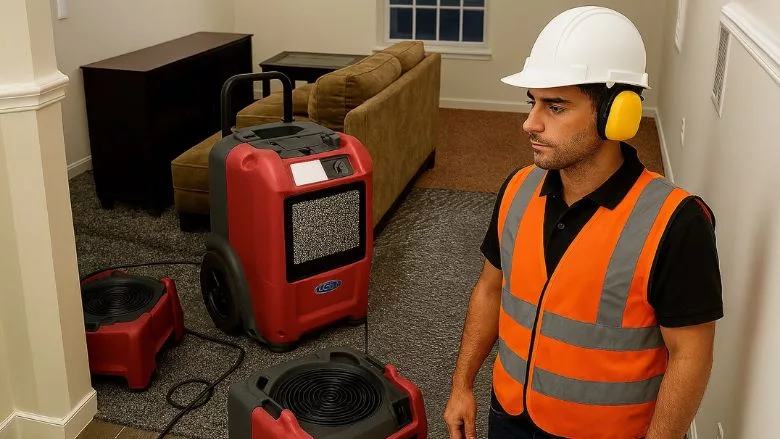
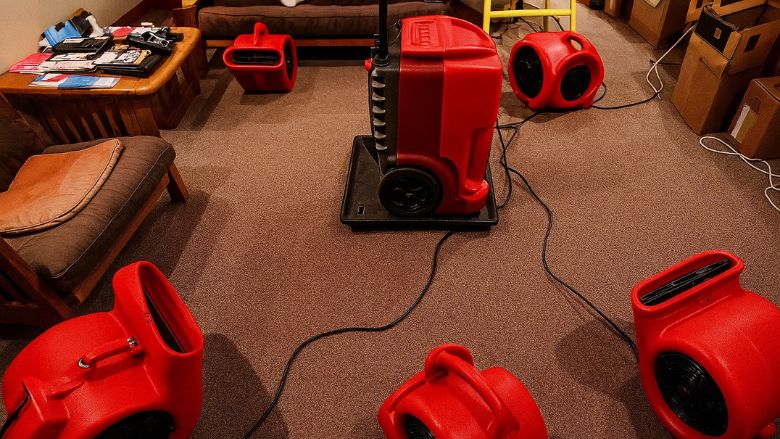
In restoration and remediation work, noise is part of the job. Whether it’s an extractor removing water, a chainsaw cutting debris or dehumidifiers running around the clock. However, the noise that drives progress can also cause irreversible hearing damage if we don’t take the necessary precautions.
Noise-induced hearing loss (NIHL) is one of the most common occupational illnesses in the United States, and it’s 100% preventable. According to the National Institute for Occupational Safety and Health (NIOSH), once hearing is lost, it’s gone for good. (1) There is no treatment that restores it. So, protection isn’t optional; it’s essential.

Credit: Highwaystarz-Photography / iStock / Getty Images Plus
Understanding Restoration Equipment Noise
| Equipment/Task | Approx. Noise Level |
|---|---|
| Air Movers | 80-85 dBA |
| Commercial Dehumidifiers | 78-82 dBA |
| Truckmount Extractors | 90-100 dBA |
| Chainsaw/Circular Saw | 100-110 dBA |
| Pressure Washer | 95-105 dBA |
| Demolition Hammer | 100-120 dBA |
Noise is measured in decibels (dBA), and both loudness and duration determine how harmful it is. Many tools used on our projects exceed safe exposure limits. For perspective, normal conversations are about 60 dBA. Anything above 85 dBA can cause permanent hearing damage with repeated exposure. (1) And every 3 dBA increase doubles the sound energy — cutting your safe exposure time in half.
OSHA Limits
OSHA requires employers to “…develop and implement a monitoring program” when noise levels reach an 8-hour time-weighted average of 85 dBA. (2) Most restorers do not have the noise meters or technical know-how to calculate that. What usually happens is that if the work is known to last for a few hours at 85 dBA, the employer takes action by implementing hearing protection.
Credit: Kayla McGowan
There are a number of ways to be more compliant with the action level standard; one is to use an Industrial Hygienist (IH) to take noise measurements during the periods employees are exposed to the noise. Sometimes Worker’s Compensation carriers provide this type of service at a reduced rate or for free, check with your carrier.
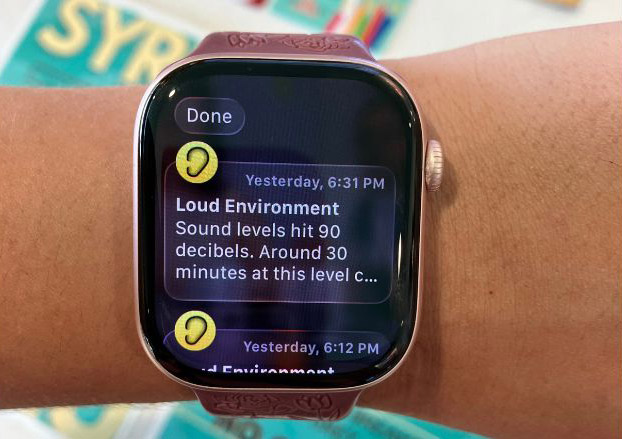
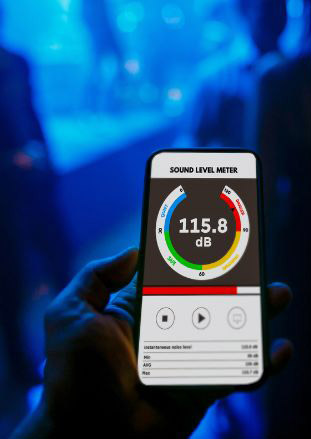
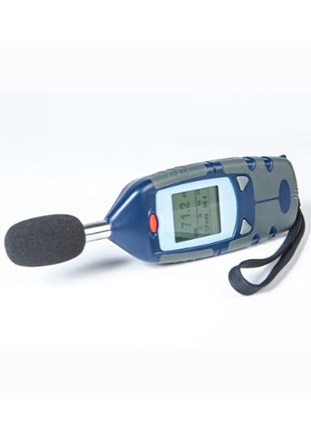
Understand that restorers have relatively easy ways to measure noise levels. One is a simple app on your smartphone. This is not a calibrated device; however, it will give you a good starting point to assess your noisy worksites. NIOSH has a downloadable noise app available on their website; see the link in the Resources Section. Also, calibrated noise level meters are easily rented or purchased for under $500.
Credit: Cheng NV / iStock / Getty Images Plus
Credit: GRI-spb / iStock / Getty Images Plus
Noise-Induced Hearing Loss
The statistics for employees NOT wearing hearing protection are staggering; up to 90% of employees in the Service Sector do not wear hearing protection. (3) So, we have a majority of employees vulnerable to hazardous noise exposure. At the same time, we know that when noise levels reach 85 dBA, we are subject to NIHL. This occurs when the hair cells in your inner ear are damaged. Once damaged, the cells won’t heal or grow back.
Looking for quick answers on restoration, remediation and cleaning topics?
Try Ask R&R, our new smart AI search tool.
Ask R&R →
Symptoms to look for are:
- Feeling fullness or pressure in your ear
- Inability to hear high-pitched sounds (e.g. birds chirping)
- Muffled or distorted speech
Jobs and industries with the highest risk include carpentry and construction (i.e. similar to restoration). (4)
Credit: Ethen Dell / iStock / Getty Images Plus and CoPilot
Hearing Protection for Restorers
Restoration equipment manufacturers are working to lower operating noise levels and often communicate this. However, there is only so much that can be done when multiple pieces of equipment are operating in containment. When you can’t control noise at the source, hearing protection is your best defense. Every team member on every job should have the right PPE and know how to use it.
Speaking of team members, a recent conversation with Brian Carter with Signal Restoration Services in Troy, Michigan highlighted the very strong reason for hearing protection. Brian brought up concerns with noise levels when, as just mentioned, multiple pieces of equipment are operating in a relatively small room. He was specifically concerned with younger technicians’ noise exposure. They hopefully have many years of successful work in the restoration industry; however, those years can lead to significant hearing loss if they don’t use protection. Brian felt that it’s critical to protect the next generation, so they don’t wind up with NIHL like many of the existing generations!
Recommended Protection Options:
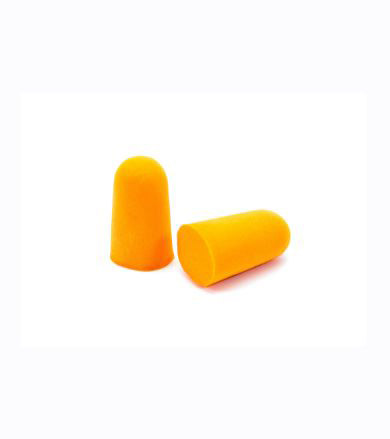
- Foam Earplugs (NRR 22–33): Cost-effective and disposable. Replace daily.
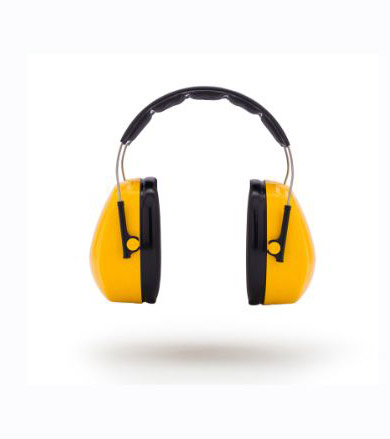
- Earmuffs (NRR 25–30): Comfortable for intermittent noise exposure. Reusable.
- Dual Protection: Use plugs and muffs together when levels exceed 100 dBA.
Credit: phanasitti / iStock / Getty Images Plus
Credit: tjulwitu / iStock / Getty Images Plus
Author’s Note: Unfortunately, the Noise Reduction Rating (NRR) you see on the label for hearing protection devices cannot be simply subtracted from the noise level in the workplace to arrive at the reduced noise level. There is a formula used to calculate the actual reduction. Consult a safety professional or CIH to get your actual reduction. (5) Regardless, more is always better for noise reduction!
Best Practices for Every Job Site:
- Wear protection whenever noise exceeds 85 dBA.
- Check the fit; if plugs aren’t inserted correctly, you’re not protected.
- Keep ear protection clean and dry, especially in microbial or sewage environments.
- Take “quiet breaks” to give your ears a rest
Your Safety Culture
Every restoration company should make hearing safety part of its daily routine; not just a rule, but a habit. That means:
- Including noise awareness in morning safety huddles.
- Training every team member on PPE use and limitations.
- Conducting periodic noise assessments on equipment and vehicles.
- Providing replacement hearing protection in all service vehicles and kits.
Under OSHA 29 CFR 1910.95 and aligned with the ANSI/IICRC S500, hearing conservation is part of a comprehensive safety program that protects not just compliance, but your people — the heartbeat of your safety culture.
Key Takeaways
- Noise levels above 85 dBA can cause irreversible damage.
- Restoration tools and equipment can exceed this limit.
- OSHA’s noise action level is 80 dBA.
- Use hearing protection consistently and correctly — it’s your first line of defense.
- The younger generation of restorers deserves to be protected from hearing loss.
Your hearing is priceless, and once it’s gone, it’s gone. Take those extra seconds to insert your earplugs, use your muffs, and remind your teammates to do the same.
References
1. U.S. Centers for Disease Control and Prevention, National Institute for Occupational Safety and Health, Noise and Hearing Loss, About Occupational Hearing Loss, January 18, 2024. https://www.cdc.gov/niosh/noise/about/index.html
2. Occupational Safety and Health Administration, Part Number 1910, Occupational Safety and Health Standards, Subpart G, 1910.95, Occupational Noise Exposure, 1910.95(c)(2). https://www.osha.gov/laws-regs/regulations/standardnumber/1910/1910.95
3. U.S. Centers for Disease Control and Prevention, National Institute for Occupational Safety and Health, Noise and Hearing Loss, Services (including Public Safety) Statistics, January 30, 2024. https://www.cdc.gov/niosh/noise/surveillance/services.html
4. Cleveland Clinic, Health Library, Diseases & Conditions, Noise-Induced Hearing Loss (NIHL), 06/12/2024. https://my.clevelandclinic.org/health/diseases/21776-noise-induced-hearing-loss-nihl
5. Oregon OSHA, Noise Exposure, OR-OSHA (05/24) FS-01. https://osha.oregon.gov/OSHAPubs/factsheets/fs01.pdf
Resources
NIOSH Sound Level Meter App, https://www.cdc.gov/niosh/noise/about/app.html
Oregon OSHA Hearing Protection Fact Sheet, https://osha.oregon.gov/OSHAPubs/factsheets/fs01.pdf
Looking for a reprint of this article?
From high-res PDFs to custom plaques, order your copy today!