Cleaning for Health: Material Science and Best Practices for Restoration Professionals
Research shows that cleaning removes 80-90% of contaminants. Here’s why it matters for yours and your customers’ safety
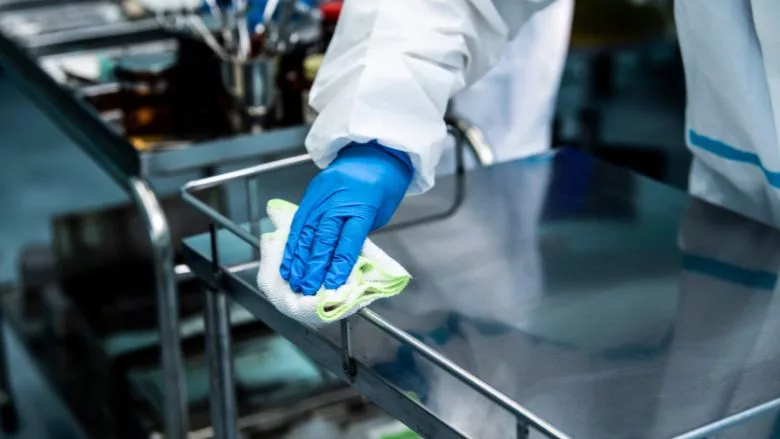
Cleaning for health begins with one measurable fact: the majority of contaminants are removed through cleaning, not through disinfection. Across environmental hygiene research, mechanical cleaning consistently accounts for 80 to 90 percent of soil and microbial removal before any sanitizing or disinfecting step is introduced. In restoration work, this is not a theoretical concept; it is a determining factor in whether a project performs as intended.
When a structure has experienced water intrusion, microbial growth, fire residue, trauma-related contamination or construction activity, the material present on surfaces becomes the primary variable that determines effectiveness. If residues remain, they absorb chemistry, shield microorganisms, and continue contributing to occupant exposure through inhalation, deposition, and contact. Cleaning for health focuses on physically removing this material so that any subsequent chemical step can perform on a surface that is not obstructed.
What Remains Determines Outcomes
A surface can pass visual inspection and still retain material that influences occupant health. The question is not whether the surface looks clean; the question is what remains on it and how that material behaves under normal human activity.
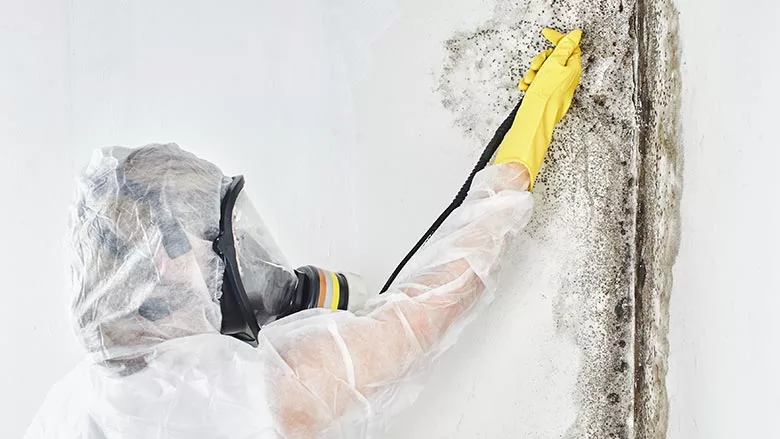
In water damage, remaining material includes microbial fragments, polysaccharides, dissolved building-material components, and proteins from fungal or bacterial activity. In fire restoration, soot presents as submicron carbonaceous particles, polymerized combustion byproducts and residue films that deposit throughout the structure. Trauma work leaves proteins, lipids and cellular debris that remain chemically active long after disinfection. In mold remediation, remaining material can include dead spores, hyphal fragments, beta-glucans, mycotoxins, and structural proteins, each fully capable of triggering respiratory and inflammatory response.
All these residues interact with occupants through three pathways: inhalation of disturbed particles, dermal contact during normal use and ingestion through hand-to-mouth transfer or settling on food-preparation areas. The material does not need to be viable to cause a reaction. It needs to be present.
The Immune System Does Not Check for Viability
This is the science that changes how we talk about our work.
Inflammation and allergic response are triggered by molecular structure, not metabolic activity. The immune system reacts to the shape of proteins, polysaccharides, lipids, toxins, and fragments, regardless of whether the organism they came from is alive.
Looking for quick answers on restoration, remediation and cleaning topics?
Try Ask R&R, our new smart AI search tool.
Ask R&R →
A dead mold spore presents the same antigenic proteins as a living one. Antibodies bind based on structural recognition, not viability. The occupant with Aspergillus sensitivity will react to dead Aspergillus spores exactly as they would to living ones, because the proteins that trigger their immune response are still present on the spore surface.
Mycotoxins, secondary metabolites produced by fungi, are stable chemical compounds, not living structures. Killing the organism that produced them does nothing to neutralize the toxin. Aflatoxin remains aflatoxin whether the Aspergillus cell is alive or not. Trichothecenes from Stachybotrys persist on surfaces long after the colony is dead.
Gram-negative endotoxin is a lipopolysaccharide fragment of the bacterial cell wall. It binds to immune receptors and triggers inflammatory response even when the bacterium is dead. In water damage with sewage involvement, endotoxin load may be the primary driver of occupant symptoms, and it survives every disinfection process.
This is the foundational principle behind cleaning for health: treatment without removal leaves the material that drives symptoms and complaints.
The Math That Explains the Callback
Log reduction is how we measure disinfection efficacy. Each log represents a 90% reduction in viable organisms. These numbers define regulatory standards and appear on every product label.
| Log | % Killed | % Remaining | From 1,000,000 organisms |
|---|---|---|---|
| 1-log | 90% | 10% | 100,000 viable organisms remain |
| 2-log | 99% | 1% | 10,000 viable organisms remain |
| 3-log | 99.9% | 0.1% | 1,000 viable organisms remain |
| 4-log | 99.99% | 0.01% | 100 viable organisms remain |
| 6-log | 99.9999% | 0.0001% | 1 viable organism remains |
But here is what the table does not show: log reduction measures viability, not presence. A 6-log disinfection process can kill 99.9999% of organisms and leave 100% of the allergenic, inflammatory, and toxic material exactly where it was.
This is why occupants still have symptoms after treatment-only remediation. This is the science behind the callback. The organisms may be dead. The material that triggers immune response, drives inflammation, and causes respiratory complaints remains on surfaces.
Where This Matters Most
In mold remediation, industry-standard clearance criteria do not ask whether mold is dead. They ask whether it is absent. Indoor spore counts must not exceed outdoor background. Target organisms: Stachybotrys, Chaetomium, Fusarium, Memnoniella, Trichoderma, must not be detected. These criteria measure presence because presence determines exposure.
In trauma restoration, disinfection addresses pathogen risk, but the proteins and lipids that decompose, generate odor, and pose ongoing exposure concerns must be physically removed. A surface that has been disinfected but not cleaned still holds biological material that will continue to affect their environment.
In fire restoration, soot that has been chemically treated but not removed continues to deposit on surfaces, transfer to skin and belongings and off gas under heat. The particle load remains.
In Category 2 and 3 water losses, microbial contamination and endotoxin levels may far exceed what product testing assumes. Treatment alone cannot resolve what cleaning must remove.
Verification Documents Removal
ATP bioluminescence testing measures organic material presence living or dead by detecting adenosine triphosphate. Results reported in Relative Light Units reflect total organic residue, not viable organisms. A surface covered in dead mold spores will produce elevated readings. A surface with killed bacteria but remaining biofilm matrix will show organic load.
This aligns with the foundational principle: the test measures what is there, not what is alive. Presence determines exposure.
Airborne verification in mold remediation follows the same logic. Industry clearance criteria require that indoor spore counts do not exceed outdoor levels and that target organisms are absent. These measurements document removal, not treatment.
The Standard
Cleaning for health is the mechanism-based removal of material that interacts with occupants through inhalation, contact and ingestion. Disinfection kills organisms. Cleaning removes the residues; living or dead, that influences immune response, drive inflammation, affect respiratory function, generate odor and transfer to skin and belongings.
The restoration professional who understands this distinction can:
- Explain to occupants why symptoms persisted after a prior treatment-only approach.
- Defend cleaning scope to adjusters with science, not just protocol.
- Verify removal with measurements that document what matters.
- Produce outcomes that hold because the exposure source is gone.
Cleaning for health is not an aesthetic outcome. It is the material-science intervention that prepares an environment for safe occupancy.
Looking for a reprint of this article?
From high-res PDFs to custom plaques, order your copy today!