Five Essential Tools for Estimating and Documenting Hurricane Damage
How AI, documentation tools, and estimating templates improve CAT response workflows
Over the past decade, restoration contractors have made significant advances in the speed and efficiency of estimating and job management projects. Digital tools have streamlined workflows and improved documentation in their day-to-day operations.
Those processes, however, are put to an extreme test when a hurricane hits. You quickly find out how well your systems work when you’re forced to scale up fast.
Hurricane Month
Prepare before the storm with specially-curated articles during the month of May. Learn more!
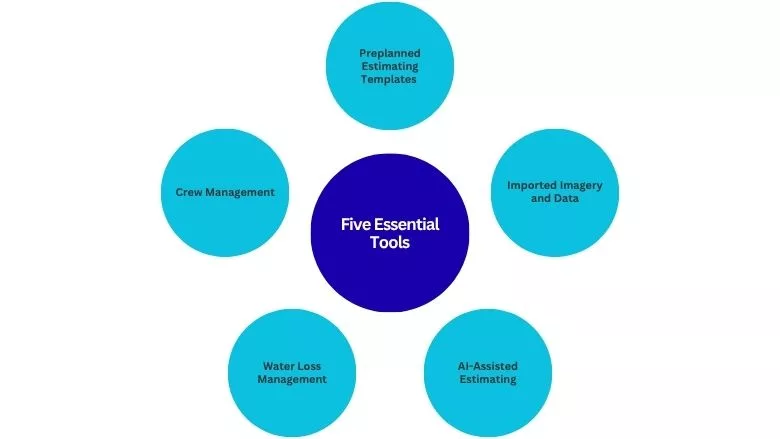
Hurricanes create an intense surge in demand, often across wide regional areas. Crews, estimators, and managers are stretched thin, timelines are compressed, and pressure builds to move quickly without sacrificing accuracy or documentation. While many tools can help contractors prepare for hurricanes and manage recovery work, five are especially essential for estimating and documenting damage efficiently after a major storm.
1. Preplanned estimating templates
As a hurricane approaches, forecasts provide a clearer picture of where the storm may strike and what types of properties are likely to be affected. From experience, you probably already know what damage patterns to expect: severe losses near the point of impact, with less severe roof, siding, and water damage extending outward.
Preplanned estimating templates help turn that experience into speed. By preparing templates tied to common construction types, materials, and layouts, contractors can significantly reduce the time required to build estimates once work begins.
For example, if a storm is heading toward a neighborhood built in the 1990s, you can reasonably expect asphalt shingles, stucco exteriors with brick accents, and architectural features like arches or columns. Many of those homes may share a small number of floor plans. Having templates with those materials and dimensions already built allows you to adjust and finalize estimates quickly instead of starting from scratch.
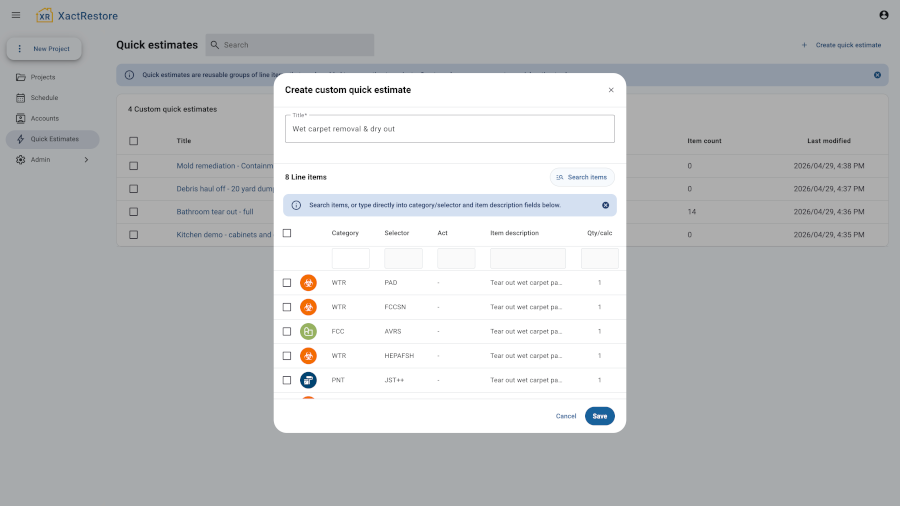
XactRestore’s custom quick estimates feature Source: Verisk
2. Imported imagery and data
Imagery and data from drones, satellites, and even phones continue to improve contractors’ ability to begin estimating with much of the groundwork already complete. Exterior measurements, roof details, and structural layouts can often be reviewed early in the process.
Looking for quick answers on restoration, remediation and cleaning topics?
Try Ask R&R, our new smart AI search tool.
Ask R&R →
Even an older paper blueprint can be digitized and used as the foundation for a functional floor plan. By leveraging available imagery and property data, contractors can reduce site time, accelerate estimation, and minimize rework, which are critical advantages during high-volume hurricane response periods.
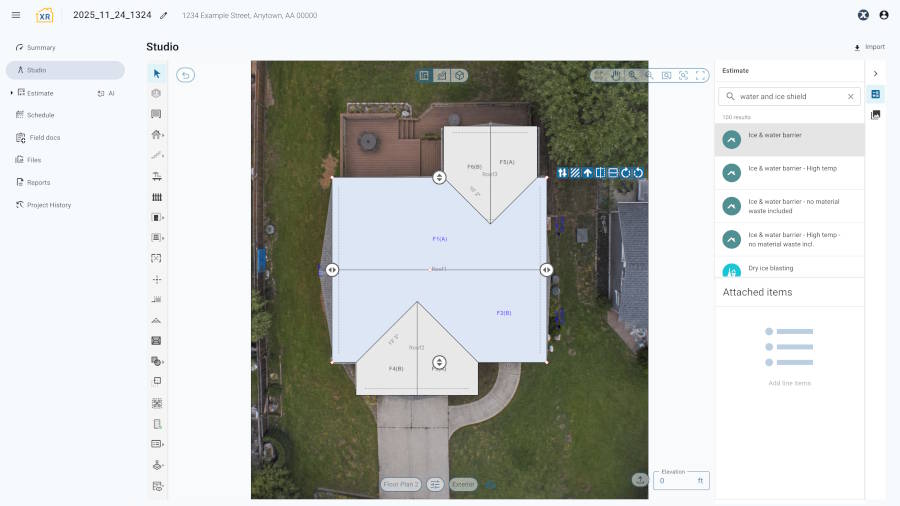
XactRestore's web-based Sketch, called Studio, with extensive roofing capabilities, featuring a drone roof photo as the underlay image Source: Verisk
3. AI-assisted estimating
AI-powered estimating tools are typically designed to assist human estimators. In a human-in-the-loop model, AI handles the bulk of routine work while professionals stay in control of key decisions, exceptions, and final sign-off. Today, AI can support tasks such as entering line items, capturing dimensions, identifying errors or omissions, labeling photos, and organizing documentation, using simple natural language prompts to maximize time savings.
The next major hurricane will likely accelerate the shift toward AI-aided estimating and job management. Contractors who begin incorporating these tools now will be better positioned to manage future storm-related demands.
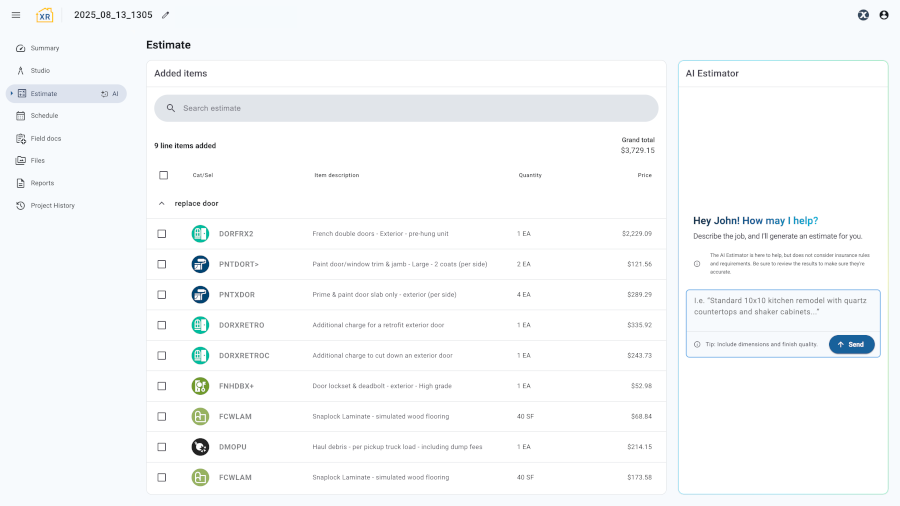
XactRestore’s AI estimator Source: Verisk
4. Water loss management
One of the hardest types of restoration work to scale after a hurricane is water-loss mitigation and repairs. Crews must carefully monitor drying progress, document conditions, and maintain detailed records, while juggling multiple jobs at once. Too often, what slips is the documentation and invoicing you need to get paid.
Scaling operations after a hurricane is expensive, and even well-run organizations can face significant cash flow pressure. Ensuring timely, accurate invoicing is critical. Modern water-loss management tools have also greatly improved this process.
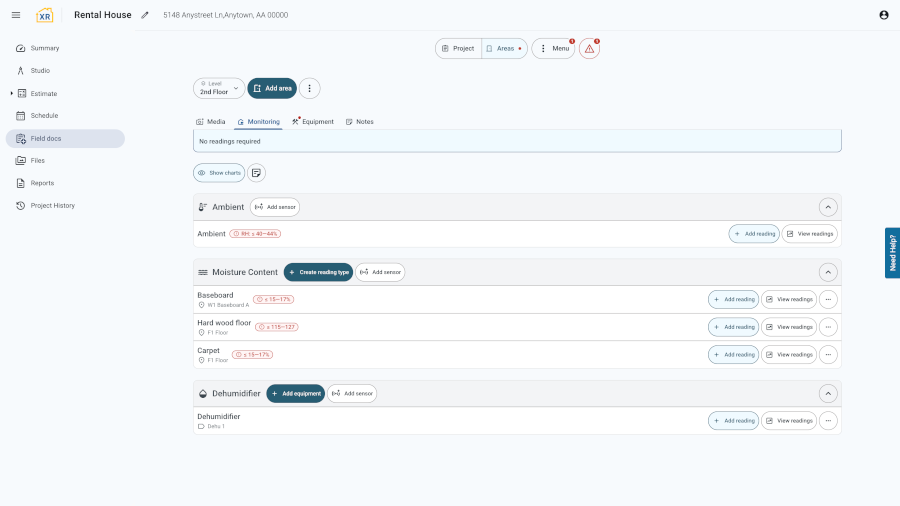
XactRestore’s water mitigation tool Source: Verisk)
5. Crew management
After a hurricane, the number of crews being managed, and the number of jobs each crew handles, can increase exponentially.
Effective crew management tools automate timelines, assign resources efficiently, and adjust schedules in real time. The most effective solutions go beyond tracking and help managers maintain visibility and control in fast-moving, high-pressure environments.
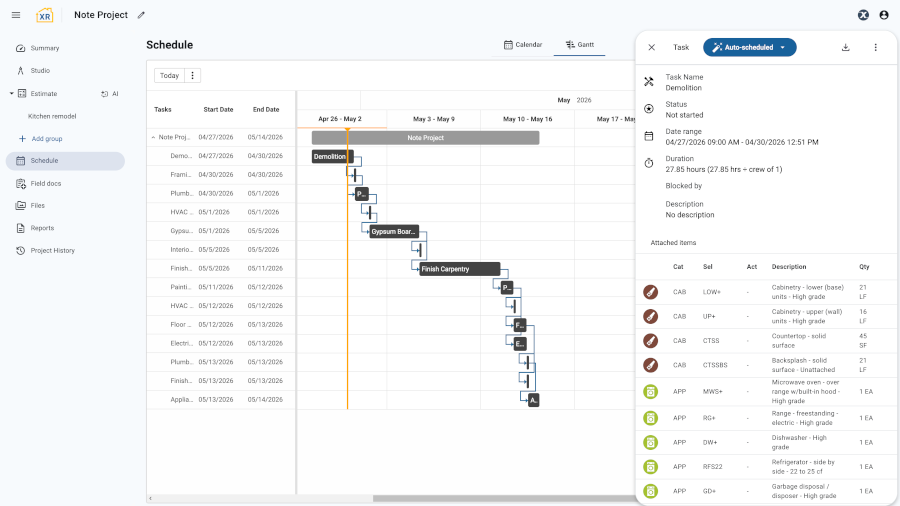
XactRestore’s scheduling capabilities tool Source: Verisk
Preparing for what’s next
The restoration industry is transforming, driven by rapid technology advancements. Hurricane response continues to be a proving ground for new tools and processes. Contractors who invest in scalable estimating, documentation, and management solutions are better positioned to navigate the challenges that follow major storms.
One thing is certain: contractors who prepare ahead of time will have a distinct advantage when the next hurricane hits.
Looking for a reprint of this article?
From high-res PDFs to custom plaques, order your copy today!