Why Smoke Odors Return After Fire Damage Restoration
Learn and understand deodorization limits, the science of smell, and odor persistence
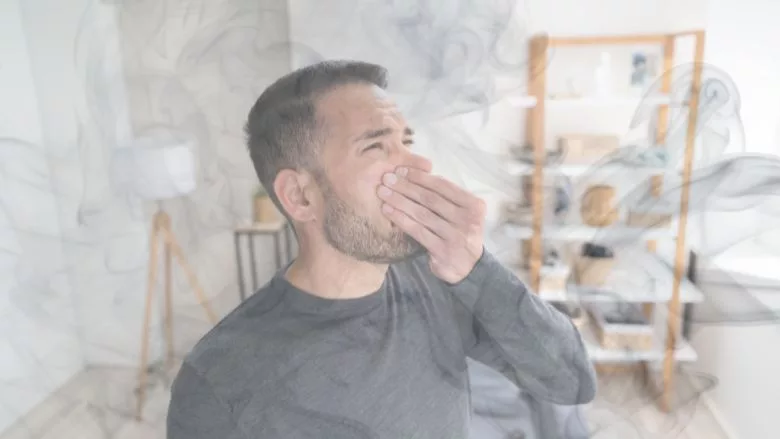
During a structure fire, heat, and pressurized smoke can permeate the air, infiltrate walls, ceiling cavities, and attic spaces, and find its way anywhere air can travel. After the fire is extinguished, porous materials begin the process of off-gassing and releasing volatile organic compounds (VOC’s). These odors can last for years if the affected materials are not properly cleaned, deodorized, encapsulated, or replaced.
Oxidizing gasses such as hydroxyls or ozone, the use of HEPA vacuuming and air filtration, and other cleaning methods can greatly reduce smoke odors and particulate matter. However, in some cases the standard methods of deodorization may not work. Restorers need to realize that on a molecular level, any structure affected by fire or smoke may not be able to be totally deodorized. Furthermore, consumers need to understand that there are certain types of combustion byproducts in the air we breathe as well as chemicals, and gases that current deodorization processes may have little to no effect. Consumers often misinterpret the smoke deodorization process as a guarantee of complete air sanitation, which in most cases is impossible to achieve.
When difficult smoke odors are encountered, deodorizers or “re-odorizers” are often used to mask or camouflage them. Over time, these odor counteractant fragrances dissipate and under the right conditions, whatever smoke odors were treated or concealed can reactivate and reappear. Here is where real trouble can begin.
In situations where a client mentions that they smell smoke after the deodorization process is complete, the first reaction may be to try and downplay the possibility that any real odor exists since all the chemicals, deodorizers, and oxidizing agents must have done their work, right? But then you must ask yourself, could the culprit be a failure of the deodorization methods deployed, an over sensitive sense of smell on the client’s part, a desensitized sense of smell on the restorer’s part, both, or something else? In this article we will explore this issue and take a closer look into smoke odors and one of the most complex of the five human senses—the sense of smell.
How does the sense of smell work?
The scientific term for the sense of smell is called olfaction. Olfaction comes from specialized sensory cells, called olfactory sensory neurons or OSN’s, which are found in a small patch of tissue high inside the nose. These cells connect directly to the brain and each has one odor receptor. Microscopic molecules released by substances around us—whether it’s coffee brewing or the scent of a flower or perfume, fragrances stimulate these receptors. Once the neurons detect the molecules, they send messages to your brain, which identifies the smell. There are more smells in the environment than there are receptors, and any given molecule may stimulate a combination of receptors, creating a unique representation in the brain. These representations are registered by the brain as a particular smell.
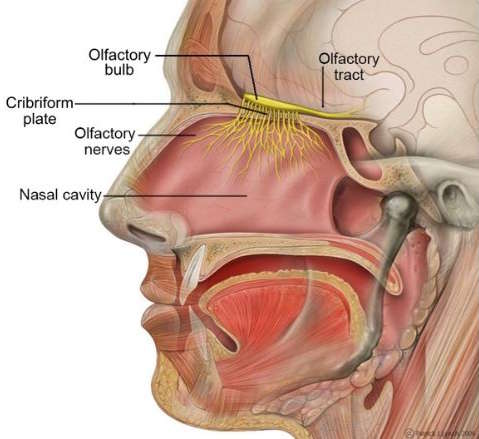
Credit: Patrick J. Lynch, medical illustrator, CC BY 2.5, via Wikimedia Commons
When OSNs become damaged or inflamed, they can send a distorted signal to the brain. In other cases, the smell signal can become blocked. This blockage prevents the smell signal from reaching the nose or the brain.
Smells reach the OSN’s through two pathways. The first pathway is through your nostrils. The second pathway is through a channel that connects the roof of the throat to the nose. Chewing food releases aromas that access the OSN’s through the second channel. If the channel is blocked, such as when your nose is stuffed up by a cold or flu, odors can’t reach the sensory cells that are stimulated by smells. As a result, you lose much of your ability to enjoy a food’s flavor. In this way, your senses of smell and taste work closely together.
Looking for quick answers on restoration, remediation and cleaning topics?
Try Ask R&R, our new smart AI search tool.
Ask R&R →
How sensitive is your sense of smell?
The human sense of smell is more sensitive than most might believe. For example, the odorant ethyl mercaptan that is often added to natural gas or propane as a warning agent, can be detected at concentrations ranging between 0.2 ppb (parts per billion) and 0.009 ppb. This is equivalent to approximately three drops of odorant within an Olympic-size swimming pool. Extremely low detection thresholds have been reported for the odorants d-limonene and ozone as well. The lowest human detection threshold known is for isoamyl mercaptan reported at 0.77 parts per trillion. (1) It has been calculated that humans can discriminate at least 1 trillion different smells or olfactory stimuli. (2)
What are smell disorders?
Some fire restoration literature teaches that if you encounter a client who complains of smelling smoke after the deodorizing process is completed, that this is attributed to psychological conditions or “phantom odors”. Although this could be true in some cases, it would be overreaching and irresponsible to assume that the deodorization process is foolproof and anyone who smells smoke odors after deodorization has a psychiatric disorder or medical condition.
I personally know of cases where homes that had fires and were “properly deodorized” later ended up in litigation and had to be torn apart and re-deodorized or torn down completely. These were the direct result of failed smoke odor remediation processes. In addition, some people cannot tolerate chemical de-odorizing agents or fragrances, so for them, the use of masking agents or scented deodorizers can present additional problems.
People who have a smell disorder either have a decrease in their ability to smell or changes in the way they perceive odors. Informed consumers believe that when something is truly clean, there shouldn’t be any odor or fragrance at all.
It has been reported that 1%-2% of North Americans report problems with their sense of smell. In one study, nearly one-quarter of men ages 60–69 had a smell disorder, compared with 11% of women in that age range. Around 14 million in the United States are believed to have a disorder related to the sense of smell.
Common Olfactory Disorders
Phantosmia:
Phantosmia is an olfactory hallucination or phantom odor. It is smelling an odor that is not actually there. While people with phantosmia can notice a range of odors, there are a few odors that seem to be most common. These include cigarette smoke, burning rubber, chemicals, such as ammonia, something spoiled or rotten. (3)
Cacosmia:
Cacosmia is a disorder where a person is unable to recognize smells or interpret the odors of different substances. People with cacosmia often feel as though they can smell something offensive, when in fact no such substance is present. When the olfactory system is not working correctly, a person can perceive even pleasant odors to be foul smelling. With cacosmia, the smell is often described as similar to feces, or a burning, rotten, or chemical odor.
Since smell and taste are closely linked, the condition can also affect your ability to eat. It may make it difficult to identify the actual smell of different foods, or it may cause foods that you usually enjoy to suddenly taste foul. Some people even find the smell and taste of food to be so bad it makes them sick. (4)
Parosmia:
Parosmia is a change in the normal perception of odors, such as when the smell of something familiar is distorted, or when something that normally smells pleasant now smells foul. People with parosmia may experience a loss of scent intensity, meaning they can’t detect the full range of the scents around them. People with Parosmia can detect an odor that’s present — but the scent smells “wrong” to them. For example, the pleasant odor of freshly baked bread might smell overpowering and rotten instead of subtle and sweet. Scents that used to be pleasant may now become overpowering and unbearable (5)
Hyposmia:
Hyposmia is a reduced ability to smell and to detect odors or when a person loses part or all their sense of smell. According to the National Institutes of Health, 12% of adults in the United States have some loss of their sense of smell. (6)
Hyperosmia:
Hyperosmia is a heightened sense of smell, usually caused by a lower threshold for odor. This perceptual disorder arises when there is an abnormally increased signal at any point between the olfactory receptors and the olfactory cortex. The causes of hyperosmia may be genetic, hormonal, or environmental. (7)
Anosmia:
Anosmia is the decreased ability or complete inability to detect odors. It is estimated to afflict 3–20% of the population. (8)
What causes olfactory disorders?
There are many different causes for smell disorders. These include:
- Upper respiratory tract infections such as bronchitis, sinusitis, rhinitis, or sore throat can cause damage to the olfactory sensory neurons.
- Head injuries or brain trauma. Some head injuries can damage the olfactory bulbs in the brain, which are responsible for differentiating smells.
- Smoking. Smokers often experience smell disorders. This is believed to be due to direct injury to the OSN’s. The longer and more frequently these cells are exposed to the toxins in cigarettes, the worse the damage over time appears to be.
- Exposure to chemical smoke. The smoke from harmful chemicals and acids (including those found in structure fires) can damage the OSN’s. This damage leads to a distorted sense of smell.
- Aging.
- Growths in the nasal cavities.
- Hormonal disturbances.
- Dental problems.
- Exposure to certain chemicals, such as mercury, lead, insecticides and solvents. (9)
Credit: Sean Scott
Interesting facts about the sense of smell
- Humans can detect over one trillion different smells. (10)
- Women typically have a stronger sense of smell than men. (11)
- During pregnancy, a woman’s sense of smell can become hypersensitive. (12)
- Smell is our most memorable sense. (13)
- Taste is reliant on scent. (14)
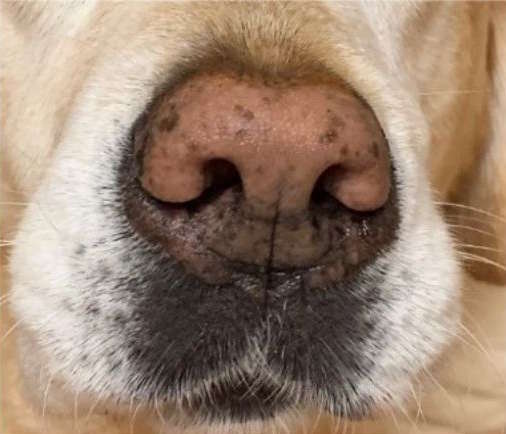
- Humans have five to six million odor-detecting cells as compared to dogs that have 220 million cells. (15)
Tips to help ensure a successful smoke odor remediation
If you do enough fire restoration projects, sooner or later you will run across a customer who swears they smell smoke after you have finished the deodorization process. Keep in mind that every fire has its own chemical makeup or DNA—the fuels that burned, the types of chemicals that have reacted or interacted, the duration of the fire, the intensity of the heat, the odors and gases the fire generates all contribute to the uniqueness and toxicity of structure fire environments. In addition, numerous new chemicals are being introduced into household products and building materials each year, many of which have never been tested or studied to determine what types of potentially toxic byproducts and odors they create when burned.
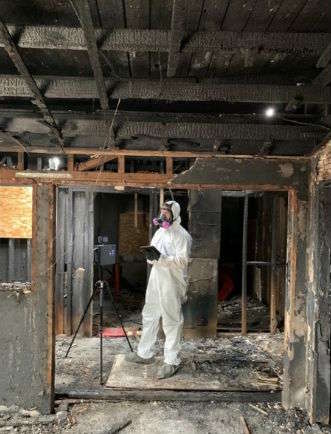
Before the restoration or deodorization process begins, restorers should consider the following steps:
Credit: Sean Scott
- Wear proper personal protective equipment before entering any fire damaged building. Keep in mind that you have no idea what chemicals or toxins may be present or that the fire may have created.
- Document the damage with a Matterport camera. This will provide a clear image for all interested parties on the severity of damage and help support your recommendations on what can be restored and what should be replaced.
- Manage your client’s expectations. Inform them of what restoration processes and chemicals will be used and what your smoke deodorization guarantee includes or does not include.
- Be mindful of the air temperature and humidity when conducting smoke odor remediation. Cold temperatures, especially in Winter months can cause certain materials to retain smoke odor, which can later release when the temperature rises. In some cases, the use of electric heaters may be necessary.
- Have an independent laboratory conduct air and surface sampling to determine what chemicals, heavy metals, and other toxins may be present. When these types of tests are conducted, a remediation protocol should be included (providing that the testing lab understands the methods of proper smoke odor and particulate remediation). This is similar to what hygienists create for mold remediation projects.
- Don’t cut corners or take shortcuts when conducting smoke odor remediation. If you don’t think certain materials can be restored or if the cost of restoration exceeds the materials value, then consider replacement.
- Once the deodorization process is complete, have an independent testing laboratory conduct a post remediation verification (PRV) prior to beginning repairs or installing new materials. If this test passes, then you have scientific proof that at the slice of time your remediation work was done and tested, that the affected areas passed and were deemed safe for use or occupancy. Without a PRV, the proof of a successful deodorization may end up in a battle of the senses – the restorer’s sense of smell versus the occupants.
Sources:
- US National Library of Medicine https://www.ncbi.nlm.nih.gov/pmc/articles/PMC2908748/
- US National Library of Medicine https://www.ncbi.nlm.nih.gov/pubmed/24653035?dopt=Abstract&holding=npg
- Science Direct https://www.sciencedirect.com/topics/medicine-and-dentistry/phantosmia and Healthline https://www.healthline.com/health/phantosmia
- Healthline https://www.healthline.com/health/cacosmia#outlook
- Healthline https://www.healthline.com/health/parosmia#takeaway
- US National Library of Medicine https://www.ncbi.nlm.nih.gov/pmc/articles/PMC3341581/ and Medical News Today https://www.medicalnewstoday.com/articles/318461.php
- Medical News Today https://www.medicalnewstoday.com/articles/321937.php#symptoms
- US National Library of Medicine https://www.ncbi.nlm.nih.gov/pmc/articles/PMC5863566/
- US Dept. of Health & Human Services https://www.nidcd.nih.gov/health/smell-disorders , Healthline https://www.healthline.com/health/parosmia#takeaway and Science Direct https://www.sciencedirect.com/topics/medicine-and-dentistry/parosmia
- US National Library of Medicine https://www.ncbi.nlm.nih.gov/pubmed/24653035?dopt=Abstract&holding=npg
- Daily Mail https://www.dailymail.co.uk/sciencetech/article-2822672/Women-really-better-sense-smell-men-Study-finds-female-brain-50-olfactory-cells.html
- US National Library of Medicine https://www.ncbi.nlm.nih.gov/pmc/articles/PMC3915141/
- Discover Magazine https://www.discovermagazine.com/mind/the-sense-of-smell-in-humans-is-more-powerful-than-we-think
- BMC Journal https://flavourjournal.biomedcentral.com/articles/10.1186/s13411-015-0040-2
- Live Science https://www.livescience.com/61234-how-dogs-smell-cancer.html
- Nasal illustration on page 1 designed by Patrick J. Lynch. Source Wikimedia Commons
Looking for a reprint of this article?
From high-res PDFs to custom plaques, order your copy today!