Ask the Expert
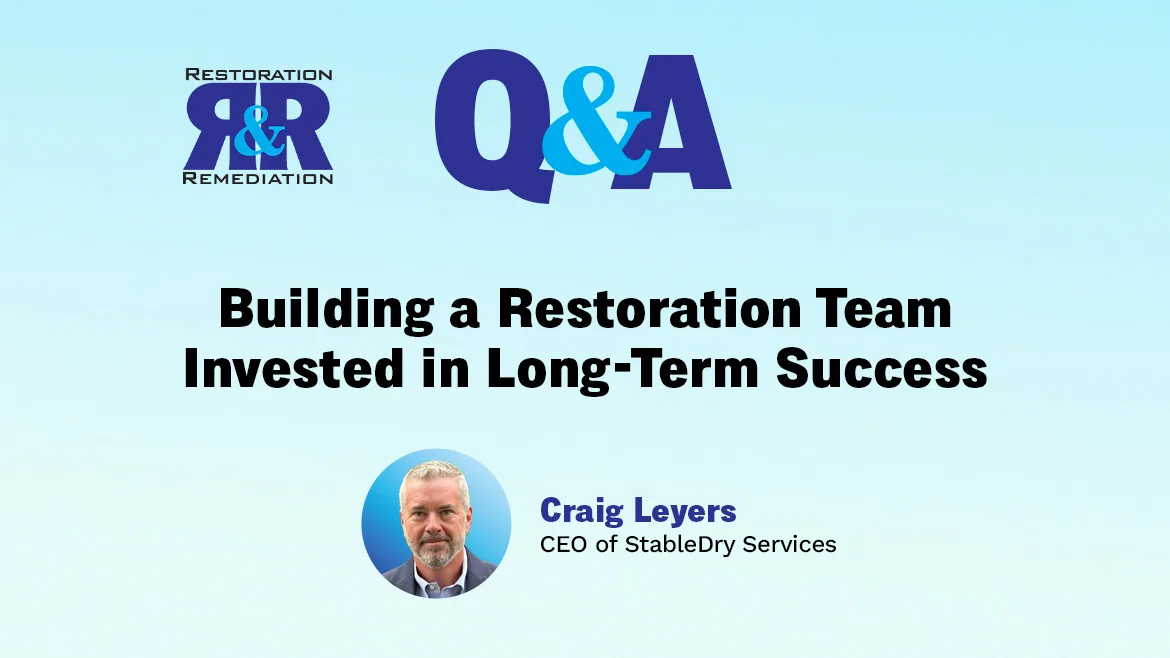
Building a Restoration Team Invested in Long-Term Success
Craig Leyers shares how trust, communication, and opportunity help strengthen employee engagement
Employee buy-in goes far beyond getting your team to follow your processes or meet your company goals. It comes from building trust, communicating openly, and helping your employees understand the role they play in the success and growth of the business.
In this Q&A, Craig Leyers, CEO of StableDry Services, shares his perspective on creating long-term employee buy-in, aligning field teams with company goals, navigating change, and building a culture where employees feel valued, invested, and motivated to help the company succeed.
Q: What does true employee buy-in look like in a construction/restoration company?
A: True buy-in isn't measured by whether employees agree with every decision leadership makes. It's measured by whether they understand where the company is headed and believe they have a meaningful role in getting there. When people understand the bigger picture, they're far more likely to take ownership of their work instead of simply completing the task in front of them. Our technicians independently make hundreds of decisions every day. When employees genuinely believe in the company's mission, they take ownership of the customer experience, help teammates when needed, and actively look for ways to improve how work gets done.
For me, buy-in also means employees feel proud to wear the company logo. When they recommend the company as a workplace to friends or family, that's one of the clearest signs that your culture is working. That kind of pride isn't built overnight. It comes from consistently treating people with respect, investing in their development, and giving them confidence that leadership values their contributions.
Q: How do you get field technicians, not just leadership, aligned with company goals?
A: The biggest mistake leaders make is assuming alignment comes from simply announcing goals when, in reality, field technicians need context just as much as executives do. If leadership talks only about revenue or profitability without explaining why those numbers matter, employees naturally disconnect from them.
We spend time translating company objectives into things our field teams can influence directly, such as customer satisfaction, efficiency, quality workmanship, safety, online reviews, and teamwork. We also share business performance openly because people deserve to know how the organization they work for is doing. When employees understand how their daily work contributes to larger outcomes, the goals start feeling like shared accomplishments rather than corporate metrics that only executives worry about.
Just as importantly, we encourage technicians to offer ideas for improving the business. The people closest to the work often identify opportunities leadership would never see from an office.
Looking for quick answers on restoration, remediation and cleaning topics?
Try Ask R&R, our new smart AI search tool.
Ask R&R →
Q: What communication cadence keeps employees engaged during periods of change?
A: Consistency matters more than volume. During periods of growth or organizational change, people don't expect leaders to have every answer immediately, but they expect honest, frequent communication.
Leaders should communicate before employees begin filling information gaps with assumptions. This means sharing updates on business performance, explaining why changes are happening, discussing what success looks like, and acknowledging challenges when they arise. Transparency builds credibility, even if the conversations are slightly difficult.
Just as importantly, communication must be a two-way conversation. Employees should never feel like communication is something that only flows downward. Some of our company’s best improvements started with conversations with technicians because the people closest to the work often have the clearest perspective on how to make it better.
Q: How do compensation, incentives, or ownership models influence buy-in?
A: Compensation matters because employees always deserve to be rewarded fairly for their work. However, compensation alone doesn't create commitment. If people don't trust leadership or don't see opportunities to grow, higher pay only provides temporary motivation.
The strongest incentive is helping employees understand that when the company succeeds, opportunities expand for everyone. That may include performance incentives, advancement into leadership, or additional career development opportunities. Growth should never feel like something reserved for management or corporate workers.
When employees see the connection between business success and their own professional development, they become even more invested in helping the organization improve. People want to feel like they're contributing to something meaningful, not just clocking in every day until retirement.
Q: What causes employees to resist growth, and how can leaders address it?
A: Most resistance isn't resistance to growth, but rather to uncertainty. People often worry about whether their role will change, whether expectations will increase, or whether they'll lose the close-knit culture they value.
That's why leaders must explain not only what is changing, but why. Growth should be positioned as creating opportunity rather than creating disruption. If employees understand that expansion leads to more career paths, stronger resources, better equipment, and greater long-term stability, they're much more likely to support it.
Leaders also need to remain visible during growth. Walking job sites, talking with employees directly, answering difficult questions, and listening carefully sends a powerful message that leadership remains connected even as the company becomes larger.
Q: How do you turn employees into advocates for company vision and culture?
A: You can't ask employees to become ambassadors if they don't have a positive experience with the company's culture, and that starts with trust in leadership. When leaders demonstrate humility, keep commitments, recognize great work, and genuinely care about employees as people, advocacy for the company’s vision and culture develops naturally.
One of my favorite indicators is employee referrals. When team members encourage someone they care about to join the company, they're putting their own reputation behind that recommendation. Which is a huge testament to the company we are all creating together. To me, that's one of the strongest endorsements a company can receive.
Ultimately, culture isn't something leadership writes in newsletters, explains during onboarding, or even creates overnight. Culture is something employees experience every day in how they're treated, how they're developed, and how they're included in the company's growth. When people believe their voice matters and that leadership is invested in their success, they become some of the company’s strongest champions.
Looking for a reprint of this article?
From high-res PDFs to custom plaques, order your copy today!