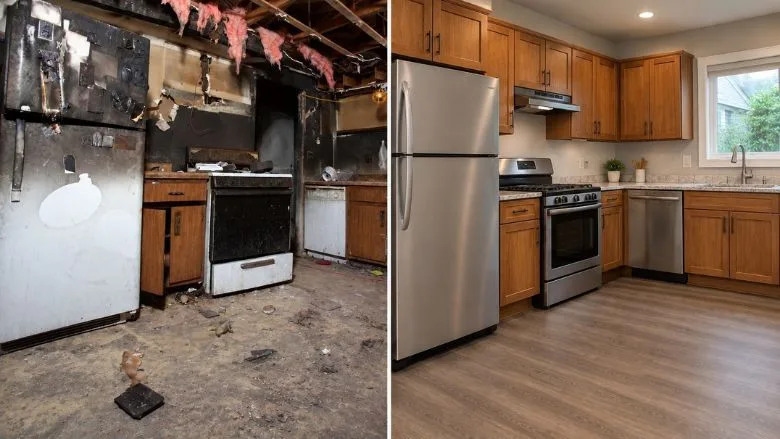
Your First Fire Restoration Job: From the Initial Call to the Final Walkthrough
Here’s how restorers can manage their first fire loss through proper assessment, partnerships, documentation, and project coordination
It's 7:30 on a Tuesday morning.
Your phone rings.
A homeowner has experienced a fire. The fire department has extinguished the flames, the insurance company has been notified, and someone has recommended your company.
They want to know how quickly you can get there.
Your heart rate picks up a little. This is the opportunity you've been preparing for. You've invested in training, developed relationships with specialty contractors, and started building your fire restoration capabilities.
Now it's time to put everything into action.
But before you load the trucks and send your crew racing toward the property, there's something important to remember.
The first job of a fire restoration contractor isn't to start restoring. It's to understand what needs to be restored, what risks may exist, and who needs to be involved.
Looking for quick answers on restoration, remediation and cleaning topics?
Try Ask R&R, our new smart AI search tool.
Ask R&R →
That distinction can make the difference between a well-managed project and an expensive disaster.
The First Fifteen Minutes Can Change Everything
Before dispatching your team, ask questions.
Has the fire department completed suppression activities? Has the property been released for entry? Is anyone displaced? Are there obvious structural hazards? Are utilities secured? Is the homeowner authorized to approve work?
Has the insurance company been contacted? Is an adjuster assigned?
You're not trying to diagnose the entire loss over the phone. You're trying to understand the situation well enough to respond appropriately.
When you arrive, resist the temptation to immediately start explaining everything your company can do.
Listen first.
Ask the homeowner to walk you through what happened, what concerns them most, and whether there are belongings requiring special attention.
Remember, this isn't just another project to them. It may be the worst day of their life.
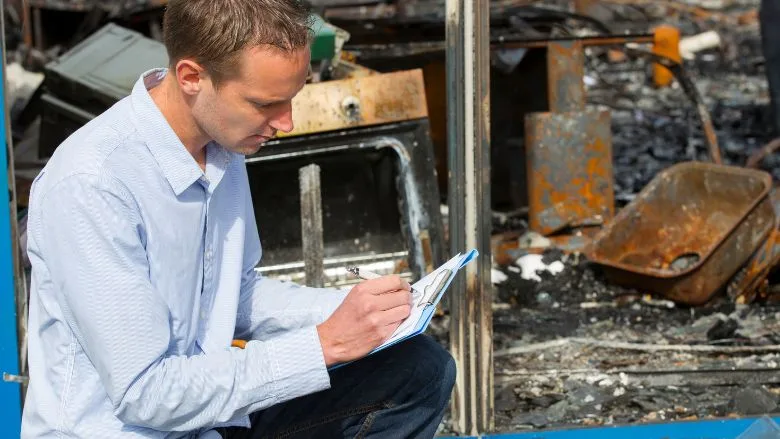
Then begin documenting the loss within the limits of safe, authorized access.
Photographs, room-by-room observations, visible smoke and fire damage, suppression water, affected contents, and potential safety concerns all become part of the project's foundation.
But don't confuse your initial walkthrough with a complete technical assessment.
Some of the most expensive mistakes happen when contractors start work before understanding the conditions they're dealing with.
Know When To Bring In The Experts
Imagine entering a fire-damaged home and discovering older building materials that may contain asbestos. Or significant smoke and ash deposition following a nearby conflagration involving multiple structures. Or damaged batteries, electronics, and other materials that introduce unfamiliar hazards.
What do you do?
Hopefully, you already know whom to call.
Depending on the loss, you may need a qualified environmental consultant, industrial hygienist, structural engineer, hazardous-material specialist, or other professional.
Their role isn't to make the project unnecessarily complicated. It's to help answer questions that should be resolved before certain work begins.
What hazards may be present? Is testing appropriate? Are there materials requiring specialized handling? What work can proceed safely? What conditions should be established for verification?
Not every fire loss requires every specialist.
But every fire loss deserves an assessment appropriate to its actual conditions.
This is why your professional network matters so much. You're not trying to figure out where to find expertise while the project is already underway.
You're bringing the right expertise into the conversation at the right time.
And once those questions have been addressed, the next challenge begins.
Don't Let The Project Become Organized Chaos
A significant fire loss can involve several different operations happening in the same property.
Contents need to be inventoried. Certain materials may need specialized removal. Structural surfaces require restoration. HVAC systems may need evaluation. Reconstruction contractors are preparing estimates. The
homeowner wants updates, and the adjuster needs documentation.
Without coordination, the job can quickly become chaos.
This is where the project manager earns their money.
Someone must establish the sequence of work, assign responsibilities, coordinate specialty contractors, track progress, and communicate with everyone involved.
Consider what happens when demolition begins before the contents have been properly documented or protected. Or when restored belongings are returned before reconstruction activities are complete.
Now you've created problems that didn't need to exist.
A successful fire project isn't simply a collection of contractors doing good work.
It's a coordinated sequence of services designed to produce a predictable result.
And one of the most important parts of that sequence is deciding what happens to the homeowner's belongings.
The Contents Decision Nobody Should Rush
Walk through almost any home and you'll find thousands of items.
Clothing, furniture, electronics, artwork, appliances, collectibles, documents, and possessions that may have little monetary value but enormous sentimental value.
For the homeowner, these aren't simply line items on an inventory.
They're pieces of their life.
Before packing anything, establish a consistent documentation process. Record the location, condition, and disposition of belongings. Use photographs, identification systems, and appropriate chain-of-custody procedures.
Then make informed decisions about what can be restored, what requires specialty processing, and what should be considered a total loss.
Don't reduce the decision to whether an item can be made to look or smell clean.
Consider the material, the nature of the contamination, the available restoration process, the ability to access affected surfaces, and whether the outcome can reasonably be evaluated.
A textile restoration specialist may be the right choice for clothing and soft goods. Electronics may require an entirely different professional. Artwork, documents, and irreplaceable possessions may need specialized conservation.
This is where the team you built before the loss starts paying dividends.
You can offer the homeowner a more complete solution without pretending your company is qualified to restore everything.
And as those specialists begin their work, your responsibility shifts toward keeping the entire project moving.
The Job Isn't Finished Just Because The Work Is Done
One of the biggest financial mistakes in restoration is confusing completed work with a completed project.
The technicians may be finished, but have all the subcontractor invoices been received? Were change orders approved? Is the documentation complete? Have contents been accounted for? Has the work met the project's established objectives?
And perhaps most importantly, how do we know when the restoration has been successful?
A structure may look clean and no longer smell like smoke. Contents may appear restored. But appearance and odor alone don't necessarily answer every question about fire-related residues.
Depending on the loss, completion may involve visual inspection, functional checks, documentation review, specialty evaluations, or environmental verification.
Where testing is appropriate, qualified professionals should help establish what is being evaluated and how the results will be interpreted. Not every material or contaminant has a universal numerical clearance standard.
The key is to define the project's objectives before the work begins and document whether those objectives were achieved.
Don't wait until the end of the job to decide what finished looks like.
That applies to the restoration work, the contents, the paperwork, and the client's experience.
The Final Walkthrough Is Where Your Reputation Is Built
Picture the homeowner returning to the property.
The structure has been restored. Their belongings are coming home. The project that began with an emergency is finally nearing completion.
This is your opportunity to demonstrate the difference between a contractor who simply performs services and a company that delivers a professional experience.
Walk the property with the homeowner. Explain the completed work. Review relevant documentation and verification results. Address outstanding concerns. Coordinate the return of contents and explain any remaining work or limitations.
Provide an organized closeout package rather than leaving the homeowner to sort through scattered emails, invoices, and reports.
Remember, people may forget what equipment you used or which restoration products were applied.
They'll remember how you treated them, how you handled their belongings, and whether you delivered on your promises.
That experience becomes part of your reputation.
But before you congratulate yourself on a successful project, there's one more walkthrough you need to perform.
This one happens inside your own business.
Did You Actually Make Money?
It's possible to complete a beautiful fire restoration project, receive glowing praise from the homeowner, and still lose money.
That's why every completed fire loss should end with a financial and operational review.
Did the project achieve its target gross margin? Were subcontractor costs controlled? Did your contents operation perform as expected? Were change orders documented and approved? Were there delays or unnecessary trips? Did you collect what you were entitled to under the contract?
What would you do differently next time?
Too many contractors judge a successful job by the size of the invoice.
But revenue doesn't tell you whether the project was profitable.
And profit alone doesn't tell you whether the process is scalable.
If the owner had to personally solve every problem, coordinate every subcontractor, answer every question, and rescue the project repeatedly, the company may have completed the loss without building a repeatable business.
That's a critical distinction.
The goal isn't to survive your first fire job. It's to build a system capable of successfully handling your next hundred.
From Your First Fire Job To A Fire Restoration Business
Your first fire loss will teach you things no training course can fully replicate.
You'll discover which partnerships work, where your systems need improvement, what your team does well, and where additional expertise or capacity is needed.
Use those lessons.
Refine your procedures. Strengthen your professional relationships. Improve your documentation. Track your financial performance. Establish clearer responsibilities and expectations.
With each project, the business should become less dependent on the owner personally directing every detail.
Because there's a difference between being a talented restoration contractor and building a successful restoration company.
One depends on what you personally know how to do.
The other depends on the people, processes, relationships, and systems you've built around the work.
Your first fire job isn't the finish line. It's the beginning of building a fire restoration business that can deliver consistent results, generate predictable profits, and grow without consuming your life.
That's what being a Business Builder is all about.
Looking for a reprint of this article?
From high-res PDFs to custom plaques, order your copy today!