Cleaning Isn't Clearance: The Next Evolution in Fire Restoration
Why defining objectives and documenting results builds confidence after a fire loss for restorers
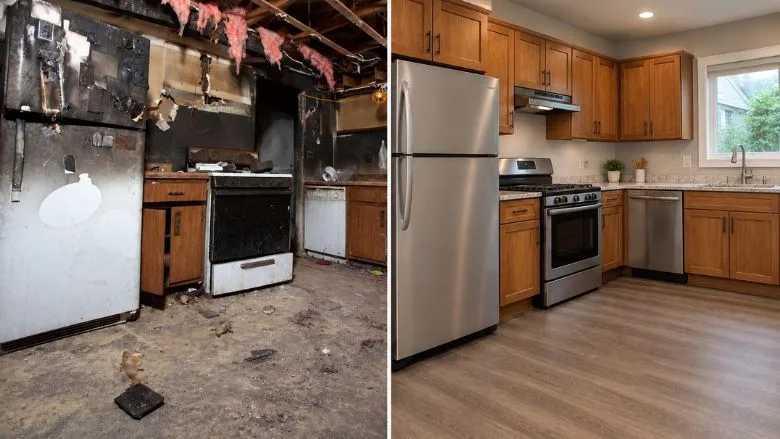
A few years ago, I was walking through a fire-damaged home with a homeowner after our team had completed the restoration. The walls had been cleaned, the ceilings looked great, the contents had been restored, and the smoke odor that greeted us during our initial inspection was gone.
From every outward appearance, it looked like another successful project.
Fire Month
Prepare before wildfires with specially-curated articles during the month of October. Learn more!
As we finished the walk-through, the homeowner stopped, looked around the room, and asked me a question I've never forgotten: "How do I know it's really clean?"
She wasn't asking whether the walls looked good or whether we had finished the job. She was asking something much deeper. She wanted to know if it was truly safe to move her family back into their home. That simple question changed the way I thought about restoration.
As an industry, we spend thousands of hours learning how to clean a fire loss. We invest in training, certifications, equipment, chemistry, and procedures designed to remove soot, smoke residue, and odor. Yet we spend far less time discussing how we determine that our restoration objectives have actually been achieved. Those are two very different conversations, and I believe that distinction represents one of the next great opportunities for our profession.
For decades, restoration has largely been measured by craftsmanship. We evaluate whether visible soot has been removed, whether smoke odors have been eliminated, whether damaged materials have been replaced, and whether the home looks better than it did when we arrived. Those are all important indicators of quality work, and they should continue to be. But are they the only indicators?
As our industry continues to evolve, homeowners, insurance carriers, adjusters, and restoration professionals are beginning to ask a larger question: Can we verify the restoration process - not simply the appearance of the result?
This isn't a criticism of our industry. In fact, I believe it's evidence of how far we've come. Restoration has never had better education, better equipment, or better-defined professional practices than it does today. Our understanding of drying science has advanced dramatically, our documentation continues to improve, and current industry standards and guidance provide a stronger framework for assessment, cleaning, documentation, and verification. Those standards are still evolving, as they should, but they give professionals a common foundation from which to make project-specific decisions.
The next evolution may not be about cleaning better. It may be about becoming better at demonstrating why we believe a property has been successfully restored.
Every Fire Tells a Different Story
One of the first lessons every restoration professional learns is that no two fires are alike. A kitchen fire involving cooking oils creates a completely different contamination profile than a garage fire involving gasoline, plastics, batteries, and household chemicals. A bedroom fire fueled by synthetic furniture and electronics differs significantly from a structure fire involving wood framing, insulation, carpeting, and modern composite building materials.
Looking for quick answers on restoration, remediation and cleaning topics?
Try Ask R&R, our new smart AI search tool.
Ask R&R →
What burns determines what remains. Depending on the fuel package, smoke residue may contain soot, char, ash, volatile organic compounds (VOCs), polycyclic aromatic hydrocarbons (PAHs), aldehydes, metals, and numerous other combustion byproducts. The composition changes based on what burned, how hot it burned, the available oxygen, ventilation conditions, and dozens of other variables.
That's why I believe the first question on every significant fire loss shouldn't be, "How are we going to clean this?" The better question is, "What exactly burned?" Understanding the source of contamination is where professional restoration begins. It influences how smoke migrated through the structure, which materials can be restored, which materials should be replaced, how the HVAC system should be evaluated, and ultimately how success should be measured.
Professional restoration has never been about applying the same process to every loss. It's about applying the right process to the loss.
Looking Clean Isn't Always the Same as Being Clean
Most of us have completed projects that looked outstanding: fresh paint, clean surfaces, no visible soot, and little or no noticeable smoke odor. From every visual perspective, the home appears restored. Yet appearance doesn't always tell the entire story.
Smoke has an incredible ability to travel through HVAC systems, attic spaces, wall cavities, plumbing penetrations, electrical chases, and other hidden pathways. Depending on the severity and nature of the fire, contamination may remain in locations that aren't visible during a final walk-through.
This isn't meant to suggest that every fire requires extensive environmental testing. Many residential losses can be properly evaluated through careful inspection, thorough cleaning, odor assessment, adherence to current industry standards and accepted professional practices, and complete documentation. However, there are situations where additional evaluation is appropriate. Large losses, unusual fuel packages, commercial properties, sensitive occupants, or disputed claims may justify a more comprehensive assessment.
The important point isn't whether testing is performed. The important point is that the evaluation matches the complexity of the loss.
A Better Question
Perhaps we've been asking the wrong question all along. Instead of asking, "Is the house clean?" maybe we should ask, "What evidence supports the conclusion that the restoration objectives have been achieved?"
That subtle shift changes the conversation entirely. It moves us away from opinions and toward documentation. It encourages us to establish restoration goals before work begins rather than after the project is complete. It challenges us to define success in measurable terms whenever practical. Most importantly, it gives homeowners and insurance professionals greater confidence that decisions were made using a thoughtful, professional process.
That's good restoration. It's also good business.
The Business Side of Science
One of the things I've learned while coaching restoration companies is that technical excellence and business excellence are inseparable. Companies often think of documentation, communication, and verification as operational responsibilities, but they're much more than that. They're trust builders.
Every time we clearly explain our process to a homeowner, we reduce anxiety. Every time we provide thorough documentation to an adjuster, we make claim decisions easier. Every time we communicate proactively, we strengthen relationships with referral partners. Every time we can confidently explain why we made a restoration decision, we reinforce our credibility.
Trust isn't built through advertising. Trust is built through professionalism. Ironically, one of the most powerful marketing strategies a restoration company can have isn't a bigger advertising budget. It's becoming known as the company that communicates clearly, documents thoroughly, follows current professional standards, and stands confidently behind its work.
Science isn't just good restoration. It's good marketing.
Confidence Is What We Really Restore
Most homeowners don't understand combustion chemistry, particle migration, or indoor environmental assessment. They shouldn't have to. They simply want confidence. They want confidence that someone knows what they're doing, that their questions are being answered honestly, and that decisions are being made based on professional judgment rather than guesswork.
When families invite us into their homes after a fire, they're placing an extraordinary amount of trust in us. They're not hiring us simply to remove soot from walls or eliminate smoke odors.
They're trusting us to help them put their lives back together. That responsibility deserves more than an opinion. It deserves a process.
Looking Ahead
I believe the restoration industry is entering an exciting period of continued professional growth. As current standards, technical guidance, and accepted practices evolve - and as our understanding of fire contamination continues to improve - we have an opportunity to raise the level of confidence we provide to homeowners, insurance carriers, adjusters, and one another.
Perhaps the next evolution of restoration isn't simply removing contamination. Perhaps it's becoming better at demonstrating that we've achieved clearly defined restoration objectives. That's a different conversation, and it's also a better one.
Cleaning is an activity. Clearance is a conclusion. Cleaning describes what we did. Clearance describes whether we accomplished what we set out to achieve. Those are not the same thing.
At the end of the day, homeowners won't remember every piece of equipment we used or every chemical we applied. They'll remember how confident they felt when we handed them the keys and told them their home was ready. That's what we're really restoring - not drywall, carpet, or contents, but confidence. And confidence may be the most valuable thing we leave behind.
The Builder's Blueprint™
Before your next fire loss, ask your leadership team these five questions:
- How do we determine the full extent of contamination before restoration begins?
- Have we clearly defined what success looks like for this project?
- Are our restoration objectives documented before work starts?
- How will we communicate those objectives to the homeowner and adjuster?
- If we had to explain and defend our restoration decisions a year from now, would our documentation support them?
The Builder's Quote™
“Professional restoration isn't defined by how clean a property looks. It's defined by how confidently you can explain, document, and stand behind the process that restored it.”
Looking for a reprint of this article?
From high-res PDFs to custom plaques, order your copy today!