New California Wildfire Smoke Laws: Is the Restoration Industry Ready?
California’s new wildfire smoke laws raise critical questions about testing, remediation, and restoration
For years, our industry has approached wildfire smoke damage with a focus on cleaning, odor removal, and visible residue. But as wildfires continue to impact the communities we serve, I think it's time we ask ourselves a bigger question.
Are we doing enough?
I've had countless conversations with restorers, industrial hygienists, firefighters, and other industry professionals about wildfire and wildland-urban interface (WUI) fires. And one thing continues to come up: We still have a lot of questions about how we assess, test, document, and restore properties.
- What constitutes contamination?
- Who determines whether a property is safe for occupancy?
- What does returning a home to pre-loss condition actually mean?
- Are we all working toward the same goal?
California is Starting a Conversation We can't Ignore
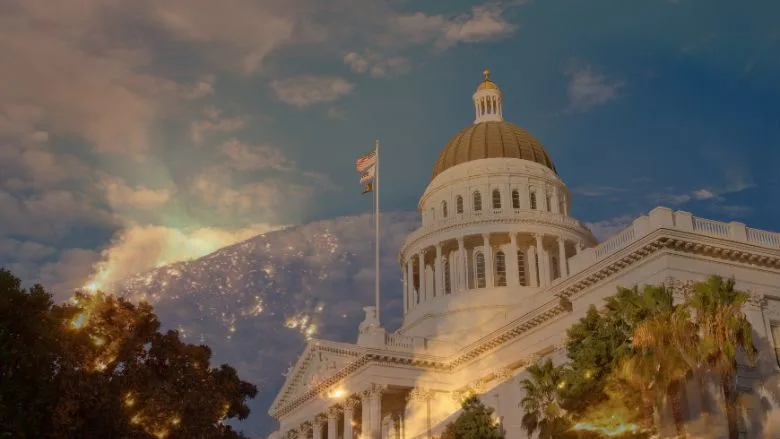
California recently enacted three pieces of legislation, AB 1795, the Smoke Damage Recovery Act, AB 1642, the Wildfire Environmental Safety and Testing Act, and SB 876, the Disaster Recovery Reform Act, that could change how our industry approaches wildfire smoke losses.
According to the California Department of Insurance, more than 13,000 of approximately 40,000 insurance claims filed after the January 2025 fires in the Los Angeles-area involved smoke damage to homes that never even burned.
Let’s think about that for a moment. Thousands of homes that never actually caught fire, but the property owners still faced smoke damage and questions about how to assess and restore their homes.
These three laws approach those challenges from different directions. Together, they begin addressing questions that our industry has wrestled with for years.
Looking for quick answers on restoration, remediation and cleaning topics?
Try Ask R&R, our new smart AI search tool.
Ask R&R →
Now, ask yourself this:
- What contamination exists?
- What does it take to properly address it?
- How do we verify the work?
- How does it impact the scope and insurance claim?
For restorers, these aren't small details. They can influence nearly every part of a wildfire restoration project.
Do I think California has all the answer? In short, no, I don't think California has all the answers, but I think it’s a start. Especially because wildfires are only increasing in frequency and severity. Many of the technical requirements are still in development. But I do think California is raising questions our industry needs to address. And we all know this isn't just a California issue.
We've watched wildfires and conflagrations impact communities across the country. The risks continue to evolve, and so do the challenges restorers face when they’re responding to fire losses.
Where Do We Go from Here?
Here's something I keep coming back to.
We talk a lot about documentation, following standards, building defensible scopes, and protecting our customers. But what happens when the industry doesn't have consistent guidance on how to assess certain types of contamination or determine when a property is ready for occupancy?
- How do we establish expectations when contractors, consultants, insurers, and property owners may approach the same loss differently?
- What happens when your scope identifies testing, cleaning procedures, or remediation measures necessary to meet state requirements, but the insurer's initial estimate doesn't include them?
- How do we move forward without creating more confusion for the very people we're trying to help?
I don't believe the answer is as simple as adding more regulation. We need practical guidance, sound science, education, and conversations that bring everyone involved in the recovery process to the table.
Because at the end of the day, we're not just talking about cleaning a home or supporting an insurance claim. We're talking about the people who need to return to their home. A home that is safe and healthy.
California's legislation may become a model for other states, and it may not. We don't know that for sure. What we do know is that the conversation around wildfire smoke contamination, testing, and restoration is changing, and it’s changing fast. I truly believe our industry needs to be part of shaping what comes next. So, I'll leave you with a few questions.
Are we treating wildfire smoke damage as a cleaning problem when we should be treating it as a contamination problem? Or should we recognize that successful restoration requires us to address both?
Looking for a reprint of this article?
From high-res PDFs to custom plaques, order your copy today!