Restoration logo
search
cart
facebook twitter linkedin youtube
  • Sign In
  • Join Today
  • Sign Out
  • My Account
Restoration logo
  • NEWS
  • PRODUCTS
    • New Products & Technologies
    • Submit Your Product
    • Interactive Product Spotlights
  • CATASTROPHE
    • Fire
    • Hurricane
  • TOPICS
    • Latinos in Restoration
    • Cleaning & Sanitation
    • Contamination
    • Contractor Safety
    • Contents
    • Fire & Smoke
    • Mold
    • Odor
    • Recon & Reno
    • Water
  • EDUCATION
    • Training & Education
    • Business Management
    • Insurance/Legal Matters
    • KnowHow
    • Podcasts
    • Webinars
    • Whitepapers
    • Industry Events
    • Sponsor Insights
    • Ask R&R AI
  • VIDEOS
    • Ask the Expert
    • Ask Annissa
    • Marketing Monday
    • Tech Tip Tuesday
  • BUYER'S GUIDE
  • THE EXPERIENCE
    • Convention & Trade Show
    • R&R Special Issue
  • ABOUT
    • Contact
    • Advertise
  • JOIN
ColumnsInsurance/Legal Matters in RestorationManaging Your Restoration BusinessGuest Columns

A Practical Guide to Remote Estimating for Restorers

Remote estimating can help restorers improve their accuracy, accelerate payments, and reduce cycle times.
By Chris Tilkov
Engineer Uses CMM Coordinate Measuring Machine in Factory
Credit: monkeybusinessimages / iStock / Getty Images Plus
November 19, 2026

Every company has the best estimator. I have heard it from contractors of every size, in every market I have worked in. And the belief is usually sincere. You spend the better part of your day writing estimates, so you assume you must be good at it.

The problem is that estimating stopped being a solo skill a long time ago. You are writing to a lot of different carrier standards, and trying to hold all of them in your head is a real challenge. Line items change. Protocols change. The volume moves in ways you cannot staff for.

Remote estimating is the industry's answer to that, and it has become standard practice for a lot of teams.


What Remote Estimating Actually Is

The idea is simple. Instead of your project manager going to the loss site, capturing the scope, and then sitting down to write the estimate themselves, they capture the documentation and send it out to be written by someone else.

That means:

→ You capture the scope on site, including 360° tours of the affected areas 

→ Use timeline captures to show conditions at the initial inspection, post demo, and with equipment installed 

→ Send the file to an estimating team 

Looking for quick answers on restoration, remediation and cleaning topics?
Try Ask R&R, our new smart AI search tool.
Ask R&R →

→ Review what comes back and submit it under your own letterhead

That last step matters more than people expect. A remote estimate is not a finished product that goes straight to the carrier. It comes back to you, you own it, and you review it before it goes anywhere. Anyone selling it differently is selling you something else.

The timeline piece is the part I see underused most often. On a water mitigation job, an initial capture, a post-demo capture, and an equipment-installed capture give an estimator a real sense of the whole job. Even in the absence of any written notes, you can still produce a solid estimate off of that.


What the Numbers Show

An analysis of over 100 files from 32 restoration locations looked at what changed when teams moved to a remote estimating workflow. The figures are worth reading regardless of which provider you use, because they show where the time actually goes into a claim.

Across those files:

→ Estimate upload time went from up to 28 days to under 3 days 

→ Cycle time went from 23 days to 8.5 days

→ Time to payment went from 30 or more days to under 9 days 

→ Estimate rejection rate came in under 15%

Estimates were returned within 24 to 48 hours of submission, and came back roughly 70 to 80% complete, with the contractor's own review closing the gap in about 10 to 15 minutes.

The scaling numbers were the ones that stood out to me. During one catastrophe event, a single customer created over 670 tours in one month while holding a steady turnaround.


Where Teams Get it Wrong

The most common mistake I see is not the decision to use remote estimating. It is the timing of when people learn how to use it.

Learning a new process during a catastrophe is a bad idea. If you are half onboarded, where one person in the company sort of knows how it works and three of your five project managers have never submitted a file, you will lose the advantage exactly when you need it.

Get every PM through a full cycle now. Have them capture a scope, submit it, work with the estimator on the questions that come back, and review the completed estimate. Do that during a normal week, when the time exists to work out the friction.

Because during a catastrophe, a project manager can see ten claims in a day. If you believe you will eventually catch up and sit in a chair and write all of those, while new claims are still coming in days later, that is not a realistic plan.


It Comes Down to Collaboration

Whether you build estimating capacity internally, use peer review inside your office, or send files out to a third party, the principle is the same. A second set of eyes on an estimate catches both the carrier protocol issues and the scope you missed.

The best estimators I know still work collaboratively with other good people to get their questions answered, and they are unafraid to use any tool available to them to write a better estimate. That has not changed. What has changed is how many of those tools are now available without hiring anyone.

KEYWORDS: insurance claims insurance estimating insurance restoration restoration business strategy restoration documentation

Share This Story

Looking for a reprint of this article?
From high-res PDFs to custom plaques, order your copy today!

Chris tilkov headshot

Chris Tilkov is a Director at DocuSketch and the President and Founder of AiME Estimate Review an InsurTech dedicated to simplifying estimating and quality assurance for the insurance restoration industry. With over 20 years’ experience from flood technician to nationally held positions, Chris works with companies to provide the training and education needed to produce fair and consistent estimates through collaborative technology. 

Recommended Content

JOIN TODAY
To unlock your recommendations.

Already have an account? Sign In

  • House fire before and after

    Cleaning Isn't Clearance: The Next Evolution in Fire Restoration

    Learn why fire restoration goes far beyond cleaning and...
    Odor Removal
    By: Kevin Coy
  • Women in Restoration Award Winner: Meredith Truitt

    Introducing R&R's 2026 Women in Restoration Award Winner, Meredith Truitt!

    Meet Meredith Truitt, R&R’s 2026 Women in Restoration...
    Restoration Training/Education
    By: Kayla McGowan
  • Digital view of the United States with a Hurricane and coding

    Is Your Restoration Technology Ready for the Upcoming Hurricane Season?

    Here’s how restoration contractors can prepare their...
    Preparing to Respond: Hurricanes
    By: Taylor Carmichael
You must login or register in order to post a comment.

Report Abusive Comment

Manage My Account
  • Join Restoration & Remediation
  • Manage My Preferences
  • Customer Service

More Videos

Sponsored Content

Sponsored Content is a special paid section where industry companies provide high quality, objective, non-commercial content around topics of interest to the Restoration & Remediation audience. All Sponsored Content is supplied by the advertising company and any opinions expressed in this article are those of the author and not necessarily reflect the views of Restoration & Remediation or its parent company, BNP Media. Interested in participating in our Sponsored Content section? Contact your local rep!

close
  • 5 Questions to Shape Your 2027 Plan
    Sponsored byVioland Management Associates

    Five Questions That Should Shape Every Restoration Company’s 2027 Plan

  • Violand business coaching
    Sponsored byVioland Management Associates

    The Conversation Most Owners Wait Too Long to Have

Popular Stories

Restoration contractor decontaminating a home

Wildfire Smoke Cleanup: When Professional Remediation is Needed, Part 5

Seamless collaboration, faster claims: Cotality Supplement™

Seamless collaboration, faster claims: Cotality Supplement™

Ask The Expert: The Hidden Costs of Workflow Fragmentation in Restoration

The Hidden Costs of Workflow Fragmentation in Restoration

Events

May 19, 2026

Hurricane Response: What’s Changed, Who’s at Risk, and How to Scale Without Breaking

On Demand Hurricane season isn’t what it used to be, and neither is disaster response. In this webinar, our panel will break down what’s changed for hurricane response, and how restorers can scale responsibly without sacrificing their safety, retention, or profitability.

December 10, 2026

Fire Damage Restoration: What We Know, What We Don’t, and What Comes Next

LIVE: December 10, 2026 at 2 PM EST This webinar brings together restoration, industrial hygienists, and safety experts for a practical discussion on what happens from the moment a property is assessed for fire damage through final clearance.

View All Submit An Event

Poll

Thanksgiving Staffing

How does your restoration company handle emergency calls over Thanksgiving?
View Results Poll Archive

Products

2026 National Renovation and Insurance Repair Estimator

2026 National Renovation and Insurance Repair Estimator

Current prices in dollars and cents and detailed descriptions for hard-to-find items needed on most insurance, repair, remodeling, and renovation jobs. All price items include labor, material, and equipment breakouts, plus special charts that tell you exactly how these costs are calculated. Includes many reinstall/salvage cost estimates, hundreds of sample product images and unique architectural items.ISBN 978-1-57218-405-3


See More Products

Submit Your New Product/Technology to R&R!

Would you like to promote a new restoration, remediation or cleaning product/technology with Restoration & Remediation? Fill out the question below to start your submission:

Related Articles

  • How to Assess and Respond to Frozen Pipes

    How to Assess and Respond to Frozen Pipes in a Home: A Step-by-Step Guide for Restorers

    See More
  • How to Dry a Home with Frozen Pipes

    How to Dry a Home Damaged by Frozen Pipes: A Step-by-Step Guide for Restorers

    See More
  • remote estimating

    The Rise of Remote Estimating

    See More

Related Products

See More Products
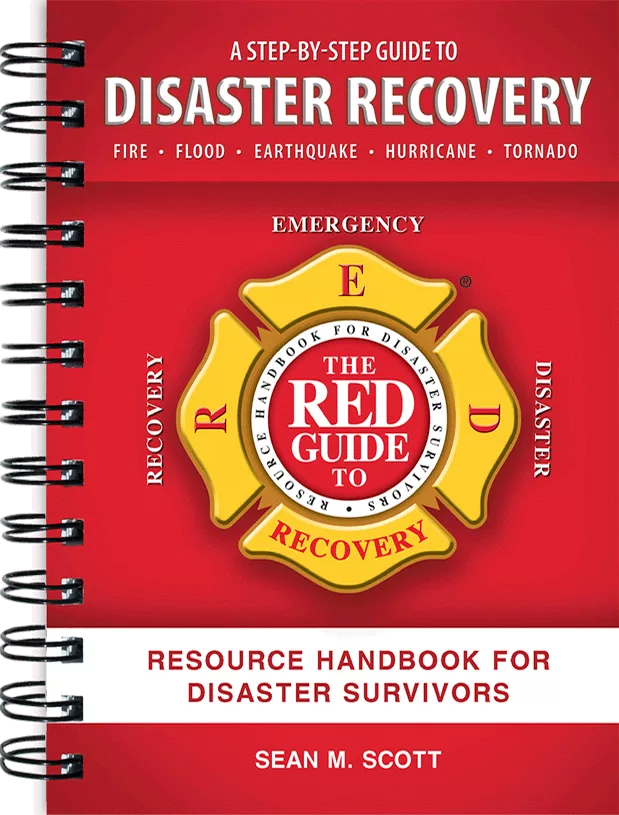
  • red-guide-national-815.png

    National Red Guide - A Step by Step Guide to Disaster Recovery

  • Water in Buildings: An Architect's Guide to Moisture and Mold

See More Products

Related Directories

  • LearnToRestore.com

    LearnToRestore.com is the leading IICRC-approved school with certification courses in water, fire, smoke, odor, contents processing, and more. Learn and earn your certification in person or online with our live-stream classes. Our expert-led training prepares you with essential skills to excel in the restoration industry! Learn water damage restoration in our IICRC-approved Flood House in Salt Lake City, Utah! Our nearly 2,000-square-foot Flood House gives you firsthand experience in all aspects of a water damage project.
×

Stay in the know on the latest restoration & cleaning industry trends.

Get tailored content delivered your way.

JOIN TODAY!
  • RESOURCES
    • Advertise
    • Contact Us
    • Directories
    • Store
    • Want More
    • Submit a Press Release
  • JOIN TODAY
    • Create Account
    • Newsletters
    • Customer Service
    • Manage Preferences
  • SERVICES
    • Reprints
    • Marketing Services
    • Market Research
    • List Rental
    • Survey/Respondent Access
  • STAY CONNECTED
    • LinkedIn
    • Facebook
    • Instagram
    • YouTube
    • X (Twitter)
  • PRIVACY
    • PRIVACY POLICY
    • TERMS & CONDITIONS
    • DO NOT SELL MY PERSONAL INFORMATION
    • PRIVACY REQUEST
    • ACCESSIBILITY

Copyright ©2026. All Rights Reserved BNP Media, Inc. and BNP Media II, LLC.

Design, CMS, Hosting & Web Development :: ePublishing