Wildfire Smoke Cleanup: When Professional Remediation is Needed, Part 5
How restorers should assess wildfire and WUI fire contamination and determine their response
Part 4 focused on homes that were damaged by lead-based paint. Houses that were constructed prior to 1978 may contain paint covering surfaces including floor and cabinet finishes that contain lead. Houses that were constructed before 1978 but have since been completely remodeled (taken down to studs), are not expected to contain lead dust. In addition, newer homes constructed after the lead-paint ban, they also would not be expected to contain lead in painted surfaces. The issue then becomes, where did the lead dust from a wildfire or a WUI Fire come from that damaged homes and businesses? The most likely source is the burning of shelters, out-buildings, fences, garages, decks, roofing materials, siding, electrical components, and batteries that contained lead. Therefore, during a wildfire or WUI Fire event, lead contamination entering homes may originate from combustion and thermal degradation of lead-containing paints, building materials, electronics, wiring, vehicles, household contents, infrastructure components, contaminated soil, and environmental dust. Fine particulate matter containing lead becomes aerosolized during fire activity, transported within smoke plumes, infiltrate structures through pressure-driven airflow and building leakage pathways, and subsequently deposit onto interior surfaces, contents, HVAC systems, and indoor environments.
Fire Month
Prepare before wildfires with specially-curated articles during the month of October. Learn more!
14.0 HEALTH HAZARDS ASSOCIATED WITH THE REMOVAL OF COMBUSTION BYPRODUCTS VS. HEAVY METALS AND SYNTHETIC FIRE RESIDUES
14.1 About Differences Associated with Health Hazards Affecting Cleanup Workers Exposed to Wildfire Contaminants vs. WUI Fire Contaminants:
Post-fire cleanup activities present materially different health hazards depending on whether the contamination originates primarily from vegetation-only wildfire smoke or from a WUI fire involving structures, vehicles, utilities, plastics, treated materials, electronics, and household contents.
This distinction is important for hazard assessment, worker protection, regulatory compliance, engineering controls, respiratory protection, decontamination procedures, and selection of appropriate PPE.
Vegetation-only wildfire residues are generally associated with biomass combustion byproducts, including ash, char, soot, carbon monoxide, fine particulate matter, volatile organic compounds, and irritant smoke residues. These materials may cause respiratory irritation, eye irritation, skin irritation, coughing, aggravation of asthma, and exposure to fine particulate matter during cleanup and disturbance activities.
In contrast, WUI fire residues may contain a more complex and hazardous mixture of contaminants because the fire consumes both vegetation and man-made materials. These residues may include heavy metals such as lead, arsenic, cadmium, chromium, nickel, copper, zinc, and mercury, as well as synthetic combustion byproducts from plastics, electronics, wiring, insulation, paints, coatings, treated wood, vehicles, batteries, and household contents.
The presence of heavy metals and synthetic combustion byproducts significantly expands the hazard profile beyond nuisance dust or irritant smoke. Heavy metals do not chemically degrade like many organic residues and may remain persistent in settled dust, insulation, HVAC systems, porous contents, and surface residues until physically removed. During cleanup, demolition, HEPA vacuuming, handling of contents, insulation removal, or disturbance of contaminated materials, these particles may become resuspended and create inhalation, ingestion, dermal contact, and cross-contamination exposure pathways.
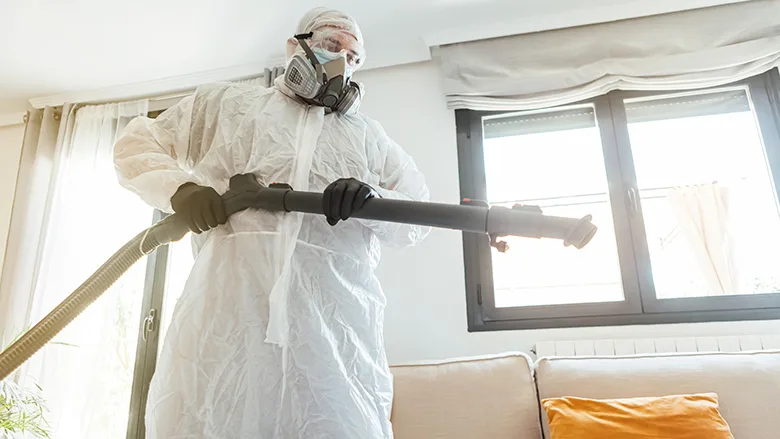
Recognizing the presence of a WUI fire vs. wildfire, in a WUI fire the cleanup activities require a higher level of worker protection than ordinary smoke or ash cleaning. Appropriate engineering controls may include site-specific hazard assessment, respiratory protection, disposable protective clothing, gloves, eye protection, HEPA-filtered equipment, containment, negative pressure controls, decontamination procedures, hygiene facilities, waste handling protocols, and post-cleaning verification.
Looking for quick answers on restoration, remediation and cleaning topics?
Try Ask R&R, our new smart AI search tool.
Ask R&R →
14.2 Scientific Basis and Regulatory Requirements:
Wildfire smoke derived from vegetation combustion fires is primarily composed of fine particulate matter (PM2.5), CO, NOx, VOCs, and PAHs. These contaminants are well established to produce respiratory and cardiovascular effects, primarily through inhalation exposure[1].
In contrast, WUI fire smoke contains a more complex mixture of contaminants due to the combustion of buildings, vehicles, and household contents. USEPA identifies that these emissions include elevated concentrations of toxic metals such as lead, copper, and zinc, along with hazardous air pollutants and synthetic organic compounds[2].
Peer-reviewed research confirms that WUI fire emissions exhibit increased toxicity and broader health risks compared to vegetation-only wildfire smoke due to mixed fuel sources and combustion of anthropogenic materials[3].
California regulatory agencies recognize these contaminants as hazardous when present at levels posing a risk to human health. Cal/OSHA requires employers to evaluate and control employee exposure to airborne contaminants, toxic dusts, and hazardous substances[4]. Cal/EPA and CDPH further recognize exposure pathways associated with contaminated dust, including inhalation, ingestion, and dermal contact, particularly for heavy metals such as lead, which has no safe exposure threshold.
14.3 Comparative Hazard Profile During Removal Activities:[5]
- Wildfire (Vegetation-Only) Residues:
- Primary Contaminants:
- Carbonaceous soot and ash, PM2.5, VOCs, irritant gases, and PAHs
- Primary Exposure Pathway:
- Inhalation (dominant pathway)
- Secondary Pathways:
- Limited dermal contact and incidental ingestion
- Health Effects:
- Respiratory irritation and reduced lung function
- Cardiovascular stress
- Eye and mucous membrane irritation
- Long-term carcinogenic risk associated with PAHs
- Industrial Hygiene Characterization:
- Primarily an airborne particulate and gas exposure scenario
- Typically transient, with reduced persistence after ventilation and cleaning
- Primary Contaminants:
- WUI Fire Residues (Structural and Synthetic Combustion)
- Primary Contaminants:
- Heavy metals (lead, arsenic, cadmium, chromium)
- PAHs and semi-volatile organic compounds (SVOCs)
- Halogenated compounds (including dioxins and furans)
- VOCs and synthetic combustion byproducts (e.g., benzene, styrene, formaldehyde)
- Inorganic particulates (silica, ash) and building debris (including potential asbestos)
- Exposure Pathways:
- Inhalation of airborne particulates and vapors
- Dermal absorption from contact with contaminated surfaces
- Ingestion via hand-to-mouth transfer of settled dust
- Health Effects:
- Neurotoxicity (e.g., lead exposure)
- Carcinogenicity (PAHs, benzene, dioxins, hexavalent chromium)
- Systemic toxicity (renal, hepatic, hematologic effects)
- Endocrine and developmental effects (particularly in children)
- Persistent exposure due to long-term contamination reservoirs
- Industrial Hygiene Characterization:
- Multi-pathway exposure scenario (inhalation + dermal + ingestion)
- Multi-phase contamination (particulate and vapor)
- Persistent contamination with potential for re-aerosolization and off-gassing
- Primary Contaminants:
Scientific studies demonstrate that heavy metals and synthetic combustion byproducts from WUI fires can persist on indoor surfaces and within settled dust for extended periods, creating ongoing exposure risks through resuspension and direct contact[6].
14.4 Exposure Pathway Distinctions:
The critical distinction between wildfire and WUI fire cleanup hazards is the complexity, persistence, and multiplicity of exposure pathways:
- Wildfire (vegetation-only):
- Predominantly an inhalation hazard associated with airborne particulate matter and gases
- Limited long-term surface contamination when compared to WUI events
- WUI Fire:
- Combined inhalation, dermal, and ingestion hazard
- Significant contribution from settled dust contamination
- Persistent exposure potential due to surface loading and material absorption
WUI fire residues introduce a “contact-based hazard environment,” where exposure continues beyond airborne conditions due to contamination of surfaces, contents, and building systems[7].
14.5 Application to Worker Protection and Remediation:
Cleanup and remediation activities in WUI-impacted structures require enhanced protective measures beyond those used for vegetation-only wildfire residue removal, including:
- Comprehensive hazard assessment and exposure monitoring
- Use of appropriate PPE:
- Respiratory protection (e.g., NIOSH-approved respirators with particulate and/or vapor protection)
- Protective clothing (e.g., disposable coveralls)
- Gloves and eye protection
- Implementation of engineering controls:
- Containment and isolation of work areas
- Negative air pressure systems
- HEPA filtration for particulate control
- Consideration of vapor-phase filtration (e.g., activated carbon) air scrubbers
- Strict hygiene and decontamination protocols to prevent ingestion and cross-contamination
- Compliance with Cal/OSHA lead standards and Hazard Communication requirements
Worker exposure potential is significantly higher in WUI cleanup due to the presence of persistent contaminants that can be mobilized during cleaning activities (e.g., HEPA vacuuming, agitation, demolition).
14.6 Summary:
- Removal of combustion byproducts following vegetation-only wildfires primarily involves exposure to particulate matter, gases, and organic compounds associated with biomass combustion, presenting predominantly inhalation-based health risks.
- In contrast, removal of contaminants following WUI fires involves exposure to a more complex and hazardous mixture of substances, including heavy metals, VOCs, PAHs, SVOCs, and synthetic combustion byproducts.
- These contaminants introduce multiple exposure pathways, inhalation, dermal contact, and ingestion are associated with carcinogenic, neurotoxic, and systemic health effects.
- WUI fire residues are more persistent, more chemically complex, and more difficult to remediate, requiring expanded industrial hygiene controls, regulatory compliance measures, and verification protocols.
- Scientific evidence supports that WUI fire cleanup presents greater and more sustained health risks than vegetation-only wildfire cleanup due to contaminant composition, environmental persistence, and multi-pathway exposure potential[8].
Technical References:
[1] Liggett, A., et al. “Unmasking the Complicated Chemistry of Wildfire Smoke: How Far Have Scientists Come?” NOAA at Climate.Gov, 2025
[2] U.S. Environmental Protection Agency (EPA). “Wildland Fire Research: What’s in Smoke?” 2025
[3] Holder, A.L., et al. “Hazardous Air Pollution Emissions from Wildfires in the Wildland-Urban Interface” National Academy of Sciences (NAS), 2023
[4] Cal/OSHA CCRs Title 8 §§5141, 5194, and 1532.1
[5] U.S. EPA “Wildfire Smoke and Your Patients Health” An EPA Online Course (updated 2025)
[6] Goftari, E., et al. “Post-Wildfire Indoor Pollution in WUI Areas Following the 2025 Los Angeles Fires” ACS Environmental Science & Technology, 2025
[7] Tang, W., et al. “Smoke from Wildland-Urban Interface Fires More Deadly than Remote Wildfires” Science Advances, 2025
[8] Averett, N. “After the Smoke Clears: Wildland-Urban Interface Fires and Residues in Nearby Homes” Journal of Environmental Health Perspectives, 2024
15.0 ACCEPTED HOMEOWNER PRACTICES FOR REMOVING WILDFIRE COMBUSTION BYPRODUCTS AND THE LIMITATIONS FOR REMOVING HEAVY METALS FROM BUILDINGS AND CONTENTS
15.1 About Accepted Homeowner Cleaning Practices:
Homeowner cleanup practices following a wildfire are recognized by public health agencies as appropriate for light to moderate combustion byproduct removal, such as char, soot, ash, vegetation, and smoke odor. Public health officials, EPA, CDC, and American Red Cross (ARC) for example, recommend that homeowners should wear appropriate protective clothing such as work boots, long pants and shirt, coveralls, work gloves or rubber gloves, eye protection, and a respirator (e.g., N95). Guidelines also recommend the replacement of HVAC filters and creating a DYI air cleaner[1]. Guidelines discourage the use of leaf blowers, household vacuums, and brooming. Rather, they prefer homeowners to use HEPA vacuums, damp wiping, and wet cleaning methods[1][2][3][4][5]. However, these practices have significant limitations when applied to WUI fire contamination, particularly where heavy metals and complex combustion byproducts are present.
- This distinction is critical for determining whether cleaning is sufficient or whether professional remediation or disposal is required to prevent ongoing exposure. From an industrial hygiene perspective, misapplication of homeowner-level cleaning in WUI-impacted environments may result in redistribution of contaminants, increased exposure, and incomplete hazard control.
15.2 Scientific Basis and Regulatory Requirements:
Federal, state, and local agencies, including the USEPA, CDC, and ARC, provide guidance for homeowners returning to fire-impacted residences.
- These guidelines focus on reducing exposure to wildfire smoke residues, which primarily consist of soot, ash, and odor-causing organic compounds[2].
- Public health guidance from local and state entities supports limited homeowner cleaning under conditions of light contamination, emphasizing methods that reduce re-aerosolization of particles and minimize exposure risk[3].
- Scientific research supports that wildfire smoke residues can be partially removed using conventional cleaning methods; however, effectiveness is limited when contaminants penetrate porous materials or when complex chemical mixtures are present, as is typical in WUI fire environments[4].
- Importantly, regulatory frameworks addressing hazardous substances (e.g., lead, arsenic, cadmium) impose stricter requirements for assessment, control, and worker protection, reinforcing that such conditions exceed the scope of routine homeowner cleaning.
15.3 Accepted Homeowner Cleaning Practices (Light to Moderate Smoke, Soot and Ash):
When contamination is limited to light surface deposition and does not involve hazardous debris or toxic residues, accepted practices include:
- Wipe hard, non-porous surfaces using mild detergent and water
- Launder clothing and textiles using standard washing methods, including repeated cycles as necessary
- Follow manufacturer cleaning instructions for contents and appliances
- Use damp cleaning methods (cloths, mops, sponges) to prevent re-aerosolization of fine particles
- Utilize HEPA-filtered vacuums to remove fine particulates from surfaces and floors
- Avoid dry sweeping, compressed air, or aggressive brushing during initial cleaning
- Apply basic odor reduction methods (e.g., ventilation, adsorption using baking soda or similar materials)
These practices are intended to reduce visible soot, ash, and odor-causing compounds and are consistent with public health advisories for wildfire recovery[1][2][3][4][5][6][7][8].
15.4 Limitations of Homeowner Cleaning Practices:
Scientific and regulatory guidance identify limitations associated with homeowner-level cleaning:
- Smoke particles and combustion residues can penetrate porous materials such as fabrics, upholstery, carpets, and draperies
- Contaminants may persist even after repeated cleaning cycles due to adsorption and material absorption
- Odors may remain unless appropriate deodorization or source removal is performed
- Repeated laundering or cleaning may reduce contaminant levels but does not ensure complete removal
- Improper cleaning methods (e.g., dry sweeping, non-HEPA vacuuming) may redistribute contaminants or drive particles deeper into materials
- HVAC systems and concealed spaces may remain contaminated and continue to redistribute particles
Public health advisories indicate that professional or commercial cleaning may be required when contamination persists, particularly for carpets, upholstery, and clothing[3][8]. Federal guidance further notes that soot and ash can permanently damage porous materials, making complete removal difficult or infeasible in certain conditions[8].
15.5 Heavy Metals and Toxic Contaminants are Absence in Homeowner Cleaning Standards:
- While guidance exists for reducing lead dust in residential environments (primarily in pre-1978 housing contexts), there are no recognized federal or state standards establishing homeowner-level methods for safely and effectively removing complex mixtures of heavy metals (e.g., lead, arsenic, cadmium, chromium, mercury) from contents contaminated by WUI fire events.
- Heavy metal contamination introduces additional complexity due to:
- Strong adhesion of particles to surfaces and fibers
- Association with fine particulate matter (PM10, PM2.5, and smaller), facilitating deep penetration into materials
- Potential for re-aerosolization during handling or cleaning
- CDPH and Cal/EPA recognize inhalation, ingestion, and dermal contact as primary exposure pathways for heavy metals in settled dust, requiring controlled remediation approaches when hazards are present.
- Occupational standards enforced by the Cal/OSHA under CCR Title 8 §1532.1 require exposure assessment and protective measures when lead-containing dust may be disturbed, demonstrating that such contamination exceeds the scope of homeowner cleaning practices.
- Scientific literature confirms that heavy metals and persistent organic compounds associated with WUI fires can bind to and penetrate materials, creating long-term contamination reservoirs that are not reliably addressed through conventional cleaning methods[4].
- Heavy metal contamination introduces additional complexity due to:
15.6 Application to Contents (Hard Goods vs. Soft Goods):
-
Hard, non-porous contents (e.g., glass, metal, sealed plastics):
- May be partially cleaned using detergent-based methods when smoke, soot, and ash contamination is light and non-hazardous
- Surface cleaning may reduce visible residues but does not confirm removal of microscopic contaminants
-
Semi-porous contents (e.g., engineered wood, laminates, coated fabrics, composites):
- Allows partial absorption of contaminants
- Cleaning effectiveness is limited; residues may remain below the surface
-
Soft goods (clothing, upholstery, rugs, draperies, mattresses):
- They are highly susceptible to contaminant penetration and retention
- Repeated laundering or cleaning may reduce contaminant levels, but recleaning does not ensure removal of heavy metals or SVOCs
- Can function as long-term contamination reservoirs
-
Heavily contaminated items (no matter if they are hard surface, semi-porous, or porous):
- They may require professional cleaning, specialized decontamination, or disposal
- Determination should be based on contamination level, material type, and potential exposure risk
- Damage can occur on finishes and in electronics
15.7 Summary:
- Homeowner practices for removing wildfire-generated combustion byproducts are limited to light, non-hazardous contamination and include basic cleaning methods such as detergent washing, HEPA vacuuming, and damp wiping to reduce soot and odors. These methods are supported by guidance from federal, state, and local agencies for wildfire recovery.
- These practices are not effective for removing embedded contaminants or toxic substances associated with WUI fires, particularly heavy metals and persistent organic compounds.
- There are no known scientifically validated or regulatory-recognized homeowner methods that have demonstrated complete removal of heavy metals, including lead, from fire-contaminated contents and building materials.
- WUI-related contamination involving heavy metals and complex combustion byproducts requires professional evaluation, and in many cases, controlled remediation or disposal to prevent ongoing exposure.
- Reliance on homeowner cleaning in these scenarios may result in incomplete contaminant removal, redistribution of hazardous substances, and continued risk to occupants.
Technical References:
[1] U.S. EPA “Wildfires and Indoor Air Quality (IAQ)” (updated 2026)
[2] U.S. EPA; Centers for Disease Control and Prevention (CDC); American Red Cross (ARC). “Wildfire Smoke Cleanup Guidance”
[3] Los Angeles County Environmental Health Division; Oregon Department of Environmental Quality “Fire Recovery and Cleanup Guidance,” 2025
[4] Destaillats, H., Chan, W. “Remediation of Indoor Environments Impacted by Wildfire Smoke,” Lawrence Berkeley National Laboratory, 2025
[5] Pasadena Office of the City Manager “Returning Home After a Fire: Advisory for Homes Impacted by Eaton Fire,” 2025
[6] U.S. EPA “Create a Clean Room to Protect Indoor Air Quality During a Wildfire” (updated 2025)
[7] U.S. EPA “Strategies to Reduce Exposures Indoors” (updated 2025)
[8] Federal Emergency Management Agency (FEMA) “Marshall Fire Mitigation Assessment Team: Homeowner’s Guide to Risk Reduction and Remediation of Residential Smoke Damage,” 2025
16.0 HOMEOWNER VS. PROFESSIONAL REMEDIATION PRACTICES FOR REMOVAL OF WUI FIRE SMOKE CONTAINING A MIXTURE OF SMOKE, HAZARDOUS, AND TOXIC SUBSTANCES
16.1 About WUI Fire Containing Toxic Smoke:
- EPA and the National Academy of Sciences mention that the composition of WUI fire smoke contains a mixture of vegetation, building construction materials, furnishings with synthetic chemical compositions including textiles, insulations, paints and coatings, premanufactured woods, added flame retardants, antimicrobial and halogenated finishes, wall coverings, and sealants. As materials heat and burn, they release carbon-based substances, such as char, soot, and ash, along with VOCs, SVOCs, PAHs, and chemicals including magnesium, aluminum, cadmium, chromium, copper, lead, and zinc.
- Following a WUI fire, the removal of combustion byproducts require a clear distinction between what a homeowner can do for themselves vs. the cleaning practices professional remediation companies can use.
- Depending on the type and degree of contamination, including the presence of toxic and hazardous substances, a risk management decision must be made to determine appropriate levels of hazard control, complying with regulatory agencies, and determining the effectiveness of contaminant removal.
- The complexity and toxicity of WUI-derived contaminants, including heavy metals, SVOCs, and synthetic combustion byproducts necessitate adherence to recognized standards of care and occupational safety requirements when contamination exceeds light, moderate, and non-hazardous conditions.
- From an industrial hygiene perspective, WUI remediation involves a multi-phase hazard environment (particulate and vapor), requiring integrated controls to address inhalation, dermal, and ingestion exposure pathways.
16.2 Scientific Basis and Regulatory Requirements:
- Federal and public health agencies recognize that wildfire smoke and ash infiltrate buildings through pressure-driven air movement, ventilation systems, and structural openings, resulting in degradation of indoor air quality and deposition of contaminants on interior surfaces. USEPA identifies that these contaminants include fine particulate matter and toxic substances requiring mitigation to reduce exposure risk[1].
- Public health guidance from local agencies allows limited homeowner cleaning only under conditions of light contamination without hazardous debris. However, guidance from FEMA and scientific literature establish that homeowner-level cleaning is insufficient for addressing embedded contaminants, fine particulates, and toxic substances typical of WUI fire residues[2][3].
- WUI fire contamination is characterized by the presence of heavy metals, VOCs, PAHs, SVOCs, and hazardous air pollutants resulting from combustion of structural and synthetic materials. Industry standards, including the Institute of Inspection Cleaning and Restoration Certification (IICRC) “S700 Standard for Professional Fire and Smoke Damage Restoration” (2025) established the accepted standard of care for professional remediation contractors[4]. These standards require comprehensive contamination assessment, controlled decontamination processes, engineering controls, and post-remediation verification (PRV).
- Regardless of contracting party (homeowner, insurer, or other), California regulatory requirements mandate worker protection. Cal/OSHA requires employers to conduct hazard assessments (e.g., Job Hazard Analysis), implement engineering and administrative controls, and provide appropriate personal protective equipment (PPE) when exposure to hazardous substances may occur[5].
16.3 Distinction Between Practice Levels:
-
Homeowner-Level Cleaning (Limited Low-Risk Conditions)
- Limited low risk conditions to a homeowner generally means, through smell and sight, there is a minimal presence of smoke odor and surface contamination. This is important to discuss because, in a self-cleaning situation the homeowner seldom has their house tested to identify toxic and hazardous substances produced by the WUI fire. Even in a light amount or level of contaminants, if the homeowner is not wearing appropriate PPE, they could be affecting their health.
- Cleaning by the homeowner is applicable where contamination is light, non-hazardous, and limited to visible soot and ash without toxic residues or debris. Typical homeowner cleaning practices include:
- Wiping hard surfaces using detergent and water
- Laundering clothing and fabrics
- HEPA vacuuming (when available)
- Improving ventilation and air filtration
- Removal of visible soot and ash deposits
- Limitations:
- Lack of hazard assessment and exposure controls
- Inadequate PPE, increasing exposure risks
- Using house vacuums, non-HEPA vacuums (e.g., shop vacs) that re-aerosolize particles
- Inability to address embedded contamination in porous and semi-porous materials
- Ineffectiveness for removal of fine particulates, heavy metals, and SVOCs
- No control of cross-contamination or secondary exposure pathways
- Professional Remediation Contractor Practices (Moderate to Heavy WUI Contamination)
- Required when contamination involves moderate to heavy smoke, soot, or any WUI-derived hazardous materials, including heavy metals and synthetic combustion byproducts.
- Scientific literature confirms, WUI residues contain complex mixtures of hazardous substances with increased toxicity and persistence as compared to vegetation-only fires [1][6][7][8][9][10].
16.4 Standard Professional Practices:
- Assessment and Documentation:
- Job Hazard Assessment / Job Hazard Analysis (JHA) and site-specific safety work plan
- Comprehensive photo and video documentation
- Use of advanced documentation tools (drones, 3D imaging, LiDAR) for structure and contamination mapping
- Detailed contamination assessment and scope of work development
- Environmental testing to determine presence, amount, and level of hazardous substances
- Engineering Controls and Jobsite Setup:
- Constructing containment zones or barriers to prevent cross-contamination
- Negative air pressure systems with HEPA filtration
- Use of air scrubbers with HEPA and activated carbon filtration
- Establish decontamination zones and hygiene facilities
-
Worker Protection:
- Respiratory protection appropriate for particulate and vapor hazards
- Protective clothing (e.g., disposable suits), gloves, and eye protection
- Compliance with hazard communication and lead standards
- First aid and emergency eyewash station
-
Contents Management and Triage (Requires Consulting with the Customer):
- Photo document the condition furniture, musical instruments, antiques, and contents are in before handling
- Inventory and classification of contents (restorable, non-restorable, total loss)
- Identify high-value and specialty items requiring specialized cleaning
- Separate porous and semi-porous materials that likely retain contaminants
- Stage a systematic contents handling, pre-clean and pack-out area
- Complete a limited pre-cleaning of contents before packing
- Pack-out restorable contents for off-site complete cleaning, deodorization, and storage
-
Material Removal (That Was Verified After Completing Inspection or Testing with the Customer):
- Remove and dispose contaminated materials (e.g., carpet, pad)
- Remove of attic and crawlspace insulation
- Remove and dispose HVAC ductwork
- Have a licensed HVAC engineer approve the removal of HVAC system
- Have a licensed electrician approve the removal of light fixtures
-
Exterior Contents Cleaning:
- Photograph the condition of contents before handling
- Group lawn furniture and other items together at an inspection and cleaning area
- Inspect for heat damage, color change, loss of finish, and burn marks
- Complete contents cleaning to remove smoke film and smoke odor
-
Exterior Structure Cleaning:
- Photograph or video the exterior landscape and building
- Do not touch propane tanks, batteries, and vehicles that experienced exposure to heat
- Inspect the exterior and when possible, the roof, for wildfire/WUI fire wind or heat damage
- Determine if the exterior of the structure requires cleaning
- When yes:
- Determine the type of cleaning, such as removing fallen branches and debris or cleaning the roof, gutters, decks, patios, windows, wood siding, stone, or stucco
- Should exterior cleaning be completed before interior cleaning
- Cleaning often requires working on ladders, scaffolding, and manlifts, requiring written safety procedures, safety equipment, and worker training.
- When using large amounts of water and detergents for cleaning, wastewater must not leave the property, where it could enter a storm drain, estuary, river, lake, or stream
-
Interior Cleaning:
- Photograph or preferably Create a 3D LiDAR tour of the interior, where ceilings, walls, offsets, doors, windows, casements, cabinets, and flooring measurements can be transferred into Sketch and Xactimate.
- Interior cleaning must be systematically staged where:
- The farthest room is cleaned first
- The room is HEPA vacuumed starting at a ceiling, walls, windows, doors, cabinets, fixtures, and then the hard floor surface
- The room is then detergent smoke washed, starting at lower walls and moving upwards, then the ceiling, cabinets, and flooring.
- Once surfaces are air dried, use a clean HEPA vacuum system and complete a second set of vacuuming.
-
Odor and Vapor-Phase Treatment:
- Odor and vapor-phase treatment refers to the use of reactive oxidizing technologies to reduce or neutralize airborne contaminants and odor-causing compounds following a building fire, wildfire, or WUI fire. While activated carbon filtration can be completed during the cleaning process, they are typically applied after particulate removal (e.g., HEPA vacuuming and surface cleaning), where they are intended to neutralize VOCs, SVOCs, and residual odors that remain sorbed to materials or are present in the air.
- Types of vapor-phase oxidizing equipment and chemistry include but are not limited to hydroxyl, ozone, and chlorine dioxide(CIO2). Applications or treatments require securing the space being treated, where there are no safety hazards, to the building, occupants, or workers, where the deodorization process is either overnight or up to 24-hours. Afterwards, purging the air with fresh air is recommended followed by closing the building, where after 8 hours or more, using the sense of smell or electronic equipment to detect the presence of lingering smoke odors.
-
Post-Cleaning and Deodorization Verification:
- Once the project is clean, it may be necessary to have an independent “post-remediation verification (PRV)” completed. This requires a visual inspection generally by an industrial hygienist, and when required, surface sampling for smoke-related combustion byproducts and heavy metals.
- Once the project is clean, air sampling for smoke VOCs and SVOCs cannot be quantified to any degree of accuracy. The cost to complete quantitative sampling and laboratory analysis is often cost-prohibitive.
- A baseline set of VOC and SVOC sampling should have been collected shortly after the fire, where that data can be compared to the PRV’s VOC and SVOC data.
16.5 Summary:
- WUI fire smoke contains a complex mixture of combustion byproducts generated from both vegetative fuels and structural materials, including soot, char, ash, VOCs, SVOCs, PAHs, heavy metals, asbestos fibers, and synthetic combustion residues. These contaminants infiltrate buildings through pressure-driven airflow, HVAC systems, and structural openings, where they deposit onto surfaces, contents, and porous materials.
- This article emphasizes the important distinction between limited homeowner cleaning and professional remediation contractor operations. Homeowner cleaning is generally limited to light contamination conditions involving minimal visible soot and odor, and typically includes detergent wiping, laundering, ventilation, and limited HEPA vacuuming. However, homeowner cleaning presents significant limitations, including lack of hazard assessment, inadequate PPE, inability to address embedded contamination, and increased potential for re-aerosolization and cross-contamination.
- Professional remediation is required when WUI contamination involves moderate to heavy smoke exposure or hazardous substances such as heavy metals and synthetic combustion byproducts. Professional remediation practices involve a structured, multi-phase process that includes contamination assessment, engineering controls, worker protection, contents triage, removal of contaminated materials, systematic cleaning, odor treatment, and post-remediation verification. The document notes that WUI contamination presents both particulate and vapor-phase hazards requiring integrated industrial hygiene controls to address inhalation, dermal, and ingestion exposure pathways.
- Professional remediation procedures include development of a JHA, contamination mapping, environmental testing, use of containment barriers, negative air pressure systems, HEPA filtration, decontamination zones, respiratory protection, protective clothing, and specialized cleaning procedures. Contents management includes documentation, classification of restorable versus non-restorable materials, pre-cleaning, pack-out operations, and specialized treatment for high-value contents such as antiques, artwork, musical instruments, and electronics.
- Interior cleaning is performed systematically using HEPA vacuuming followed by detergent smoke washing and secondary HEPA cleaning. Exterior cleaning may include removal of debris, roof and siding cleaning, and management of contaminated wastewater to prevent environmental release. Vapor-phase deodorization technologies, including hydroxyl, ozone, chlorine dioxide, and activated carbon filtration, may be used after particulate removal to reduce residual odors and VOCs.
- The document further explains that post-remediation verification (PRV) may require visual inspection and environmental sampling by an independent industrial hygienist to evaluate cleanliness and confirm reduction of smoke-related contaminants and heavy metals. It also notes that quantitative VOC and SVOC sampling following remediation is often difficult and cost-prohibitive without baseline data collected shortly after the fire event.
Technical References:
[1] U.S. Environmental Protection Agency (EPA) “Wildland Fire Research: What’s in Smoke?”
[2] Los Angeles County Department of Public Health “Fire Recovery for Residences and Businesses,” 2025
[3] Federal Emergency Management Agency (FEMA) “Marshall Fire Mitigation Assessment Team: Homeowner’s Guide to Risk Reduction and Remediation of Residential Smoke Damage,” 2025
[4] ANSI/IICRC S700 “Standard for Professional Fire and Smoke Damage Restoration”
[5] Cal/OSHA Title 8 §§5141, 5194, 1532.1
[6] National Academies of Sciences “The Chemistry of Fires at the Wildland-Urban Interface,” 2022
[7] Holder, A.L., et al. “Hazardous Air Pollution Emissions from Wildfires in the WUI,” 2023
[8] Tang, W., et al. “Emissions from Burned Structures in Wildfires,” Nature, 2025
[9] Goftari, E., et al. “Post-Wildfire Indoor Pollution in WUI Areas,” ACS EST, 2025
[10] UL Research Institutes. “WUI Fire Chemistry Research,” 2025
Looking for a reprint of this article?
From high-res PDFs to custom plaques, order your copy today!