Water-Damaged Buildings: How Humidity can Affect Dry Materials
Here’s why restorers must control moisture migration and humidity, and utilize drying chambers during structural drying
Need to Know
- Elevated humidity can spread moisture beyond the original water-damaged area, causing previously dry materials to absorb water vapor and potentially suffer secondary damages.
- Effective structural drying requires balancing evaporation with dehumidification. Restorers need to control the entire drying environment, including temperature, humidity and airflow, while monitoring both environmental conditions and material moisture levels.
- Proper containment can reduce secondary damage and improve monitoring and documentation by limiting moisture migration and creating a defined environment where drying progress can be measured.
Effects of Humidity
In a water-damaged building undergoing structural drying, moisture does not remain confined to materials that are directly in contact with liquid water. Water evaporates from wet carpet, drywall, wood framing, concrete, subflooring, insulation, contents, and other materials, increasing the amount of water vapor in the indoor air. When indoor humidity becomes elevated because of a water damage, uncontrolled moisture can migrate through the building and transfer into dry materials.
Transferring moisture into non-water damaged materials must be avoided because elevated humidity can create secondary damage in areas that are not part of the water loss. Hygroscopic and porous materials can sorb (absorb/adsorb) water vapor from humid air, where it increases the moisture content.
Depending on the material and environmental conditions, elevated moisture may contribute to dimensional changes, swelling, warping, deterioration of finishes, corrosion, loss of adhesion, staining, microbial growth, and other forms of damage.
Moisture transfer is influenced by several interacting mechanisms and environmental conditions, such as evaporation, vapor movement, sorption, condensation, capillary action, relative humidity, vapor pressure, material porosity, and differences in the material’s moisture concentration.
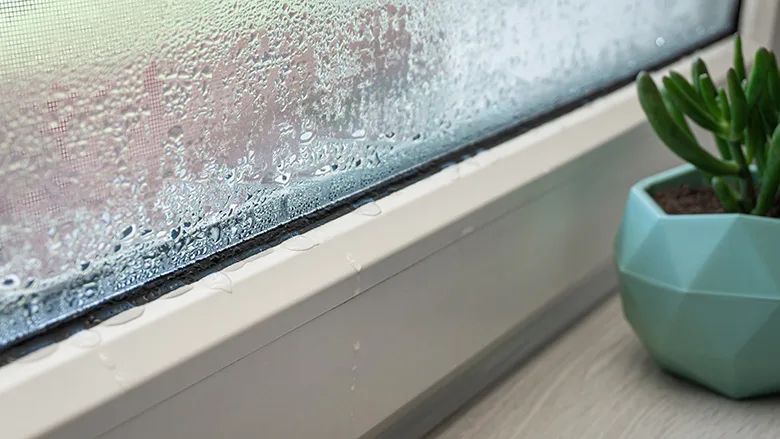
Temperature is also important, because temperature affects evaporation, and the amount of water as water vapor the air can hold before reaching saturation. When humid air contacts colder surfaces where the surface temperature reaches or falls below the dewpoint temperature, condensation occurs. Liquid water then forms on windows, HVAC surfaces, wall assemblies, metal components, and other cooler materials including on contents. In other words, condensation may create additional sources of wetting that are physically separated from where water intrusion is located.
Moisture Movement
Moisture generally moves toward equilibrium. When wet materials release water through evaporation, the surrounding air receives moisture as water vapor. As the vapor concentration and relative humidity increase, nearby dry or drier hygroscopic materials begin taking in moisture. Therefore, a material does not need to be touched by liquid water to become moisture-affected or moisture damaged.
Capillary action represents another form of moisture movement. Liquid water can move through small pores and interconnected spaces within materials such as concrete, masonry, gypsum products, wood, and other porous building materials. As a result, the visible boundary of water damage may not represent the full extent of moisture migration.
Looking for quick answers on restoration, remediation and cleaning topics?
Try Ask R&R, our new smart AI search tool.
Ask R&R →
Remediation Efforts
Promoting evaporation without providing sufficient dehumidification can create additional problems. Air movement and heat may accelerate the release of moisture from wet materials, but that water does not disappear as it enters the surrounding air as water vapor. Unless the moisture is removed from the drying environment, relative humidity and vapor pressure may increase and moisture may subsequently be transferred into previously dry materials.
Effective structural drying requires more than simply removing standing water or placing drying equipment next to visibly wet materials. The restorer must understand and control the entire drying process and the environment that is or can be affected. This includes identifying moisture reservoirs, promoting controlled evaporation from wet materials, removing water vapor from the air through dehumidification and ventilation when appropriate, maintaining suitable temperatures, providing adequate air movement, and monitoring both environmental conditions and material moisture content.
For this reason, successful structural and content drying requires a balance between evaporation and dehumidification. The objective is to move moisture from wet building materials into the air and then remove that moisture from the drying chamber before it can contribute to causing secondary damage.
In other words, understanding the mechanisms that cause moisture to become airborne is equally important as extracting the liquid water. This allows restoration professionals to evaluate not only where water initially traveled, but also where moisture may subsequently migrate towards during the drying process.
Constructing Containments (Drying Chambers)
Constructing containments or controlled drying systems are more commonly called a “drying chamber” that are constructed around one or more water-damaged areas. Properly engineered, the drying chamber can substantially improve the efficiency and control of structural drying process, rather than attempting to condition the air throughout an entire building. Drying chambers allow the restoration contractor to concentrate air movement, temperature control, and dehumidification within the affected area. When properly designed and monitored, the drying chamber provides several important advantages:
- Reduces the Volume of Air that Must Be Conditioned:
- A drying chamber reduces the cubic footage of the wet environment. Instead of attempting to dehumidify an entire house, commercial building, high-rise, or other occupied space, drying equipment can be concentrated around the water damaged area.
- By reducing the volume of air that is being conditioned, drying chambers improve drying efficiency, and they may reduce the amount of equipment and energy necessary to achieve drying goals.
- A drying chamber reduces the cubic footage of the wet environment. Instead of attempting to dehumidify an entire house, commercial building, high-rise, or other occupied space, drying equipment can be concentrated around the water damaged area.
- Improves Humidity Control:
- Wet building materials continuously release moisture into the air through evaporation. Drying chambers are designed to keep moisture within a defined environment where dehumidifiers can collect and remove excess moisture more efficiently.
- Without adequate environmental controls, moisture-laden air can migrate into unaffected adjoining rooms and previously dried areas.
- Wet building materials continuously release moisture into the air through evaporation. Drying chambers are designed to keep moisture within a defined environment where dehumidifiers can collect and remove excess moisture more efficiently.
- Protect Unaffected Building Materials and Contents:
- Elevated humidity can affect materials that did not have contact with water. Drywall, wood framing, cabinets, flooring, paper products, furnishings, and other hygroscopic materials can take up moisture from humid air.
- Properly constructed drying chambers can limit the movement of elevated humidity into unaffected portions of the building and reduce the potential for secondary damage.
- Elevated humidity can affect materials that did not have contact with water. Drywall, wood framing, cabinets, flooring, paper products, furnishings, and other hygroscopic materials can take up moisture from humid air.
- Creates a More Controlled Drying Chamber:
- Containments constructed as drying chambers allows the restoration contractor to establish and maintain environmental conditions that promote evaporation and dehumidification, such as air movers, dehumidifiers, and air scrubbers.
- This makes the water damaged area in a controlled drying chamber dry more efficiently rather than relying upon uncontrolled temperature and humidity conditions in the building.
- Containments constructed as drying chambers allows the restoration contractor to establish and maintain environmental conditions that promote evaporation and dehumidification, such as air movers, dehumidifiers, and air scrubbers.
- Improves Dehumidifier Efficiency:
- Dehumidifiers perform more effectively when they are treating a defined volume of moisture-laden air. If doors, windows, hallways, stairways, or other openings allow uncontrolled air exchange, the dehumidifier will continually process moisture entering from outside the intended drying area.
- Drying chambers help establish boundaries around the wet air mass being dehumidified.
- Dehumidifiers perform more effectively when they are treating a defined volume of moisture-laden air. If doors, windows, hallways, stairways, or other openings allow uncontrolled air exchange, the dehumidifier will continually process moisture entering from outside the intended drying area.
- Maintain Vapor Pressure Differentials:
- Structural drying depends on differences in vapor pressure between wet materials and the surrounding air. Maintaining relatively dry air around wet materials encourages moisture to leave wet or damp materials as moisture enters the air.
- A properly sized dehumidifier removes moisture from the air, helping the dehumidifier requires maintaining conditions favorable for continued evaporation.
- Structural drying depends on differences in vapor pressure between wet materials and the surrounding air. Maintaining relatively dry air around wet materials encourages moisture to leave wet or damp materials as moisture enters the air.
- Improves Air-Movement Control:
- Air movers can be positioned within the drying chamber to direct airflow across wet surfaces and into difficult drying locations. Properly positioned, they can reduce the amount of airflow to increase moisture evaporation in areas requiring dehumidification while at the same time redirecting air movers from moving humidified air into dry materials.
- Air movement can therefore be concentrated on materials and assemblies requiring specialized drying.
- Air movers can be positioned within the drying chamber to direct airflow across wet surfaces and into difficult drying locations. Properly positioned, they can reduce the amount of airflow to increase moisture evaporation in areas requiring dehumidification while at the same time redirecting air movers from moving humidified air into dry materials.
- Allows for More Effective Equipment Placement:
- The restoration contractor can calculate the approximate volume and characteristics of the drying chamber and select dehumidification, air movement, heat (if required), and other drying equipment accordingly.
- Equipment performance can then be evaluated against the actual wet environment along with monitoring wet materials.
- The restoration contractor can calculate the approximate volume and characteristics of the drying chamber and select dehumidification, air movement, heat (if required), and other drying equipment accordingly.
- Improvement of Temperature Controls:
- Temperature influences evaporation and relative humidity. A smaller contained drying environment can often be temperature conditioned more efficiently than attempting to dry a large open space. This is particularly important in a Class 4 drying situation, such as when materials contain deeply bound moisture.
- However, increasing the heat temperature of a material or air should only be used as part of a carefully constructed drying process. While increasing the temperature can accelerate evaporation, the resulting increase in temperature may damage materials. In addition, increasing temperature can increase the amount of water vapor, which may require modifying the dehumidification or ventilation system process.
- Temperature influences evaporation and relative humidity. A smaller contained drying environment can often be temperature conditioned more efficiently than attempting to dry a large open space. This is particularly important in a Class 4 drying situation, such as when materials contain deeply bound moisture.
- Controls Moisture Migration:
- Water vapor can move beyond the original boundaries of the liquid-water damage, where it can move from one room into another or creating conditions known as stack effect, where moisture transfers to upper floors or into an attic.
- Drying chambers help reduce uncontrolled movement of moisture-laden air into adjoining rooms, upper floors, closets, cabinets, and ventilation systems. This is particularly important when large quantities of water is evaporating from structural materials.
- Water vapor can move beyond the original boundaries of the liquid-water damage, where it can move from one room into another or creating conditions known as stack effect, where moisture transfers to upper floors or into an attic.
- Reduces Secondary Damage:
- When humidity remains elevated for extended periods, previously dry materials can gain moisture. This may contribute to swelling, warping, delamination, corrosion, deterioration of finishes, loss of adhesion, staining, and conditions favorable to microbial growth.
- Once recognized, rapid environmental controls or modifying existing controls are important components of reducing the potential of secondary damage.
- When humidity remains elevated for extended periods, previously dry materials can gain moisture. This may contribute to swelling, warping, delamination, corrosion, deterioration of finishes, loss of adhesion, staining, and conditions favorable to microbial growth.
- Simplifies Environmental Monitoring:
- A properly constructed drying chamber provides a more meaningful environment for monitoring temperature, relative humidity, dew point, humidity ratio or grains per pound (GPP), and other psychrometric conditions.
- Measurements can be collected inside and outside the drying chamber, where they are compared over time to evaluate drying performance and determine whether moisture-laden air is migrating beyond the intended drying zone.
- A properly constructed drying chamber provides a more meaningful environment for monitoring temperature, relative humidity, dew point, humidity ratio or grains per pound (GPP), and other psychrometric conditions.
- Improves Moisture Mapping and Drying Documentation:
- Containments as drying chambers establish a defined drying environment that can be documented throughout the project. Technicians can correlate environmental readings with moisture measurements from unaffected drywall, framing, flooring, concrete, cabinetry, and other materials.
- This provides better documentation of drying progress and helps determine when established drying goals are achieved.
- Containments as drying chambers establish a defined drying environment that can be documented throughout the project. Technicians can correlate environmental readings with moisture measurements from unaffected drywall, framing, flooring, concrete, cabinetry, and other materials.
- Isolate Occupants from Entering Drying Chambers:
- Where portions of the building remain occupied, drying chambers are expected to physically separate the active drying area from normal building use. They can also help prevent occupants from interfering with drying equipment, disconnecting air movers or dehumidifiers, becoming injured, or causing the drying chamber to fall or become disengaged.
- Drying chambers should not, however, be represented as providing microbial contaminant control unless they are specifically designed and function for that purpose, such as remaining under HEPA filtered negative air pressure.
- Where portions of the building remain occupied, drying chambers are expected to physically separate the active drying area from normal building use. They can also help prevent occupants from interfering with drying equipment, disconnecting air movers or dehumidifiers, becoming injured, or causing the drying chamber to fall or become disengaged.
Looking for a reprint of this article?
From high-res PDFs to custom plaques, order your copy today!