Wildfire Smoke Infiltration: How Standing Homes Become Contaminated, Part 3
How wind, embers, and pressure drive smoke into living spaces, attics, and wall cavities
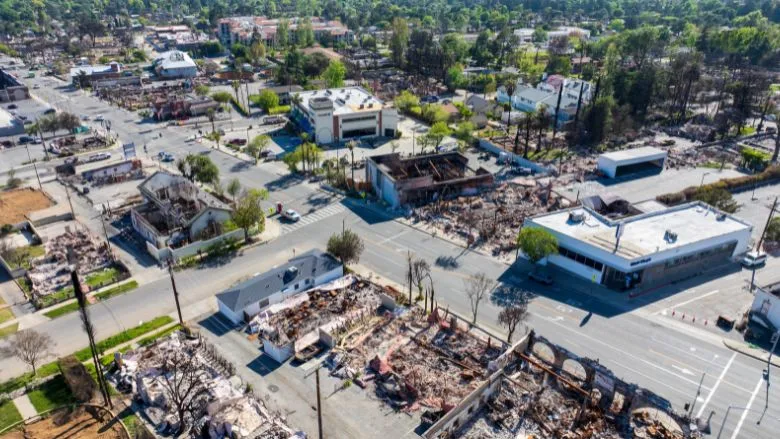
Part 2 focused on thermal pressures generated during fire, where they are a primary drivers of smoke movement and the transport of combustion byproducts toward downwind buildings. These pressures arise from intense heat release, which produces gas expansion, buoyancy-driven flow, and pressure differentials between the fire environment and surrounding areas. When materials burn, they generate extremely high temperatures that cause surrounding air and combustion gases to expand rapidly. This expansion creates localized high-pressure zones within the fire area. The resulting pressure gradient forces smoke and combustion byproducts outward from the fire source toward lower-pressure regions, including downwind environments. This is a fundamental driver of initial smoke movement and plume formation. Fire whirls, also referred to as fire vortices or pyrogenetic tornadoes, are extreme fire-induced atmospheric phenomena that can develop during high-intensity wildfire events, including those occurring in wildland-urban interface (WUI) environments. These phenomena are driven by intense heat release, strong buoyancy-induced convective updrafts, and localized wind shear generated by the fire environment. Understanding zones of a wildfire or WUI fire may be helpful in defining the type and level of destruction, damage, and contamination. Homes located inside the burn zone of a wildfire or WUI fire are subjected to the most severe fire exposure conditions, including direct flame contact, prolonged radiant heat, convective heating, and sustained combustion.
Fire Month
Prepare before wildfires with specially-curated articles during the month of October. Learn more!
8.0 HOMES IMMEDIATELY OUTSIDE THE BURN ZONE: IGNITION, DAMAGE, AND CONTYAMINATION
8.1 About Homes That Are Immediately Outside the Burn Zone:
Homes located immediately outside the wildfire or WUI fire burn perimeter are typically exposed to indirect fire effects rather than continuous flame impingement. The dominant exposure mechanisms in these areas include ember (firebrand) intrusion, intermittent radiant heat, and smoke infiltration[1].
Depending on wind patterns, exposure conditions result in damage patterns that are generally more variable and, in many cases, less severe than those observed within the burn zone[2].
Research from the USFS demonstrates that structure ignition outside the primary fire front is most commonly caused by firebrands entering vulnerable areas of a building, including vents, roofs, eaves, and accumulation zones of combustible debris[3]. Ember intrusion is widely recognized as the leading cause of structure ignition in WUI fires.
NIST and NFPA further confirm that wind-driven embers can travel significant distances ahead of the fire front and ignite structures through small openings or by igniting nearby combustible materials such as mulch, fencing, and vegetation[3][4][5].
Wind-driven embers (firebrands) ignition mechanisms are distinct from the sustained flame contact and high heat flux experienced within the burn zone. Additional research indicates that while homes outside the burn zone may ignite, the absence of prolonged radiant heat exposure and continuous combustion conditions reduces the likelihood of full structural involvement. As a result, damage outcomes are more dependent on localized conditions, including building design, maintenance, defensible space, and the presence of combustible materials adjacent to the structure[2][3][4][5].
Fire behavior studies also show that radiant heat exposure decreases significantly with distance from the fire front. This reduction in heat flux limits the ability of fire to sustain ignition once initial ember-caused ignition is controlled or extinguished. Consequently, structures outside the burn zone may experience partial damage rather than total loss, depending on suppression effectiveness and material vulnerability. Research on residential structure survivability supports these findings. Studies associated with Cornell University demonstrate that survivability is strongly influenced by exposure conditions, including fire intensity, duration, and proximity to continuous fuels. Homes located outside the burn perimeter are typically exposed to intermittent or indirect fire effects, which results in higher survival rates compared to structures within the burn zone[4][5][6].
Looking for quick answers on restoration, remediation and cleaning topics?
Try Ask R&R, our new smart AI search tool.
Ask R&R →
In addition to ignition risks, homes outside the burn zone are subject to contamination from smoke and combustion byproducts as a complex mixture containing PM2.5, VOCs, PAHs, and other hazardous substances[7]. These contaminants are transported by wind and can infiltrate buildings through ventilation systems, openings, and building envelope leakage pathways. In WUI fire environments, the combustion of structural and synthetic materials introduces additional contaminants, including heavy metals such as lead, copper, and zinc. California agencies including Cal/EPA and Cal/DPH recognize that homes outside the burn zone may still be impacted by hazardous smoke and ash deposition resulting from nearby structural fires[8].
8.2 Homes That Are Outside the Burn Zone Areas:
Homes immediately outside the burn zone are subject to ember (firebrand) intrusion through vents, roofs, and openings; ignition of adjacent combustible materials such as vegetation, debris, and fencing; intermittent radiant heat exposure; reduced duration of heat exposure compared to burn zone structures; variable fire damage depending on local conditions and suppression effectiveness; deposition of smoke and combustion byproducts on structures and contents; and potential infiltration of airborne contaminants into indoor environments. These mechanisms result in a different damage profile than that observed within the burn zone[1][2].
8.3 Summary:
- Homes located immediately outside the wildfire burn zone are primarily exposed to indirect fire effects, including ember intrusion, intermittent radiant heat, and smoke. Scientific research demonstrates that structure ignition in these areas is most commonly caused by firebrands entering vulnerable building components or igniting nearby combustible materials.
- The absence of sustained flame impingement and continuous high heat exposure generally results in more variable and often less severe damage outcomes compared to structures located within the burn zone. Studies on wildfire damage patterns indicate that structural survivability is strongly influenced by exposure conditions, including fire intensity, duration, and proximity to continuous fuels.
- In other words, homes surviving in the burn zone are more likely to experience prolonged exposure resulting in lower survivability rates, whereas homes outside the burn zone are typically exposed to intermittent or indirect conditions, resulting in higher survivability, but continue to face risk of ignition and contamination as long as the fire remains present.
Technical References:
[1] Mendocino County Fire Safe Council “Important Facts About How Homes Burn”
[2] U.S. Fire Administration “Protecting Structures From Wildfire Embers and Fire Exposures,” 2024
[3] Rogers, J. “Hard Facts About How Homes Burn,” United States Forest Service, 2014
[4] National Institute of Standards and Technology “WUI Firebrand and Structure Ignition Research”
[5] National Fire Protection Association “Structure Ignition and Wildfire Exposure Mechanisms”
[6] Kumar, M., et al. “Residential structure survivability to large wildfire,” Cornell University, 2025
[7] U.S. Environmental Protection Agency “Wildfire Smoke: A Complex Mixture”
[8] California Environmental Protection Agency; California Department of Public Health “Post-Fire Smoke and Contamination Guidance”
9.0 WILDFIRE/ WUI FIRE-GENERATED VORTICES AND WIND-DRIVEN SMOKE IMPINGEMENT INTO ATTICS AND WALL CAVITIES
9.1 About Wildfire/WUI fire Generated Vortexes and Wind:
WUI fire events are frequently accompanied by extreme and highly variable wind conditions, including fire-induced vortices (commonly referred to as fire whirls or wildfire-generated tornadic circulations).
These dynamic wind fields significantly increase pressure differentials across building envelopes, thereby intensifying the mechanisms responsible for smoke impingement and infiltration into structures.
Airflow into and through a building is governed by pressure differentials created by wind forces, thermal buoyancy (stack effect), and mechanical systems. Under wildfire conditions, elevated wind velocities and turbulent flow patterns substantially increase exterior pressure loads on structures, particularly at the windward façade, while simultaneously creating negative pressure zones on the leeward side. This pressure imbalance drives the forced movement of smoke-laden air into buildings through available leakage pathways.
When wind impinges on a structure, positive pressure is created on the windward side, forcing air inward through vents, soffits, attic openings, roof penetrations, wall assemblies, and other discontinuities in the building enclosure. Concurrently, negative pressure on the leeward side promotes exfiltration, establishing a pressure gradient that facilitates continuous airflow through the structure.
Pressure-driven airflow is a primary mechanism for transporting combustion byproducts, including PM2.5, soot, heavy metals, PAHs, VOCs, and SVOCs into interior and concealed building spaces[1][2].
9.2 Infiltration and Impingement Vortices and Wind-Driven Smoke Impingement into Attics and Wall Cavities:
Infiltration is defined within building science and fire protection engineering as the unintentional entry of outdoor air into a building through cracks, gaps, and openings in the building envelope, driven by wind pressures, buoyancy forces, and mechanical influences[2]. Leakage pathways include, but are not limited to, attic vents, soffit vents, ridge vents, exterior wall cavities (such as cracks, expansion control joints, and siding joints), windows, doors, decks, electrical and telephone penetrations, junction boxes, plumbing penetrations, and duct systems.
Under wind-driven wildfire conditions, these pathways serve as conduits for smoke intrusion into attics and concealed wall spaces. Guidance from federal and building science authorities, including the USEPA and U.S. Department of Energy (USDOE) confirms that wind acting on a structure creates measurable pressure differences across building surfaces, which directly drive airflow through openings in the building enclosure[3][4]. Increased wind velocity proportionally increases pressure loading, thereby increasing the volumetric flow rate of contaminated air entering the structure.
Thermal buoyancy further amplifies this process. During a wildfire, elevated temperatures generate buoyant forces that cause heated smoke to rise. This phenomenon, commonly referred to as the stack effect, results in upward air movement within buildings, drawing contaminated air into attic spaces and upper wall cavities. The stack effect also facilitates vertical redistribution of smoke through concealed pathways such as wall chases and interstitial spaces, as described in research associated with the NIST and ASHRAE[2][5].
Wind and buoyancy effects act concurrently and synergistically. Temperature differentials between interior and exterior environments create additional pressure gradients that interact with wind-induced pressures, increasing both the rate and extent of air movement through the building. The combined effect results in enhanced intrusion and redistribution of smoke contaminants throughout the structure, including areas not directly exposed to exterior openings.
Fire protection and building enclosure research further demonstrates that wind velocity plays a critical role in smoke transport and building infiltration. Increased wind speeds elevate surface pressures and turbulence, which in turn increase the penetration of smoke into building assemblies and interior environments[6]. In WUI fire scenarios, fire-induced vortices can create localized, rapidly fluctuating pressure fields that further exacerbate infiltration beyond typical wind-driven conditions.
9.3 Typical Pressure Ranges Relevant to Smoke Infiltration:
The National Institute of Standards and Technology explains that air movement through building envelopes occurs whenever pressure differences exist across cracks, joints, and penetrations, even at very low levels[7].
There is no single minimum wind pressure threshold required to move smoke into exterior wall cavities. Infiltration occurs whenever a pressure differential exists across the building envelope and leakage pathways are present. The Building Science Corporation (BSC) states that air flows from areas of higher pressure to lower pressure through any available openings in the building enclosure, and that very small pressure differences can move significant quantities of air if leakage pathways are present[1]. Typical pressure ranges associated with infiltration include[8][9][10] [11][12][13][14][15][16]:
- Low Pressure (Natural Conditions):
- 1 to 5 pascals (Pa) (1 Pa = 2.9 mph, where 5 Pa = 6.5 mph)
- Normal wind and thermal effects
- Normal background pressure differences from light wind and temperature gradients
- Sufficient to initiate air leakage through common building envelope discontinuities
- 1 to 5 pascals (Pa) (1 Pa = 2.9 mph, where 5 Pa = 6.5 mph)
- Moderate Pressure (Common Wind Conditions):
- 5 to 20 Pa (6.5 to 12/13 mph)
- Typical wind-driven pressures on building facades
- Capable of moving smoke through joints, gaps, and penetrations
- Stucco joints
- Sheathing gaps
- Wall penetrations
- 5 to 20 Pa (6.5 to 12/13 mph)
- Elevated Pressure (Strong Wind Events):
- 20 to 50 Pa (12/13 to 20 mph)
- Equivalent to moderate to strong wind conditions
- Increased volumetric airflow through building assemblies
- Documented as typical testing and real-world infiltration range
- 20 to 50 Pa (12/13 to 20 mph)
- Higher Pressure (Windstorm Events):
- 100 to 400 Pa (30 to 60 mph)
- Windward positive pressure and leeward negative pressure conditions
- Windward walls experience positive pressure
- Leeward walls experience negative pressure
- Significant pressure-driven airflow across the building envelope
- Pressure differences across the building envelope that drives infiltration
- Windward positive pressure and leeward negative pressure conditions
- 100 to 400 Pa (30 to 60 mph)
- Extreme Conditions (Windstorm/WUI Fire Context):
- 50 to 1,000+ Pa (40 to 100 mph)
- Influenced by high winds, fire plume dynamics, and thermal buoyancy
- Thermal buoyancy (hot gases)
- Fire plume pressure
- Capable of driving substantial smoke intrusion and internal redistribution
- Long duration exposure
- Influenced by high winds, fire plume dynamics, and thermal buoyancy
- 50 to 1,000+ Pa (40 to 100 mph)
9.4 Pressure -Driven Transport of WUI Combustion Byproducts into Living Spaces (Weeks and Months Post Fire):
Following a WUI fire, combustion byproducts do not remain static within exterior walls or building assemblies. Instead, they can continue to migrate into occupied spaces over time due to pressure-driven airflow, temperature gradients, humidity changes, and vapor pressure dynamics.
Airflow into a building is governed by pressure differences between the exterior, wall cavities, and interior living space. Even small pressure changes (as low as 1 to 5 Pa) can drive air and associated contaminants through drywall seams, electrical outlets, plumbing penetrations, baseboards, flooring gaps, and HVAC system leakage pathways.
Thermal gradients (stack effect), moisture cycling, and off-gassing processes further mobilize contaminants that have been deposited or absorbed within building materials. These processes contribute to the delayed release and redistribution of combustion byproducts into indoor environments long after the fire event has concluded.
9.5 Summary:
- Strong winds associated with WUI fires, including fire-induced vortices, create significant pressure differentials across building envelopes that drive smoke and combustion byproducts into structures through vents, cracks, and other leakage pathways.
- Positive pressure on windward surfaces forces contaminated air into attics and wall cavities, while negative pressure on leeward surfaces promotes airflow through the building. When combined with thermal buoyancy (stack effect), these forces result in intrusion and vertical redistribution of smoke within building assemblies.
- The magnitude of infiltration is directly related to wind velocity, pressure differentials, and the extent of leakage pathways within the building envelope.
- Scientific and engineering authorities, including the NIST and ASHRAE, confirm that pressure-driven airflow is a primary mechanism for transporting combustion byproducts into building assemblies and interior environments.
- Weeks to months after a WUI fire, pressure-driven airflow combined with temperature changes, humidity cycling, and vapor pressure dynamics continues to transport contaminants from wall cavities and insulation into living spaces. Even very small pressure differentials can sustain this process, resulting in persistent and dynamic indoor contamination conditions following fire events.
Technical References:
[1] Straube, J. “Air Flow Control in Buildings,” Building Science Corporation, 2007
[2] Klote, J., et al., “Smoke Control Engineering,” ASHRAE Handbook, 2012
[3] U.S. Environmental Protection Agency
[4] U.S. Department of Energy
[5] Klote, J., “Considerations of Stack Effect in Building Fires,” NIST
[6] Lstiburek, J. “Air Pressure and Building Envelopes,” Building Science Corporation, 1999
[7] National Institute of Standards and Technology (NISTRIR 7238) “Airflow and Contaminant Transport in Buildings”
[8] Straube, J. BSC-014 “Airflow Control in Buildings” Building Science Corporation, 2007
[9] NISTIR 7238 “Airflow and Contaminant Transport in Buildings”
[10] Air Infiltration and Ventilation Centre “Infiltration and Pressure Relationships”
[11] U.S. Department of Energy
[12] American Society of Heating, Refrigerating and Air-Conditioning Engineers
[13] U.S. Environmental Protection Agency
[14] McGuire, J. “Smoke Movement in Buildings,” National Research Council Canada
[15] Pacific Northwest National Laboratory “Fire-Driven Pressure and Smoke Transport”
[16] Yao, Y. “Effects of Ambient Pressure on Thermal-Driven Smoke Flow,” J. Tunneling and Underground Space Technology, 2023
10.0 INFILTRATION-DRIVEN FIRE CONDITIONS VS. PRESSURIZED FIRE CONDITIONS (Fire Dynamics and Building Airflow)
10.1 About Infiltration vs. Pressurized Fire Conditions:
Fire behavior within structures is fundamentally governed by airflow, pressure differentials, and oxygen availability. The distinction between infiltration-driven (ventilation-limited / air-driven) fire conditions and pressurized fire conditions is well established in fire dynamics, building science, and fire protection engineering literature, and is directly relevant to WUI fire exposure, smoke movement, and structural contamination pathways. An infiltration-driven fire condition occurs when outside air is introduced into a structure through leakage pathways in the building envelope.
In building science, infiltration is defined as the unintentional entry of outdoor air through cracks, gaps, and penetrations driven by wind pressures, thermal buoyancy (stack effect), and mechanical forces[1]. In a fire environment, this infiltrating air provides oxygen to the combustion process. Fire dynamics research, including work from the National Institute of Standards and Technology, demonstrates that many structure fires transition into ventilation-limited conditions, where the rate of combustion is controlled not by available fuel, but by the availability of oxygen[2]. Under these conditions, any additional airflow, whether from wind-driven pressure, structural openings, or envelope leakage, can significantly increase combustion intensity, heat release rate, and fire growth. This phenomenon is consistent with infiltration-driven fire behavior, where incoming air actively feeds and accelerates combustion[2][3]. Wind effects are particularly significant in this context. Wind-induced pressure differentials across a structure can force air into the building through vents, soffits, and cracks, increasing oxygen supply to the fire compartment.
This aligns with established fire behavior principles that identify airflow as a controlling variable in ventilation-limited fires[3]. In contrast, a pressurized fire condition exists when heat and combustion gases accumulate within a compartment, resulting in elevated internal pressure relative to adjacent spaces or the exterior environment. This condition is commonly observed in enclosed or poorly ventilated fire compartments. As temperature increases, thermal expansion of gases leads to pressure buildup, causing smoke and hot gases to be expelled through available openings such as doors, windows, and structural breaches[4].
Fire dynamics literature describes this condition as part of a bidirectional flow regime, where hot gases exit at higher elevations while cooler air is simultaneously drawn inward at lower elevations due to pressure differentials[4][5]. Field indicators of pressurized conditions include turbulent, forceful smoke emission from openings and pulsing smoke behavior, reflecting internal pressure fluctuations and restricted ventilation.
10.2 Fire Conditions vs. Pressurized Fire Conditions:
The interaction between infiltration-driven and pressurized conditions is critical in understanding fire progression and associated hazards. When a pressurized, oxygen-depleted compartment (ventilation-limited fire) receives a sudden influx of air, rapid combustion events can occur. One such event is a backdraft, defined as the explosive ignition of accumulated unburned pyrolysis gases when oxygen is rapidly introduced into a confined, oxygen-deficient environment, as documented in training and fire dynamics research by organizations such as the San Diego Fire-Rescue Department and supported by fire behavior literature[5].
From a fire dynamics perspective, structure fires often transition between fuel-controlled and ventilation-controlled regimes. In ventilation-limited (infiltration-driven) conditions, airflow governs combustion. In pressurized compartments, heat accumulation and gas expansion dominate until ventilation conditions change. The introduction of additional air can rapidly shift the fire from a smoldering or under-ventilated state to a high-intensity flaming condition[2][5].
From a regulatory and worker occupational safety standpoint, these fire dynamics are directly relevant to hazard recognition and worker protection. Guidance from the California Department of Public Health and California Environmental Protection Agency recognizes that wildfire smoke and post-fire environments contain complex mixtures of toxic combustion byproducts, reinforcing the need to understand airflow-driven contamination pathways and fire behavior when assessing structures.
10.3 Summary:
- An infiltration-driven fire condition occurs when external air enters a structure through leakage pathways due to pressure differentials, supplying oxygen that can intensify combustion and accelerate fire growth, particularly under ventilation-limited conditions.
- A pressurized fire condition exists when heat and combustion gases accumulate within a compartment, creating elevated internal pressure that forces smoke and gases outward through openings while drawing air inward at other points.
- The interaction between these conditions is governed by fire dynamics principles. Sudden introduction of oxygen into a pressurized, ventilation-limited compartment can result in rapid fire intensification, including backdraft or explosive fire growth. These mechanisms are critical to understanding fire progression, smoke intrusion, and contamination of building assemblies during WUI fire events.
Technical References:
[1] Straube, J. “Air Flow Control in Buildings,” Building Science Corporation, 2007
[2] National Institute of Standards and Technology “Fire Dynamics and Ventilation Effects in Structures”
[3] Bolton, I. “Understanding Fire Behavior” Firefighting Publications, 2014
[4] Pennsylvania State Fire Academy “Fire Dynamics Training Materials (Compartment Fire Behavior)”
[5] San Diego Fire-Rescue Department “Ventilation-Limited Fire Behavior Drill Manual”
Looking for a reprint of this article?
From high-res PDFs to custom plaques, order your copy today!