After the Eaton Fire: Evidence-Based Priorities for Post-Wildfire Assessment and Restoration
Abstract
The January 2025 Eaton Fire in Altadena, California, was one of a series of Southern California wildfires that destroyed numerous structures and heavily smoke-impacted many more that never burned. Current wildfire restoration guidance supports a restoration-first approach for homes that remain structurally intact, with cleaning, repair, demolition, and verification decisions driven by the nature and extent of impact rather than by any blanket assumption that smoke-impacted homes are unrestorable. ANSI/IICRC S700: Standard for Professional Fire and Smoke Damage Restoration and the IICRC/RIA/CIRI Technical Guide for Wildfire Restoration provide a practical framework for risk-tiered assessment and restoration after wildland-urban interface (WUI) fire events. This article translates peer-reviewed science from recent WUI fires, including the Marshall Fire in Colorado, into practical priorities for restoration contractors working after the Eaton Fire and similar events. Topics include risk framing, microscopic residues, attic insulation, HVAC and duct cleaning, situations that may justify additional hazard evaluation, contents strategies, porous versus non-porous decision-making, and a defensible sequence of work that supports safe re-occupancy, regulatory compliance, and alignment with ANSI/IICRC S700.
1. Applying Current Wildfire Restoration Guidance After the Eaton Fire
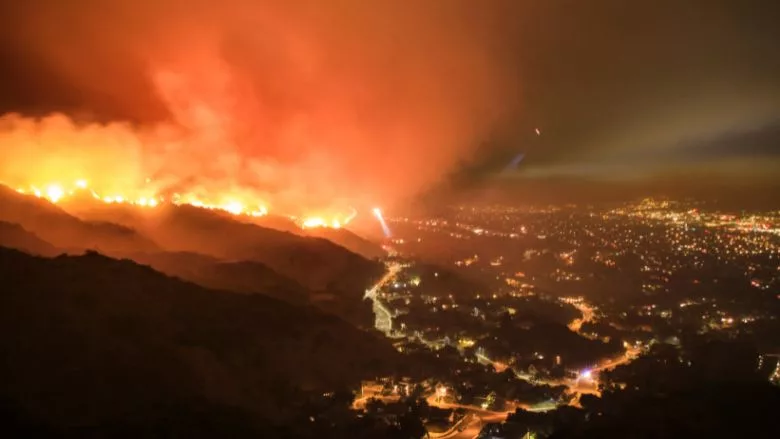
The Eaton Fire burned through foothill communities, destroying numerous structures and leaving many more standing but heavily smoke-impacted. For contractors, the key lesson is that surviving homes should not be treated as generic deodorization projects, but neither should they be presumed to be categorically unrestorable. Consistent with current industry guidance, post-wildfire work should begin with a restoration-first mindset and then be scaled according to impact zone, infiltration pathways, building conditions, occupant vulnerabilities, and whether assessment findings justify enhanced controls, targeted sampling, or selective removal of difficult-to-restore materials.
This article does not argue that all smoke-impacted homes are unrestorable, nor that all wildfire residues create the same level of risk. Rather, it supports a tiered restoration approach grounded in current industry guidance and identifies the narrower circumstances in which enhanced assessment, selective removal, targeted sampling, or added regulatory controls may be justified.
A useful starting point is the zone-based model presented in the IICRC/RIA/CIRI Technical Guide for Wildfire Restoration. In the burn zone, restoration may involve cleaning, demolition, repair, odor management, or replacement of building components and contents, depending on direct thermal damage and combustion impact. In the near-field, restoration generally centers on systematic survey, source control, and surface cleaning of impacted walls, ceilings, flooring, contents, attic surfaces, and mechanical systems if they are affected. In the far-field, restoration commonly focuses on surface cleaning of impacted flooring, contents, and other surfaces, with additional testing reserved for limited cases where inspection findings justify it (Cleaning Industry Research Institute [CIRI], Institute of Inspection, Cleaning and Restoration Certification [IICRC], & Restoration Industry Association [RIA], 2025).
Real-time monitoring in Los Angeles during the January 2025 fires documented an approximately 110-fold spike in PM2.5-bound lead at one urban site, with elevated levels persisting for several days before returning toward baseline (Baliaka et al., 2025). These findings are consistent with broader WUI fire research showing that combustion of homes, vehicles, and infrastructure can produce complex mixtures of metals and organic pollutants in air and deposited particulate (Jech et al., 2024; Kieta et al., 2023). That does not mean every structure requires the same level of intervention. It does mean that restorers should recognize when a project may involve more than ordinary cosmetic soot cleanup.
Lead is the clearest example of where wildfire restoration may intersect with established regulatory thresholds. EPA's 2024 final rule on hazard standards and clearance levels for lead in paint, dust, and soil under TSCA sections 402 and 403 lowers the threshold at which lead in dust becomes a regulated concern in target housing and child-occupied facilities under the lead-based paint program (U.S. Environmental Protection Agency [EPA], 2024). In those occupancies, wildfire-derived dust can become a regulatory as well as a restoration issue.
At the same time, restorers should not rely on building age alone when evaluating jobsite hazards. OSHA's Lead in Construction standard applies to construction work where an employee may be occupationally exposed to lead, including demolition, renovation, repair, and lead contamination or emergency cleanup, regardless of whether the property was built before or after 1978 (Occupational Safety and Health Administration [OSHA], n.d.-a). Likewise, many jurisdictions and project specifications require asbestos evaluation before disturbance work, and OSHA's asbestos construction standard requires competent-person oversight and exposure assessment for covered operations (OSHA, n.d.-b). In practice, older housing stock, suspect materials, known lead-based paint, visible debris loading, and the nature of the planned disturbance should all inform hazard recognition and worker protection.
Looking for quick answers on restoration, remediation and cleaning topics?
Try Ask R&R, our new smart AI search tool.
Ask R&R →
For restorers working post-Eaton, this has several implications:
- Use the burn zone / near-field / far-field framework to calibrate scope and avoid over-treating lightly impacted structures or under-treating heavily impacted ones.
- In target housing and child-occupied facilities, wildfire-derived ash and dust can meet the regulatory definition of a dust-lead hazard even if no building components burned and no paint is visibly deteriorated.
- For projects that rise to the level of lead abatement under applicable law, post-work dust-wipe clearance must meet EPA's dust-lead hazard standards and clearance levels. A "no visible soot" inspection or a clean smell is not sufficient to demonstrate compliance (EPA, 2024).
- Where work may disturb lead-containing materials or otherwise expose employees to lead, OSHA lead requirements for exposure assessment, controls, respiratory protection, hygiene, and training may also apply, even outside the specific EPA lead-based paint framework (OSHA, n.d.-a; OSHA, n.d.-c).
- Where suspect asbestos-containing materials may be disturbed, project planning should include asbestos evaluation consistent with local law, owner requirements, and OSHA's construction asbestos requirements (OSHA, n.d.-b).
2. Microscopic Residue: Why Visual Inspection Is Not Enough
Wildfire smoke is dominated by fine particles with aerodynamic diameters at or below 2.5 micrometers (PM2.5), and it includes a substantial ultrafine fraction below 0.1 micrometers (Liang et al., 2021). These particles readily penetrate typical building envelopes, enter through open windows and HVAC intakes, and deposit on interior surfaces and deep into porous materials.
Crowdsourced sensor data from California wildfires show that indoor PM2.5 rises quickly as outdoor smoke levels increase. Indoor concentrations are strongly influenced by building tightness, window and door operation, HVAC use, and filtration quality (Liang et al., 2021). Experimental work in a smoke-contaminated house demonstrated that VOCs from wildfire smoke remain elevated for days and weeks, repeatedly partitioning between indoor air and surfaces (Li et al., 2023). These findings help explain why occupants may continue noticing smoke-related odor and discomfort after obvious soot has been removed.
Research from smoke-impacted homes after the 2021 Marshall Fire found that residents of standing but smoke-damaged homes reported ongoing odors and symptoms, such as eye irritation, headaches, and respiratory complaints, months after the event. These findings are observational and do not by themselves establish causation, but they do indicate that perceived smoke damage, persistent odor, and degraded indoor environmental quality can remain meaningful concerns for occupants after a wildfire (Reid et al., 2025).
For restorers, several points follow:
- The particles of greatest concern are below the threshold of visibility, but they are still inhalable and can carry metals, PAHs, and other combustion by-products (Jech et al., 2024; Kieta et al., 2023; Liang et al., 2021).
- A room can appear free of soot yet still have elevated dust loading on horizontal surfaces, particularly near windows, doors, and HVAC registers, where particles tend to settle or be deposited.
- Higher-risk or more heavily impacted cases may justify targeted dust-wipe sampling, HVAC assessment, or additional documentation in addition to visual and odor evaluation.
- Visual inspection and odor assessment remain core components of post-wildfire restoration, but in higher-risk or more heavily impacted cases they may need to be supplemented by targeted sampling, HVAC assessment, or additional documentation to support scope, communication, and regulatory defensibility.
3. Attic Insulation and HVAC Systems: Controlling the Major Reservoirs
3.1 Attic insulation: From thermal asset to contamination reservoir
Attics are often among the first readily accessible interior spaces affected in WUI events. Smoke and embers enter through vents, soffits, ridge caps, and unsealed roof penetrations. Loose-fill and batt insulation in these spaces can trap soot, ash, and odors and can continue to shed dust during later work or building operation.
Studies of smoke-contaminated homes show that VOCs from wildfire smoke sorb into and desorb from porous materials over extended periods, and that source removal combined with thorough cleaning is sometimes necessary to reduce ongoing emissions (Li et al., 2023). At the same time, the IICRC/RIA/CIRI Technical Guide makes clear that impacted attic assemblies should not automatically be stripped. Attic structural surfaces can often be restored using HEPA vacuuming, damp wiping, or a combination of these methods. When impacted, some insulation types such as rock wool, mineral wool, fiberglass, and cellulose are difficult to adequately restore and can require replacement, while other insulation materials such as open- and closed-cell foams or reflective insulation products may remain restorable depending on the extent and nature of the impact (CIRI et al., 2025).
For restorers working after the Eaton Fire, a defensible approach to attic insulation includes the following elements:
- Inspect attic surfaces and insulation type systematically, document soot, ash, odor, and infiltration pathways, and evaluate whether the attic is functioning as a persistent reservoir.
- Prior to disturbance, evaluate the need for hazardous materials (i.e. asbestos) surveys where suspect materials, local requirements, or project conditions indicate it, following applicable regulatory and industry standards.
- When insulation is visibly impacted, odorous, or otherwise shown by assessment to function as a persistent reservoir, evaluate whether cleaning is feasible or whether replacement is the more reliable option.
- Where removal is warranted, use appropriate containment, HEPA-equipped collection, and dust-control methods. After insulation removal, HEPA vacuum structural members, clean accessible surfaces, and verify that the attic is not likely to continue seeding contaminants into occupied spaces.
- Where hazardous materials, such as lead and asbestos, are suspected in attic dust, integrate appropriate worker-protection measures and post-cleaning evaluation consistent with applicable regulatory and project requirements.
3.2 HVAC systems and ductwork: The distribution network
If the attic functions as a reservoir, the HVAC system functions as the distribution network. During and after a wildfire, HVAC systems that are operating draw smoke into air handlers, coils, and ducts. Even systems that are shut down during peak smoke periods can entrain residual soot and ash from outdoor intakes, attics, or leaky duct systems once restarted. In ANSI/IICRC S700: 2025, the HVAC system refers to the full airside path from intake to discharge, not just the visible ducts. That includes return and supply grilles, return paths (including outdoor make-up air), the interior of the air-handling unit, mixing and coil sections, condensate pans, humidification or dehumidification components, fan assemblies, and the entire supply duct network serving conditioned spaces.
The same infiltration dynamics identified in residential indoor air studies, including envelope leakage, ventilation patterns, and filtration performance, apply within mechanical systems (Liang et al., 2021; Li et al., 2023). Once fine particles and VOCs enter return ducts or air handlers, they can be redistributed throughout the building, particularly if filters are low-efficiency, overloaded, or poorly seated.
For restoration contractors, the research and current guidance point to several concrete steps:
- Assess every smoke-impacted HVAC system. Inspect filters, return cavities, coils, blower compartments, and accessible ductwork for soot, ash, and dust loading. Document conditions with photographs and written descriptions.
- Inspect the HVAC filters for heavy contamination, damage, and poor fit, and correct any gaps that allow unfiltered air to pass around the filter.
- Where contamination is evident, arrange professional duct cleaning using negative pressure and HEPA extraction, consistent with ANSI/IICRC S700 and recognized duct-cleaning standards such as NADCA's ACR Standard for the Assessment, Cleaning, and Restoration of HVAC Systems. Heavily contaminated flex duct or ductboard may be better replaced than cleaned.
- For HVAC systems, the IICRC/RIA/CIRI Technical Guide cautions that post-fire surface sampling does not establish particle infiltration in the system. Where detailed HVAC assessment is warranted, that work should be performed by a qualified HVAC assessor, and infiltration concerns may be better characterized using appropriate aerosol comparison methods between supply and return rather than surface sampling alone (CIRI et al., 2025).
- During high dust-generation phases of restoration, limit system operation where practical, or isolate zones and use temporary negative pressure and HEPA filtration to avoid redistributing contaminants through the duct system.
4. When Additional Hazard Evaluation May Be Appropriate
Neighborhoods impacted by Eaton share important features with those affected by the Marshall Fire and other WUI events. Burned and partially burned buildings, vehicles, and infrastructure can contribute anthropogenic contaminants to smoke and deposited dust. Current restoration guidance still supports cleaning and restoration as the baseline response for many smoke-impacted structures. At the same time, certain higher-risk conditions may justify more detailed hazard evaluation, particularly in target housing, child-occupied facilities, properties near heavily burned structures, situations involving suspect materials, or projects with persistent post-cleaning concerns.
Soil and dust studies following the Marshall Fire found elevated, though generally sub-acute, concentrations of metals on burned properties relative to unburned controls. These included lead and other elements associated with building materials, although levels were typically below acute health-based thresholds (Jech et al., 2024). Additional WUI research has documented persistent PAH contamination in soils and sediments for several years after fires, with levels in burned areas remaining higher than in unburned reference sites (Kieta et al., 2023). Indoor research from the Marshall Fire area also showed elevated VOCs and semi-volatile compounds in some smoke-impacted standing homes months after the event (Dresser et al., 2025; Li et al., 2023). Initial Eaton Fire field data from Caltech likewise suggested plume-related deposition of lead and other heavy metals on outdoor and indoor surfaces, including homes well beyond the burn zone, with the highest levels generally found along the plume path and near windows and doors; however, those findings were preliminary and not yet peer-reviewed, and they are best understood as supporting risk-tiered assessment, cleaning, and verification rather than as a basis for treating all wildfire restoration projects as equivalent. (Caltech Science Exchange, n.d.)
For restorers, the takeaway is not that every smoke-impacted house is acutely toxic. Rather, it is that some projects may involve potential contaminants that warrant a more deliberate assessment and documentation process than ordinary cosmetic cleaning alone. Lead is the clearest example because it intersects with defined regulatory thresholds in EPA's lead-based paint program and with OSHA worker-protection requirements where employees may be occupationally exposed (EPA, 2024; OSHA, n.d.-a; OSHA, n.d.-c). Outside of specific regulatory frameworks such as EPA dust-lead standards, however, quantitative decision thresholds for many wildfire-related contaminants in residential restoration remain limited.
Situations that may justify additional evaluation include the following:
- Target housing or child-occupied facilities where wildfire dust may create a dust-lead issue subject to EPA standards.
- Projects involving disturbance of painted or debris-laden materials where employee lead exposure may need to be assessed and controlled under OSHA's construction or general industry lead standards (OSHA, n.d.-a; OSHA, n.d.-c).
- Projects involving suspect asbestos-containing materials, where owner requirements, local rules, or the nature of the planned disturbance justify asbestos testing or asbestos-specific controls.
- Yards and play areas with substantial ash deposition, especially where children or pets are likely to have frequent contact with soil (Jech et al., 2024; Kieta et al., 2023).
- Homes with persistent odors, repeated complaints, or visible re-deposition after cleaning, which may indicate unresolved reservoirs or pathways.
Sampling results can be used to refine scope, justify more aggressive source removal and HEPA cleaning, and determine whether special work practices, clearance testing, or outside expertise are appropriate. They should not be presented as implying that all wildfire projects require the same hazard characterization program.
5. Contents and High-Touch Surfaces: Where Occupants Actually Contact Residue
While much attention rightly focuses on attics and mechanical systems, residents interact primarily with contents and high-touch surfaces. These include countertops, cabinets, tables, chairs, handrails, electronics, dishes, children's items, and food-contact areas. VOC measurements inside homes affected by the Marshall Fire showed elevated indoor gaseous pollutants associated with both building materials and contents, suggesting that smoke compounds sorbed into furnishings and household materials can contribute to lingering odor and exposure concerns (Dresser et al., 2025; Li et al., 2023).
For restorers, a practical contents strategy after Eaton includes the following components:
- Implement top-down HEPA vacuuming and damp wiping of all horizontal and high-touch surfaces. Kitchens, bathrooms, bedrooms, and children's play areas warrant special attention because they combine frequent contact with surfaces where dust settles.
- Segregate food-contact items such as dishes, glassware, utensils, and small appliances for thorough cleaning with detergent and hot water. Where items are heavily impacted or cannot be adequately cleaned, document replacement.
- Evaluate soft goods including upholstery, bedding, rugs, and stuffed toys for odor and visible contamination. Where practical, clean these items using appropriate methods such as HEPA pre-vacuuming, laundering, extraction, or specialized textile cleaning. Where they are heavily impacted, difficult to adequately restore, or involve infant or hand-to-mouth contact concerns, disposal may be the more practical choice (CIRI et al., 2025).
Because occupants live in intimate contact with their contents, success or failure at this level often determines long-term comfort and satisfaction with the project more than the appearance of walls or ceilings.
6. Porous Versus Non-Porous Materials and the Role of Pressurization
6.1 Porous materials as longer-term sinks
Research on wildfire smoke and indoor chemistry shows that many smoke compounds behave similarly to pollutants from other combustion sources such as tobacco smoke. They partition into porous materials and then re-emit over time, especially under changing temperature and humidity conditions (Li et al., 2023). In practical terms, this means:
- Non-porous items such as glass, metal, and glazed ceramics are usually good candidates for cleaning and reuse.
- Semi-porous materials such as finished wood and some plastics can often be cleaned and kept, provided that post-cleaning performance and occupant response are acceptable.
- Highly porous items, including old upholstered furniture, foam mattresses, and dense textiles, may function as longer-term reservoirs for odor or smoke-related compounds. Decisions should be based on degree of impact, cleanability, item value, occupant circumstances, and post-cleaning performance rather than on a presumption that all porous items are unrestorable. Consistent with current guidance, disposal is more readily justified where items are heavily impacted, difficult to adequately clean, low in replacement resistance, or involve infant or hand-to-mouth contact concerns (CIRI et al., 2025).
Clear communication with materially interested parties is critical. Keeping certain porous items may mean accepting some residual odor or a higher probability of lingering complaints, even if the item is technically restorable.
6.2 Pressurization and smoke entry
Wildfire smoke enters buildings via infiltration and mechanical systems, and pressure differentials strongly influence the pathways and magnitude of that entry. Negative pressure, driven by exhaust fans, leaky return ducts, or stack effect, can pull outdoor smoke into the building through cracks and openings. During wildfire events, real buildings operate under a variety of conditions. Power outages, evacuations, and ad hoc occupant responses mean some homes experience extended periods of negative pressure and uncontrolled infiltration.
For post-event assessment, restorers should:
- Ask residents or property managers how the building was operated during the fire, including whether windows and doors were opened, which fans or HVAC modes were used, and whether power outages occurred.
- Expect greater interior loading of smoke residues where negative-pressure conditions existed, such as in houses with running exhaust fans combined with open leakage pathways or leaky return systems (Liang et al., 2021).
- In heavily impacted homes, pay particular attention to returns, stairwells, and lower-level rooms where stack effect and duct leakage may have preferentially drawn contaminants.
These building-science factors help explain why two neighboring houses with similar exterior exposure can show very different interior contamination patterns. They also underscore why scope cannot be determined solely from the street or by odor complaints alone.
7. A Practical Sequence for Post-Wildfire Assessment and Restoration
Drawing on conditions observed after the Eaton Fire, current wildfire restoration guidance, ANSI/IICRC S700, and peer-reviewed research from the Marshall Fire and other WUI events, a practical, risk-tiered sequence for restorers can be summarized as follows.
Step 1: Risk stratification and intake
Start with the property's relationship to the fire perimeter, nearby destroyed structures, visible smoke and ash impact, building age, occupant vulnerability, and likely impact zone. Distinguish burn-zone, near-field, and far-field conditions early so the project is not over-scoped or under-scoped from the outset (CIRI et al., 2025).
Step 2: Structured inspection
Perform a structured inspection that includes:
- Exterior: roofing, vents, soffits, gutters, siding, and soil around the structure
- Attic: insulation type and condition, structural sooting, odors, evidence of ember entry
- Interiors: ceilings, upper walls, window and door tracks, horizontal surfaces, and representative contents
- HVAC: filters, returns, coils, and accessible ductwork for soot and dust accumulation (Liang et al., 2021; Li et al., 2023)
Document observations thoroughly with notes and photographs. This structured inspection is consistent with ANSI/IICRC S700's expectations for fire and smoke damage assessment and sets the foundation for a defensible Restoration Work Plan.
Step 3: Targeted sampling where indicated
In higher-risk situations, use targeted sampling or specialist evaluation to guide decisions:
- In target housing and child-occupied facilities, consider dust-wipes for lead where wildfire dust, occupant vulnerability, or the planned scope of disturbance justifies it (EPA, 2024).
- Sample soil in yards and play areas where ash deposition is significant or where children and pets are likely to come into direct contact with soil (Jech et al., 2024; Kieta et al., 2023).
- Where suspect asbestos-containing materials may be disturbed, address asbestos evaluation in accordance with local rules, project requirements, and OSHA obligations.
- For HVAC systems, rely on qualified HVAC assessment methods rather than assuming that surface sampling alone establishes system infiltration (CIRI et al., 2025).
Targeted data points can help define scope and support risk-based decisions. They do not need to be universal to be useful.
Step 4: Scope definition and communication
Use inspection and any targeted assessment findings to develop a written scope that explains to owners and adjusters how microscopic residues, attic insulation, mechanical systems, and impacted contents fit into the overall risk picture. Under ANSI/IICRC S700, the fire and smoke damage assessment is the basis for a Restoration Work Plan, but the restorer should also communicate that supplemental work may become necessary if hidden damage or persistent reservoirs are discovered during demolition, source removal, or detailed cleaning.
This is also the time to address porous versus non-porous contents and finishes and to set realistic expectations about what can be cleaned and what may need to be removed and replaced.
Step 5: Source removal and system cleaning
Remove and control primary sources of contamination as justified by the assessment:
- Remove impacted attic insulation where cleaning is not feasible or reliable, and clean structural members before installing new insulation.
- Clean or replace HVAC components and ductwork as needed, and upgrade filtration to appropriate efficiency levels, following ANSI/IICRC S700 and NADCA's ACR Standard for HVAC assessment and cleaning (Liang et al., 2021; Li et al., 2023; Destaillats & Chan, 2025).
- Apply worker-protection measures appropriate to the hazards and disturbance activities involved, including lead or asbestos controls where required.
Source removal is the foundation on which subsequent cleaning and filtration efforts rest.
Step 6: Detailed interior and contents cleaning
Implement comprehensive interior cleaning:
- HEPA vacuum and damp-wipe all surfaces, giving priority to high-touch and food-contact areas.
- Apply porous versus non-porous decision logic for contents and finishes, with clear documentation when heavily impacted porous items must be removed (Li et al., 2023; Destaillats & Chan, 2025).
- Use isolation, pressure control, and portable HEPA filtration as needed to prevent cross-contamination during the work (CIRI et al., 2025).
Step 7: Verification and handoff
Verify performance and hand off the project:
- Perform structured visual and odor checks of all treated areas.
- In lead-related cases in regulated occupancies, obtain post-cleaning dust-wipe clearance from a qualified professional where required or appropriate (EPA, 2024).
- Provide occupants with written information on what was done, any remaining limitations, and guidance on filter changes, housekeeping, and monitoring over the next several months (Reid et al., 2025).
This sequence is flexible but rooted in current guidance and available evidence. It prioritizes appropriate restoration, source control, pathway control, detailed cleaning, and verification without assuming that every project presents the same level of hazard.
8. Conclusion
The Eaton Fire reinforces that smoke-impacted does not mean lightly damaged, but it also does not mean categorically unrestorable. For many standing homes, the appropriate path remains careful assessment, targeted source control, professional cleaning, and verification aligned with current wildfire restoration guidance.
Where impacts are heavier, where attics or HVAC systems function as unresolved reservoirs, where worker exposure hazards are present, or where regulatory issues such as dust-lead in target housing come into play, restorers may need enhanced documentation, targeted evaluation, tighter controls, or selective removal of difficult-to-restore materials. Outside of specific regulatory frameworks such as EPA dust-lead standards, however, quantitative decision thresholds for many wildfire-related contaminants remain limited, and many decisions still rely on impact assessment, professional judgment, occupant considerations, and standard-based restoration methods.
By integrating emerging wildfire research with field best practices, the IICRC/RIA/CIRI Technical Guide for Wildfire Restoration, ANSI/IICRC S700, and current regulatory frameworks, restorers can move beyond simple smoke-smell removal and provide documented, technically defensible, and health-protective restoration for communities recovering from Eaton and the next WUI fire.
References (APA Style)
Baliaka, H. D., Ward, R. X., Bahreini, R., Dillner, A. M., Russell, A. G., Seinfeld, J. H., Flagan, R. C., Wennberg, P. O., & Ng, N. L. (2025). Notes from the field: Elevated atmospheric lead levels during the Los Angeles urban fires - California, January 2025. MMWR. Morbidity and Mortality Weekly Report, 74(5), 69-71. https://doi.org/10.15585/mmwr.mm7405a4
Institute of Inspection, Cleaning and Restoration Certification, Restoration Industry Association, & Cleaning Industry Research Institute. (2025, November). Technical guide for wildfire restoration (Version 1).
Caltech Science Exchange. (n.d.). Lead concentration in dust and tap water in the aftermath of the Eaton Fire. California Institute of Technology. https://scienceexchange.caltech.edu/topics/sustainability/ask-expert-sustainability/ask-expert-fires/francois-tissot-lead-water-soil-ash-eaton-fire/lead-dust-ash-water-eaton-fire-francois-tissot
Destaillats, H., & Chan, W. R. (2025). Remediation of indoor environments impacted by wildfire smoke: A review of available information and research needs. Indoor Environments, 2(3), 100112. https://doi.org/10.1016/j.indenv.2025.100112
Dresser, W. D., Navarro, K. M., Marshall, J. D., Volckens, J., & Hannigan, M. P. (2025). Volatile organic compounds inside homes impacted by smoke from the Marshall Fire. ACS ES&T Air, 2(1), 4-12. https://doi.org/10.1021/acsestair.4c00259
Institute of Inspection, Cleaning and Restoration Certification. (2025). ANSI/IICRC S700: Standard for professional fire and smoke damage restoration (1st ed.).
Jech, S., Adamchak, C., Carlton, E. J., Haugen, M., Farmer, D. K., & Hannigan, M. P. (2024). Determination of soil contamination at the wildland-urban interface after the 2021 Marshall Fire in Colorado, USA. Environmental Science & Technology, 58(9), 4326-4333. https://doi.org/10.1021/acs.est.3c08508
Kieta, K. A., Young, T. M., Lin, D., Wu, X., & Westerling, A. L. (2023). Long-term persistence of wildfire generated PAHs in outdoor soil and indoor dust in the wildland-urban interface. Environmental Pollution, 335, 122290. https://doi.org/10.1016/j.envpol.2023.122290
Li, D., Dresser, W. D., Volckens, J., & Hannigan, M. P. (2023). Wildfire smoke can persist indoors for weeks: Continuous monitoring of smoke marker and source characteristics in a smoke-impacted home. Environmental Science & Technology Letters, 10(8), 662-667. https://doi.org/10.1021/acs.estlett.3c00484
Liang, Y., Sengupta, D., Campmier, M. J., Lunderberg, D. M., Apte, J. S., & Goldstein, A. H. (2021). Wildfire smoke impacts on indoor air quality assessed using crowdsourced data in California. Proceedings of the National Academy of Sciences, 118(36), e2106478118. https://doi.org/10.1073/pnas.2106478118
Occupational Safety and Health Administration. (n.d.-a). 1926.62 - Lead. U.S. Department of Labor.
Occupational Safety and Health Administration. (n.d.-b). 1926.1101 - Asbestos. U.S. Department of Labor.
Occupational Safety and Health Administration. (n.d.-c). 1910.1025 - Lead. U.S. Department of Labor.
Reid, C. E., Finlay, J., Hannigan, M., Rieves, E. S., Walters, H., Welton-Mitchell, C., Bauer, C., Blackmore, M., Gibbons, C., Heller, M., & Gilbert, S. G. (2025). Indoor environmental quality and health in Marshall Fire smoke-damaged homes. Environmental Research, 271, 121419. https://doi.org/10.1016/j.envres.2024.121419
U.S. Environmental Protection Agency. (2024). EPA final rule: Hazard standards and clearance levels for lead in paint, dust, and soil (TSCA sections 402 and 403).
Looking for a reprint of this article?
From high-res PDFs to custom plaques, order your copy today!