Complications In Removing WUI Fire-Generated Lead Dust and Smoke Residue
The importance of understanding health risks, organic and inorganic residue, and cleanup strategies
Abstract:
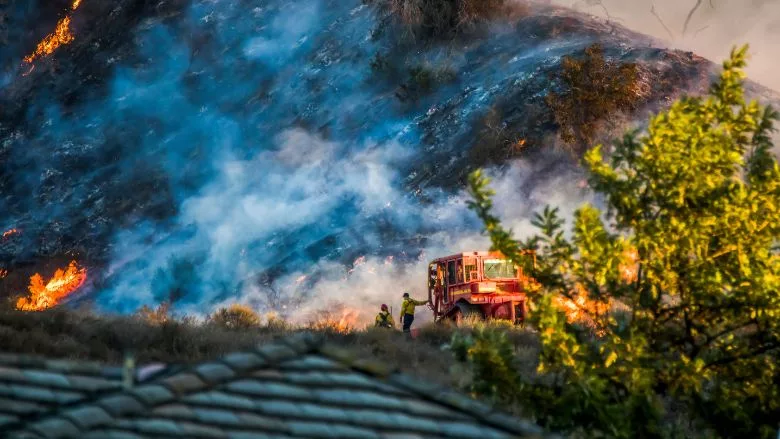
Wildland urban interface (WUI) fires produce extensive smoke caused by the burning of vegetation and buildings (e.g., framing, roofing, paint, cars, carpets, electronics, furniture, and other contents). Smoke from the fire contains toxic and hazardous substances, such as asbestos, lead, mercury, arsenic, and cadmium. (National Academies of Science: “The Chemistry of Fires at the WUI”) Smoke also contains a mixture of aerosolized particles and the vaporization of smoke, char, ash, dioxins, furans, and heavy metals. (California DIR “Respiratory Requirements During Fire Cleanup, Removal, and Demolition”; Newsweek “California Wildfires: How Smoke Harms Your Body;” Scientific American “What Makes Urban Wildfire Smoke So Toxic”) Ash and char are the main wildfire particles that may contain heavy metals, polycyclic aromatic hydrocarbons (PAHs), dioxins and furans. (AIHA: Technical Guide for Wildfire Impact Assessments for the OEHS Professional)
Some pollutants in fires are heavy metals, which are defined as metallic elements that have a relatively high density compared to water. With the assumption that heaviness and toxicity are inter-related, lead and beryllium for example can induce toxicity in humans at low levels of exposure. (Heavy Metal Toxicity and the Environment) However, in controlled amounts, not all metals are bad for us to inhale, eat, and drink, such as cobalt, copper, chromium, iron, magnesium, manganese, molybdenum, nickel, selenium, and zinc. These are essential nutrients that are required to maintain human biochemical and physiological functions. In other words, we need a certain amount of heavy metals around us all the time to maintain human and animal life, vegetation, and a balanced ecosystem. Therefore, after a vegetation wildfire or a WUI fire, removing all 100% of heavy metals in a house is not necessary or scientifically sustainable.
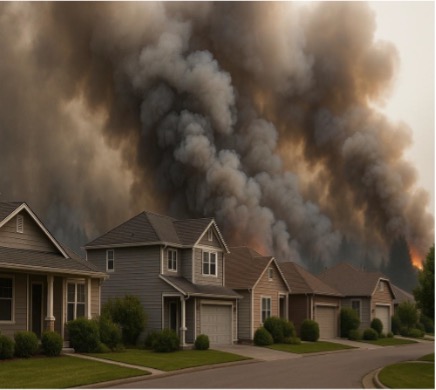
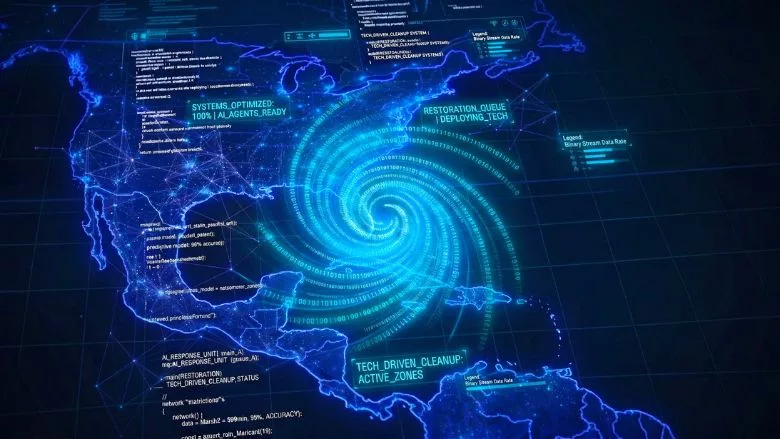
Image AI-Generated by Chat GPT
The emissions from a WUI fire can vary depending on whether the fire burns homes, cars, or commercial areas; even a subset of these fuel types can vary, such as homes of different ages made of different materials. Emissions vary depending on fuel composition, fire characteristics, and the heating dynamics that the fuels experience. Human exposure can vary greatly, depending on weather patterns during and after the fire, personal activities, and the living and working circumstances of the people exposed. While few data are available on emissions and exposures from fires at the WUI, knowledge of chemistry, emissions, exposures, and health impacts of wildland fires and urban fires can be combined to hypothesize characteristics of WUI fires. (The Chemistry of Fires)
As mentioned, wildfires generate a wide range of fire effluents (e.g., gases, vapors, and particles) that can enter structures, settle on horizontal surfaces, and absorb and adhere to ceilings, walls, flooring, cabinets, and contents. The extent of wildfire residue impact on buildings and infrastructure depends on the distance the house is from the fire area, the wind speed and direction, flaming, heat energy, and smoke. In addition, the conditions near and downwind of the fire (e.g., open windows and doors, attic ventilation, HVAC systems) are important factors to consider during environmental and restoration professional inspection.
Structures downwind that are indirectly impacted by the fires’ thermal pressure and smoke residue may not exhibit visible signs of heat damage, and they may not have visible evidence of wildfire residue contamination. Still, microfine particles, smoke vapors, gases, and residue can contain toxins and may be responsible for homeowners experiencing adverse health effects for weeks and months after the fire. Homeowner’s health concerns must not be ignored by environmental professionals and restorers.
Unless contamination is removed or otherwise neutralized, wildfire residue will continue to emit chemical vapors that cause odors to linger for extended periods. Therefore, the goal of restoration is to return the property to its pre-wildfire state. (AIHA: Technical Guide for Wildfire Impact Assessments for the OEHS Professional) To accomplish this, there are general cleanup guidelines for wildfire cleanup available to property owners and restorers from various sources (e.g., FEMA, Cal/EPA, Cal/OEHHA, Cal/DHA, the Colorado Department of Public Health and Environment), in Canada, the Canadian Environmental Protection Act (CEPA) and provincial agencies; in Australia, the National Emergency Management Agency (NEMA), along with state and territory agencies. Recognizing workers can be affected by smoke and its byproducts, employers are required to protect workers before allowing them to have exposure to hazardous substances. (OSHA) Before beginning work involving fire damage cleanup, a job hazard analysis (JHA) should be performed. (IICRC S700)
The complete removal or neutralization of every wildland fire particle, along with VOCs, SVOCs, PAHs, dioxins, furans, and heavy metals, is not scientifically feasible. What is feasible is using a systematic method of cleaning and restoration that may completely remove or significantly reduce lingering wildfire residue down to acceptable levels. In other words, the purpose of detailed cleaning is to remove wildfire particles and heavy metals from surfaces is to stop the spread of wildfire residue within the structure and exposure to human health. If after testing this cannot be achieved, a plan for removing porous materials and soft goods should be recommended.
Looking for quick answers on restoration, remediation and cleaning topics?
Try Ask R&R, our new smart AI search tool.
Ask R&R →
In California, the current clearance criteria for lead dust in pre-1978 homes on hard surface flooring, is 10 micrograms per square foot (µg/ft2 or ug/m2). Meaning, lead levels above 10 µg/ft2 are not acceptable, where additional cleaning is required to either eliminate or lower lead levels.
Apart from environmental professionals using the California EPA lead dust exposure value of 10 µg/ft2, California EPA has not established regulatory limits of surface concentrations of metals in residential dust that were brought into a home after a WUI fire. That said, the Center for Disease Control and Prevention (CDC) , there is no safe level of lead dust for children and babies to have exposure. Lead dust, in any amount is dangerous to infants, toddlers, and developing fetuses.
Even at low levels of exposure lead dust can cause neurological, behavioral, and mental damage. CDC and public health officials agree, all detectible levels of lead dust, even below federal standards, should be treated as hazardous in homes where children or pregnant women live. In addition, homeowners that did not have lead dust in their home and contents prior to a WUI fire, do not want lead dust in any amount.
The EPA methods and procedures for removing lead dust and other inorganic metalloid dust are not the same for removing smoke generated by organic vegetation and buildings and contents that burned. In other words, oils, tars, PAHs, VOCs, SVOCs, dioxins and furans, brought into downwind homes require different cleaning methods along with deodorization.
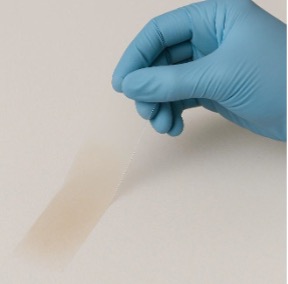
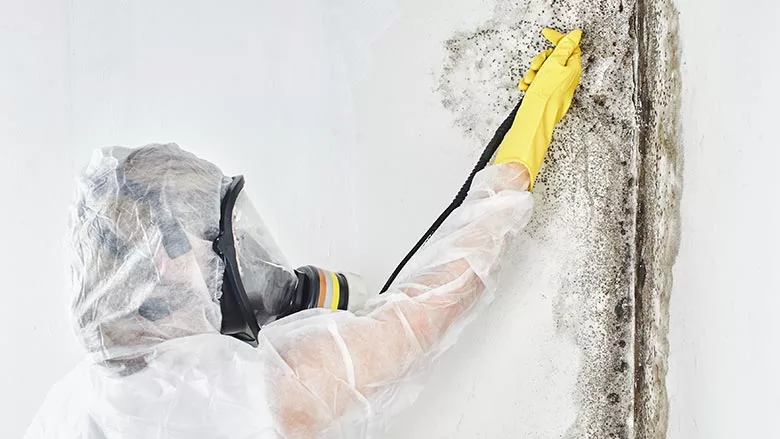
Image AI-Generated by Chat GPT
Organic Combustion Byproduct Testing:
In most instances, tapelifts are preferred to be a non- destructive method for collecting and analyzing char, ash, soot, and other particles of interest, because these particles are the primary indicators of wildfire debris impact. Laboratory analysis identifies carbonaceous material (soot), fibrous material, char fragments, ash crystals, and biological particles.
Tapelift samples use clear adhesive tape to capture settled dust and transfer it onto a clean microscope slide where particles remain fixed in place, making it easy to analyze their structure and composition under a SEM (scanning electron microscope) and other microscope types. In other words, the tapelift sampling technique preserves the relative position, density, size, and shape of particles on the surface, as well as the population per unit area. Sampling methods and techniques follow ASTM D7910- 14(2021) and E1216-21.
Laboratory analysis using SEM-EDS (energy dispersive spectroscopy) can detect elemental composition that might detect metals, but tapelift sampling and analysis methods are not designed to identify heavy metals or their level. On the other side of the coin, alcohol wipes, detergent wipes, and Ghost wipes, are not designed to capture carbonaceous material (soot), char fragments, ash, and biological particles, because the wiping and chemicals in wipes destroy their appearance and structure.
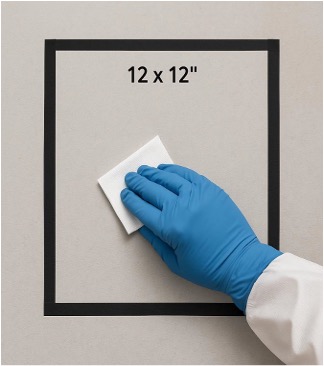
Image AI-Generated by Chat GPT
Inorganic Chemical Testing:
Recognizing the tight-rope environmental professionals walk on when meeting customer commitments, no matter who their customer is, they have the responsibility for pre and post testing, verifying cleaning work was completed correctly, therefore returning homes and contents back to pre-wildfire condition.
For structures within or near the fire impacted area, a detailed evaluation of the property should be completed by qualified professionals, and when necessary, tested to determine the extent of wildfire impact. The results of inspection and tests should lead to reasonable and necessary recommendations for cleaning and restoration. Once cleanup is completed, compare the initial data against a second set of data involving the post-cleanup verification testing.
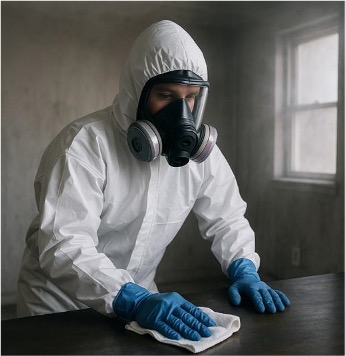
Image AI-Generated by Chat GPT
Environmental Professionals and Restorers Cleanup Strategies:
When lead dust is in wildland fire smoke that impacts downwind buildings, the primary responsibility of the restorer is worker protection before completing cleaning.
Unless there are structural safety issues that become primary for stabilizing the building, making it safe for workers to enter, the next process is the removal of lead dust which supersedes the removal of smoke residue and other contaminants.
The EPA methods for lead dust cleanup are not completely interchangeable with procedures for cleaning and neutralizing smoke residue.
Key factors in distinguishing differences between the cleanup of inorganic lead dust and organic smoke residue include:
The Chemical Composition of Inorganic and Organic Contamination
| Contaminant Type: | Lead Dust (Inorganic) |
Smoke Residue (Organic) |
|---|---|---|
| Nature | Heavy metals and metalloids (e.g., Pb, As, Cd, Hg, Cr, Sb) |
Complex based-carbon compounds (e.g., PAHs, VOCs, SVOCs) |
| Solubility | Often water insoluble; remains persistent on surfaces | Often oily, resinous, and semi-volatile substances |
| Behavior |
|
|
Surface and Material Penetration Differences Affecting Cleaning and Testing
| Characteristics | Lead and Other Metalloid Dust | Smoke Residue |
|---|---|---|
| Surface Behavior |
|
|
| Environmental Testing |
|
|
Cleaning Agents and Chemistry Requirements
| Lead and Other Metalloid Dust Cleanup | Smoke Residue and Carbon-Based Cleanup |
|---|---|
| Use EPA accepted binding agents such as TSP, and other specific cleaners that chelate (adhere) to metal dust, such as Sentinel 805, and Fiberlock Lead Safe Cleaners and Wipes | Often requires surfactants, solvents, and oxidizing deodorizing machines and chemicals to break down oily soot residue, PAHs, VOCs, SVOCs, furans, and dioxins |
| Focus is on the physical removal of metalloid dust per area | Focus is on the chemical neutralization, deep penetration cleaning, and odor neutralization |
| Disposal of wipes that absorbed hazardous dust may require disposal according to regulation | Disposal of wipes and other materials that absorb smoke and other organics can be disposed as normal construction waste |
Cleanup Criteria for Lead Dust and Smoke Residue
| Lead Dust in Fire-Impacted Buildings | Smoke in Wildland Fire and Building Fire |
|---|---|
| Regulations: EPA, HUD, OSHA |
Regulations: OSHA
Guidelines:
|
|
|
Re-Contamination Risks
| Lead Dust | Wildland Fire and Building Fire |
|---|---|
Caused by:
|
Caused by:
|
Comparison Between Lead Dust, Wildfire Contaminants, and Human Health Effects
| Category | Lead Dust | Wildfire Smoke, Soot, Ash, Char, SVOCs and PAHs |
|---|---|---|
| Primary Route of Exposure: | Inhalation, ingestion, dermal (less significant) | Inhalation, dermal absorption, ingestion of deposited particles |
| Main Target Organs: | Nervous system (especially in children), kidneys, reproductive system | Lungs, cardiovascular system, skin, liver, eyes, nervous system |
| Chronic Health Effects: | IQ loss in children, Developmental delays, Reproductive harm, Kidney damage | COPD, asthma, fibrosis Cancer (PAHs, dioxins, benzene), Endocrine disruption |
| Acute Health Effects: | Abdominal pain, Fatigue, Anemia, Irritability | Eye and throat irritation, Headaches, Shortness of breath, Skin rashes |
| Carcinogenicity: | Probable human carcinogen (IARC Group 2A) | PAHs, dioxins (Group 1, known carcinogens) |
| Neurotoxicity: | High, especially in fetuses and young children | Possible, from exposure to benzene and ultra-fine particles |
| Cumulative Effect: | Builds up in bones, teeth, organs | Varies for each substance |
Conclusions:
The earth and its environment contain a balance in chemicals it produces. However, when wildfire occurs, the balance in biodiversity changes where vegetation becomes altered, damaged, or permanently destroyed. Burning mainly releases combustion byproducts, but it can release natural heavy metals in plants, and soils.
In a WUI fire, the burning of vegetation and buildings creates a more complex mixture of gases, particles, and harmful chemicals that can remain in outdoor air for days and weeks, and downwind inside buildings for considerably longer, posing health risks to occupants and cleanup workers.
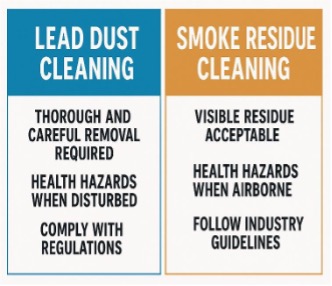
Image AI-Generated by Chat GPT
In downwind buildings impacted by smoke and heavy metals, there are similarities between lead dust and smoke combustion byproduct removal, but there are also distinct differences, such as:
- Lead dust is a more serious health hazard than wildfire smoke residue.
- The level of worker protection is generally much higher for lead dust than it is when removing wildfire smoke residue
- Lead dust generally settles on horizontal surfaces, where smoke impacts all surfaces
- Lead dust is invisible and has no odor, where smoke is a volatile organic and generally has an odor right after the fire, and feasibly weeks and months afterwards
- The cleanup processes for lead dust are regulated, where smoke residue is not regulated
- The chemistry to remove lead is regulated, where smoke residue is not regulated
- Lead is inorganic requiring different processes to bind and chelate lead dust, where smoke is organic requiring different processes to chemically penetrate porous surfaces and dissolve and neutralize oils, tars, furans, and other combustion byproducts residues
- The post-remediation verification (PRV) testing for lead dust is regulated by EPA, where PRV testing involving the elimination of smoke residue is not regulated.
While the focus of the article is establishing the difference between organic combustion byproducts and inorganic lead dust, it is important to confer that lead dust in smoke impacted buildings is only one of the heavy metals that can produce toxic effects in humans, where it must be removed according to government regulations. After being brought into a home by a WUI fire, other heavy metals that are not regulated in “residential buildings”, but at certain levels they can be as toxic or carcinogenic as lead. Examples include arsenic, beryllium, cadmium, chromium, cobalt, copper, mercury, and nickel. When they are present at certain levels, the requirements for completing a job hazard assessment, establishing engineering controls, and worker protection are the same as for lead.
Research and Academic Resources:
AIHA “Analysis of Wildfire and Structure Fire Combustion Residues” (2022)
AIHA “California Issues Wildfire Cleanup Safety Guidance for Workers” (blog)
AIHA “Technical Guide for Wildfire Impact Assessments for the OEHS Professional” (2018; 2025)
AIHA “The ABCs of Wildfire Residue Contamination Testing: Post Fire Assessments of the Indoor Environment” (2017)
AIHA “The Challenges of Post-Fire Assessments, Part 1 and Part 2” (blog)
AIHA “The LA Fires: Considerations for OEHS Professionals” (blog)
AIHA/Alberta “Assessing the Potential Health Risks of Wildfire Residues in the Indoor Environment” (2024)
ANSI/IICRC S700 “Standard for Professional Fire & Smoke Damage Restoration” (2025)
Baxter, D. “Establishing the Scientific Burden of Proof in Wildfire Smoke Damage Claims” (2016)
Baxter, D. “The Science and Controversy Wildfire Sampling and Microscopy Analysis Methods” (2023)
California DPH “Wildfire Cleanup: Considerations for California’s Public Health Officials” (2019)
California DPH “Wildfire Smoke: Considerations for California’s Public Health Officials” (2022)
California DTSC “Emergency Guidance on Wildfires #2 – Hazardous Waste Management” (2025)
California DTSC “Wildfire Debris Removal & Recovery” (2025)
Cal/EPA “Emergency Response Guide” (2011)
Cal/EPA “Guidance for Emergency Debris, Waste & Hazardous Materials Removal” (2011)
Cal/OSHA “Occupational Lead Exposure Prevention Guidance and Resources” T8 CCR 1532.1, 5155, and 5198 (updated 2025)
Cal/OSHA T8 CCR §3380 (hazard assessment); T8 CCR §1532.1 and 5198 (lead); T8 CCR §3380 (dermal contact); T8 CCR §3382 (eye and face protection); T8 CCR §1528-1532.1 (contaminated work clothing); T8 CCR §3544 (respiratory protection)
Cal/OSHA “Understanding California’s Revised Lead Standard” (2025)
Cal/OSHA “Wildfire Smoke Emergency Standards” (2019)
Cal/OSHA “Worker Protection from Wildfire Smoke” Title 8 Section 5141.1 (2025)
Cal/OSHA “Worker Safety and Health During Wildfire Cleanup” (2025)
Cal/OSHA “Worker Safety Requirements for Wildfire Clean-Up” (2025)
Caltech “Hazards of Smoke and Tips for Cleaning After Fires” (2025)
Caltech “Studying Lead on the Environment After the Fires” (2025)
CARB “Camp Fire Air Quality Data Analysis”
CDC “Guidance on Cleaning Safely After a Disaster” (2024)
CDC “Guidelines for Protecting Yourself from Chemicals After a Disaster” (2024)
CDC “Hazards During Wildland Fire Cleanup” (2024)
CIRI/UL “Guidance on WUI Fire Smoke” (2024)
CIRI/UL “Reducing Downwind Wildfire Smoke Exposure Risks Toolbox” (2024)
CIRI/UL “The Effects of Wildfires and the WUI on Indoor Air Quality and Health in Residential Homes” (2025)
CIRI/UL “Wildfires in the Wildland Urban Interface: Exploring Resilience in WUI Communities” (2024)
CIRI/UL “Wildfires in the WUI, the Built Environment, and Public Health” (2024)
Colorado State University “Wildfire Smoke Leaves Harmful Gases in Floors and Walls: Air Purifiers Aren’t Enough, New Study Shows, but You Can’t Clean It Up” (2023)
Colorado State University “Research Shoes Wildfire Smoke May Linger in Homes Long After Initial Blaze” (2023)
EHP “After the Smoke Clears: Wildland–Urban Interface Fires and Residues in Nearby Homes” (2024)
Environ. Epidemiology “Beneath the Smike: Understanding the Public Health Impacts of the Los Angeles Urban Wildfires” (2025)
Environ. Sci. Tech. “Beyond Particulate Matter Mass: Heightened Levels of Lead and Other Pollutants Associated with Destructive Fire Events in California” (2022)
EPA “Ambient Monitoring and the Chemistry of Urban Interface Fires” (2022)
EPA “Best Practices Guide for Improving Indoor Air Quality in Commercial/Public Buildings During Wildfire Smoke Events” (2025)
EPA “Best Practices Guide for Indoor Air Quality During Wildfire Smoke” (2025) EPA “Metal Emissions from Landscape Fires” (2022)
EPA “Wildfires and Indoor Air Quality (IAQ)” (updated 2025)
EPA “Wildland Fire Smoke: Health Effects and the Wildland Urban Interface (WUI)” (2025)
EXS “Heavy Metal Toxicity and the Environment” (2014)
Fed/OSHA 29 CFR 1910.132(d) (hazard assessment); 29 CFR 1910.1025-1030 (lead); 29 CFR 1910.134 (respiratory); 29 CFR 1910.138 (dermal contact); 29 CFR 1910.133 (eye irritation from smoke and chemicals)’ 29 CFR 1910.133(a) (contaminated clothing)
FEMA “Homeowner’s Guide to Risk Reduction and Remediation of Residential Smoke Damage” (2025)
FEMA “Marshall Fire: Building Performance, Observations, Recommendations, and Technical Guidance” (2025)
Harvard University School of Public Health “Cardiorespiratory Effects of Wildfire Smoke Particles Can Persist for Months, Even After a Fire Has Ended” (2025)
Harvard University School of Public Health “The Health Impacts of Wildfires: Frequently Asked Questions” (2025)
IAFF “Smoke Exposure and Firefighter Risk in the Wildland Urban Interface” (2013)
IICRC S700 “Standard for Professional Fire & Smoke Damage Restoration” (2025)
Kovar, B., et al: “Suggested Guidelines for Wildfire Smoke Damage Investigations and Remediation” (2015)
LA County DPH “Guidance for Those Returning to Areas Affected by Fire Damage” (2025)
LA County DPH “Lead in Ash and Soil After Wildfires” (2025)
Medina, E. “The LA Fires: Considerations for the OEHS Professional” (2025)
NAS “The Chemistry of Fires at the Wildland-Urban Interface” (2022)
NAS “The Chemistry of WUI Fires” (2022)
Nature “Metal Toxin Threat in Wildland Fires Determined by Geology and Fire Severity” (2023)
NFPA 1989 “Standard on Breathing Air Quality for Emergency Services Respiratory Protection” (2019)
NIH “Volatile Organic Compounds Inside Homes Impacted by Smoke from the Marshall Fire” (2024)
NIH “Beyond Particulate Matter Mass: Heightened Levels of Lead and Other Pollutants Associated with Destructive Fire Events in California” (2023)
NOAA “Fire and Smoke at the Wildland Urban Interface” (2022)
NOAA “Residual Impacts of a Wildland Urban Interface Fire on Urban Particulate Matter and Dust: A Study from the Marshall Fire” (2023)
Northwest Fire Sciences “The Persistence of Smoke VOCs Indoors: Partitioning, Surface Cleaning, and Air Cleaning in a Smoke Contaminated House” (2023)
PNAS “Wildfire Smoke Impacts Indoor Air Quality Assessed Using Crowdsourced Data in California” (2021)
RIA “Achieving Smoke Odor Removal Success” (blog)
RIA “Guidelines for Fire & Smoke Damage Repair” (2007)
RIA “Protection from Environmental Dangers During Fire Restoration” (2025)
SCAQMD “Wildfire Smoke and Ash Health Safety Tips” (updated 2025)
Science “In the Ashes: After Wildfire Burned Houses and Brush Alike in Los Angeles, Researchers Have Mobilized to Understand the Health Risks Posed by Urban Conflagrations” (2025)
Stanford University “What We Know About the Health Effects of Wildfire” (2025)
Standford University “Wildfires Can Unlock Toxic Metal Particles from Soils” (2023)
UCAR “Smoke from Wildland-Urban Interface Fires More Deadly than Remote Wildfire: Emissions are Proportionately Three Times More Likely to Lead to Premature Deaths” (2025)
University California Davis “Wildfire, Smoke and Air Quality Experts” (2025)
University of California LA (UCLA) “Air Quality After the Fires: Understanding Where and When the Air is Safe” (2025)
University of Colorado Boulder/CIRES “CIRES Researchers Find Compromised Indoor Air in Homes Following Marshall Fire” (2024)
University of Washington “Research Links Wildfire Smoke Exposure with Increased Dementia Risk” (2025)
University Nevada, Reno/Desert Research Institute “New Study Analyzes Air Quality Impacts of Wildfire Smoke” (2025)
Looking for a reprint of this article?
From high-res PDFs to custom plaques, order your copy today!