Why CAM17 Studies Are Critical After Wildland-Urban Interface Fires

Credit: mapo / iStock / Getty Images Plus
After a Wildland-Urban Interface (WUI) Fire, Who Relies on the Completion of a CAM17 Study?
A CAM17 study refers to California Analytical Methods (CAM17) protocol used by environmental professionals working for state and federal government agencies, insurance companies and building owners for the detection and quantification of 17 heavy metals found in buildings, water, air and soil, such as those found at the Palisades and Eaton WUI fires. Note: Smoke odors and particulate matter that enters homes are not part of a CAM17 study, where combustion byproduct sampling and analysis should also be completed.
CAM17 Overview
Following the federal Resource Conservation and Recovery Act (RCRA) of 1976, California created its own stricter hazardous waste laws, resulting in the Hazardous Waste Control Law (HWCL) administered by environmental and public health agencies. To support these laws the California Department of Toxic Substances Control (DTSC) developed California Analytical Methods (CAM), which is a set of laboratory procedures and lists for detecting hazardous chemicals in solid and liquid waste. DTSC compiled the CAM17 list as a standardized panel for identifying 17 priority toxic heavy metals that frequently occur in industrial waste, contaminated soil, ash and building debris.
| Metal / Element | Common Sources in Building Fires (20% larger than screen slot, rounded up to nearest 5) | Potential Health Concerns |
|---|---|---|
| Antimony (Sb) | Fire retardants, batteries, plastics, paints | Respiratory issues, potential carcinogen |
| Arsenic (As) | Pressure-treated wood, pesticides, glass | Carcinogenic (cancer causing), skin lesions, skin & lung irritation, cardiovascular issues |
| Barium (Ba) | Paints, electrical components, insulation | Gastrointestinal distress and cardiovascular issues |
| Beryllium (Be) | Aerospace alloys, electrical components | Lung disease (chronic beryllium disease) |
| Cadmium (Cd) | Batteries, pigments, plastics, roofing | Kidney damage, lung cancer, bone loss |
| Chromium (Cr, Cr-6) | Stainless steel, coatings, insulation | Carcinogenic, respiratory irritation, skin irritation and burns |
| Cobalt (Co) | Alloys, batteries, ceramics, magnets | Allergic reactions, lung damage |
| Copper (Cu) | Wiring, plumbing, electronics | Gastrointestinal distress, liver toxicity and damage at high levels |
| Lead (Pb) | Paint (pre-1978), pipes, solder, batteries | Neurotoxicity, learning development issues, kidney damage, reproduction effects |
| Mercury (Hg) | Fluorescent bulbs, thermostats, wiring | Nervous system and kidney toxicity, lung damage |
| Molybdenum (Mo) | Alloys, lubricants, pigments | Gastrointestinal issues, metabolic effects |
| Nickel (Ni) | Stainless steel, batteries, electronics | Carcinogenic, respiratory and skin irritation |
| Selenium (Se) | Electronics, glass manufacturing | Neurological symptoms in high doses, hair/nail brittleness |
| Silver (Ag) | Electrical contacts, jewelry, mirrors | Argyris (skin discoloration), low toxicity, high amounts can cause kidney damage |
| Thallium (Tl) | Electronics, glass, old pesticides | High toxicity, hair loss, nerve damage, neurological damage, cardiovascular effects |
| Vanadium (V, V2O5) | Alloys, ceramics, fossil fuel combustion | Lung irritation, immune system effects, V2O5 is a potential carcinogen |
| Zinc (Zn) | Galvanized materials, brass, paints | Low toxicity, but excess causes nausea and nutrient interference |
While there are many heavy metals that can be present, among them 17 were selected because laboratories can detect them at low levels where results are important to investigators that are required to comply with California Code of Regulations (CCRs) Title 22, Proposition 65, EPA and OSHA, because heavy metals can affect the environment and human health. More recently, the CAM17 list became the de facto screening panel method for evaluating metals in contaminated debris after urban interface fires.
How Are Heavy Metals Produced?
Heavy metals are produced and released by the burning of construction materials, paint, roofing, siding, wiring, transformers, contents, synthetics, electronics and vehicles. Strong winds along with the fire creates firestorms, sending toxic smoke downwind into homes and businesses.
What Is In Smoke That Makes It Toxic?
Smoke from the burning of buildings contain large and micro-fine particles, combustion byproducts, volatile organic compounds (VOCs), polycyclic aromatic hydrocarbons (PAHs), furans, heavy metals and other toxic substances. (CARB; ACS; USC) Heavy metals can remain toxic to breathe and have contact with weeks and months after the fire and they can remain toxic in small amounts even after building and content cleaning. Health risks to individuals exposed to heavy metals is everyone, where more vulnerable populations include infants, children, pregnant mothers, the elderly, including pets. (AQMD; EPA; CDC)
Benefits In Completing A CAM17 Study:
The initial and follow-up CAM17 studies provide valuable information to government agencies such as public health officials, including environmental professionals, building owners, insurance companies, medical professionals and cleanup specialists.
The CAM17 study confirms the presence or absence of heavy metals:
Looking for quick answers on restoration, remediation and cleaning topics?
Try Ask R&R, our new smart AI search tool.
Ask R&R →
- Supports after an urban interface fire or cleaning, there are no heavy metals of concern.
- Identifies soils that have above background levels.
- Identifies hidden contamination that a person cannot see or smell.
- Identifies water as being potable or contaminated.
- Identifies contaminants in buildings and on contents.
- Confirms cleanup and remediation is necessary.
- Confirms certain contents should be discarded.
- Provides quantification post-remediation verification (QPRV) data confirming materials and finishes sampled are within accepted government tolerances and guidelines.
Exposure to Heavy Metals:
California Heavy Metal Levels and Health Effects:
❖ Discussion –
- Small amounts of heavy metals are around us all the time, such as in the air we breathe, drinking water and the food we eat, surfaces we touch and the Earth we walk on. In addition, certain metals are essential for life, such as potassium, calcium and magnesium, where others include copper, zinc and iron in smaller amounts. (Source: Columbia University School of Public Health; Ana Navas-Acien MD, PhD)
- In California, the residential levels for many heavy metals have no fixed regulatory limits. However, DTSC provides recommendations to homeowners for cleaning and removing heavy metals, which is based on the type and concentration of specific metals, exposure pathways and site-specific factors.
- For mercury, arsenic and cadmium, the DTSC provides guidance in evaluating potential health risks. The criteria includes surface areas having skin (dermal) exposure, contact frequency and the fraction of contamination transferred from skin to mouth.
- There is a guidance document for heavy metal dermal exposure provided by
- DTSC “Human Health Risk Evaluation of Structural Surfaces Contaminated with Metals” where chemical specific assumptions / toxicity criteria surface screening is for workers; not building occupants.
- Children and adults’ exposure to metals in frequency, breathing or having contact with surfaces can vary. Individual exposure to metals can cause harmful effects and interfere with biological processes, for instance, lead exposure can mimic
- calcium deficiencies, while cadmium imitates zinc.
- Some metals can cause skin, bladder or lung cancer, where others play a role in heart disease and diabetes. (Source: Columbia University School of Public Health; David PhD, MPH)
- Recognizing the above, individuals having questions about their health should consult with licensed medical professionals.
Heavy Metal Collection Methods and Media Commonly Used Include:
Water Sampling:
- Using 1,000 mL (1L) sterile polyethylene or Teflon bottles with preservative, water samples should be kept in a cold but not frozen container. (Source: California Lead and Copper Rule; State Water Resources Control Board)
- It is recommended that potable water should be collected closest to the building’s water supply line, from the cold water line in the kitchen and a cold water line at the farthest part of the building, for a minimum of three samples.
- When water lines remain stagnant (unused) for days or the water line remained off for more than 6 hours, water should be collected before purging the water lines.
❖ Discussion – Lead and Other Heavy Metals:
- EPA says there should be no lead in drinking water, where it should be zero parts per billion or zero milligrams per liter (0 ug/L).
- CDC says “there is no safe level” for lead in children’s blood that may occur from drinking water or having contact with contaminated surfaces.
- Under the Lead and Copper Rule (LCR), the LCR is an “action level” not a health-based standard. When 15 parts per billion (0.015 milligrams per liter; mg/L) are exceeded, utilities are legally required to act.
- California has legally enforceable Maximum Concentration Levels (MCL) and Public Health Goal (PHG) levels of contamination that are acceptable for drinking water. An Action Level (AL) is a trigger point that requires a water system to take specific actions when they exceed consumer tap water levels.
- Heavy metal measurements of water are in micrograms per liter (mg/L) as shown in the table below:
Heavy Metal California MCL PHG Arsenic 10 ug/L 2,000 ug/L Barium 1,000 ug/L 2,000 ug/L Cadmium 5 ug/L 0.04 ug/L Chromium 50 ug/L 2.5 ug/L Chromium 6 Currently there is no MCL 0.02 ug/L Copper AL – 1,300 ug/L 300 ug/L Lead AL – 15 ug/L 0.2 ug/L Mercury 2 ug/L 1.2 ug/L Nickel 100 ug/L 12 ug/L Thallium 2 ug/L 0.1 ug/L (Source: California Water Board)
Air Sampling:
- Air sampler and MCE filters capture air over 4, 8 to 24 hours to create a time-weighted average (TWA).
- For an 8-hour study, a common configuration is 2 to 4 liters of air per minute (LPM), yielding 0.96 to 1.92 m3 of total sampled air (or 960 to 1,920 liters of air).(Source: DTSC)
- The cassette sample media should contain 37mm MCE filter having 0.8 um pore size.
- Outdoor air should be collected upwind and downwind of the house, where indoor air samples should be collected three for the first 1,000 square feet and one additional air sample for each additional 1,000 square feet. (Source: DTSC “Interim Guidance for Sampling and Analysis of Building Materials and Surfaces for Metals”)
- For air that may contain mercury vapors use Hopcalite sorbent tubes.
❖ Discussion – Outdoor and Indoor Air Sampling:
- To complete an air sample study correctly, the labor required to set up, monitor multiple instruments and remove them within a prescribed period, is time- consuming, as compared to collecting water, surface and soil samples.
- Air samplers must be calibrated and tested beforehand to ensure they maintain a constant air flow rate for the entire sampling period.
- For heavy metals air sample data to be quantitative, including TWA, the time required to complete sampling should be no less than 8 and sometimes 24 hours.
- In California, based on the Office of Health Hazard Assessment (OEHHA), the reference exposure levels (RELs) (ug/m3) for selected heavy metals in air is: (1) lead – 0.15; (2) arsenic 0.003; (3) cadmium 0.02; and (4) mercury 0.3.
- Note: These values are for acute exposures where they only serve as reference points. For other heavy metals, California does not have specific ambient air quality standards, where they rely on the data from the California Air Resources Board (CARB) and Air Quality Management District (AQMD).
- Note: In a CAM17 study, outdoor air is expected to be significantly different from indoor air both in comparison to the types and levels of metals due to sources of emissions, weather and ventilation for example. In some cases, certain heavy metals types and concentration can be higher indoors.
❖ Discussion – Airborne Lead Levels in Outdoor Air:
-
Outdoor levels near a WUI fire, including days, weeks and possibly months afterwards, the breathable concentrations of lead can be 0.2 to >1.5 ug.m3 (which exceed EPA’s average 3-month based on the National Ambient Air Quality Standards (NAAQS) for lead which is 0.15 ug/m3).
- The Post-Camp Fire (2028) had airborne levels exceeding 0.4 to 0.9 ug/m3) in downwind areas during active burning. (Source: Johnston, et al., 2020)
❖ Discussion – Airborne Lead Levels in Indoor Air:
- Hours, days and weeks after a fire, where outdoor air remains elevated with heavy metals produced by smoldering, wind, cleanup activities, including traffic that aerosolizes contaminated soils off streets, downwind homes act as a filter, absorbing metals onto the exterior and into them on windows, doors, cabinets, walls, contents, draperies, carpets, upholstery, HVAC systems and exposed insulation.
- Without proper cleanup, indoor re-aerosolization of heavy metal dust can occur by opening and closing doors and windows, walking, moving contents, dry dusting, sweeping and vacuuming. These intermittent spikes can cause lead dust levels for examples to exceed 0.15 ug/m3 and expose persons up to levels 100 times greater exposure to lead dust as compared to undisturbed background levels.
- Avoid unnecessarily disturbing heavy metal dust in homes.
-
The Agency for Toxic Substances and Disease Registry (ATSDR) and the federal Environmental Protection Agency (US/EPA) lead-level studies report:
Activity Airborne Lead Increase Factor Walking on contaminated floors 3x to 10x Moving contents and furniture 5x to 30x Dry sweeping 10x to 100x
Surface Wipe Sampling:
- Surface wipe sampling is the most accepted method for collecting heavy metals in a home affected by fire debris. In addition, after cleaning and decontamination, surface wipe sampling is the most accepted method for providing the homeowner with data supporting their living space has normal background levels of metals.
❖ Discussion – Surface Wipes and Use:
- Wet wipes (e.g., SDS Ghost wipe®, Kimwipes, or equivalent) (Source: CDC “Surface Sampling Guidance, Considerations, and Methods in Occupational Hygiene”; DTSC)
- Ghost wipes for example are pre-moistened, lint free, low-background wipes, that stick to the moist wipe by electrostatic charges, Van der Waals forces and capillary adhesion. In the laboratory wipe dissolve during nitric and other acid digestion ensuring full digestion where metals are not lost.
- The use of Ghost wipes® to complete a CAM17 survey follows a set of standards and recommendations, such as ASTM E1792 and EPA 6200.
- Samples should be collected on flat surfaces, where the sample area should represent a total of 12 x 12 square inches (ft2) on flooring, walls, counters, window ledges, corners of rooms, ventilation systems, wood framing and contents. (Source: EPA; HUD, OSHA)
-
In post-WUI fire assessment, as a screening method, a composite sample may be collected on leather, fabric furniture and other soft goods, where the data may actually be underestimated or under representative of the actual level of metals present. The data may help during a triage assessment, determining whether leather, fabrics and other soft goods are contaminated. (Photo: Patrick Moffett)
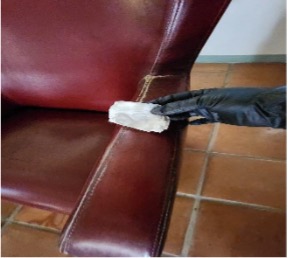
Photo: Patrick Moffett
Soil Sampling:
- Requires using sterile polyethylene jars and tops capable of holding 4 to 16 ounces of soil.
- Collect initial samples containing about 2 inches of the surface soil to represent potentially friable heavy metal dust that can be released in the air caused by ground disturbance or wind.
- Collect below grade samples about 6 inches below the surface to assess leaching.
- The number of suggested samples include three samples for the first 1,000 square feet and one additional surface sample for each additional 1,000 square feet.
-
Using CAM 17 studies, the “Phase 2 Cleanup Objectives” for lead and other heavy metals in soil are based on California EPA Health-Based Cleanup Goals that are measured in milligrams of contamination per kilogram (mg/kg).
1. Antimony – 31 mg/kg 2. Arsenic – 2 to 11 mg/kg 3. Barium – 15,000 mg/kg 4. Beryllium – 16 mg/kg 5. Cadmium – 7.1 mg/kg 6. Chromium – 85,000 mg/kg 7. Cobalt – 23 mg/kg 8. Copper – 3,100 mg/kg 9. Lead – 80 mg/kg 10. Mercury – 1 mg/kg 11. Molybdenum – 820 mg/kg 12. Nickel – 1,600 mg/kg 13. Selenium – 390 mg/kg 14. Silver – 390 mg/kg 15. Thallium – 5 mg/kg 16. Vanadium – 390 mg/kg 17. Zinc – 23,000 mg/kg (Source: LA Times; California DTSC Human Health Risk Assessment; EPA Regional Screening Levels)
❖ Discussion – Heavy Metal Disintegration in Soil:
- One would think that heavy metals will break down by the sun’s radiation and oxidation through air and wind. The sun and outdoor air do not break down heavy metals into non-toxic or harmless forms. This is because heavy metals are elements, not organic compounds, where they cannot be destroyed or decompose by natural processes such as exposure to UV radiation, wind erosion and microbial neutralization (bioremediation / biodegradation).
- Under the right conditions, some metals can change their form, mobility and toxicity when having contact with moisture, nutrient rich soils and pH. Some metals can bind to soils and organic matter to form insoluble compounds. Wetting or tilling the ground may cause certain metals to absorb deeper in soil where they continue to remain.
- The homeowner may hire a company to complete remediation processes such as soil washing using chemicals, mixing soils with phosphate, biochar, lime and iron oxides, phytoremediation using plants to absorb metals, electrokinetic (which is using electric current through probes in the ground that draw heavy metals to a collection point), or thermal desorption for specific metals such as mercury.
- The homeowner may also choose to remove the topsoil and apply new soils or apply triple superphosphate, till the ground to a depth of 6-inches, add compost or biochar, cover with clean soil or mulch and plant non-edible plants and grass.
Produce “Fruit and Vegetable” Concerns:
After a WUI fire, fruit and vegetables can accumulate heavy metals from contaminated soil, water and air.
The University of California Agriculture and Natural Resources (UCANR) mentions that they do not recommend individuals picking or eating fruit and vegetables after a wildland fire, because they may contain higher levels of metals on the skin and inside.
❖ Discussion – Food Safety:
- For produce, there are no universal acceptable levels of heavy metals but there are regulatory limits, known as action levels (AL) that must not be exceeded.
- The uptake absorption and translocation of metals into trees and plants can occur inside fruit and vegetables.
- Washing may not completely remove metals from skin of produce.
- It is recommended to wait at least one full growing season before consuming fruit.
❖ Discussion: Plant Safety:
- While properly wearing a mask, gloves and protective clothing, carefully remove visible ash and fire residue from topsoil.
- By using clean water to wash off ground soil contaminated with heavy metals it may benefit the sustainability of the plant or tree, but it can also introduce metals into their root zone. Instead, consider using soaker hoses that can slowly irrigate heavy metals away from trees and plants.
- Set up a misting system around trees and plants to remove ash and metals.
- Rake in compost, humic acid or organic mulch 3-4 inches deep into the topsoil.
- Avoid using fertilizers immediately because they can stress trees and plants.
Summary and Conclusions:
- Heavy metals are around us all the time, both in natural and man-made forms. They are part of the Earth, where they exist in soil, rocks, water, air and food. They are also introduced by human activity such as building construction, manufacturing of flooring materials and paint, the delivery of electronics, appliances and fixtures.
- As homes get older, so do their materials, such as PVC blinds and plastics, caulking and sealants, flooring and finishes, electronics and fixtures. In addition, as we open doors and windows, track in soils and dirt on the bottom of shoes, wear and tear of building components, sweeping, dusting and vacuuming, increases indoor air pollution.
- When homes burn, buildings that are downwind absorb smoke that contain ash, char, soot, VOCs, gases, tars, heavy metals and other hazardous substances. Standing homes act as a filter as they absorb smoke. Wind and thermal pressure can increase indoor dust substantially that may cause inhalation, skin contact and ingestion hazards. (Photo: Patrick Moffett)
- Disturbing heavy metal dust by sweeping or using a house or a shop vacuum can further increase exposure by as much as 200 times. (Photo: Patrick Moffett)
- Heavy metal dust binds with organic and synthetic materials through electrostatic attraction, Van der Waals forces, entrapment in cracks and pores, adsorption and chemical binding (chelation). (Photo: Patrick Moffett)
- The naked eye cannot see microscopically, where a polarized light microscope or a scanning electron microscope is capable of identifying char, ash and other debris, but they are not capable of identifying heavy metals that are bound to particles. (Macro Photo: Patrick Moffett)
- Everything around us is made of different combinations of elements. Heavy metals are characterized by their high density and potential toxicity, and they are ubiquitous in the environment. After a WUI fire, such as the Eaton and Palisades fire, monitoring heavy metals using CAM17 studies are important to identify contaminant sources, assess risks and implement effective remediation, including clearance strategies. They are critical to ensure homes and contents are returned back to a safe condition. Specialized laboratory analysis equipment is required to complete CAM17 study, such as Inductively Coupled Plasma Mass Spectrometry (ICP-MS) and Optical Emission Spectrometry (ICP-OES).
| Root Cause: | Result in Homes: |
|---|---|
| Ground and Spring Water | Can contain arsenic, lead, mercury, cadmium, chromium, manganese |
| Moving contents and furniture | Can contain arsenic, iron, manganese selenium |
| Wind-Blown Dust | Can contain arsenic, chromium, nickel |
| Sea Spray | Can contain zinc and copper |
| Coastal Areas Near Towns and Shipping | Can contain lead, mercury, arsenic and cadmium |
| Air in a Rural Area or City | Can contain lead, arsenic, cadmium, chromium, nickel, mercury |
| Cars and Trucks | Can contain lead, mercury, arsenic, cadmium, chromium |
| Metal: | Conditions: | Levels less than: |
|---|---|---|
| Lead | Buildings constructed after 1978; vehicle emissions | <1 to 2 ug/ft2 |
| Lead | Buildings constructed before 1978; vehicle emissions | <1 to 5 ug/ft2 |
| Cadmium | Non-smoking or vaping house | <1 to 5 ug/ft2 |
| Arsenic | Infiltration of outdoor dust, pesticides used indoors | <1 to 5 ug/ft2 |
| Chromium | Outdoor infiltration conditions; indoor coatings | <5 ug/ft2 |
| Antimony | Outdoor infiltration; electronics, flame retardant fabrics | <1 to 10 ug/ft2 |
| Copper | Outdoor infiltration; electrical, plumbing and appliances | <20 to 100 mg/m2 |
| Nickel | Stainless steel and electronics | <10 to 50 ug/ft2 |
| Manganese | Agriculture, batteries and tracked in soils | <10 to 50 ug/ft2 |
| Zinc | Ducting, paint, coatings, appliances | <50 to 300 ug/ft2 |
| Note: All outdoor and indoor environments have heavy metals in construction materials and house dust, where before the WUI fire, having a set of data reporting various metals and levels would have been valuable. Recognizing we don’t have them, after final cleanup, professionals should collect sufficient samples and compare the data against tables, such as those outlined herein. | ||
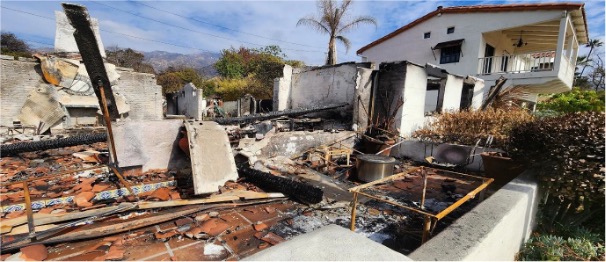
Photo: Patrick Moffett
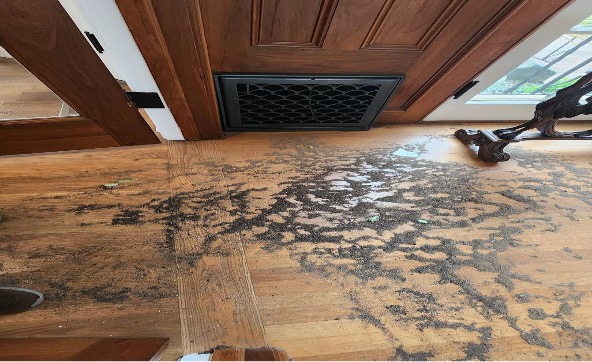
Photo: Patrick Moffett
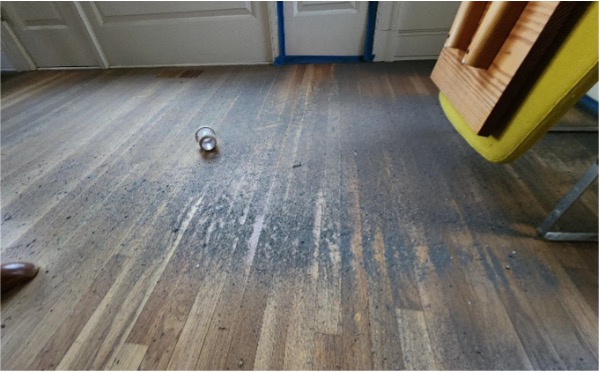
Photo: Patrick Moffett
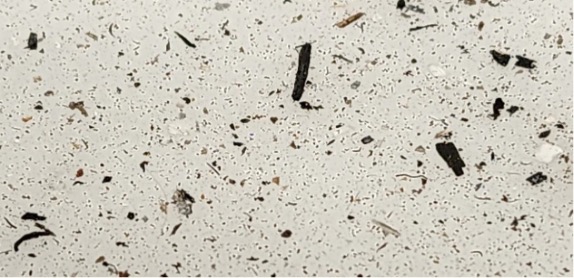
Photo: Patrick Moffett
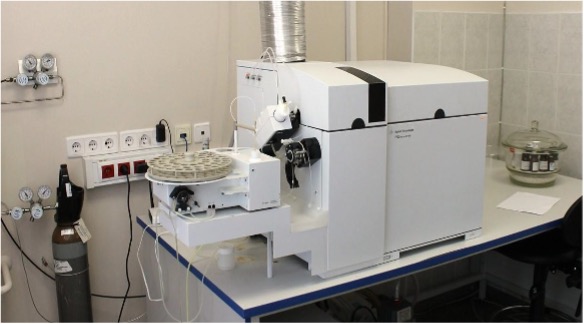
Photo: Agilent
Looking for a reprint of this article?
From high-res PDFs to custom plaques, order your copy today!