Unveiling the Chemistry and Environmental Impact of Phos-Chek Fire Retardant
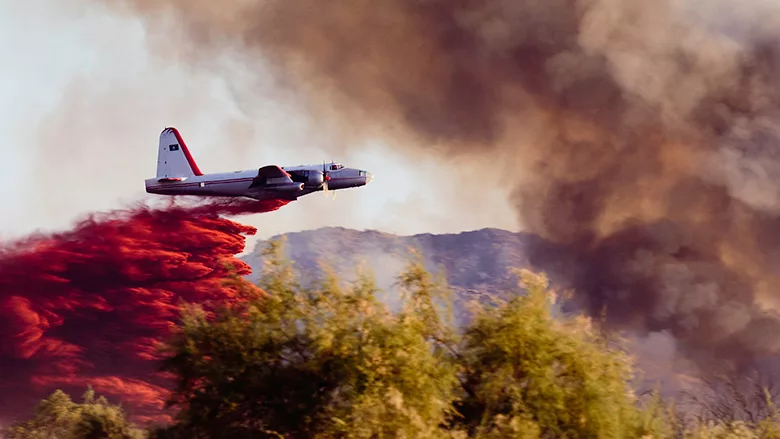
Photo credit: taburton / iStock via Getty Images Plus
About Phos-Chek:
It is a widely used long-term fire retardant which is designed to slow or stop the spread of wildfires and community fires. It is commonly dropped from aircraft or applied on the ground to create fire-resistant barriers.
1. Chemistry:
- Phos-Chek is manufactured by Perimeter Solutions where the product contains:
- Fertilizer, consisting of ammonium phosphate salts, where the main agent is monoammonium phosphate (NH4H2PO4) or diammonium phosphate (NH4H2PO4).
- When exposed to fire, these compounds decompose and release phosphoric acid (H3PO4)
- The acid chemically disrupts combustion by forming a fire-resistant coating on vegetation and organic materials, which prevents the release of flammable gases that sustain flames.
- Phos-Chek also Includes:
- Thickeners (gelling agents), such as:
- Guar-gum, clay-based thickeners, or polymer additives, where they increase adhesion to vegetation, preventing it from running off too quickly, and it improves the effectiveness of aerial drops by reducing drift.
- Corrosion Inhibitors:
- Commonly organic compounds or phosphate-based inhibitors that help prevent damage to aircraft and firefighting equipment.
- Colorants:
- Which are typically red, pink, or orange dye, where they enhance visibility for pilots and ground crews to track where the retardant is applied. Some dyes may fade over time for minimal landscape impact.
- Surfactants:
- They are detergents that help improve the flow and spreadability.
- Thickeners (gelling agents), such as:
2. Environmental Considerations:
- The manufacturer says Phos-Chek is biodegradable and non-toxic.
- Ammonium phosphates in Phos-Chek enhance soil nutrients for post-fire regrowth.
- Drawbacks:
- Excess phosphate runoff can contribute to waterway eutrophication (algae blooms).
- Fire-retardants including Phos-Chek is harmful to fish and fowl.
- In a recent USC study “Metals in Wildfire Suppressants,” post fire-retardant residue contains heavy metals, such as in Phos-Chek product “LC-95W,” which contains concentrations of toxic metals arsenic (As), barium (Ba) cadmium (Cd), chromium (Cd), copper (Cu), manganese (Mn), antimony (Sb), lead (Pb), thallium (Tl), and vanadium (V), which are 4 to 2,880 times greater than drinking water regulatory limits, and potentially greater than some aquatic toxicity thresholds. Meaning, Phos-Chek can be harmful to the environment and to cleanup workers.
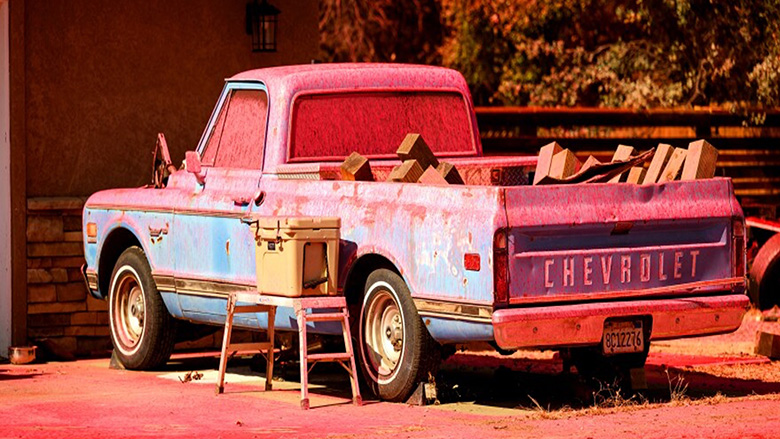
Photo credit: Josh Edelson / AFP
3. Structure, Automobile, and Metal Surfaces:
- When left on a surface for extended periods, Phos-Chek is corrosive to buildings, vehicles, and other metal surfaces:
- However, Phos-Chek impact is believed to be less as compared to other fire suppression chemicals, because it includes corrosive inhibitors to reduce damage.
- Ammonium salts can cause metal corrosion and pitting:
- Ammonium phosphates and moisture can accelerate oxidation (rust) on metal surfaces, including copper components (wiring, plumbing).
- When left on painted surfaces including metal furniture and roofing, it can cause:
- Permanent staining and discoloration due to its red and pink color dye.
- When left on window glass and other glass surfaces including some plastics:
- Pitting when moisture is present.
- Dry residue can cause hazing.
4. Electrical and Electronics:
- Security systems and cameras, electric gates, swimming pool motors, lawnmowers and power tools:
- When practical, immediately wash surfaces using deionized (DI) water and a mild liquid detergent, then, DI water rinsing, followed by drying.
- There can be increased corrosion to electric and electronic components.
- Interior parts should be inspected and cleaned by qualified service persons.
5. Cleaning and Decontamination of Most Materials:
- For best results, Phos-Chek should be removed from surfaces within the first 24 to 48 hours.
- The cleaning process includes scrubbing surfaces with an appropriate scrub brush that will not scratch or damaged surfaces, using a mild detergent and clean water.
- Do not use high-pressure power washers and spray rigs, since the force of the water can push colorant deeper into surfaces, resulting in permanent damage.
Closing Remarks:
- Phos-Chek is a necessary chemical that is environmentally safe for application on most grassland fires, ground fires, smoldering fires, wildfires, forest fires, and building fires.
- Phos-Chek must be kept away from lakes, streams, estuaries, and habitation areas, since it can kill fish and fowl.
- A 2024 “USC Study” says Phos-Chek, such as product “LC-95W,” contains heavy metals that are toxic. https://pubs.acs.org/doi/full/10.1021/acs.estlett.4c00727 This is different from the general understanding that Phos-Chek is non-toxic.
- Phos-Chek can cause skin, eye, and respiratory irritation. Also, the retardant contains ammonia and salts, where they may burn if it gets into rashes, cuts, and the eyes.
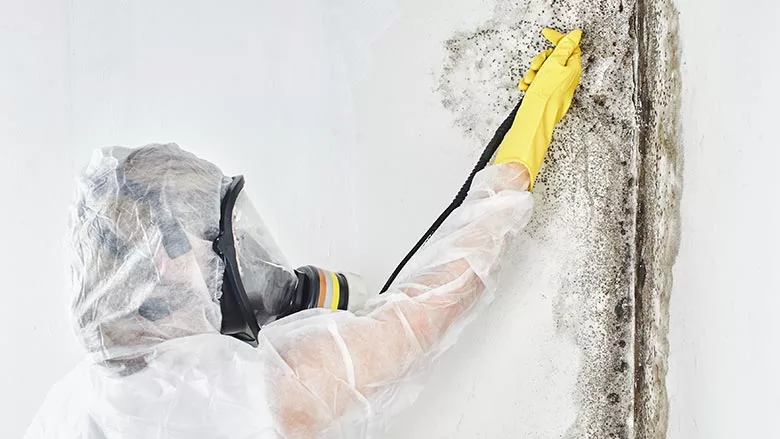
- Recognizing there can be safety hazards and toxicity, personal protective equipment (PPE) and safety measures must be followed during cleanup of land and property. Examples of PPE include wearing nitrile, neoprene, or chemical-resistant gloves, protective suits and boots, splash goggles, and at a minimum, an N-95 respirator.
- For the cleanup of Phos-Chek, restorers must have a designated safety program in place where instruction is provided to all workers by a “competent” supervisor or safety person.
- Restorers must have appropriate first aid equipment onsite at all times, where a “competent” first aid person is to ensure the safety of the job and when applying first aid. In California this requires the restorer (employer) to comply with GISO, Title 8: §1512 “EmergencyMedicalServices;” §3400 “MedicalServicesandFirstAid;” and §8421 “FirstAidTraining.”
- Restorers that cleanup Phos-Chek from burnt buildings and vehicles must realize there can be additional worker safety hazards and exposure to toxic substances, such as falling remnants of building materials, falling through debris, engulfment, exposure to ash, chemicals, and vaporized toxic substances.
- Restorers removing Phos-Chek from land and property using hose water or water from a power washing truck or spray rig must consider if there is a possibility of water-runoff that can migrate towards a lake, river, stream, creek, inlet, bay or estuary, or water can flow towards a storm drain. When there is a possibility of water-runoff, the restorer is to berm and contain pooled water next to where it is being applied, where a waste hauler removes water and chemical residues for proper disposal.
Looking for quick answers on restoration, remediation and cleaning topics?
Try Ask R&R, our new smart AI search tool.
Ask R&R →
Looking for a reprint of this article?
From high-res PDFs to custom plaques, order your copy today!