What Restorers Need to Know about OSHA Ladder Safety Requirements
OSHA 1926 ladder safety requirements you need to understand that help reduce falls, injuries, and citations

As part of our OSHA Top 10 series, this article will cover the third most frequently cited OSHA standards for 2024, Ladders. It’s ironic that ladders are quite simple to use, but they rank third in most cited OSHA standards. Likewise, falls from ladders account for many injuries. I see this topic as low-hanging fruit – in that safe use and training on ladders is easy to improve upon. So, let’s dive into safe ladder use.
Introduction
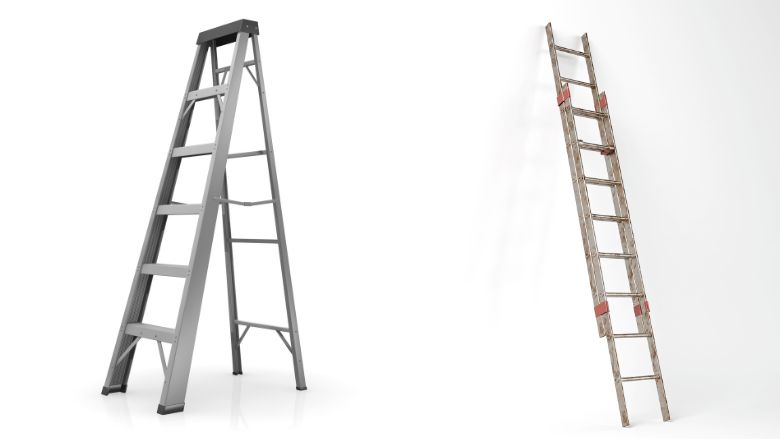
OSHA addresses a few different types of ladders, for this article we are going to cover two types of portable ladders:
- Step ladders
- Extension ladders
Credit: allanswart / iStock / Getty Images Plus
Restorers have the potential to run into other types of ladders, especially in industrial settings. For example, there are the permanently mounted ladders on the sides of buildings or other structures. For simplicities sake, we are going to cover portable ladders because I believe restorers use them more often and therefore have a greater risk of injury or OSHA citation.
The OSHA 1926 ladder regulations have 3 basic components:
- Use
- Inspection
- Training
Pretty simple, right? Let’s look at the requirements for each of these regulatory components.
Core OSHA 1926 Requirements
A. Ladder Use (1):
This is a bit of a long list; however, it covers the specific OSHA requirements. I challenge you to read each one and see if you knew that requirement. This list can also serve as an excellent training or jobsite inspection resource!
- Extend extension ladders 3 feet above the landing surface (e.g. roof)
- Keep ladders and rungs clean (e.g. no slippery rungs)
- Don’t load above the maximum rating
- Use ladders for their intended purpose; examples include:
- Correct 4:1 angle for extension ladders
- Step ladders not closed and leaned against the wall
- Use on a stable/level surface, unless secured
- Slip resistant feet on ladders
- Secure or barricade if near activities that can knock it over (e.g. by doorway)
- Areas around the top and bottom of ladder kept clear (no slip/trip hazard)
- Top rails of extension ladder supported equally or have a single support bracket
- Not shifted or moved while in use
- Non-conductive rails if used near energized electrical equipment (e.g. fiberglass)
- Top rail or step of a step ladder not used as a step
- Stepladder cross braces not used as steps
- Inspected on a periodic basis
- Damaged/Defective ladders taken out of service and labeled “Do Not Use”
- Any ladder repair shall return it to the original condition and design criteria.
- No single rail ladders
- User shall face the ladder when ascending/descending
- User shall grasp the ladder with at least one hand when ascending/descending
- User shall not carry load when ascending/descending

Credit: Liudmila Chernetska / iStock / Getty Images Plus

Credit: ZargonDesign / E+ via Getty Images
B. Ladder Inspection (2)
Yes, this was already listed in the ‘Use’ section; however, I believe it deserves further discussion. I recommend making ladder inspections a routine task for your employees. This can easily be accomplished; for example:
Looking for quick answers on restoration, remediation and cleaning topics?
Try Ask R&R, our new smart AI search tool.
Ask R&R →
- Download the ladder manufacturer’s inspection checklist and train your employees on how to perform the inspection
- Establish an inspection schedule. I recommend setting a frequency that’s based on your ladder use; frequent, hard use might justify weekly or monthly inspection. Infrequent, light use might justify quarterly or twice-yearly inspection.
- Review your inspections and make sure they are being performed
C. Ladder Training (3)
Again, following the theme of this article, I believe ladder training is one of the most simple topics that a Restorer can train employees on. Below is what OSHA wants for training. I’ve also listed training resources in the ‘Resources’ section of this article.
- Ensure your employees are trained by competent person on the following
- Nature of fall hazards in the work area
- Correct procedures to erect, maintain, and disassemble any fall protection system used
- Proper construction, use, placement, and care of ladders
- Maximum intended load of ladders used
- The standards contained in the 1926.1053 Ladder Regulations

Credit: Ekkasit Jokthong / iStock / Getty Images Plus
Let me explain a few of these training requirements in greater detail.
For the competent person, must be able to identify hazards and have the authority to correct them. I recommend that employee complete the OSHA 10-hour or 30-hour Construction Outreach Training Program. That should cover the competent person requirement.
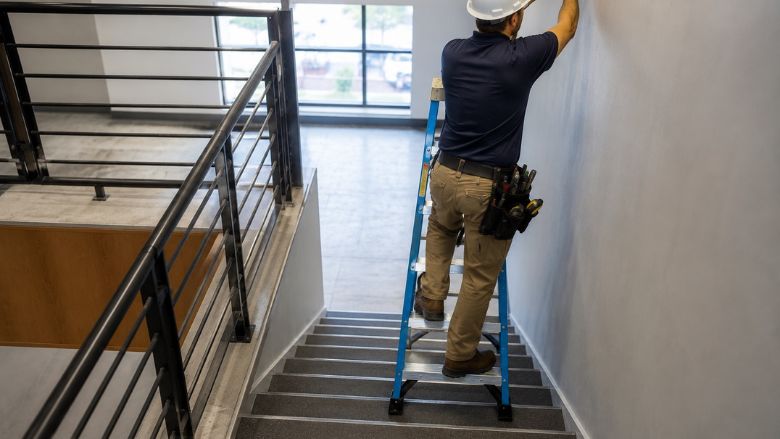
Fall protection is NOT required when using a ladder unless there is a unique fall risk. For example, you are on a ladder beside an unprotected edge. (Think along the lines of using a ladder on a balcony where it is placed beside a rail and the user can fall over the railing.) I’m sure there are some other unique situations where fall protection is needed on a ladder, but for the average restoration job, the most common unique fall risk would be using a step ladder beside a balcony and elevating yourself above the railing. Do you have something to share on fall protection and experience with ladders? Share it with us in the comments.
Credit: AI-generated image created with DALL-E by OpenAI
Conclusion
Safe ladder use and OSHA compliance are quite easy if you put some effort into it. Buy the correct ladders, maintain them, inspect them, train your team on ladder safety, and ensure safe use. Regardless, they are still ranked third on OSHA’s top 10 citations….go figure. Restorers can keep themselves out of this OSHA enforcement category by following the simple recommendations in this article!
Resources
OSHA Quick Cards and Fact Sheets – Ladder Safety: https://www.osha.gov/publications/publication-products?publication_title=ladder+safety
Ladder Inspection Forms – Werner Ladders: https://www.wernerco.com/us/safety/ladder-inspection-form
General Ladder Resources – Werner Ladders: https://www.wernerco.com/us/support/literature
References
- OSHA 1926.1053(b) Use: https://www.osha.gov/laws-regs/regulations/standardnumber/1926/1926.1053
- OSHA 1926.1053(b)(15): https://www.osha.gov/laws-regs/regulations/standardnumber/1926/1926.1053
- OSHA 1926.1060 Training Requirements: https://www.osha.gov/laws-regs/regulations/standardnumber/1926/1926.1060
Looking for a reprint of this article?
From high-res PDFs to custom plaques, order your copy today!