What Restoration Contractors Need to Know About OSHA Fall Protection Requirements
Understanding OSHA 1926.501 and how restorers can prevent the most cited safety violation
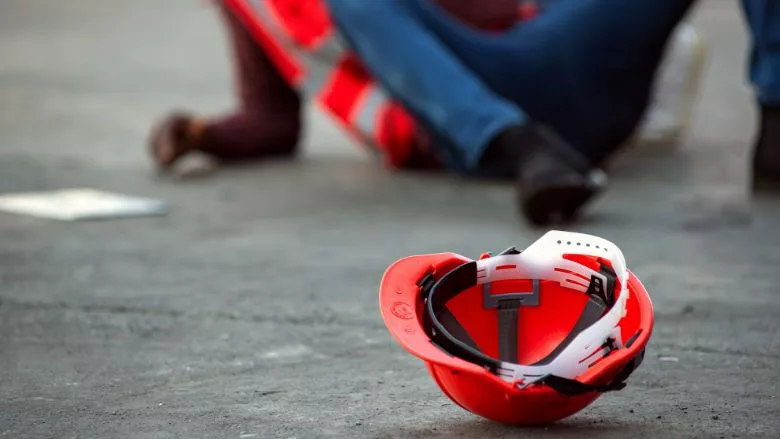
This is the second article in our OSHA Top 10 series, and we are diving into the first of the top 10 most frequently cited standards for 2024, Fall Protection, General Requirements. OSHA cited 6,827 violations in 2024 for this standard, which is double the number of violations for the second most cited!
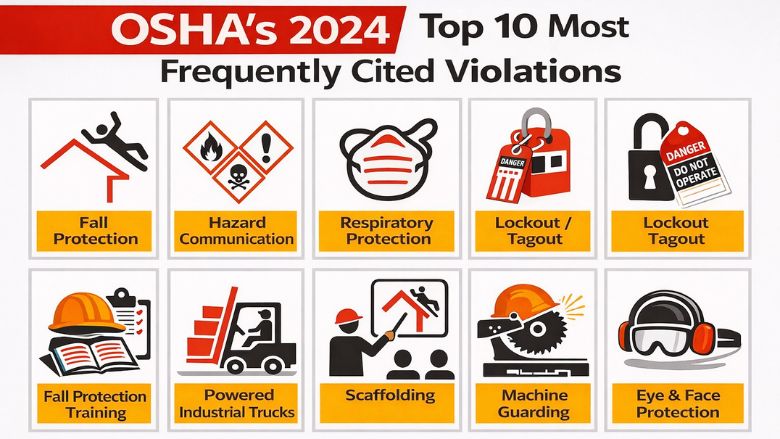
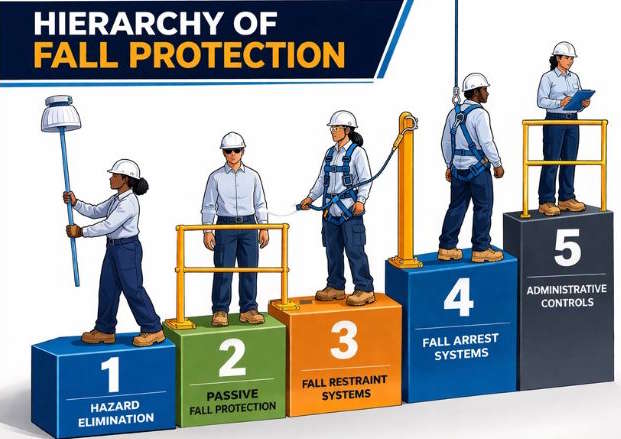
Credit: AI-generated image (OpenAI DALL·E), customized for R&R Magazine
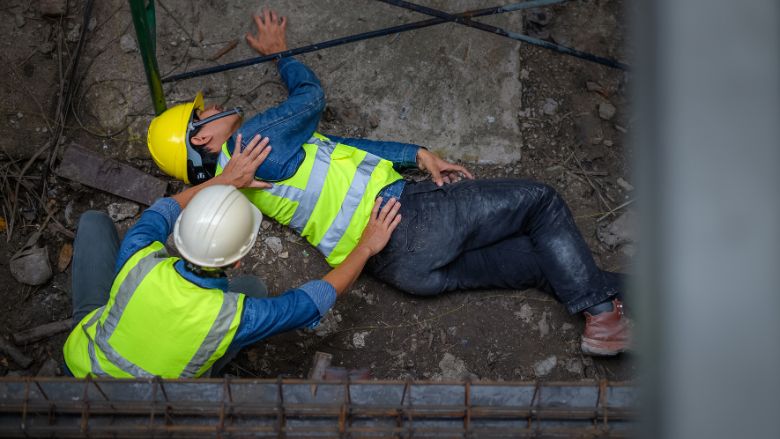
I can tell you that aside from the actual fall protection violations observed, OSHA is very vigilant with this topic because falls are the #1 cause of fatalities in the construction industry. (Remember, the restoration industry does not have an NAICS Code, so the closest labor group injury statistic we can follow is the construction industry.) We can dive into fatal fall statistics, but the significant static here is that falls are still killing people at a higher rate than any other cause!
Bottom Line: Falls are OSHA’s most cited violation and the leading cause of death.
Credit: WUT789 / iStock / Getty Images Plus
The OSHA Regs
Now that we understand the significance, let’s talk more specifically about the fall citation. For falls, OSHA references 1926.501, Duty to have fall protection. This regulation isn’t lengthy, but I will summarize what OSHA wants:
- Walking/working surface shall support the weight of employees.
- Employee(s) shall be protected from falling from an unprotected edge that is 6 feet or higher from a lower level.
- Fall protection options include:
- Guardrail
- Safety net
- Fall arrest system
- Holes, Skylights, Form work/Steel work, Ramps, and Runways with unprotected edges 6 feet or higher shall have fall protection
- Excavations 6 feet or deeper shall have fall protection
- Falls into/onto dangerous equipment shall have guardrails, equipment guards, or fall protection.
- Bricklaying and related work with at edges 6 feet or higher shall have fall protection; that includes when the employee reaches more than 10 inches to the working surface.
- Roofing work at 6 feet or high, which includes
- Low-slope roofs, which have additional options for a warning line system. (see 1926.501(b)(10) for more details)
- Steep roofs require conventional guardrail/safety net/fall arrest systems.
- Precast concrete erection with edges 6 feet or higher shall have fall protection.
- Residential construction with edges 6 feet or higher shall have fall protection.
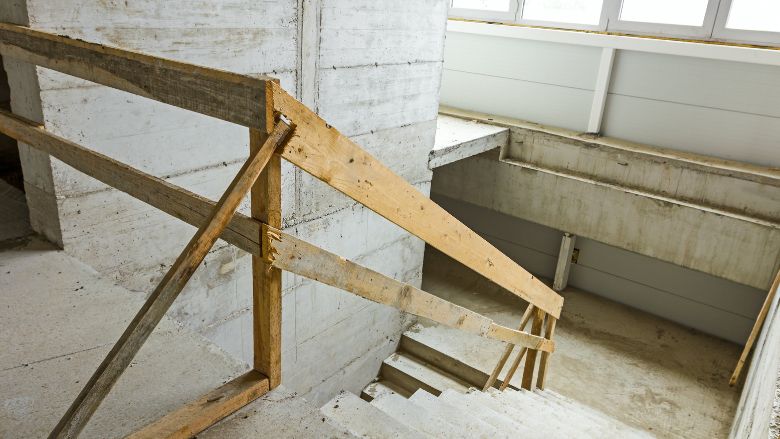
- Wall openings with edges 6 feet or higher shall have fall protection. For the sake of simplicity, we’re talking about gaps of 18” or more that are 30” or higher. (Refer to 1926.501(b)(14) and the wall opening definition.)
- Employee protection from falling objects includes hard hats, toe boards, screens, guardrails, canopies, and barricaded hazard areas. (See 1926.501(c).)
Credit: roman023 / iStock / Getty Images Plus
Credit: AI-generated image (OpenAI DALL·E), customized for R&R Magazine
The Takeaway
You can see that the most cited regulation, fall protection, has quite a few specific applications beyond just the requirement to protect employees from a fall 6 feet or higher! What does that mean for the Restorer who simply wants to protect their employees and avoid violations? I’d recommend the following:
- Fall Protection Training for restoration owners, managers, and employees. More specifically, get hands-on training that shows how to apply the requirements, put on a harness, and all the details relevant to restoration work. Those details are not available from an online course!
- A Job Hazard Analysis (JHA) for jobsites requiring fall protection that specifically identifies what protection and equipment is needed. (actually, a JHA for all jobsites).
- Jobsite visits by management/leadership when fall protection is required.
- A written fall protection program that everyone can refer to and use as guidance.
Note: A previous article on fall protection was published on March 31, 2023; Safety Insight: Choosing and Applying the Right Fall Protection for The Job.
Summary
We all know that fall protection is critical in the construction industry and falls are a killer. Dare I say, the restoration industry does not always see itself in that category or level of hazard. I can personally attest that falls can and do happen in our industry and they change the way you look at a fall hazard. Take some time this year to see where your weaknesses are in fall protection so that you don’t contribute to the OSHA violation count and fully protect your employees from this serious hazard! Part three of this series we will cover Hazard Communication (1910.1200), something that is vital in our day-to-day work. If you’ve followed Part One and now Part Two, you know there were a total of 3,121 violations cited for our next topic.
Looking for quick answers on restoration, remediation and cleaning topics?
Try Ask R&R, our new smart AI search tool.
Ask R&R →
Looking for a reprint of this article?
From high-res PDFs to custom plaques, order your copy today!