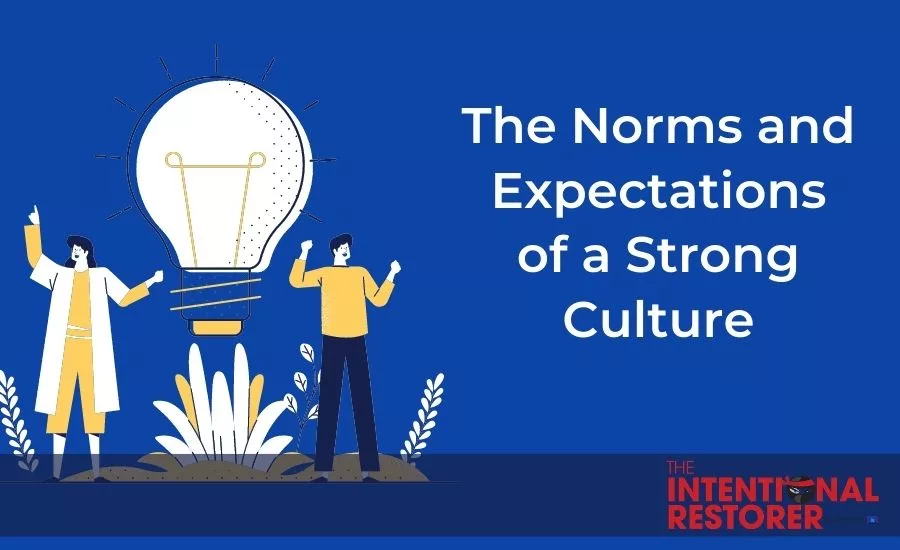
The Norms and Expectations of a Strong Culture
"Be excellent to each other.” and "party on dudes." These quotes are from "The Two Great Ones", William "Bill" S. Preston Esq. and Ted "Theodore" Logan. You will remember them from their inaugural film, "Bill and Ted's Excellent Adventure" (1989) where two friends travel through history to complete a report, the success of which has implications for the duration of mankind. In this movie, Ted opens a history book and quotes Socrates, "The only true wisdom consists in knowing that you know nothing."
In the latest book from The DYOJO publication, Be Intentional: Culture, the authors have worked to share from their experiences what has and has not worked as they labored to build strong cultures in their various organizations. What they know and share comes from trial and error. There is a great quote that I believe is attributed to Debasish Mridha,
“Experience comes from failure and success comes from experience.”
You will find that the mindsets and habits of our talented group of authors are practical and helpful to your own efforts to build a thriving culture. It is important to remember that these truths were not discovered because these authors are smarter or more talented than the reader; they may have more experience than you. If you can learn from their experiences, many of which have come through surviving and learning from failure, then you can shorten your DANG learning curve; as we like to say on The DYOJO Podcast.
As you pursue building a strong culture, don't make it any more difficult than it has to be. As Bill and Ted put it, "Be excellent to each other." If you are excellent to your people, your people will be excellent to your clients, word will spread and you should have a great shot at remaining competitive as you work with your team to adapt to ongoing challenges and evolutions in the market.
We structured Be Intentional: Culture to be a cohesive read through as well as something that will be a reference when the reader needs some inspiration as you build your team and culture. Many of the co-authors have been guests on The DYOJO Podcast and have shared their great insights on the mindset and habits that lead to enhancing strong cultures.
If a picture is worth a thousand words, we will share this picture and a few concluding thoughts from the book.
Looking for quick answers on restoration, remediation and cleaning topics?
Try Ask R&R, our new smart AI search tool.
Ask R&R →
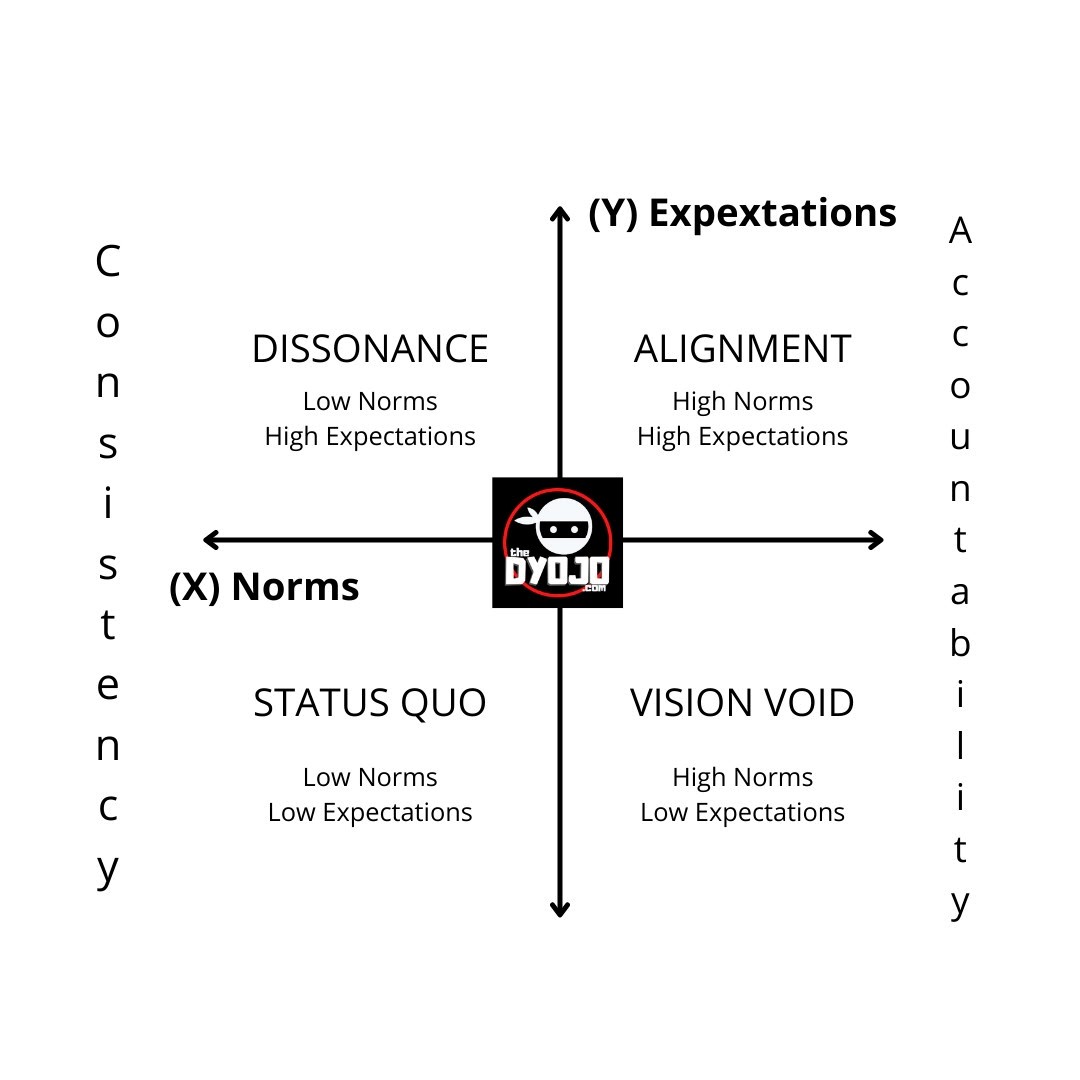
Culture could be described as the culmination of your organizational norms (x - axis) and expectations (y - axis).
Norms are what you do. If you stand back and observe yourself and your team, what do you see? Are your actions in alignment with your stated vision, values, and objectives (or whatever words you use)? As we discuss several times in this book, the question is not whether you have a culture, the question is whether you have been intentional in developing it. Do you communicate your expectations and do the norms you practice and/or allow follow those principles?
Are you, as a person in a position of leadership practicing:
(A) Dissonance
(B) Status Quo
(C) Vision Void
(D) Alignment
(E) Other
Expectations are both those that you declare as well as those that are understood. There often is dissonance between what is done and what is said. Expectations can also be revealed in how you hire, train, discipline, reward, promote, and fire. Similar to parenting, if you say one thing but do another or don't follow through, your team (like children) will continue to test at just how far your boundaries can be pushed.
- Does your hiring process include measures to determine if a candidate is a good cultural fit?
- How consistently do you train your team on hard and soft skills relevant to your work?
- When someone acts out of character for the organization, how are they dealt with?
Consistency is critical to developing norms of behavior that embrace and enhance your culture. How often do we set out to make a change but fail to stick with it long enough to determine whether it is a success or failure and why. I would suggest that you don't make any changes that you are unwilling to commit at least 90 days to the testing of the item's merits. Like a scientist, you should have a thought out hypothesis of what you plan to do, why you think it will work, and how you believe it will affect the team. Most changes have an arc of high investment, low initial productivity, until you get over the "hump" and can see whether the item is going to be effective.
Accountability, from top-to-bottom as well as bottom-to-top, is critical to sustaining and further developing your culture. Expectation means that you are both intentional in your development as well as your communication with your team. Communication in this instance would include training. I recently shared a working definition of accountability that I think is helpful. "Accountability is having a healthy fear that you may be the weakest link on your team and working diligently to ensure that it isn't so." This should not be confused with having a low self-worth or value. What I am attempting to convey is that you want to be on a team of people where you feel a strong desire to ensure you are carrying your weight and others are doing the same. Focus on your roles and responsibilities and work to be the best you can at those. A team helps fill in the gaps only after every individual is 100% committed to mastering their area of contribution.
Status Quo
Low Expectations + Low Norms
You may have a poster on the wall that communicates your "expectations" but in practice there is little communication, training, development, or discipline that reflects, enhances, or defends those stated values. Your norms exist but they are not intentional. Jocko Willink has a great quote, "When setting expectations, no matter what has been said or written, if substandard performance is accepted and no one is held accountable—if there are no consequences—that poor performance becomes the new standard.” Too often people in a position of leadership know what needs to be done but don't have the resolve to see things through internal opposition and/or resistance to change. If you aren't disciplined in your own personal and professional development, you are not going to be authentic in your efforts to improve your team. Start by leading yourself so that you can lead by example.
Dissonance
High Expectations + Low Norms
You have the poster on the wall and you have a lot of meetings, but in practice these activities are not intentional or effective at impacting the norms of your organization. I quoted George Bernard Shaw earlier, “The single biggest problem in communication is the illusion that it has taken place.” I have been in many organizations where regular "training" occurs but it is rarely designed to address real world scenarios faced by the team members and the standards don't apply to the "money makers" who get a pass on bad behavior. You have to dismount your high horse if you are going to impact change where it matters, at the ground level of your organization. Roll your sleeves up and get some dirt under your fingernails as you work with your team to make positive changes.
Vision Void
Low Expectations + High Norms
Those people in a position of leadership who do very little to develop their cultures and yet somehow have periods of high performing teams, enigmas. The biggest threat in this scenario is for the manager to take too much of the credit for their team's success and not understand who the real drivers of that success have been. Often this type of leader rewards those who they like rather than those who actually contribute and it won't be long before those people get tired of being overlooked. As we have discussed, perhaps ad nauseum, in this book - don't make culture more difficult than it is. The beauty of this type of organization is that all that is needed is a bit of investment, of allowing those who shine to formalize the effort, and the people in a position of leadership to defend the culture. When you begin the process of raising the expectations, across the board, to meet the norms, many who have been hiding in the shadows, benefiting from those at the front of the lines, will be revealed and will loudly resist. They may say, "Why mess up a good thing with all these expectations and accountability?" Be brave. Identify and give credit where it is due. This doesn't make you weak as a manager, it will ensure the sustainability of your current high.
Alignment
High Expectations + High Norms
Where your norms meet your expectations, you have alignment of values. There is consistency in your actions and accountability among all of your team members. This doesn't mean that you can let your foot off the gas and coast to victory; far from it. The culture sets the tone and pace, it rallies your team to be disciplined even in periods where motivation may be lacking. All of the items from phases prior apply. You must continue to hire, train, develop, discipline, and fire based upon these expectations and norms (your culture). As you grow and the market changes, you have to adapt. We discussed navigating that curve of growing without losing your values with author Lex Sisney on The DYOJO Podcast Episode 22.
- Be Intentional: Culture - is now available in Kindle and paperback through Amazon
- Contact The DYOJO about discounts when you bulk order for your team
Looking for a reprint of this article?
From high-res PDFs to custom plaques, order your copy today!