Many people in the environmental industry have heard of the terms “sick building syndrome” and “indoor air quality” (IAQ), but substantially fewer understand the concept of “building bake-out”.
Protecting return-to-work individuals who had been restricted from gathering in an effort to minimize the spread of COVID-19, and efforts to reopen public indoor spaces safely have led to a lot of interest in how HVAC systems may be adjusted to reduce the spread of the virus.
Working for a state occupational safety and health program and as a safety and health consultant for over 40 years, I have learned the value of understanding the peculiarities of any chemical being used on the job site.
For many people, discussions of chemistry are not only confusing; such conversations are actually scary. Too many individuals do not appreciate just how valuable a basic understanding of chemistry can be to their efforts as a cleaning or restoration professional.
Have you ever stopped to wonder what role chemistry plays in our professional lives as cleaners and restorers? To get a sense, all you have to do is go out to your shop or warehouse and stop in front of the shelf, cabinets, or storage room that has all your miscellaneous bottles, cans, bags and containers of miscellaneous chemicals.
Although there are some substantive differences during execution of the work, there is no denying that many of the core concepts integrated into the current standard of care for mold remediation come from the asbestos abatement industry.
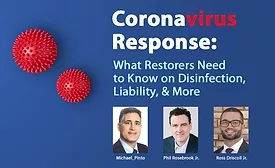
Michael Pinto, Phil Rosebrook Jr., and Ross Driscoll Jr. weigh in on coronavirus outbreak and how restoration contractors can step in to help their communities.
In many respects, it seems very odd. The word “it” pertains to a large number of crucial issues in the mold remediation industry where practitioners still have serious differences of opinion regarding key aspects of the work.
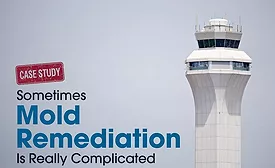
Air traffic control towers are the most visually striking aspect of any airport. These tall, funnel-shaped structures are the focal point for the movement of aircraft over all the taxiways and runways, as well as in the air for a five-mile radius around the airport.