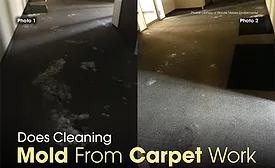
There is considerable confusion in the minds of restoration professionals regarding the proper approach to carpets that are part of a water loss where visible fungal growth is present.
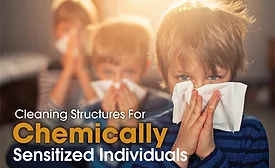
This is the last of a five part series providing insights and suggestions for restoration contractors who are faced with situations involving chemically sensitized occupants. The focus has been on individuals whose sensitivities are related to chemical exposures.
The first three parts of this series covered an overview of chemical sensitivities, the critical importance of source removal and detailed cleaning, and products and processes that can be used for neutralization of chemical or biological residues that remain following cleaning.
In the first part of this series, basic information was offered regarding the causes of chemical sensitization and the impact that such an experience has on a person’s life.
As we begin, it is important to remember that cleaning structures for chemically sensitized individuals involves the removal or control of chemical source material as well as the removal of chemical residues; including residue that has adhered to dust.
As will be explained in greater detail, cleaning and restoration professionals are increasingly being faced with the challenge of responding to situations where chemically sensitive individuals are involved.
The issue comes up during instruction quite frequently. In mold classes, water restoration seminars, fire cleanup presentations, and forensic restoration training; it is variations of the same thought. What takes precedence in our business when we run into materials that may be regulated under various health and safety standards?
The first article in this series ended with a discussion on using fogging to assist particle control, and the importance of proper droplet size. Smaller, light particles tend to be more effective because they are then similar or smaller in size than the particles being removed from the air.
As a professional who has been involved in the mold remediation industry ever since it emerged from the shadows of the more general concept of an indoor air quality problem, I find it fascinating to see how much the science and practice of fungal control continues to change.
Hoarding is now recognized by the medical community as a psychological disorder. While it has only recently been defined and studied as an illness (mostly in the last 20 years), it has been recognized as a problem for nearly a millennium.