As will be explained in greater detail, cleaning and restoration professionals are increasingly being faced with the challenge of responding to situations where chemically sensitive individuals are involved.
Strange, how a fire can ignite from the most unlikely source; especially when that source is water related. A condo in an affluent community drew the unlucky straw of being located next to a pump station that ran the lawn sprinkler for six homes.
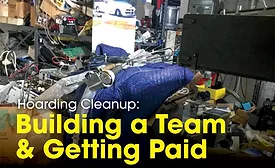
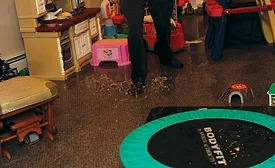
Restoration, in general, is not for the faint of heart. You can probably think of dozens of situations you’ve been in that would make the “average” person squirm. Snakes in a crawl space? Monster spiders in an attic? Sewage up to your shins? Hoards of trash and biohazardous waste? That list just scratches the surface.
Every entrepreneur whose business has grown to the point where they have people in roles managing others has a few individuals in their organization that are critical for success. These are the rock stars.
Mechanic’s liens are unquestionably the most powerful, and most poorly-understood collections weapons available to contractors. But like any weapon, they are dangerous, and can backfire on the unwary and the inexperienced.
In our industry, we face jobsite odor problems almost daily, and no matter how much experience we gain, how much training we get, or how many of these educational articles we read, controlling odors can still be a challenge. So, here’s a quick summary of the various odor control tools at your disposal and some tips and tricks I’ve picked up along the way to help you decide what tools to use and when to use them.
The landscape of digital marketing is changing. The view is more expansive than ever as customer behavior continues to become more impatient, and more demanding.
The World Economic Forum says we are living in the Fourth Industrial Revolution. Today, there are more than 2.2 million apps in Apple’s App Store, and nearly three million in the Android store. A Time Magazine article published in early 2016 found at that time that 72 percent of Apple’s apps were aimed at toddlers and preschoolers.
This is the third in a series of articles on how to get paid for insured restoration work. The first two articles focused on accelerating payments from insurance companies and from banks holding two party checks in escrow, mostly in homeowners insurance claims.
Under the current state of the law, the restoration industry must navigate a labyrinth of archaic laws generically written for the construction industry. These laws have no place whatsoever in the world of emergency mitigation service.