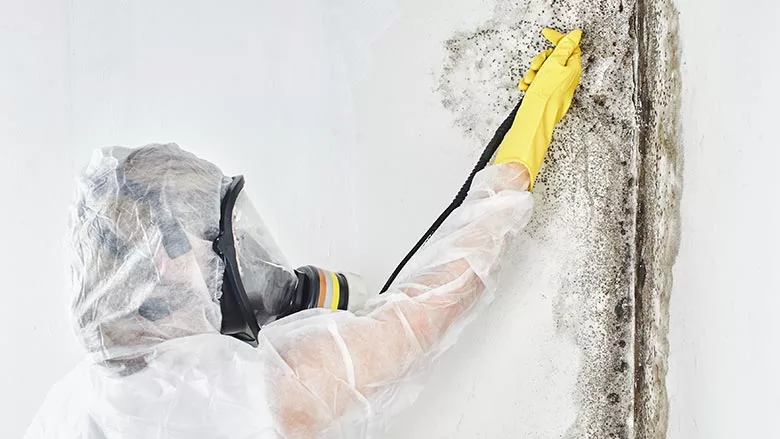
Bed Bugs After Remediation: Are Restoration Practices Quietly Contributing to Reinfestation?
Learn how contents handling, demo, and transport may contribute to bed bug dispersal
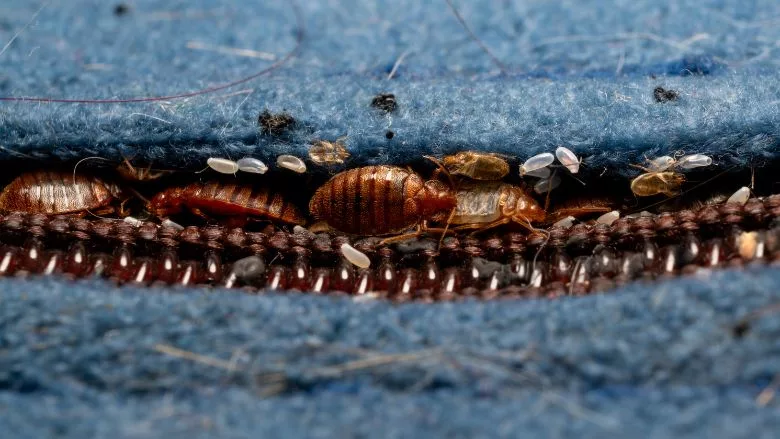
The property is cleared. The visible signs are gone. Contents have been removed, soft goods discarded, structural materials opened and dried, surfaces cleaned, and the pest control operator has completed treatment. Yet weeks later, the calls start again. Bites. Sightings. Complaints. The immediate assumption is treatment failure. But what if the failure occurred somewhere else in the process, not during extermination, but during remediation itself?
There is no published study directly stating that restoration practices spread bed bugs. However, when one examines the entomological literature on bed bug dispersal, survival, resistance patterns, and passive transport mechanisms, a more complex risk picture emerges. The biology of Cimex lectularius suggests that restoration workflows, particularly those involving contents manipulation, demolition, staging, and transport, may unintentionally create opportunities for redistribution if containment is not deliberate and systematic.
Bed bugs do not fly. They do not jump. Their primary method of long‑distance spread is passive dispersal, hitchhiking on objects, furnishings, and personal belongings1,2. Studies have demonstrated that bed bugs readily conceal themselves in seams, voids, corrugations, and fabric folds and can survive extended periods without feeding 3,4.
In multi‑unit housing environments, infestations have been shown to expand not only through wall void migration but also through human‑mediated transport during moves, renovations, and routine handling of belongings5. EPA guidance explicitly warns against moving infested items from one area to another without sealing due to spread risk6.
Restoration professionals routinely move contents. The implication is not that restoration causes infestation. Rather, the mechanical steps embedded in restoration align closely with documented passive dispersal mechanisms.
Research demonstrates that disturbance can trigger dispersal behavior. When harborage sites are disrupted, bed bugs may migrate to adjacent areas2. Demolition activities, pulling baseboards, removing drywall, lifting carpet strips, represent high‑disturbance events capable of redistributing surviving insects.
A common assumption is that once infested soft goods are removed, risk is mitigated. However, bed bugs readily harbor in structural voids, outlets, subfloors, and behind baseboards1. Eggs cemented into cracks can be resistant to insecticides depending on formulation and contact time7. Heat treatments may also leave survival pockets in insulated voids or shielded areas8.
Looking for quick answers on restoration, remediation and cleaning topics?
Try Ask R&R, our new smart AI search tool.
Ask R&R →
Perhaps the most underappreciated variable is resistance. Pyrethroid resistance is now widespread globally7,9. Evidence also suggests evolving resistance to additional insecticide classes10. Treatment success therefore may not equal eradication.
Research has documented bed bug survival in automobiles under moderate conditions11. Restoration vehicles transporting upholstered contents or debris may unintentionally serve as temporary harborages if items are not sealed prior to loading.
In apartment, hospitality, and senior living environments, restoration often involves corridor staging and elevator transport. Bed bug dispersal between units has been well documented in multi‑unit dwellings5. Even brief exposure during movement may allow escape of dislodged insects.
In infection control and water damage remediation, validation is increasingly emphasized. In bed bug management, confirmation often relies on visual inspection or canine detection. While canine detection can be sensitive, performance variability exists depending on training and environmental complexity12.
There has been growing interest in fungal biopesticides such as Beauveria bassiana for control. Studies suggest efficacy including against resistant populations13. However, these agents require contact and favorable environmental conditions and should be considered part of integrated pest management rather than standalone eradication tools.
No peer‑reviewed study has examined restoration contractors as vectors of spread. That gap should not be interpreted as absence of risk. The literature clearly establishes passive transport1,2, disturbance‑induced movement2, prolonged survival3, resistance 7,9, and multi‑unit transfer5. When overlaid onto restoration workflows, a plausible transmission pathway emerges.
If restoration is to minimize redistribution risk, containment strategies may include sealing contents before movement, minimizing staging, dedicating equipment, inspecting vehicles, and coordinating clearance confirmation prior to reconstruction.
The restoration industry excels at managing visible damage. Bed bugs challenge that paradigm. They are mobile, cryptic, and adaptive. Reinfestation is often attributed solely to pesticide failure or occupant behavior. Yet workflow mechanics may also play a role. As density increases and resistance expands, restoration professionals may find themselves more directly implicated in infestation investigations. The science suggests we should at least ask.
References
- Potter MF et al. The history of bed bug management. American Entomologist. 2010.
- Reinhardt K, Siva‑Jothy MT. Biology of the bed bugs. Annual Review of Entomology. 2007.
- Usinger RL. Monograph of Cimicidae. 1966.
- Romero A et al. Insecticide resistance mechanisms. Journal of Medical Entomology. 2010.
- Wang C et al. Bed bug dispersal in apartment buildings. Journal of Economic Entomology. 2010.
- Environmental Protection Agency. Preparing for treatment against bed bugs. 2023.
- Romero A, Potter MF, Haynes KF. Insecticide resistance. Journal of Medical Entomology. 2007.
- Pereira RM et al. Lethal effects of heat treatment. Journal of Economic Entomology. 2009.
- Zhu F et al. Knockdown resistance mutations. Archives of Insect Biochemistry. 2010.
- Gordon JR et al. Resistance to pyrethroid‑neonicotinoid insecticides. Scientific Reports. 2014.
- Potter MF et al. Bed bugs in vehicles. University of Kentucky Extension. 2015.
- Cooper R et al. Evaluation of canine detection. Journal of Economic Entomology. 2014.
- Barbarin AM et al. Beauveria bassiana for bed bug control. Journal of Invertebrate Pathology. 2012.
Looking for a reprint of this article?
From high-res PDFs to custom plaques, order your copy today!