Are You Making Safety a Priority?
We took a look at three jobs and asked the professionals how to best stay safe on them.
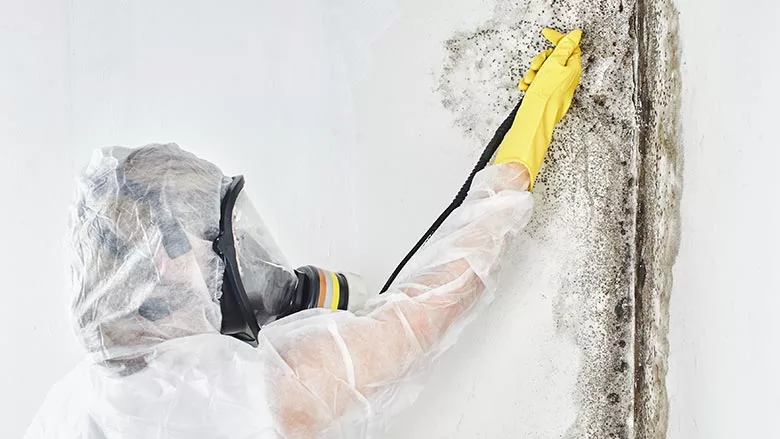
You can’t underestimate safety, especially on the types of jobs that you’re likely to be called out to in the restoration industry. But are you wearing the right PPE and taking the proper precautions when you’re on-site? If you’re not, you’re not only endangering yourself, but your clients, your workers, your family and, potentially, your company’s reputation.
To help fill you in on what PPE you should be wearing, we touched base with three industry professionals with first-hand knowledge of the danger of each situation they were presented with to talk about how to best protect yourself. Here’s a look:
Category 3 Water Loss
As you know from the IICRC’s definition of Category 3 water, it’s characterized as grossly contaminated water and can contain disease-causing pathogenic organisms. But what you might not know is that there are over 120 different viruses excreted by humans that could be in a Category 3 water loss or sewage losses, including rotavirus, adenoviruses and the Norwalk virus. And that’s in addition to harmful bacteria and parasites.
“At a minimum, to reduce the risk of these toxigenic and infectious disease-carrying microbes, technicians should be provided with training and the necessary PPE,” says Daniel Bernazanni PhD, the Founder and President of Flood Safe Habitats and a veteran of the water damage restoration and indoor environmental fields. “NIOSH-approved half-, full-face or air supplied respirators with organic vapor and HEPA cartridges, protective coveralls and suitable gloves – these will reduce exposure from mycotoxins and other contaminants in the air or contaminated materials that could be absorbed through the skin.”
Bernazzani continues, “It is crucial that flood victims, restoration workers and volunteers understand that dangers do not recede with any category of contaminated water damage. Often times, a slightly musty odor, or what appears to be minor contamination, suggests that a more serious health threat may be lurking inside wall cavities or in or under rugs, carpets and padding.”
Bio-Recovery
Andrew Yurchuck, owner of Bio-Clean of New Jersey and current president of the American Bio-Recovery Association (ABRA), has been doing bio work for about 20 years now. And over that span, he’s come to know that 1 out of every 300 people is HIV positive. One out of every 20 has Hepatitis. One out of every 5 has some sort of STD. And about 50% of all people have some sort of communicable disease, from cold sores to HPV.
“Disease – that’s the No. 1 concern,” he says. “That’s why we’re there to begin with.”
Looking for quick answers on restoration, remediation and cleaning topics?
Try Ask R&R, our new smart AI search tool.
Ask R&R →
Because of the concern of contracting a disease, Yurchuck has adopted a motto in his business – maximum PPE, every time, all the time. He says there’s no excuse not to be wearing it.
“You need to have a biohazard suit that’s rated for whatever contaminant you’re working with,” he says. “You need eye protection, because you’re going to be dealing with splash. I offer my guys three different types of eye protection: regular safety glasses, old fashioned chemical glasses with side splash protection and full face shields.”
And that’s not even getting into respirators. Yurchuck says that while each job is different, half-face and full-face respirators are a staple in his business.
“The bio company that doesn’t necessarily follow industry practices, although they might be cheaper, isn’t necessarily going to be cheaper in the long haul when a lawsuit results,” he says. “Let’s say that a job goes bad and you end up in court for whatever reason. I want to be the guy that met or exceeded industry standards, which is HEPA P100 masks. I don’t want to be the guy in the paper masks.”
Asbestos Abatement
As you read in the cover story from the R&R August issue, the once clear-cut segments of restoration are starting to overlap. Hence, more and more restoration contractors are getting into asbestos abatement. But asbestos abatement is an extremely complicated project, based on the fact that inhaling asbestos fibers during abatement is very dangerous and can result in lung damage and cancer.
That’s why Vinh Pham, VP of Operations, Envirocheck, recommends that current abatement jobs always have plastic containment barriers established and that air filtration should be set in negative air pressure mode with air exhausting either outdoors or outside the containment.
“A restorer should always know that only authorized personnel equipped with PPE is allowed entry into the work area,” Pham says. “Proper PPE consists of disposable coverall suits and respiratory protection. The minimum respiratory protection is a half-face respirator equipped with HEPA filter cartridges. Prior to donning the appropriate respiratory protection, the restorer should be medically cleared to use such equipment and should participate in a proper respiratory program administered by their employer.”
Looking for a reprint of this article?
From high-res PDFs to custom plaques, order your copy today!