In this article, I am going provide you with what is expected of employers, some resources for those expectations, and some proactive heat management practices you can provide at your restoration jobs.
“Creating a clearly planned education and career path for your technicians will help with employee retention and improve the dedication and quality of your restoration efforts,” Lorne McIntyre writes. This article focuses on the role of a technician from day one to an RIA Certified Restorer and can be used as a guide to not only develop employees but attract more talented candidates.
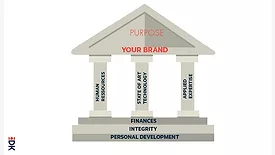
Rather than begin the hiring process by looking at external factors such as unemployment rates or shifts in the perceived value of secondary education (things outside your control), it would be more beneficial to start the recruiting process by looking internally at both your company’s culture and the company’s leadership (things within your control). Chuck Violand highlights three critical areas to invest in.
“One of the many things I like most about being involved in the training side of our industry is the opportunity to meet people new to the industry who are on a mission. Whether it is a new owner or a person who has been challenged to make an impact in their organization, the drive and excitement is infectious. I recently met an owner/operator of a new restoration company and afterward thought, ‘What if I could bottle that and share it – the mindset and the passion?’”
There is one universal key that, Jennifer Sharpe found, will always lead to an increase of success. That is your own commitment to personal development.
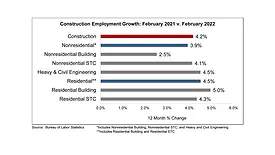
Overall, the industry has recovered virtually all (99.0%) of the jobs lost during earlier stages of the pandemic. The construction industry added 60,000 jobs on net in February, according to an Associated Builders and Contractors analysis of data by the U.S. Bureau of Labor Statistics.
On its surface, restoration doesn’t seem synonymous with “soft.” It’s a hard industry that operates in physically and emotionally tough working environments. Restoring a property to pre-loss condition requires a particular set of hard (job-specific) skills and tools. But there is a soft side that, I’d like to argue, carries more weight.