Ebola Is Back: Why Restoration Professionals Must Prepare for the Biological Emergencies
Understanding biosecurity response, environmental control, and containment for high-consequence pathogens
Most biological threats never make international headlines. Ebola does. And for good reason.
The ongoing Ebola outbreak in Central Africa has once again reminded the world that high-consequence biological threats are very real. What makes the current outbreak particularly concerning is that it involves the Bundibugyo species of the Ebola virus, a rare strain for which there is currently no approved vaccine and no targeted antiviral therapy specifically proven effective.
For physicians, epidemiologists, and public health officials, this reality immediately changes the risk equation. For restoration and remediation professionals, it should as well.
When vaccine protection is unavailable, the burden shifts back to the oldest principles of infectious disease control:
- Identification.
- Isolation.
- Containment.
- Environmental control.
- Decontamination.
In other words, the very foundations of biological emergency response. At first glance, an Ebola outbreak occurring thousands of miles away may seem irrelevant to restoration and remediation professionals in North America. History suggests otherwise.
- International travel moves millions of passengers across various continents every day.
- Sports fans will cross oceans to see their teams win championships.
- Healthcare workers deploy globally.
- Military personnel move internationally.
- Humanitarian organizations cross borders routinely.
- Patients seek treatment in multiple countries.
Pathogens travel with them. The next biological emergency may not begin in your city. But it could arrive there tomorrow.
- At your airport.
- Your hospital.
- Your ambulance fleet.
- Your nursing home.
- Your correctional facility.
- Your hotel.
- Your commercial building.
- Or your client's home.
The question is not whether biological threats exist. The question is whether we possess the capability to contain them when they do.
Looking for quick answers on restoration, remediation and cleaning topics?
Try Ask R&R, our new smart AI search tool.
Ask R&R →
Understanding Ebola
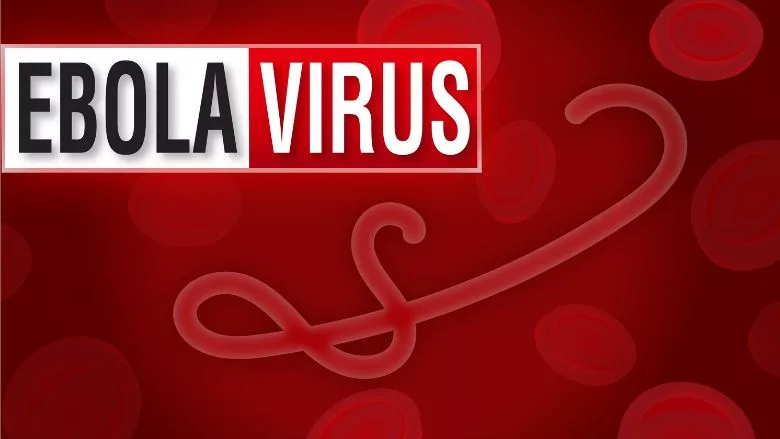
The Ebola virus belongs to the Filoviridae family, a group of filament-shaped enveloped viruses capable of causing severe viral hemorrhagic fever. Unlike highly contagious airborne pathogens such as the measles, Ebola spreads primarily through direct contact with infected bodily fluid. That distinction often creates a dangerous false sense of security. Because while Ebola does not spread through the air with the efficiency of measles, it possesses another characteristic that makes it extraordinarily dangerous:
Massive viral loads.
As the disease progresses, infected individuals can shed enormous quantities of virus through:
- Blood
- Vomit
- Diarrhea
- Urine
- Saliva
- Sweat
- Semen
- Contaminated medical waste
- Human remains
Every one of these materials can contain the infectious virus. Every one of these materials can contaminate an environment. As symptoms worsen, contamination can rapidly spread throughout patient rooms, bathrooms, vehicles, medical equipment, residences, hotels, ambulances, and healthcare facilities. This is where medicine and remediation intersect. Once the contamination enters the environment, Ebola is no longer solely a healthcare problem. It becomes a containment problem.
And ultimately, it becomes a restoration problem.
Why Ebola Remains One of the World's Most Feared Pathogens
The fear surrounding Ebola is not driven solely by mortality. It is driven by the combination of mortality, delayed recognition, environmental contamination, and operational complexity. Historically, Ebola outbreaks have demonstrated case fatality rates ranging from approximately 25% to 90% depending on the viral species involved, available medical resources, and speed of intervention. Across major outbreaks, mortality has frequently approached 50%.
To put that into perspective, few naturally occurring infectious diseases encountered by civilian responders carry that level of lethality. Compounding the danger is the disease's ability to disguise itself during its earliest stages.
Patients often initially present with:
- Fever
- Fatigue
- Headache
- Muscle aches
- Weakness
- Nausea
These symptoms are indistinguishable from dozens of common illnesses.
- Influenza.
- COVID-19.
- Malaria.
- Gastroenteritis.
- Food poisoning.
The result is a dangerous period of delayed recognition.
During this phase, infected individuals may continue traveling, interacting with family members, seeking medical care, or entering public spaces before Ebola is even suspected. By the time diagnosis occurs, multiple exposures may have already occurred. For responders, this creates a uniquely dangerous scenario.
The contamination event may already be underway long before anyone realizes it exists.
Why Ebola is Classified as a BioRisk Level 5 Event
Over decades of responding to microbial contamination events, environmental hazards, forensic restoration projects, and biological incidents, Microbial Warrior® and world-renowned expert in forensic restoration, decontamination, and abatement, Jeff Jones recognized a critical gap in emergency response.
Most biological hazards are discussed using medical terminology or laboratory classifications. Very few systems exist that allow responders to rapidly evaluate operational risk in the field. To address this challenge, Jones developed the proprietary BioRisk Scale. Unlike laboratory classifications, the BioRisk Scale evaluates threats from the perspective of operational response.
The system assesses five critical factors:
- Mortality potential
- Transmission potential
- Environmental contamination potential
- Operational complexity
- Consequence of containment failure
Under this framework, Ebola is classified as a BioRisk Level 5 Event, the highest threat designation.
This designation is not based on fear. It is based on operational reality. The current Bundibugyo outbreak receives additional weighting because responders cannot rely upon an approved vaccine as a primary protective layer. Containment failure may therefore have significantly greater consequences.
Few biological threats score as highly across all five categories. Ebola combines extreme lethality, delayed recognition, efficient transmission through bodily fluids, extensive environmental contamination potential, complex response requirements, and catastrophic consequences if containment fails.
From a responder's perspective, it represents one of the highest-risk biological events likely to be encountered in civilian operations.
The Hidden Threat: Environmental Contamination
When most people think about Ebola, they picture physicians, nurses, and isolation wards.
What they often overlook is that someone must eventually make the contaminated environment safe again.
- Patient rooms.
- Emergency departments.
- Ambulances.
- Aircraft.
- Hotels.
- Private residences.
- Funeral homes.
- Medical waste storage areas.
Every contaminated environment becomes part of the transmission chain. Environmental contamination is not a housekeeping issue.
It is a life-safety issue. A single improperly handled contaminated surface, bodily fluid release, waste stream, or exposure pathway can create additional infections and expand the scope of the incident. Every touchpoint becomes a potential transmission vector. Every operational decision becomes a risk-management decision. This is where specialized biological response capabilities become essential.
For restoration professionals, Ebola highlights an uncomfortable truth. Many companies are capable of cleaning. Far fewer are capable of biological containment. And fewer still possess the expertise to safely restore environments impacted by high-consequence pathogens.
Contain. Control. Neutralize. Remove.
The greatest mistake organizations make during biological emergencies is assuming that cleaning is the solution. It is not.
The objective is not cleaning. The objective is interruption of transmission. Every biological emergency response is built upon four operational principles:
Contain. Control. Neutralize. Remove.
Each principle builds upon the one before it. Failure at any stage compromises every stage that follows.
CONTAIN
Containment is always the first priority. Before decontamination begins, contamination must be prevented from expanding beyond the initial impact area.
Containment includes:
- Isolation of affected spaces
- Restricted access
- Establishment of operational, transitional, and clear zones
- Controlled personnel movement
- Exposure tracking and accountability
- Waste segregation
- Environmental assessment
Containment creates boundaries. Without boundaries, contamination spreads. Without containment, every subsequent action becomes exponentially more difficulty. Time is the enemy of biological containment. The longer contamination remains uncontrolled, the larger the operational footprint becomes.
CONTROL
Once containment has been established, the next objective is control. Control focuses on protecting responders, occupants, healthcare personnel, and the surrounding environment.
This phase includes:
- Advanced PPE selection
- Structured donning and doffing procedures
- Medical surveillance
- Exposure prevention protocols
- Personnel accountability systems
- Waste stream management
- Cross-contamination prevention
- Continuous risk assessment
- Threat suppression via pre-conditioning
Historically, many Ebola-related healthcare worker infections occurred not during patient treatment but during the removal of contaminated protective equipment. The threat is often not what responders touch. The threat is what they unknowingly carry with them. Control prevents a contained incident from becoming an expanding disaster.
NEUTRALIZE
Only after contamination has been contained and operational risks controlled can neutralization occur. Neutralization is the systematic inactivation of viable pathogens within the affected environment.
This phase requires:
- EPA-registered disinfectants with proven efficacy
- Validated disinfection protocols
- Strict adherence to contact times
- Surface-specific treatment strategies
- Verification procedures
- Documentation and quality assurance
The goal is not to make a space appear clean. The goal is to make it biologically safe. There is a profound difference. A surface can appear pristine while still harboring infectious risk. True neutralization relies upon science, validation, discipline, and repeatable protocols. Not assumptions. Not appearances. And certainly not luck.
REMOVE
Perhaps the most overlooked component of biological response is removal. Disinfection alone is not enough. Pathogens exist within organic soils, biofilms, bodily fluids, contaminated debris, porous materials, and microscopic reservoirs that can interfere with effective disinfection. These contaminants must be physically removed from the environment before true decontamination can occur.
Removal is conducted utilizing proprietary forensic cleaning methodologies developed through decades of field experience in microbial contamination, biohazard remediation, and forensic restoration. Removal requires technically specialized mechanical action performed by elite-trained responders utilizing disposable microfiber towels, microfiber pads, and specialized tools designed to physically capture and remove contamination from surfaces.
This process cannot be replaced by spraying disinfectants. It cannot be replaced by fogging. And it cannot be replaced by simply wiping visible surfaces. According to Dr. Michael Barry of the United States Environmental Protection Agency, cleaning is defined as the removal of soil and visible contaminants.
Forensic cleaning goes significantly further. Forensic cleaning is the systematic removal of biological and pathogenic contamination from both horizontal and vertical surfaces in preparation for professional disinfection and environmental restoration.
This distinction is critical. Disinfectants are designed to neutralize microorganisms. They are not designed to remove contamination. Without proper removal, disinfectants may never effectively contact the pathogens they are intended to neutralize. This is one of the reasons many biological remediation efforts fail.
Removal is not housekeeping. Removal is a specialized operational discipline. It is also one of the core tactics, techniques, and procedures that makes the response framework uniquely effective in high-consequence biological events. Only after contamination has been contained, operational risks controlled, pathogens neutralized, and contamination physically removed can an environment be considered ready for verification and occupancy.
Because biological response is not about making a structure look clean. It is about breaking the chain of transmission.
Why We Built this Group
Biosecurity Emergency Response Team – Scientific Operations Group (BERT-SOG) was created to address a critical gap in national preparedness. Most biohazard response organizations originate from either healthcare or remediation. Very few originate from both.
Biological emergencies are simultaneously medical events and environmental events.
- Understanding pathogen behavior matters.
- Understanding transmission dynamics matters.
- Understanding environmental persistence matters.
- Understanding contamination pathways matters.
- Understanding PPE failure points matters.
- Understanding how to safely return an environment to operation matters.
That requires more than cleaning. It requires more than disinfectant application. It requires a systems-level understanding of biological risk. Most remediation companies are trained to restore buildings after damage occurs. It was built to interrupt disease transmission before damage expands.
We do not view Ebola as a cleaning problem. We view it as a biological containment problem requiring medical expertise, environmental expertise, operational expertise, and specialized forensic restoration methodologies working together under a unified doctrine.
Whether the threat is Ebola, Marburg virus, viral hemorrhagic fever, emerging zoonotic disease, healthcare-associated contamination, or another high-consequence biological agent, the mission remains the same:
- Contain.
- Control.
- Neutralize.
- Remove.
The Next Biological Emergency Is Not a Matter of If
History has been remarkably consistent. New pathogens emerge. Old pathogens return. Global travel accelerates spread. Healthcare systems become strained. Organizations discover they were less prepared than they believed. Then everyone scrambles.
The organizations that perform best are the ones that trained before the emergency occurred. The restoration industry now occupies a critical position within our nation's public health infrastructure. Our responsibility extends far beyond drying buildings and removing mold.
Increasingly, we are responsible for restoring safety, operational continuity, and public confidence in environments impacted by biological hazards. The question is no longer whether biological emergencies belong within the restoration industry. The question is whether the restoration industry is prepared for them.
We believe readiness begins long before the first call comes in. Because when the next biological emergency arrives, the mission will remain unchanged:
Contain. Control. Neutralize. Remove.
The pathogen may change. The mission does not.
Looking for a reprint of this article?
From high-res PDFs to custom plaques, order your copy today!