Fentanyl: Negotiating the Planet’s Most Deadly Contaminant
The World's Leading Expert on Fentanyl Decontamination, Forensic Restoration(TM) and Abatement shares an overview.
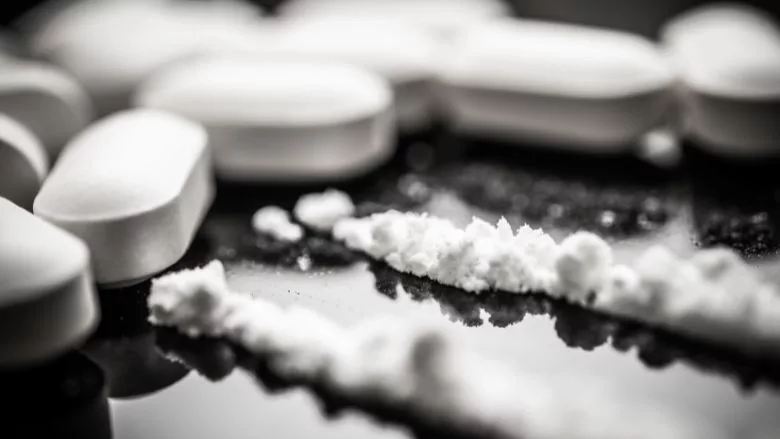
Photo Credit MoleQL / iStock / Getty Images Plus
The synthetic opioid known as fentanyl was invented in 1959 and introduced into the United States in 1968 as a pain management tool. Due to its potency, it was primarily used in hospital operating rooms for anesthesia. In the 1980s, a transdermal fentanyl patch was developed for the management of chronic pain, particularly for cancer patients. What was once used to help mankind has morphed into one of the greatest scourges of civilization. According to USAFacts, fentanayl was responsible for 200 deaths every day in 2022.1 Fentanyl has claimed more American lives than the Vietnam War. In fact, in 2023, more than 70,000 Americans died from a fentanyl overdose, according to the Centers for the Disease Control and Prevention. That’s a higher death toll than U.S. military casualties in the wars in Vietnam, Iraq and Afghanistan combined.2
The purpose of this article is to lay the foundations for a systematic approach to fentanyl remediation in microenvironments for the Certified Forensic Operators®. Having read this and understanding the basics, the author stresses that there can be no substitution for hands-on training. The first guideline for Fentanyl Remediation was published in June 2020 for Alberta, Canada, prepared by Stantec Consulting,3 and relied on “heavily” by the Environmental Protection Agency, EPA, for their voluntary guidelines addressing fentanyl cleanup.
The first hands-on training conducted within the industry for the decontamination and abatement of fentanyl was conducted in March 2023. After years of research and development and consulting with some of the top scientists in the field of decontamination, Bio-Sheen Services’ Microbial Warrior® put students through an extensive hands-on training experience, resulting in the first Certified High Risk / High Level Decontamination Specialists while never losing sight of the Prime Directive of safety.

Photo Credit: Jeff Jones
Levels of contamination
There are four levels of fentanyl contamination. The first three involve illicit drug use and distribution. The fourth level of contamination concerns itself with the use of fentanyl as a Weapon of Mass Destruction (WMD), as in a terrorist attack, and was established by the Centers for Disease Control (CDC).
Level 1 Contamination
Low Level of Contamination = Presence of a small quantity of intact pills and/or powder no larger than the size of a U.S. Susan B. Anthony Dollar.
Level 2 Contamination
Moderate Level of Contamination = Presence of damaged tablets and/or visible powder larger than a U.S. Susan B. Anthony Dollar but limited to an area approximately 3 x 3. May involve Structure, Contents and Indoor Air Quality.
Level 3 Contamination
High Level of Contamination = Presence of packaging consistent with pure fentanyl and/or suspected tableting operations, and/or powder processing locations. A Distribution Center: contamination greater than a 3 x 3 area. Contamination within HVAC system is known/suspected.
Looking for quick answers on restoration, remediation and cleaning topics?
Try Ask R&R, our new smart AI search tool.
Ask R&R →
Level 4 Contamination
Fentanyl Contamination in a wide area = Used in a Terrorist Attack. Established by the Centers for Disease Control (CDC).4
Overview
The following is not a step-by-step method, but rather a “10,000-foot overview,” which, if followed, will provide the decontamination specialist a roadmap to success. Be aware that once the line has been crossed in dealing with such a dangerous contaminant, this is no longer Cleaning and Restoration but has clearly become Decontamination and Abatement. Training, Tactics, Techniques and Tools lay down such a strong base in Bio-Sheen’s Microbial Warrior System of Decontamination and Abatement that they are referred to as the 4 Ts.

Photo Credit: Jeff Jones
Training
The first step in training is to obtain the OSHA 40-Hour Hazwoper. This will establish a foundation of understanding safety protocols, which is mandatory by law for this level of decontamination work. Next would be to obtain the Red Cross Narcan Training Program.5 And finally, attend a training program that specifically deals with the decontamination and abatement of fentanyl.
Tactics
The word Tactics or Tactical means having a plan to get from point A to point B safely. How will the team enter? How will they leave? What are the tactical objectives to be accomplished?

Photo Credit: Jeff Jones
Techniques
From the moment the threshold is crossed into the operation zone, very specific techniques are utilized for each phase of the decontamination process (remember, decontamination is a process, not a product). So, what are the proper techniques for threat suppression? What are the proper techniques when using disposable microfiber pads and towels during the Neutralizing and Abatement phases of the project?
Tools
Everything from delivery systems (sprayers), neutralizing agents, abatement equipment and even PPE is a tool, and each tool must be carefully selected for each phase of the Decontamination and Abatement Process.
To Contain, Control, Neutralize and Remove the contaminants are our Tactical considerations and should be followed in the exact order mentioned.
Contain
What will it take to isolate and contain the contaminated area? What engineering controls will be used? If the area is to be placed under negative air pressure, when is the most appropriate time to do so?
Control
Control of the contaminant must be a primary objective from the beginning of the decontamination and abatement project. This can be accomplished by wetting down the contaminant with the appropriate neutralization agent using the proper delivery system.
Note: Pump-up and Ultra-Low Volume (ULV) sprayers are not appropriate for threat suppression via pre-conditioning due to inconsistencies in droplet size and pressure, resulting in Boundary Layers and the disturbance of the contaminant increasing the possibility of sending the contaminant airborne.
Neutralize
Neutralizing agents should be carefully screened and chosen based on their ability to neutralize fentanyl.
Remove
The Abatement phase will be accomplished via mechanical action (by hand) utilizing disposable Microfiber Pads, which will then be placed for proper disposal.
The three major considerations on any project would be Structure, Contents and Indoor Air Quality.
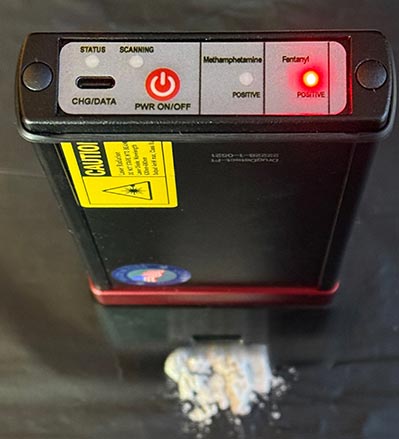
Photo Credit: Jeff Jones
Testing
Testing for fentanyl should be performed prior, during and after the decontamination project. Testing for clearance during the decontamination project can help reduce the size of the contaminated area. Final testing for clearance should be done by a third party.
Structure
How is the structure affected? What are any pre-existing conditions? Are there any compromises to structural integrity?
Contents
What can be successfully decontaminated and what must be discarded will depend on the level of contamination and whether the material is porous or non-porous.
Note: No contents, whether to be saved or discarded, can leave the Operation Zone without being treated with a neutralizing agent.
Indoor Air Quality
In any level 1, 2 or 3 contamination events, if the structure and contents have been compromised, it shall be presumed that the HVAC system has also been contaminated – unless strict, professional sampling definitively proves otherwise. In such cases, the HVAC system must undergo a complete decontamination and abatement process.
Not all HVAC cleaning methods are appropriate for this level of remediation. The only acceptable method is the use of Positive Air Duct Cleaning Method™, a system supported by years of scientific research, validated through extensive field experience and peer-reviewed by global experts in HVAC manufacturers as the standard for effective decontamination in high-risk environments.
Cross-Contamination
Cross-contamination is what happens when contaminants are unintentionally transferred from one area to another. In the case of fentanyl, cross-contamination can be attributed to foot traffic from friends, family and first responders. Transfer of a contaminant from the sole of a shoe can occur for 29 steps. The average human stride is 2.5 feet in length resulting in contamination for 72.5 feet.6 It only takes a two-milligram dose similar to 5-7 grains of salt, to cause death for an average size adult7 and even less for a child or infant. Because of these facts, Bio-Sheen’s Microbial Warrior Forensic Restoration Decontamination and Abatement insists on decontamination 100 feet from the last visible sign of contamination thus creating a safety barrier.
Conclusion
The author in this brief overview cannot overemphasize the need for training and certification. No one has died remediating fentanyl but due to a lack of understanding regarding professional Forensic Restoration Decontamination and Abatement protocols and procedures, people have died after so-called biohazard cleanup companies, without proper training, have gone out to remediate incident sites of contamination and declared them “clear” from fentanyl when they were not. Testing for clearance should be ongoing during the decontamination and abatement project. Final testing for clearance must be performed by a third party to assure a safe and contaminant-free microenvironment. Fentanyl decontamination and abatement can be slow and meticulous work that requires a serious commitment to excellence, a steady hand, an eye for detail and a servant’s heart.
Sources:
- USAFacts.org Article: Are fentanyl overdose deaths rising in the US?
- 60 Minutes CBS News, Bill Whitaker reporting, Article by, Will Croxton Sept. 22, 2024
- Fentanyl Remedation.Alberta.CA Guidance for Remediators, Regulatory Agencies and Professionals
- Centers for Disease Control/The National Institute for Occupational Safety and Health (NIOSH)
- www.redcross.org First Aid for Opioid Overdoses Online
- Jeff Jones, Certified Tracker, Certified Search and Rescue Tracker, Certified Crime Scene Track Investigator. POST - Police Officer Standards of Training.
- United States Drug Enforcement Administration (DEA)
Looking for a reprint of this article?
From high-res PDFs to custom plaques, order your copy today!