OSHA Top 10 – Respiratory Protection: What Restorers Need to Know
Fit testing, training, medical evaluations, and written programs help restorers stay compliant
Need to Know
- Select respiratory protection based on the specific hazards your employees will be exposed to. To help with this, create a spreadsheet listing your common work activities, respiratory hazards, and the respirator and cartridge required for each task.
- Medical evaluations, fit testing and training are required prior to the use of a respirator.
- If respirators are necessary to protect your employees, or your company requires employees to wear them, OSHA also requires a Written Respiratory Protection Program, along with a designated Program Administrator.
- Use the SDS, OSHA and EPA guidance, industry standards, respirator manufacturer recommendations and Industrial Hygienists to make an informed decision about what protections to implement in order to comply with safety regulations.
As part of our OSHA Top 10 series, this article covers the fourth most frequently cited OSHA standard for 2024 – Respiratory Protection, 29 CFR 1910.134.
Respiratory Protection may be #4 nationally, but I would argue that it could rank much higher if OSHA created a Top 10 list specifically for the Restoration Industry1&2.
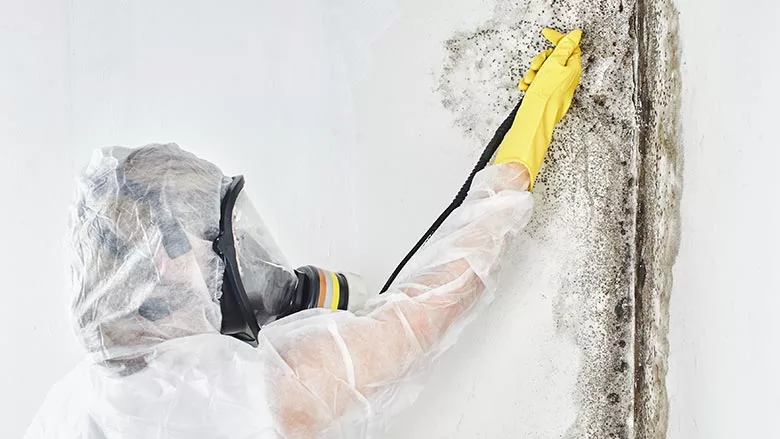
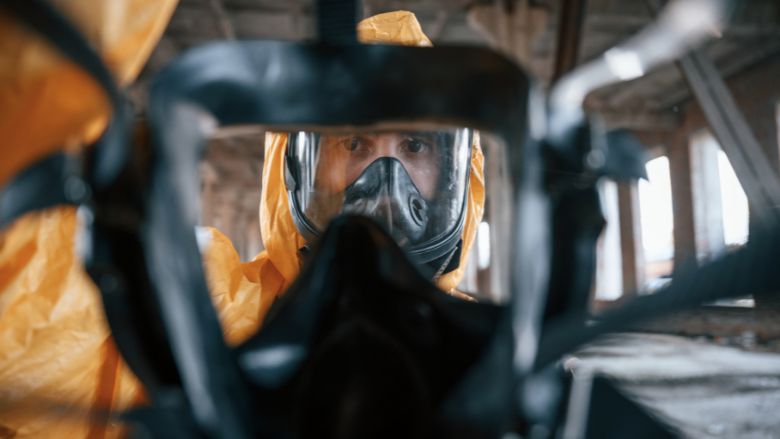
Why? Think about the environments we work in. Restorers routinely encounter mold, sewage, fire and smoke residues, dust, fiberglass, asbestos, and other potentially hazardous materials. Then there are the hazards we sometimes create ourselves by cutting, sanding, grinding, tearing out building materials, or spraying cleaning chemicals, and disinfectants.
Credit: standret / iStock / Getty Images Plus
Fortunately, the basic OSHA compliance requirements aren’t terribly complicated, but certainly require some effort. Here are the basic requirements a restorer should be aware of:
- Hazard Assessment and Respirator Selection
- Medical Evaluations
- Fit Testing
- Training
- Written Respiratory Protection Program
Pretty simple, right? Let’s look at each one.
Hazard Assessment and Respirator Selection
Before handing an employee a respirator, we first need to answer a basic question:
What are we protecting them from?
Looking for quick answers on restoration, remediation and cleaning topics?
Try Ask R&R, our new smart AI search tool.
Ask R&R →
OSHA’s first preference is not to put your employees in respirators. OSHA requires employers to prevent atmospheric contamination as far as feasible through engineering controls (think along the lines of fans, air scrubbers, outside ventilations, etc.). Respirators are used when these controls aren’t feasible or aren’t sufficient to protect the employee.
For Restorers, I recommend creating respiratory hazard evaluation for your tasks. This doesn’t need to be complicated. A spreadsheet listing your common work activities, respiratory hazards, and the respirator and cartridge required for each task works just fine.
Typical Restoration Industry tasks might include:
- Mold inspection and remediation
- Sewage/Category 3 water cleanup
- Fire and smoke damage restoration
- Biohazard/trauma cleanup
- Demolition and dust-producing activities
- Asbestos-related work
- Cleaning chemical and disinfectant use
- Misting and spray applications
These are some of the same hazards I identified in my previous respiratory protection articles3&4.
Once you know the hazard, you can select the proper respiratory protection. Don’t guess!
Safety Data Sheets (SDS), OSHA and EPA guidance, IICRC Standards, Industrial Hygienist recommendations and respirator manufacturer’s selection guides are all excellent resources. Respirator selection can become technical very quickly, particularly when gases, vapors, Assigned Protection Factors and Maximum Use Concentrations enter the picture.
If you don’t know what respirator or cartridge is appropriate, get some help.
Medical Evaluations
Here is the most frequently cited requirement within OSHA’s Respiratory Protection Standard: medical evaluations.
OSHA requires an employee to be medically evaluated before the employee is fit tested or required to wear a respirator5.
Why? It’s pretty simple. Wearing a respirator places additional strain on the body. OSHA refers to this as a physiological burden. An employee may have a medical condition that makes respirator use difficult or unsafe.
Here’s an important distinction: Medical evaluations are not automatically required annually.
OSHA requires additional medical evaluations under certain circumstances, such as when an employee reports symptoms related to respirator use; however, I recommend being conservative and get evaluations annually with fit testing.
Fit Testing
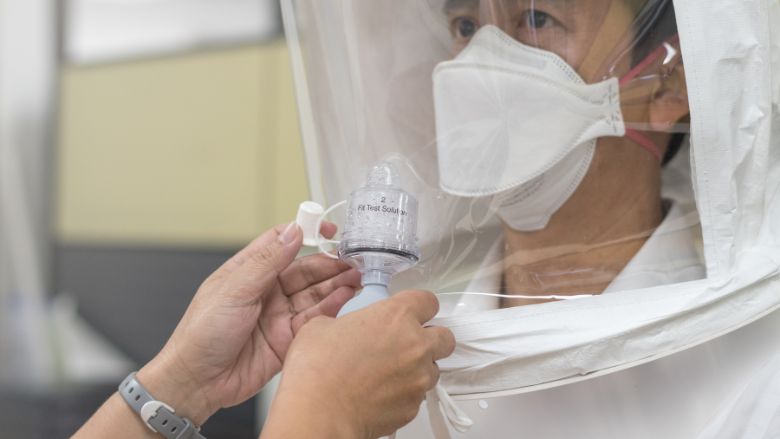
Fit testing verifies that a tight-fitting respirator properly seals to the employee’s face. Think about it – what good does a respirator do if it leaks?
OSHA requires fit testing before initial use, whenever a different respirator facepiece – size, style, model or make – is used, and at least annually thereafter. Additional fit testing may also be necessary when an employee experiences physical changes that could affect respirator fit.
Credit: Pornpak Khunatorn / iStock / Getty Images Plus
One common mistake is assuming disposable N95 respirators don’t require fit testing. If the N95 is required respiratory protection, OSHA considers it a tight-fitting respirator and fit testing is required.
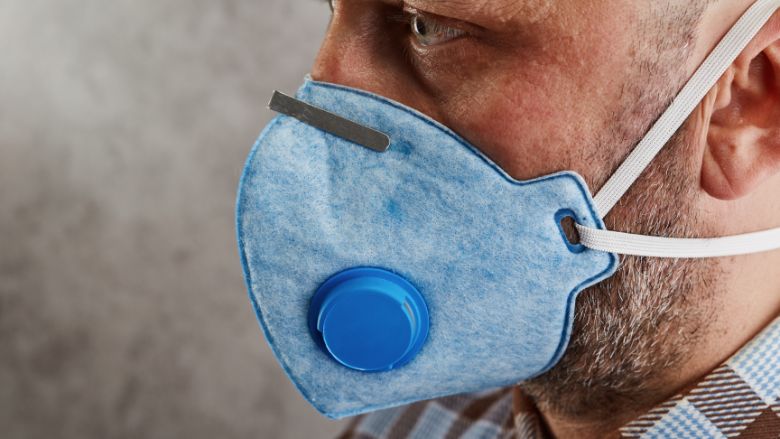
Now let’s tackle another common issue I have dealt with almost every year: no facial hair when wearing a tight-fitting respirator6.
Credit: delihayat / E+ / Getty Images
A tight-fitting respirator cannot properly protect the wearer when facial hair comes between the respirator’s sealing surface and the face. For employees who want to maintain facial hair, a loose-fitting Powered Air-Purifying Respirator (PAPR) may be an alternative. As I discussed in my previous article, loose-fitting PAPRs can offer several advantages, including eliminating the tight face seal and associated fit test requirement3.
Training
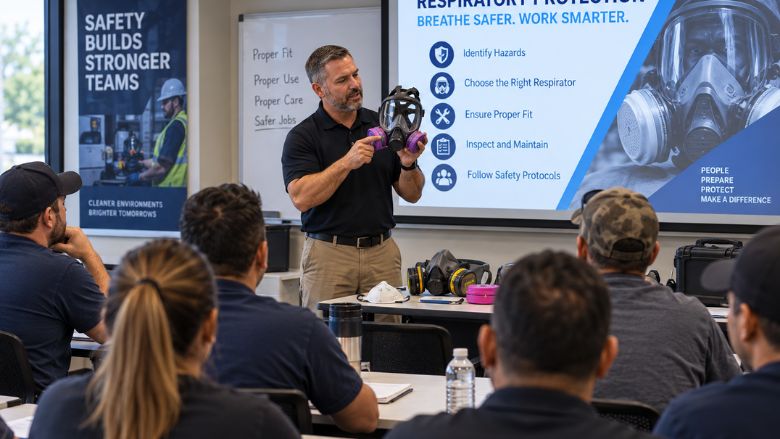
Respirator training is another relatively straightforward OSHA requirement that can easily fall through the cracks. Employees need to understand some key points, such as:
- Why the respirator is necessary
- The respirator’s limitations and capabilities
- How to properly put on and remove the respirator
- How to perform seal checks
- Proper maintenance and storage
Credit: AI-generated image created with DALL·E by OpenAI.
Training is required before initial respirator use and must be repeated annually. Retraining is also required when workplace conditions or respirator types change or when an employee demonstrates that they don’t have adequate knowledge or skill to properly use the respirator.
Fortunately, this is something restorers can readily incorporate into their annual safety training.
Written Respiratory Protection Program
If respirators are necessary to protect your employees, or your company requires employees to wear them, OSHA requires a Written Respiratory Protection Program. The employer must also designate a suitably trained Program Administrator.
Your written program will need to be specifically tailored to your work, so be careful about downloading a generic Respiratory Protection Program from the Internet and putting your company name on it. You need to customize the Program for the work you actually perform.
There is nothing wrong with starting with a template. In fact, OSHA publishes a Small Entity Compliance Guide, and many State OSHA programs, insurance carriers, industry organizations and safety consultants have excellent sample programs. I recommended these same resources in my previous respiratory protection article3.
Your written Program should address such things as respirator selection, medical evaluations, fit testing, proper use, maintenance and care, training and program evaluation.
My recommendation is to assign someone the responsibility for the Program and let them become your company’s respirator expert. Have that person coordinate medical evaluations and fit testing, maintain records, purchase respirators and cartridges, organize training, and periodically review the Program.
Don’t Forget Voluntary Respirator Use!
Here’s an OSHA requirement that may surprise some Restorers - what if respiratory protection isn’t required, but an employee says: “I’d just feel better wearing my respirator.”
That’s voluntary respirator use, and OSHA still has requirements.
If employees voluntarily use only filtering facepiece respirators, such as N95s, the employer generally does not have to establish a Respiratory Protection Program for those employees. However, the employer must provide the information contained in Appendix D of 1910.134. (see Resources section)
If employees voluntarily use other types of respirators, such as an elastomeric half-face respirator, additional requirements apply, including portions of a written program addressing medical fitness and proper respirator maintenance.
Don’t overlook this one. Voluntary respirator use was among OSHA’s most frequently cited Respiratory Protection requirements in 2024.
Why Are Companies Still Getting Cited?
From my experience, I don’t believe the problem is that Restoration Professionals don’t care about respiratory hazards. Rather, the challenge is often the OSHA compliance details when wearing a respirator.
- Did everyone receive a medical evaluation?
- Were they fit tested on the specific respirator they’re wearing?
- Was the fit test completed within the past year?
- Did they receive annual training?
- Does facial hair interfere with the respirator seal?
- Is the correct cartridge being used?
- Is there a written Program?
- Is the written Program specific to your restoration work?
Addressing these details requires effort; however, not addressing them is where OSHA citations can begin.
Gray Areas in the Restoration Industry
I’ve previously identified my concerns with Assigned Protection Factors and Maximum Use Concentrations being a gray area for the Restoration Industry, particularly when actual airborne concentrations haven’t been measured3.
For instance:
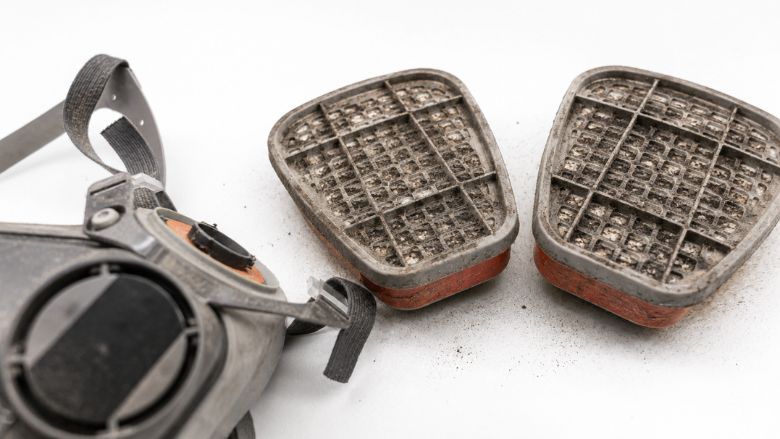
How do we establish a cartridge changeout schedule?
Credit: Ivan Reshetnikov / iStock / Getty Images Plus edited with DALL·E by OpenAI
What Assigned Protection Factor do we need?
Exactly what are the airborne concentrations/exposure levels of the respiratory hazards?
These questions go beyond the information available on a product label or even an SDS. And there is little-to-no restoration industry data on exposure levels for any airborne contaminant.
My recommendation remains the same: don’t guess.
Use the SDS, OSHA and EPA guidance, industry standards, respirator manufacturer recommendations and Industrial Hygienists when necessary. More importantly, save the information you used to make the decision. That way, the next Project Manager or technician doesn’t have to start over.
Hopefully one day we will have restoration industry data to support these compliance requirements; however, those do not exist at this time.
Conclusion
Restorers work in environments where respiratory hazards are common and OSHA frequently cites respirator violations, so we are prime candidates for enforcement.
The good news is the compliance fundamentals are achievable: medical evaluations, a written Program, fit testing, voluntary-use requirements and training.
I recommend every restorer to check if they have addressed these fundamental requirements to better protect your technicians and keep your company out of OSHA’s Top 10 statistics!
Resources
OSHA Respiratory Protection Standard – 29 CFR 1910.134
OSHA Respiratory Protection webpage and training resources: https://www.osha.gov/respiratory-protection
OSHA Small Entity Compliance Guide for the Respiratory Protection Standard: https://www.osha.gov/sites/default/files/publications/3384small-entity-for-respiratory-protection-standard-rev.pdf
OSHA 1910.134 Appendix C – Respirator Medical Evaluation Questionnaire: https://www.osha.gov/laws-regs/regulations/standardnumber/1910/1910.134AppC
OSHA 1910.134 Appendix D – Information for Employees Using Respirators When Not Required Under the Standard: https://www.osha.gov/laws-regs/regulations/standardnumber/1910/1910.134AppD
NIOSH Respirator Resources
References
1. OSHA, 29 CFR 1910.134 – Respiratory Protection: https://www.osha.gov/laws-regs/regulations/standardnumber/1910/1910.134
2. OSHA, FY 2024 Top 10 Most Frequently Cited Standards: https://www.nsc.org/newsroom/osha-reveals-top-10-safety-violations-at-nsc-safet?srsltid=AfmBOorfITyzPcxsz6a8AViGJrDkYWtu4acQ2oHH7GGMVMfcRWS7jg1R#/
3. R&R Magazine Online, Awareness and Effort: Respirator Use in the Restoration Industry, Part 1 of 2: https://www.randrmagonline.com/articles/90046-awareness-and-effort-respirator-use-in-the-restoration-industry-part-1-of-2
4. R&R Magazine Online, Awareness and Effort: Respirator Use in the Restoration Industry, Part 2 of 2: https://www.randrmagonline.com/articles/90101-awareness-and-effort-respirator-use-in-the-restoration-industry-part-2-of-2
5. OSHA 29 CFR 1910.134(e): https://www.osha.gov/laws-regs/regulations/standardnumber/1910/1910.134
6. OSHA 29 CFR 1910.134(g)(1)(i)[A]: https://www.osha.gov/laws-regs/regulations/standardnumber/1910/1910.134
Looking for a reprint of this article?
From high-res PDFs to custom plaques, order your copy today!