Awareness and Effort: Respirator Use in the Restoration Industry, Part 2 of 2
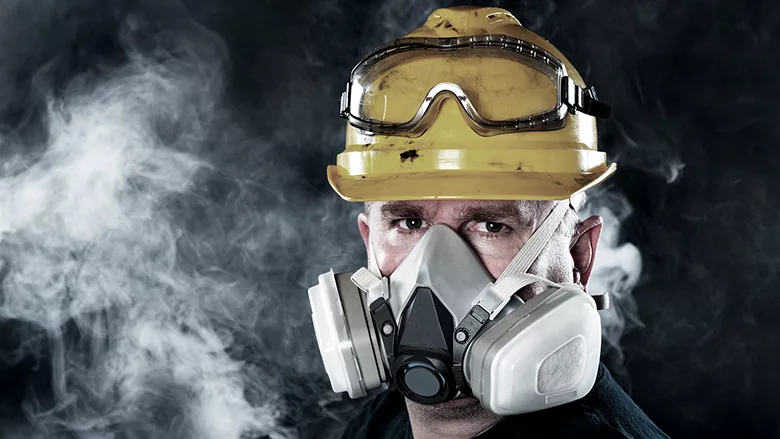
Photo credit: joebelanger/ iStock / Getty Images Plus via Getty Images
In the first part of this series, I identified the steps to create a respiratory protection program. This second article will cover how to implement and follow your program. Once everything is implemented, you will have an OSHA-compliant program tailored to your company and designed to protect employees from the hazards in the Restoration Industry.
Who qualifies for your respiratory protection program?
Start by creating a list of employees who should wear a respirator. The Breathing Hazard Evaluation created in the first article will guide you with this – any employee performing the work in the evaluation needs a respirator!
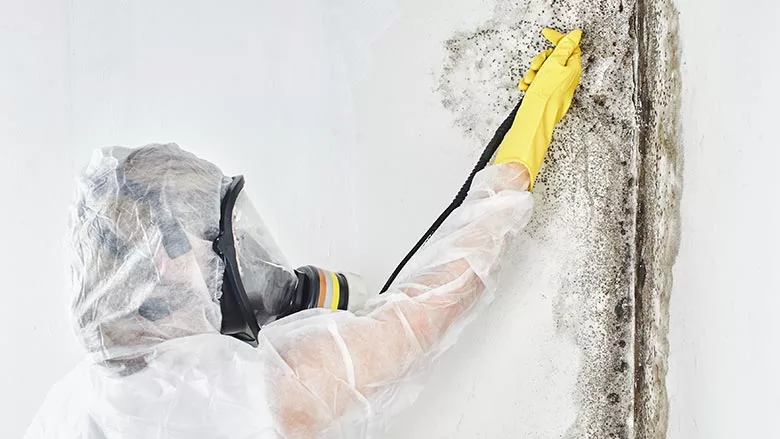
Remember, even estimators and managers are exposed to respiratory hazards when they walk into buildings with mold, sewage and fire damage.
Medical Evaluations
OSHA expects employers to provide medical evaluations to respirator wearers prior to them putting on a mask.1 Why do you think that might be?
It’s pretty simple: Employees may have medical conditions that will become worse when they put on a respirator. Think along the lines of heart conditions, high blood pressure, asthma, etc. This is because respirators put additional strain on your lungs and heart. OSHA’s term for this is “physiological burden.” 1 So, we want to make sure we are minimizing that burden.
The medical evaluation is going to consist of the employee completing the OSHA Evaluation Form2, a physician or other licensed health care professional reviewing the form, and then approving or disapproving the employee to wear a respirator.1
Note: After the evaluation, employers only need paperwork showing the employee was cleared to wear a respirator or not; any other information will likely be private medical information that you should not have.
Looking for quick answers on restoration, remediation and cleaning topics?
Try Ask R&R, our new smart AI search tool.
Ask R&R →
There are three basic choices of where to get a Medical Evaluation performed:
- A local occupational health clinic (my favorite choice). They have professionals experienced with work environments and are familiar with the OSHA requirements.
- A local medical clinic that is familiar with this process and can perform the evaluation. A word of caution: The generic cold and flu clinics that are so common typically won’t be able to do this.
- An online medical evaluation service. If you search online for “respirator medical evaluation” you will find these services. I have used these successfully before.
Remember: Keep the records from medical evaluations; see the recordkeeping section.
Fit Tests
Now it’s time for employees to actually put on a mask! Per OSHA, fit tests should be performed annually.3 Fit tests are important because they check for leaks around the seal of the respirator. If you think about it, what good does a respirator do if it leaks?
Let’s start with what respirators you need fit tested for. I’ll cut right to the chase; you need to fit test anyone who will wear an N-95, half-face or full-face respirator. 3, 4, 5
Why is the N-95 included? Because OSHA considers it a tight-fitting facepiece. (Note that the N-95 instruction manuals typically mention this as well.)
Interesting side note: As COVID-19 was starting in February 2020, I was fit tested for all three respirators mentioned above and passed with no problem!
There are two basic choices of where to go for a fit test:
- You can use an occupational health or medical clinic, just like you did for the medical evals.
- You can do it yourself. However, you will need training/certification and a fit test kit. A fit test kit can be purchased for $300 to $400. Based on this commitment, I typically recommend this option for larger companies (e.g. at least 10 or more respirator wearers).
Remember: Keep the records from fit tests; see the recordkeeping section.
Training Respirator Wearers
Training is if often overlooked by employers. OSHA requires employers to provide annual “effective” training.6 Fortunately, OSHA provides a list of training expectations in 1910.134(k)(1-5). The expectations are relatively easy to follow and can performed in-house.
Remember: Keep the records from training; see the recordkeeping section.
Ongoing Program Evaluation
OSHA also expects us to periodically evaluate our Respirator Program.7 This is pretty simple but can also pay dividends. The simple part is reviewing your program to verify that it is current. Examples of this would be asking the questions:
- Do we still perform the tasks in our breathing hazard evaluation?
- Do we still use the chemicals that drove us to choose our specific respirators?
- Do we still have the same employees or work crews performing tasks that require respirators?
Here is where the evaluation can provide dividends: Identifying opportunities to wear less-protective respirators or even no respirator. For instance:
- Do we have an opportunity to use a less toxic or “green” chemical in our tasks?
- Do we have an opportunity to implement engineering or administrative controls to decrease respiratory hazards?
Recordkeeping
The OSHA requirement for retaining respirator records is broken down as follows:
- Medical records from the evaluation shall be kept for the duration of an employee’s employment plus 30 years.8
- Fit test records for respirators shall be kept until the next fit test is performed.8
Consider a conservative approach and keep all respirator records in digital format in a secure drive indefinitely; that way there is no worry about meeting the minimum requirements.
Cleaning and Maintenance
From my observations, respirators are commonly stored wet and with dirty cartridges. Neither condition is optimal for storage. This can result in the wearer breathing in hazards that they were trying to avoid! My suggestion is to treat respirators like you would any other equipment or tool – clean and maintain them! This can include:
- Provide cleaning wipes for quick, routine cleaning.
- Allow respirators time to dry before storage.
-
After extended periods of use, set up deep cleaning events.
- For instance, at a monthly safety meeting, deep clean respirators with a cleaning solution and rinse approved by the respirator manufacturer. Manufacturers have instructions on cleaning that will guide on you on how to do this.
Maintenance, in turn, can be synchronized with the routine cleaning events. Contact your respirator manufacturer representative or look at their diagrams for replacement parts. Purchase common valves (flaps) for your respirators and routinely replace them. It is really easy!
Summary
As I mentioned last month, there is a significant investment of time, money, and effort to establish and maintain a respiratory protection program. However, we absolutely need respirators that fit well, function well and are clean in order to protect us from the respiratory hazards of the restoration industry. I hope you have found information and insight in this two-part series. If you don’t have a respiratory protection program, jump in and create one! If you already have a program, dust it off and compare it to the requirements I’ve covered.
Resources
- Respirator Protection in the Workplace – A Guide for Employers, California Department of Industrial Relations & Division of Occupational Safety and Health, April 2021.
- OSHA Small Entity Compliance Guide for the Respiratory Protection Standard, 3384-09, 2011.
- The National Institute for Occupational Safety and Health’s (NIOSH) publication webpage: https://www.cdc.gov/niosh/pubs/all_date_desc_nopubnumbers.html
Reference
Looking for a reprint of this article?
From high-res PDFs to custom plaques, order your copy today!