Mission Critical powered by KnowHow
How Peerless Restoration Turned a Perfect Storm Into a Playbook for Growth
An inside look at the systems and leadership strategies that emerged from a perfect storm.
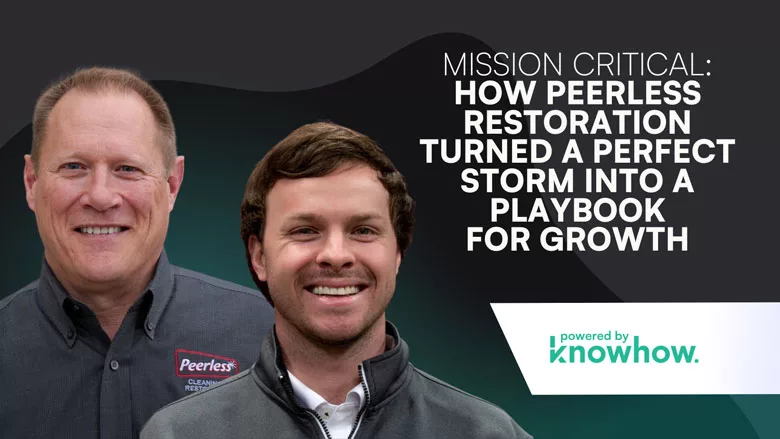
Welcome to “Mission Critical,” a brand new series from KnowHow that explores how today's restoration leaders are navigating the industry's most urgent challenges. Sales are soft, margins are thin, and getting paid feels like pulling teeth. In this series, we spotlight elite restorers who share battle-tested systems and strategies from the trenches.
Each feature dives into specific tactics leaders use when everything's on the line—from stabilizing cash flow to driving profitable growth in unpredictable markets.
If you want concrete strategies to hit your sales numbers and produce work profitably, you're in the right place. Expect real advice, actionable insights, and takeaways from leaders who've been through the storm and come out sharper.
Ready for the mission brief?
“I can remember a really challenging meeting,” Chris Hembrough—Chief Operating Officer at Peerless—recalls, and the way he pauses suggests it wasn't the kind of “challenging” that felt good at the time.
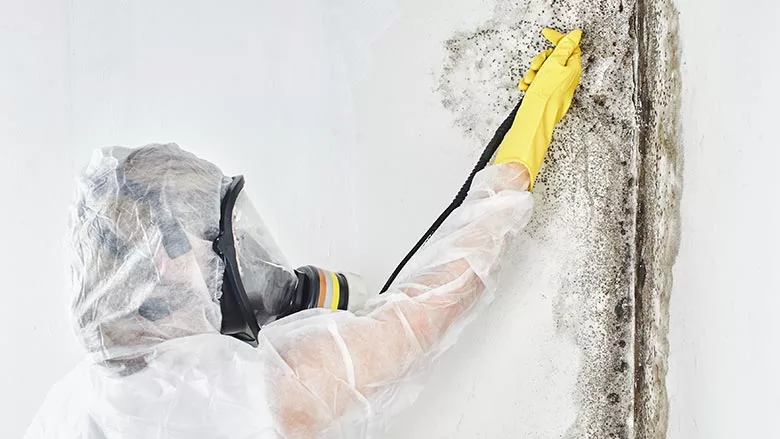
Summer 2024. Peerless Restoration was running three massive jobs simultaneously: the biggest mold project they'd ever tackled, a three-month commercial ventilation job, and a major downtown fire. Key leaders from all three projects were in the same room, and everyone needed more technicians. But nobody had extra to give.
“There were days where that was tense and stressful because somebody needed one more guy or one more gal, and they couldn't have one more,” says Chris.
Looking for quick answers on restoration, remediation and cleaning topics?
Try Ask R&R, our new smart AI search tool.
Ask R&R →
Peerless cross-trains its technicians for exactly this reason. Water techs can work fire jobs. People can flex between locations. Flexibility is the whole point.
Except now there was no wiggle room.
Most restoration companies would call that a nightmare quarter. Chris calls it something different: “Last year allowed us to build muscle that we probably didn't realize we had.”
Here's the twist. A year later, business is steady. And Chris is frustrated—not because they're struggling, but because they want to be stretched like that again.
Peerless discovered something most operators miss: chaos isn't the problem. Being unprepared for it is.
Curious to hear more from Chris and Matt? Click on the video below to catch the full discussion!
The Outsider and the Inheritor
Chris came to restoration four years ago after running the local Chamber of Commerce. When Brad Wike, his best friend of 20 years, invited him to join Peerless, one thing grabbed him immediately: “We walk into people's lives at their most stressful moment and help bring order out of the chaos.”
But here's what he learned once inside: you can't bring order to customers' chaos if your own operations are chaotic.
Brad's son Matt had the opposite journey. He grew up in the restoration business. His grandparents started Peerless, and his dad expanded it. Matt remembers his father's pager going off at random hours and nights when it was just his dad and a few core people heading out on emergency calls.
At industry conferences, there's often a confession that comes during the second drink: “My kids want nothing to do with this business.” Owners who poured decades into building something for their family, watching their children choose other things over the family business.
Matt's story went differently: He left for college. Tried other things. His parents never pressured him to join the business. But once he started working in the business, really getting his hands dirty, “I couldn't even imagine being anywhere else.”
Two different paths. Same revelation: that perfect storm summer was going to expose every weakness in their operation. Starting with the one nobody wanted to admit.
What the Crisis Actually Revealed
During those three simultaneous projects, Peerless’s two locations, 15 minutes apart, stretched beyond capacity. The meetings turned daily. Then tense.
Matt remembers it clearly. “We had guys from both markets trying to pull resources from each location. Well, we don't have any resources left.”
Most companies would smooth this over in the retelling. Make it sound like great leadership saved the day. Chris and Matt don't do that.
The uncomfortable reality: Peerless thought they were good at communication. They talk about it and value it. But the crisis revealed something different. When resources vanished and pressure mounted, their communication systems showed cracks.
“When we were that busy, it helped us find a lot of our underlying weaknesses that we may not have realized were there,” Matt says.
The crisis showed them exactly where the cracks were. And because they delivered on every promise during that stretch, their community noticed. When the dust settled, they had something more valuable than survival: a diagnosis of exactly what needed fixing.
The question became: what do you build when you know the next storm is coming but can't predict when?
The Infrastructure Nobody Sees
The first change was systematizing communication.
Peerless runs a weekly leadership meeting, not for operational updates, but for leadership development. Division leaders sit with emerging leaders. Same room. Same conversation.
“Here is where I witnessed our core values at work,” people share. “And here is where I need help.”
These meetings happen weekly, even when everyone would rather be doing something else. “While sometimes they feel like one more thing,” Chris admits, “it's forced us to be in a room together when we're busy.”
“It helps us connect on another level that's not so work-based,” Matt adds. “The more you get to know someone, it really helps with communication.”
One of Peerless's core values is courage. “Having the courage to kindly speak the truth about a situation. Then say, Okay, how do we tackle that?”
During the chaos, they practiced it daily out of necessity. Now it's baked into their weekly rhythm by design.
But honest communication only matters if you have the people to execute. Which is why Chris's most urgent Q3 priority isn't revenue or sales. It's this: “How do we take folks we've identified internally who are technicians and move them to job leaders and project managers?”
The process is specific: 6-8 week development plans with concrete milestones. What skills do they need? When do they need to demonstrate them? What moves someone from field tech to job leader?
“We're a growing company, our needs continue to grow, and therefore our need for really good leaders continues to grow.”
In this market, businesses that build leaders outperform businesses that buy them. Peerless is betting everything on that thesis.
The Two Numbers Chris Checks Every Morning
Every morning before anything else, Chris looks at two things: “Jobs that are still open and how those are being handled. And then our overnight calls—our on-call calls that came in after hours.”
Not revenue. Not margins. Not pipeline.
Why?
“It goes back to the promises we make and taking care of people.”
Open jobs reveal broken timelines. Overnight calls reveal response speed. Both measure the same thing: are we doing what we said we'd do?
When you're clear about what you're optimizing for, the right metrics become obvious. Peerless optimizes for promise delivery. Everything else flows from that.
Hungry for the Next Storm
Looking back on that perfect storm summer, Chris doesn't frame it as survival. He frames it as a revelation.
“We delivered on the promises we made, and our community knows that. When those opportunities arise again—and they will—we'll be better prepared.”
The chaos revealed exactly where their systems needed reinforcement. Communication infrastructure. Leadership pipeline. Technology that could scale. They spent the last year building those things intentionally, not reactively.
Now, when Chris talks about being frustrated with the slower pace, it's not impatience. It's confidence. They built muscle they didn't know they had. They know what they're capable of now. And they're hungry to prove it again.
Most restoration companies see unpredictability as the enemy—something to manage, mitigate, or avoid if possible.
Peerless sees it as the crucible that reveals what you're made of. The question isn't whether the next storm is coming. It's whether you're building the infrastructure to get stronger when it does.
What You Can Learn from Peerless:
Encourage Communication Even When It's Uncomfortable. Create weekly forums where speaking truth is expected, not optional. Peerless uses leadership development meetings where leaders share where they've seen values in action and admit where they need help. Small gaps don't become crises when you're honest early.
Build Your Bench Before Game Day. Identify which technicians show leadership potential now. Create specific 6-8 week development plans with concrete milestones. Companies that develop internal leaders outperform companies scrambling to hire when growth hits.
Let Crisis Be Your Diagnostic Tool. When everything breaks simultaneously, you learn exactly where your systems are weak. Peerless spent the year after their perfect storm deliberately building what the chaos exposed. Ask: What did our last chaotic period reveal? Then fix it.
Keep Your Promises. Chris doesn't start his day by checking revenue. He checks open jobs and overnight response calls. “It goes back to the promises we make.” When you're clear about your actual priority—delivering what you committed to—the right metrics become obvious. And customers can tell the difference.Looking for a reprint of this article?
From high-res PDFs to custom plaques, order your copy today!