A Career in Restoration: It is Time to Change Our Approach

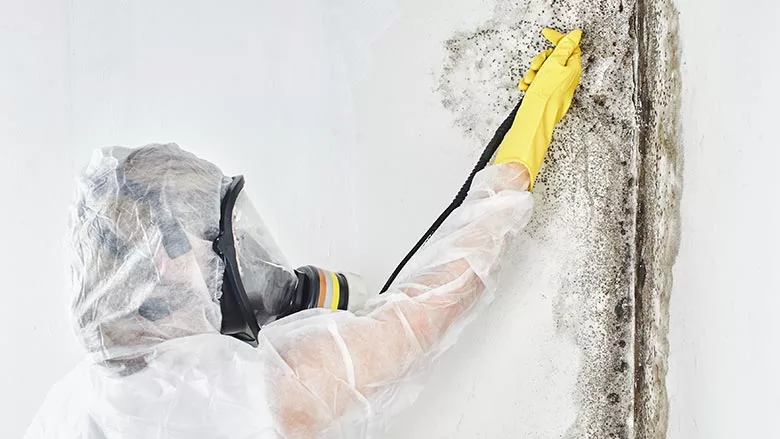
Photo credit: BrianAJackson / iStock / Getty Images
For years, there has been much discussion about our profession and industry gaining the recognition and elevation it deserves. Despite our efforts, we often fall through the cracks of formal classifications. Are we janitorial, construction, or something else entirely? The point is there's a lot of work to be done within our industry. The solution doesn't rest with a single organization or person; it lies within all of us, making many small but meaningful impacts.
I recall a moment when someone who knew me well complimented me on being a Master Plumber. I had to clarify that I was not a Master Plumber but held IICRC Masters certifications in Water, Fire, and Textile Restoration. This incident underscores our industry's ongoing struggle for recognition, despite our expertise and the vital services we provide.
We still have work to do to educate consumers about our industry. Who grows up aspiring to be a Restoration Professional? Currently, it seems only the children and grandchildren of those already in the field consider it. Imagine a world where first graders aspire to be heroes in their communities, motivated by training and a desire to help others in times of need. For example, Dr. Jake Avila, inspired by the profession, earned a Doctor of Policy, Planning, and Development, and now serves as an Associate Professor of Construction Management at Middle Tennessee State University (MTSU). He is leading the charge in launching a new degree program supported by Middle Tennessee State University (MTSU): the Restoration Industry Management Program.
In 2015, I wrote "Restoration Professionals Wanted, No Degree Required," which tells the story of someone who "stumbled" upon our industry and became one of the most accomplished restorers I know. We cannot rely on chance alone to fill the ranks of our industry. As the saying goes, "It takes a village."
Here are some actionable steps we can take, followed by Dr. Jake’s story, his passion, and how you can help:
1. Culture: Many current leaders and managers began as "techs." Foster a culture where every job and position are viewed as a career. Promote opportunities, invest in training and development, and instill pride in every team member. If someone introduces themselves as “just a tech,” I often respond with a reminder: “You are not just a tech. Every role in a restoration company is crucial to its success and to serving our customers. There are opportunities and joy ahead that you can seize.”
2. Focus on the Positive: We should highlight the positive aspects of a career in restoration. For instance, an 11-year-old wrote about his father, an experienced Project Manager, capturing both the pride and accuracy in the job description: Life As A Project Manager, As Told By An 11-Year-Old. As we inspire others to consider a career in Restoration, it's essential to emphasize the skills, impact, opportunities, and positives. Every industry faces challenges, but focusing solely on them can be detrimental.
Looking for quick answers on restoration, remediation and cleaning topics?
Try Ask R&R, our new smart AI search tool.
Ask R&R →
3. Get Involved: Here are some ways to contribute:
- Schools: Engage with local schools to showcase our profession as a viable career option.
- Serve on committees and boards.
- Offer your company as a destination for class or group activities, experiences, and field trips.
- Participate in career and job fairs by bringing tools of the trade and discussing the impact and science of restoration.
- Support programs and initiatives aimed at helping future professionals find careers in the trades.
- Internships: Provide internship opportunities for high school students.
- Community Events: Engage young people through events, perhaps with activities like coloring pages depicting professional restorers as heroes.
4. Donate to the Initiative: Review Dr. Jake’s story, MTSU To Launch Restoration Management Degree Program, and consider making a donation HERE.
Supporting these initiatives not only contributes to a long-term vision for the industry but also has several benefits:
- Morale: Rallying around a common goal boosts team spirit and pride. Impacting the future generation of restorers is rewarding.
- Community: Consider how these efforts reflect on your company’s and the industry’s image within the community.
- Positive Impact: Positive actions lead to more positive outcomes. Just thinking about these efforts brings a smile to my face and warms my heart.
True Story of a High School Intern in Restoration: I must share the story of our first high school intern, which profoundly impacted me and my team. Despite the logistical challenges and safety considerations, this intern brought enthusiasm and confidence that lit up the room. His choice to pursue restoration, despite many other "cool" options, intrigued me. During lunch, he revealed that he was from Haiti and wanted to learn about construction and water to help rebuild homes that could withstand hurricanes. He wanted to return to his community with his knowledge and skills to make a meaningful impact. His story reminded us that we are part of a connected world, and that each member of the restoration industry plays a role in it.
We asked Dr. Jake to share his insights on making impactful changes in the industry:
Tell us about the journey that led you to earn your doctorate, become a professor, and begin work to launch a degree program in restoration.
Answer: I grew up working in the restoration industry. My Dad (Chuck Avila) worked in the industry for years and started his own restoration business with my Mom (Naomi Avila) in 1990, when I was a kid. I really enjoyed the work and my time working with my parents and my brother, Aaron. I worked in the family business through college and while pursuing my MBA.
After completing my MBA, I was sitting on two advisory boards for a university in town as a local business owner providing perspectives on courses students should be taking and feedback on how to enhance the learning experiences for students. While sitting on the advisory board I was approached by the business chair (who was on the same university committee) of a community college in our town. He needed someone to teach an entrepreneurship course that was starting in a couple of weeks, and I jumped at the opportunity. It was that semester that I was drawn to teaching and decided to begin working on a doctorate so I could, at some point, teach full time.
Part of the work of a professor is conducting research and I decided that I wanted most of my research work to focus on the restoration industry. That led me down a path of working with restoration contractors to determine what they thought would be of greatest value to the industry. From there we launched a study that examined family businesses in restoration, then employee burnout, and burnout among restoration industry estimators. As we wrapped up each study and published articles, I shared all our data and findings with the industry. The response from the industry has been overwhelmingly supportive each time; however, there has been a lingering question at the end of every work session, presentation, focus group, and talk that followed… what can you do to help us attract more people to the industry?
This has been the most pressing question, and my answer has evolved into one that has a couple of key components. There are certainly other factors and more nuanced factors, but the following, I believe, are key if we want to see meaningful and marked improvement in this area.
The restoration industry is not doing enough to reach young people and attract them to the industry. The issue of dwindling manpower is not one that is unique to restoration. Most industries are experiencing this, and some are simply doing a better job than others at combating this challenge. For example, our university hosts employer events every semester. Last year we had approximately 175 employers on campus recruiting students for careers in concrete and construction management. Of those employers only one was a restoration contractor. This restoration contractor that shows up to our events hires at least one to two students every year and they are reaping the benefits of their efforts. They send their best people to interact with students and they show up excited to talk about the industry, the good work their people are doing, and the opportunities that await. Point is… if we don’t show up to events like this with this attitude, we probably won’t see the needle move. If we aren’t reaching out to high schoolers, community colleges, trade schools, universities, and similar places we can’t expect these challenges to get any better. How can we expect to attract talent if we aren’t showing up to compete for it?
-
We have examples of other industries that have led efforts to educate, train, and equip young people for careers. The concrete industry serves as a great example of a similar industry, in a similar space, and with similar circumstances. The concrete industry is about half the size of the restoration industry ($110 billion vs. $200 billion). About 20 years ago the concrete industry recognized the need to educate, train, and equip young people for careers in concrete. This led to an initiative to start the first concrete industry management degree program in the country at our university, Middle Tennessee State University. This was an initiative driven by members of the concrete industry in support of the long-term health and sustainability of the industry. Over the past 20 years the concrete industry has expanded this effort to add several other programs at other universities in the country, funded new buildings for these programs, and raise approximately $2 million every year to advance concrete education at the university level. The concrete industry has seen great results from this industry-led effort. The impact has been significant, and we now have graduates from these programs working in many capacities in the concrete industry. Some have moved on to estimating, project management, and plant management and others have started their own concrete companies or moved into general and operations management – among many other roles.
We are excited to be leading a fundraising effort to bring a similar degree concentration to the restoration industry.
How will this program contribute to the future of the industry?
Answer: We are working to raise $1 million to fund a faculty position in restoration and $2 million to fund student scholarships and educational support to advance the restoration degree concentration at MTSU. The donations will go directly into endowments and will fund, in perpetuity, restoration education at MTSU. The money donated will never be less than what is given, and the university endowment will generate a 4% return which will be used to fund the program. We envision the program (1) bringing student interns and graduates to the industry; (2) funding student travel and participation in industry conferences; (3) supporting students earning industry certifications; (4) encouraging student research in restoration; and (5) bringing members of the industry to MTSU every year for conferences, training, and recruiting events.
What steps should we take as an industry in the short term and long term?
Answer: The most important step we can take right now is donate. Our initial goal is to raise $1 million by this December to get the faculty line in place so we can have a dedicated person and staff working on getting the curriculum approved through our industry stakeholders and accreditors. This timeline would put us in a position where we could potentially launch the program within two semesters of meeting this goal. The university is supporting this work and matching the funds, but the most important piece is knowing the industry supports this initiative and, to be candid, donation support from the industry is a key metric in discerning whether the industry is behind this effort.
We have attached a gift commitment form for download that we are asking all donors to complete and send back as soon as possible. This will help with planning on our end so we can start making strides toward getting the program off the ground. Credit card donations may be made at http://www.mtsu.edu/give by entering the amount you want to give, clicking the dropdown menu under “What would you like to give to?” and selecting “Other” before typing in “Disaster Restoration” within the “Other” comment box.
Checks may be made Payable to The MTSU Foundation and sent to P.O. Box 109, Murfreesboro, TN 37132 with “Disaster Restoration” in the memo line. Learn more HERE.
May rallying as an industry to look at the future of our industry bring us much continued Restoring Success.
Looking for a reprint of this article?
From high-res PDFs to custom plaques, order your copy today!