Restoration logo
search
cart
facebook twitter linkedin youtube
  • Sign In
  • Create Account
  • Sign Out
  • My Account
Restoration logo
  • NEWS
  • PRODUCTS
    • New Products & Technologies
    • Submit Your Product
    • Interactive Product Spotlights
  • EDUCATION
    • KnowHow.
    • Podcasts
    • Trade Shows & Expos
    • Training & Certification
    • Webinars
    • Whitepapers
  • TOPICS
    • Water Damage
    • Fire & Smoke Damage
    • Mold
    • Contamination
    • Odor
    • Contents
    • Architecture
    • Catastrophe
    • Cleaning
  • BUSINESS
    • Managing Your Business
    • Insurance/Legal Matters
  • BUYER'S GUIDE
  • VIDEOS
    • Ask the Expert
    • TradeTalks
    • Video Channel
  • THE EXPERIENCE
    • Convention & Trade Show
    • R&R Special Issue
  • EMAG
    • eMagazine
    • Archive Issues
    • Contact
    • Advertise
  • SIGN UP
Water Damage RestorationMold Remediation

Steps to Successful Drying With Moisture Meters
By Chuck Boutall
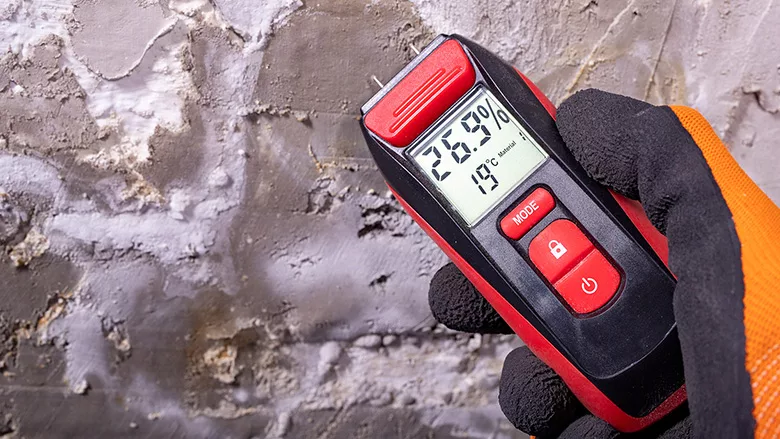
moisture meters

Photo credit: Piotr Wytrazek/ iStock / Getty Images Plus via Getty Images

May 9, 2022

In order to have as successful drying project, one must have a complete and accurate scope of work. There are many parts to a proper scope, and one of the most important contributing factors is accurate and complete moisture level readings on the materials present. This seems much easier to do than it actually is, however, advancements in meter technology, software applications, and online training for monitoring technicians are making the process more efficient and improving accuracy.

“Moisture Meters” need to be understood to acquire accurate readings. The first thing to remember is that no moisture meter directly measures moisture.
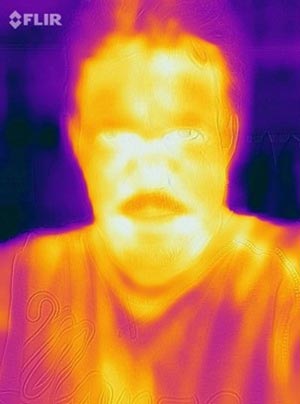
Thermal imaging
Image courtesy of Chuck Boutall

Thermal Imaging cameras are not moisture meters but they serve many great purposes. The most important of which is the ability to scan a room quickly to find temperature anomalies. The areas with cooler temperatures may indicate evaporation off a surface, or “evaporative cooling.” These potentially “wet” areas need to be followed up with a moisture meter to get accurate moisture content readings.

Always remember, if the water cannot evaporate off the surface area, there may be no evaporative cooling effect on the material, thus the camera will not see a temperature differential and you may falsely assume the material is dry. This is known as a false negative and could result in wet materials left out of the scope of work increasing the potential for microbial amplification.

Non-invasive (non-penetrating or scan) type meters typically use a system of signal impedance. This basically means a signal or energy wave is sent out from the emission section of the meter, transmitted through the material and received by another section of the meter. The degradation or variation of this signal is compared to a calibrated reference, the scale you select, and displays the information as a reading we record on our “moisture map.”

The concept is simple, a hydroscopic material that is in equilibrium with its environment, at its dry standard or normal equilibrium moisture content, has a certain number of pores or air pockets. When these pores are filled with excess water, the density of the material changes from normal to a higher density. Water is obviously denser than air, so the signal changes when the water is encountered and that is what the meters “see,” “interpret” and “read” to us. “More moisture — more dense — more wet.” Since materials naturally have different densities, you need different scales or a known NEMC or dry standard reference.

Invasive meters use a system of electric current passage. Invasive meters have been around longer and operate a little simpler. Invasive meters usually have two pins or contact points designed so current (electricity) can be passed from one point to the other. As most people know, water is more conductive than air, so as pores fill with water the material typically becomes more conductive. The more conductive, the more current passes, the higher the reading on the meter. “More conductive reads more wet.” Again, materials vary in conductivity so you must choose a scale and compare the reading to a known NEMC or dry standard for that material, in that climatic area, during that time of the year, on that model meter, on that scale. No shortcuts here.

Thermal imaging
If you have not guessed it, that stands for “Dew You Measure Up.” Image courtesy of Chuck Boutall

As you can see, proper training on the type of meters, the materials they are used on and how to interpret the data requires a skill set. On my very first project in the late ‘80s, I was handed two meters and told to “scan and stab, write it down, call me if you have questions.” This was on a multistory commercial loss. I was a young field engineer and thought, "No problem." On day one most of the areas were wet, on day two fewer areas were wet, day three was even better, but the corners of the walls were still reading saturated! My assumption: Water was trapped behind the metal corner bead. Actually, of course, it was the metal corner bead, no moisture but it was reading the higher density material, metal corner bead, on the drywall scale. No problem, it was actually dry, so all was good.

More recently, a similar mistake by an untrained technician ended with disastrous results. He used the drywall scale on drywall, but it was double layer fire-rated (Type “X”) drywall. So, anybody that has carried fire rock and general purpose rock knows the difference in weight. They are materials of different density. So, a huge amount of perfectly dry fire rock was removed and discarded because it read “elevated” on the drywall scale. This was called into question as the loss was being processed. The contractor was found responsible for the unnecessary removal and the replacement of all the firewalls in that section of the building, resulting in a huge cash loss for the contractor.

Look into online training for all your critical path training to bolster what they learn in the field and from attending in-person, hands-on training classes. Do not hand the “new hire” a meter and say “scan and stab it, and write down the readings”. The thermal imaging world has online training for multiple skill levels, and now this is happening for moisture meter monitoring.

Learn more about tools and best practices for water damage restoration

Automated tracking systems are now coming back, with great new additions, mapping apps and integration possibilities into multiple software platforms. A concern here is will your meter work with your software? The biggest concern, truly the worst, would be getting caught up in a system where you have to use their meter, their app, their software only and now they own you. Make sure the system you get into is flexible, easy for all your people to learn and use, and of course, cost effective. Make sure the dog is wagging the tail, not the other way around!

For all you R&R readers out there, we have attached a great Poem by Lisa Lavender. The worlds’ first “restoration poet.”
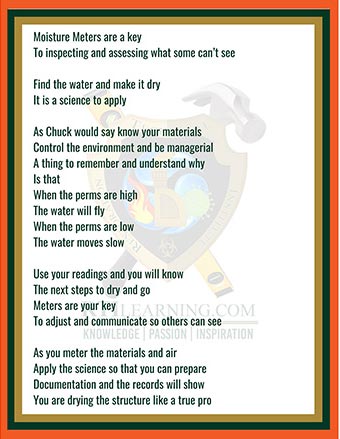
/ext/resources/Issues/2022/05-May/4-RR0522-Boutall-moisture-meters-restoration-poet.jpg
Image courtesy of Chuck Boutall

Also, attached are links to downloadable “Simple Steps Monitoring” and other relevant articles previously published in R&R magazine.

  • Simple Steps: Monitoring a Water Loss
  • Do You Measure Up? 
  • Moisture Mapping Large Commercial Buildings 
  • Restoring Success: It's All About Perspective

Wishing you a successful drying career.

KEYWORDS: moisture detection and monitoring moisture meters

Share This Story

Looking for a reprint of this article?
From high-res PDFs to custom plaques, order your copy today!

Charles A. Boutall II, (Chuck) joined the Restoration Industry in 1988 and took his first IICUC courses from Claude Blackburn, Jeff Bishop, Ruth Travis and Jim Caulfield. He has been an IICUC-RC member since 1988 except for two years. He is a native of New Orleans and has an Associates in Electrical Engineering. 

He is co-owner of Air Quality Specialists which provides
Courses and Consulting in Commercial losses with a specialty in Timber and Concrete Drying as well as Climate Control for Surface Preparation and Coating Projects. AQS focuses on IICR’s WRT & CDS courses and several Specialty Restoration courses approved for IICRC’s Continuing Education Credits.

Presently Chuck is Director of Education at The Restoration Technical Institute in Reading, PA. Here he trains with some of the best instructors in the industry and enjoys the ability to have a Three story 1890’s Fabric mill as a lab and hands on training facility.

He began his career as a Product support Representative at Xerox in New Orleans then to San Jose, CA as a Sr. Field Engineer for National Semiconductor Corporation providing Installation and Repair of Mainframe computers and Laser Barcode Scanning systems for the US military all the way to Grocery stores.

At Munters Cargocaire Corporation he was a District Manager for the Moisture Control Services division then moved on to Sr. Application Engineer for Consultation, design and build of dehumidification projects throughout the US and Central America. Here Chuck provided dehumidification services ranging from dog food drying to climate control on Nuclear submarines and the Space Shuttle.

Moving on to Sponge-Jet Inc. Where he planned and implemented the start-up of a new low – dust blasting technology in the Southern United States.

Afterwards, Chuck was National Sales Manager at Eagle Industries – Containment & Abatement Products, where he directed Product Development and new product launches.

He was also owner of Air Quest Systems, a Manufacturer of Custom Desiccant Dehumidifiers, Large Refrigerant Dehumidifiers and Custom Portable Air Conditioning and Heating systems.

Chuck is probably best known for his no nonsense style of Speaking at the Water Strategies Cruises, Dri-Eaz’s Restorative Drying Symposiums, the Water Loss Institute, ASCR National, Connections East and West, DRC Canada, Experience East & West and moderator of Specialty Drying Roundtable on the Water Strategies Cruise. 

He has also written a series of articles about Commercial Drying for Restoration and Remediation Magazines.

I have dried millions of square feet of structure, hundreds of thousands of books and documents and designed permanent systems for various manufacturing and storage projects over my 31 year career as an Application Engineer.

Recommended Content

JOIN TODAY
To unlock your recommendations.

Already have an account? Sign In

  • mold remediation

    Fighting Mold and Bacteria Damage

    Successful mold remediation can be multidisciplinary,...
    Cleaning and Sanitation
    By: Josh Woolen
  • certifications and licenses for restoration professionals

    Certifications and Licenses Every Restoration Company Needs

    Restoration companies need to make sure they have the...
    Restoration Training/Education
    By: Sharon Elzarat
  • a wall covered in moss and fungus

    Zero Tolerance for Toxic Molds: Essential Steps for Successful Remediation

    Understanding the importance of zero tolerance for toxic...
    Mold Remediation
    By: Michael A. Pinto CSP, SMS, CMP, RTPE, FLS, ERS and Kendra Seymour
You must login or register in order to post a comment.

Report Abusive Comment

Manage My Account
  • eNewsletter
  • Online Registration
  • Subscription Customer Service
  • Manage My Preferences

More Videos

Popular Stories

Ask the Expert - Inside the Cost of Doing Business Survey: What It Means for Restoration Companies Today

Inside the Cost of Doing Business Survey: What It Means for Restoration Companies Today

Ask the Expert - Margin vs. Markup: The Costly Confusion in Restoration

Why Understanding Markup, Margin and Overhead is Critical for Restoration Success

mold spores

Mold and Mental Health: The Dual Crisis Facing Indoor Environmental Remediation Teams

2025 Technician Award winner - Congratulations, Kaylin Glaspie!

Events

January 20, 2026

INTRCONNECT

Dive into the latest trends, innovations, and best practices shaping the future of property insurance and restoration.

April 27, 2026

RIA Convention & Expo

This event empowers professionals through world-class education, powerful networking, and access to cutting-edge tools and services.

View All Submit An Event

Poll

Technology Innovations

Which emerging technology do you believe will have the biggest impact on restoration work in the next 5 years?
View Results Poll Archive

Products

The Cleaning, Restoration, Inspection, and Safety Glossary

The Cleaning, Restoration, Inspection, and Safety Glossary

The Cleaning, Restoration, Inspection, and Safety Glossary.

See More Products
Prepare for CATASTROPHE with R&R!

Related Articles

  • A Look at the Benefits and Types of Automatic Moisture Tracking

    See More
  • Moisture Mapping Large Commercial Buildings

    See More
  • Procedures and Processes for Proper Drying

    See More

Related Products

See More Products
  • Water in Buildings: An Architect's Guide to Moisture and Mold

See More Products

Related Directories

  • Wagner Meters

    Since 1965, Wagner Meters has been a leading innovator in moisture measurement technology. Wagner provides the home/building/mold inspection industry with a variety of accurate and reliable professional-grade equipment for detecting moisture issues.
×

Stay ahead of the curve with our eNewsletters.

Get the latest industry updates tailored your way.

JOIN TODAY!
  • RESOURCES
    • Advertise
    • Contact Us
    • Directories
    • Store
    • Want More
    • Submit a Press Release
  • SIGN UP TODAY
    • Create Account
    • eNewsletters
    • Customer Service
    • Manage Preferences
  • SERVICES
    • Reprints
    • Marketing Services
    • Market Research
    • List Rental
    • Survey/Respondent Access
  • STAY CONNECTED
    • LinkedIn
    • Facebook
    • Instagram
    • YouTube
    • X (Twitter)
  • PRIVACY
    • PRIVACY POLICY
    • TERMS & CONDITIONS
    • DO NOT SELL MY PERSONAL INFORMATION
    • PRIVACY REQUEST
    • ACCESSIBILITY

Copyright ©2025. All Rights Reserved BNP Media.

Design, CMS, Hosting & Web Development :: ePublishing