Wildfire vs. Conflagration: What Restorers Need for Fire Response Today
Wildfire and conflagration risk data can improve CAT planning and response for restorers
Need to Know
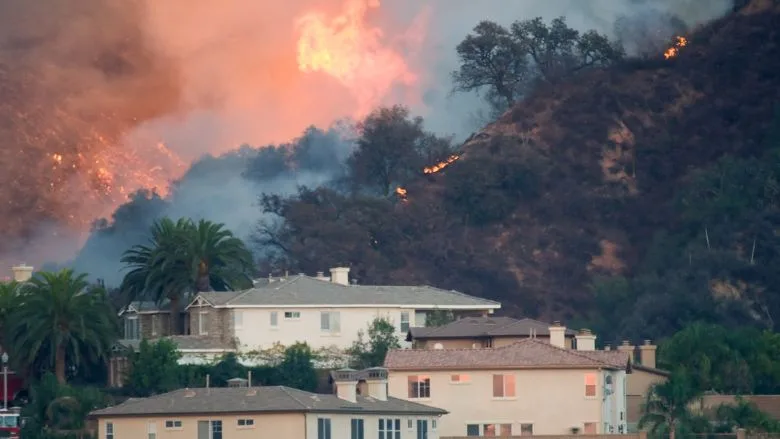
- When the flames and embers of an outdoor fire cross into the built environment and begin feeding on manmade materials, a wildfire turns into a conflagration: a structure-to-structure firestorm that spreads rapidly and inflicts far more severe property destruction than a traditional wildfire.
- Standard wildfire models assess regional factors like wind, drought, and surrounding vegetation, whereas conflagration risk analysis factors in building density, structural characteristics, ember dynamics, and hyper-local fuel sources.
- By utilizing property data and peril models to gain granular wildfire and conflagration insights, restorers can provide proactive mitigation in high-risk communities, prioritize deployments to the areas that need them most, and position fleets for long-term readiness.
After a wildfire blazes through a community, the impacted homeowners don't always initiate the remediation process with a call to their insurance providers. As major fires overwhelm carrier response capacity, property owners frequently reach out to restoration contractors first. For less obvious damage, many bypass the insurance claim process entirely to avoid increasing deductibles and future premium spikes.
In either scenario, the need for immediate restoration remains. Contractors who can mobilize rapidly and operate with a full understanding of diverse natural perils are the ones who are best positioned to win the work.
Fire Month
Prepare before wildfires with specially-curated articles during the month of October. Learn more!
While restorers increasingly leverage weather intelligence to track severe storms, today's landscape also demands an intentional view of wildfire risk. Effectively responding to wildfires—which cause billions in property losses annually—requires contractors to lay the groundwork long before smoke appears.
Ultimately, comprehensive catastrophe response requires restoration professionals to understand modern fire behavior. By analyzing wildfire and urban conflagration risk down to the property level, restorers can engage the right communities and pre-position assets strategically.
The differences between wildfire and conflagration
The terms ‘wildfire’ and ‘conflagration’ get used interchangeably, but the distinction carries real implications for insurers — and now more than ever for restoration contractors. Knowing what constitutes a conflagration is especially important for the many firms expanding beyond mitigation and deeper into reconstruction.
A wildfire is the classic outdoor fire most of us picture — fueled primarily by wildland vegetation. But when these flames cross into the built environment, they begin feeding on manmade materials like homes, vehicles, and infrastructure. At this juncture, a wildfire turns into a conflagration: a structure-to-structure firestorm that spreads rapidly and inflicts far more severe property destruction than a traditional wildfire.
It is because of conflagrations that fires have become far more destructive over the past decade. The 2025 Los Angeles wildfires and this year’s Spokane Area Fires have been classic conflagrations. These wildfire-induced conflagrations are blazing more frequently in suburban areas because residential construction is pushing deeper into the Wildland-Urban Interface (WUI) — the zones where undeveloped land meets human development.
Looking for quick answers on restoration, remediation and cleaning topics?
Try Ask R&R, our new smart AI search tool.
Ask R&R →
Conflagrations are largely driven by "ember cast" — sparks that can travel more than one mile by high winds. When these embers land on combustible roofs or enter attic vents, structures ignite from the inside out.
Because of these dynamics, wildfire is a year-round, nationwide problem — no longer confined to the American West. According to Cotality's 2026 Wildfire Risk Report, Texas ranks as the third most at-risk state for wildfires in the U.S., with over 250,000 properties facing moderate or greater risk for wildfire and/or conflagration. More than half of these vulnerable properties — representing significant reconstruction cost value — are concentrated in the Greater Austin and San Antonio metro areas.
The line between wildfire and conflagration risk comes down to the individual property: two homes in the exact same ZIP code can carry completely different threat profiles. That’s why insurers and restorers need risk tools that evaluate wildfires and conflagrations as related, yet distinct, perils.
While standard wildfire models assess regional factors like wind, drought, and surrounding vegetation, conflagration risk analysis looks deeper—factoring in building density, structural characteristics, ember dynamics, and hyper-local fuel sources.
Transforming workflows with conflagration risk insights
Restorers cannot stop a wildfire from happening or shrink its perimeter. However, restoration contractors can minimize the fallout and guide homeowners to rebuild structures that are more resilient against future hazards.
Granular wildfire and conflagration insights empower restorers to build community trust and better business practices across four key phases:
Before (Proactive mitigation): Powered by granular risk intelligence, restoration firms can spread awareness in the community where it will have the most impact. By identifying where exposure is highest, firms can identify the communities that will benefit most from preparedness and mitigation education. When restorers pinpoint high-risk conflagration zones, they can re-engage with past clients and establish direct connections with key decision-makers — including homeowners, commercial portfolio managers, and property owners.
By educating homeowners on defensible space, ember-resistant venting, and customized emergency response plans, contractors build trusted, strategic relationships long before a fire ever starts.
During (Staging in time): Tracking active fire perimeters against high-conflagration zones can help restorers pinpoint specific locations where a fire will have the greatest potential impact. In response, companies can safely pre-position assets, secure hotel blocks, and stage specialized equipment to roll out the moment evacuation orders lift.
On the other hand, granular risk data also tells contractors when not to deploy—helping them accurately evaluate true opportunity size upfront, protect baseline revenue, and avoid costly missteps.
Long-term (Asset distribution): For multi-regional networks, conflagration intelligence serves as a precise and strategic growth map. Instead of guessing where to open new locations or stage equipment, restoration firms can follow the data — positioning fleets near high-risk conflagration corridors to ensure maximum readiness when disaster strikes.
Property intelligence for today’s restoration landscape
Regardless of how closely a restoration company works with insurers after a fire, property-level conflagration insights will become invaluable for disaster response.
Accessing these models no longer requires in-house data scientists or a massive technology budget. The same highly granular property data and peril models long utilized by major insurance carriers are now available directly to the restoration industry via licensing and consulting solutions.
Companies that specialize in property intelligence, such as Cotality, synthesize millions of data points—spanning high-resolution imagery, localized vegetation density, roof and siding construction types, and structure proximity—into clear, actionable property profiles. By accessing these comprehensive insights, restorers can instantly analyze community and structural characteristics, as well as surrounding wildfire exposure, before arriving on site.
As wildfire events become more frequent and destructive nationwide, restoration contractors have an increasingly important role to play, protecting more properties and building long-term community resilience.
Looking for a reprint of this article?
From high-res PDFs to custom plaques, order your copy today!