Why Embers are Driving Wildfire Risk to Homes and Communities
How ember-driven ignition, community design, and vulnerable structures are reshaping wildfire resilience
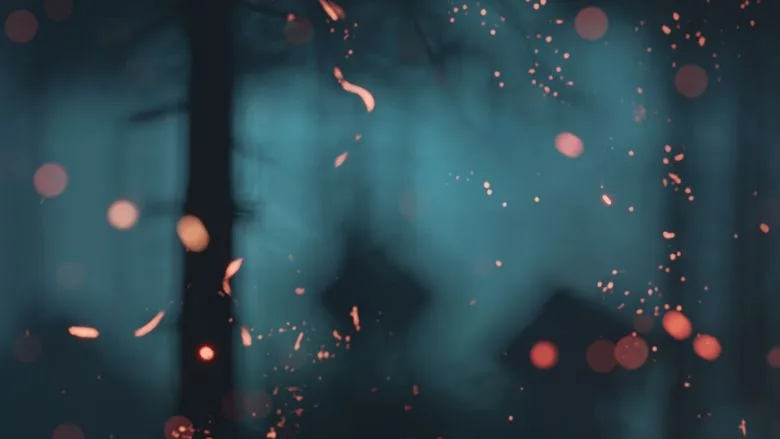
Wildfire is no longer only a forest-management problem or a rural issue. It is a growing threat to homes, communities, infrastructure, and local economies. Today’s wildfire losses are driven by a complex mix of climate change, extreme weather, land management, vegetation fuels, and the way communities are built. While dramatic images often show walls of flame, most wildfire-related structure ignitions begin with wind-driven embers. These embers can travel ahead of the fire front, enter vulnerable structures, ignite combustible materials, and turn individual buildings into fuel for community-scale losses.
Why Wildfire Risk Is Increasing
Wildfires are becoming more frequent and intense worldwide. Rising average temperatures driven by climate change, combined with more than a century of fire suppression, have created ideal conditions for severe fires. Historically, many natural wildfires burned close to the ground, clearing ground fuels without reaching the canopy. After generations of suppression, forest floors now carry heavy fuel loads that can ignite the canopy and produce catastrophic wildfires that often burn until the snow flies.
Fire Month
Prepare before wildfires with specially-curated articles during the month of October. Learn more!
Data shows that fires extinguished through firefighting intervention are typically easier to contain and 98% are extinguished before burning 100 acres. While the remaining 2% of fires account for 98% of the affected burn area. The most severe fires can continue burning until winter conditions help suppress them. Boundary Waters could smolder until snow falls. That said, wildfires are now a year-round issue for many regions.
Another alarming reality is that climate-driven heat and drought are rapidly increasing wildfire risk in regions that historically saw little fire activity. These areas once had cooler, wetter weather patterns, shorter summers, and much lower average temperatures. Their forests and wildlands often contain vegetation that did not evolve to resist fire. As a result, fires can burn hot and fast, quickly overwhelming local firefighting resources. Many of these communities have limited wildfire experience and are now urgently trying to adapt and plan for this new risk.
Wildfires can start naturally from lightning or from human causes such as negligence, equipment use or malfunction, arson, debris burning, and downed power lines. Once ignited, a fire spreads across the forest floor, burning dry vegetation, shrubs, and grasses. When ground fuels are overloaded, flames can climb into the canopy through “ladder fuels.”
In the Pacific Northwest, wildfire has been part of natural ecosystems for millennia. Conifers have thick, fire-resistant bark, but their cones and needles are highly flammable and often burn until the fuel is gone. When fire reaches the canopy, it produces embers that can travel miles in the wind.
Deciduous forests are generally less fire-resistant than conifer forests. The northeastern United States, central and western Europe, Scandinavia, and England are dominated by deciduous forests and historically had cooler temperatures and wetter climates. As climate conditions change rapidly across these regions, the risk of catastrophic wildfire is increasing.
Looking for quick answers on restoration, remediation and cleaning topics?
Try Ask R&R, our new smart AI search tool.
Ask R&R →
Europe and Scandinavia also have higher average population densities in the wildland-urban interface than North America, creating substantial risks to property, lives, and economies, especially as more urban areas experience wildfire events.
Historically, wildfire risk was viewed mainly as a rural issue because development was limited and fewer people lived in the wildland-urban interface. As urban growth boundaries expanded to support economic development and housing demand, more people moved into or near wildfire-prone areas. That trend is likely to continue, while climate-driven wildfire risk makes the challenge increasingly severe.
For restoration professionals, understanding how wildfire moves from wildlands into the built environment matters. The conditions that cause structures to ignite can directly influence the damage restorers encounter, the contamination they assess, and the recovery challenges their communities face after a fire.
Why Embers Pose the Greatest Risk to Structures
Wind-driven embers are the leading cause of wildfire spread and structure ignition. One common pathway is ember intrusion into a home’s crawl space or attic. Embers can enter through any opening larger than a golf tee, including the traditional quarter-inch mesh screens commonly used to keep pests out of crawl spaces and attics.
Combustible materials within five feet of a structure, such as sporting equipment, wood fences and gates, vegetation, trash cans, and similar items, can ignite from embers and act as a ladder for flames to reach the building. Dirty gutters and overhanging trees also create significant structure-ignition risks.
Building codes and material standards are not designed to prevent ignition from embers, radiant heat, or direct flame. In high-risk wildfire areas, combustible structures can become fuel loads, much like dry vegetation, helping fire spread from the forest into neighborhoods and then from one structure to another.
Many urban wildfires, known as conflagrations, destroy most buildings while leaving nearby trees relatively intact, underscoring how vulnerable structures are to ignition and how effectively they can spread fire through a neighborhood. Trees tend to be less flammable than built structures and many are adapted to be fire resistant. Structures on the other hand are more vulnerable because they are built with combustible materials, they often have combustible materials on site and close to the building like wood piles and patio furniture, are connected to wood fences and gates, and are susceptible to ember penetration through vents which can ignite the structure from within.
Building for Wildfire Resilience
Adapting to this new reality will require multiple, complementary actions. Mitigation strategies must be diverse, coordinated, and sufficient to protect both communities and individual properties.
Building codes, construction materials, and development standards remain far behind what is needed to prevent ember ignition. The building materials industry must design, test, and engineer better materials that can prevent ignition from embers and flames.
Design standards must also address the vulnerabilities of current home construction. Improvements to materials, HVAC systems, roof and gutter design, and exterior landscaping can provide mitigation at relatively low upfront cost.
Development standards and building codes should require planning and rules that reduce structure-to-structure fire spread. Examples include banning wood fences, setting minimum spacing between structures, removing fuels from community green spaces, and improving emergency evacuation routes. Local jurisdictions need to take a more proactive role in driving these changes.
Home Hardening Requires Community-Wide Action
Firewise home-hardening best practices should be implemented at the neighborhood level and made mandatory for both existing homes and new construction. One or two homes taking the initiative will not suffice. We need full-scale adoption and actions to protect our neighborhoods. This should be viewed as a responsibility rather than a discretionary act.
Large-scale active fire-suppression systems are needed for structures and for the boundaries where wildlands meet neighborhoods or towns. Communities should take an offensive approach. Self-contained, autonomous exterior wildfire suppression systems can be designed to saturate structures and perimeter areas, adding protection while reducing strain on local emergency resources. These systems should have their own water and power supplies and activate automatically without a human operator.
Moving From Planning to Action
The emergency is no longer something that may happen. It is here.
Communities must move beyond planning and into tangible, coordinated action. Protecting neighborhoods, cities, wildlands, and local economies will require a diversity of solutions implemented at the community level, from stronger building standards to active suppression and home-hardening strategies.
Reducing climate change remains essential, but resilience is the work within our immediate control, and it must begin now.
Looking for a reprint of this article?
From high-res PDFs to custom plaques, order your copy today!