Closing the Restoration Skills Gap with Training for Tech, AI and Customer Care
Why evolving training models and soft skills are more critical in today’s tech-driven restoration industry
The restoration industry is changing faster than most of us ever expected. Consolidation is accelerating. Technology is advancing at a pace that feels almost weekly. Carriers are demanding more documentation and more accuracy than they ever have before. And in the middle of all this change, something important has happened that many owners do not want to admit out loud. We have developed a very real skills gap in our workforce.
This gap is not just about new hires who have never held a moisture meter before. It is not even just about project managers who suddenly find themselves responsible for bigger caseloads or more demanding documentation standards. The gap is more complicated and more uncomfortable. It reflects the speed of the industry’s growth, the strain of new technologies and the erosion of old training pipelines that used to quietly shape people into confident professionals. Most owners feel this gap every day even if they cannot fully articulate it. Jobs take longer. Customers feel less connected. Carriers ask more questions. Documentation reviews turn into battles. And talented employees often burn out before they ever hit their stride.
The truth is that restoration companies have been expected to evolve at the speed of technology. But our people have not always been given the structure, the training or the mentorship needed to keep the pace.
The Industry Outgrew Its Training Model
As private equity firms moved into the industry, many of the small companies that once served as training grounds either merged or disappeared. It was common for a young technician to learn on the job under the close supervision of a seasoned operator who had seen hundreds of losses. As companies consolidated, those seasoned operators were pulled into larger organizational responsibilities. Their time for coaching new technicians naturally shrank. The mentorship ladder that helped shape new talent grew weaker.
At the same time, expectations from carriers and customers rose sharply. A technician today must understand psychrometrics, moisture behavior, safety, documentation, photographing techniques and communication skills at a level that is significantly more demanding compared to ten or fifteen years ago. These expectations did not come with a matching investment in training across the industry. That gap is now showing.
Industry studies in related construction fields estimate that rework accounts are somewhere between six and twelve percent of total project cost. While the exact numbers vary, restoration follows the same trend. Many of these issues are not the result of laziness or poor intentions.
They are the result of people being asked to perform at levels they were never trained for. It is difficult to execute confidently when the training foundation is inconsistent or incomplete.
Looking for quick answers on restoration, remediation and cleaning topics?
Try Ask R&R, our new smart AI search tool.
Ask R&R →
Technology Increased Accountability but Also Increased Stress
Technology has brought tremendous improvements to documentation and visibility. Three-dimensional imaging has become the norm. Digital job files now capture every activity. Moisture mapping is far more precise than it used to be. These tools help everyone see the loss more clearly which ultimately benefits carriers and customers.
However, anyone who runs a field team has seen the unintended side effect. Technicians spend more time holding tablets than having conversations. They may be focused on capturing the perfect image while missing the worried look on a homeowner’s face. They can become so absorbed in meeting documentation requirements that they forget the emotional context of the job.
I have watched technicians stand silently in front of a customer who is overwhelmed by a flooded basement while the technician’s attention is directed at a checklist. It is not because the technician does not care. It is because the job demands are pulling their attention away from the human being in front of them.
We often hear owners say that the job has become too digital. The reality is that the industry pushed accountability forward faster than it pushed people skills forward. As a result, the modern technician is under pressure to satisfy two competing priorities. Document everything at a granular level and also building trust with the customer in a high-stress situation. Without proper training, one of those two priorities suffer.
Software overload only adds to this challenge. Many workers today must use multiple programs that do not communicate with one another. It can feel like the job has become a moving target of new logins and updates. This constant switching weakens confidence and slows down development. People learn best when tools simplify the job not when they complicate it.
The Skills We Neglect Are the Skills Customers Remember
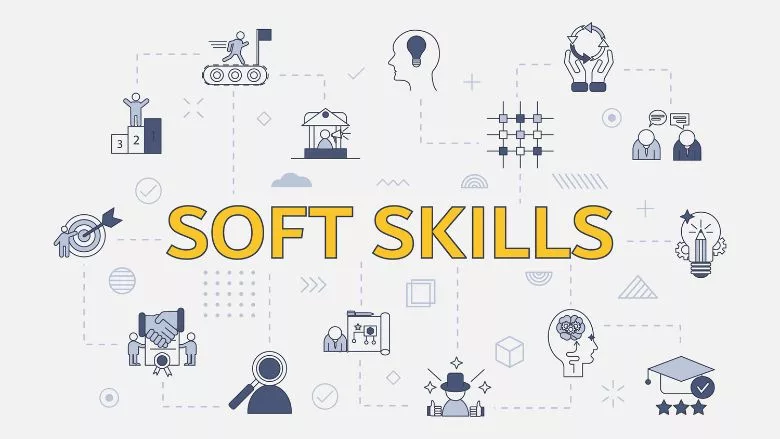
The most overlooked gap in the restoration industry is the soft skill gap. The ability to speak with empathy. The ability to read a customer’s emotional state. The ability to set expectations in a way that reduces fear rather than adds to it. These skills matter more than we often acknowledge.
If you need proof, consider Chick fil A. Their technology is excellent and their food is consistent. Yet what customers remember is something much simpler. They remember a smiling employee who says “My pleasure” as if they truly mean it. They remember how the culture felt. This is the outcome of strong cultural onboarding, not equipment or software.
Restoration is no different. Your brand is often judged not by your drying plan but by the way a technician speaks to someone who is having a very bad day. If training does not reinforce culture and communication, then even the best equipment will not win the market.
At my training academy we place a strong emphasis on these interpersonal skills. We train technicians how to guide customers through uncertainty how to talk about timelines how to address fears and how to deliver difficult updates without creating additional stress. Soft skills do not replace technical knowledge, but they shape the customer’s entire experience. When technicians are confident communicators everything else becomes easier. Estimates are smoother. Carriers have fewer complaints. Customers trust the process. And the technician feels successful rather than overwhelmed.
Understanding AI Without the Hype
Artificial intelligence has now entered the restoration world in a very visible way. There are tools that help dispatching. Tools that help documentation. Tools that give estimating suggestions. Tools that help with communication. Tools that offer quick reference guidance in unusual situations such as ice dams or complex sprinkler losses.
AI has become incredibly capable in these supportive roles. It can reduce the administrative weight that often crushes new technicians. It can help project managers catch missing documentation. It can help estimators identify potential oversights. It can assist office teams with collections strategies and standardized communication. It can even help route technicians faster during heavy call volume.
AI shines when it removes repetitive administrative tasks and makes people more efficient.
But AI cannot replace the very thing that defines restoration. It cannot look into the eyes of a customer and provide reassurance. It cannot judge tone. It cannot interpret emotion or ethically navigate a gray area situation. It cannot decide how to deliver bad news. It cannot carry the culture of your company.
The best way to view AI is as a safety net. Not a replacement but a support tool that catches loose ends and helps teams perform more consistently. It enhances human work, but it does not substitute for human judgment.
The companies that succeed with AI will be the ones that introduce it slowly and thoughtfully. They will choose one workflow to improve at a time rather than overwhelming the team. They will explain the purpose behind each tool, so employees understand why it matters. They will integrate AI into the existing process instead of forcing employees to restructure their routines around it. Most importantly they will keep people at the center of the operation.
The Real Hidden Cost of the Skills Gap
The skills gap shows up in long job cycles, customer frustration, friction with carriers' inconsistent scopes, weak documentation and low employee confidence. These issues create measurable financial consequences. They also create cultural consequences. Technicians who feel unprepared are more likely to leave. Project managers who feel overwhelmed are more likely to burn out. Companies with high turnover carry the burden of constant training and inconsistent service.
When you trace the problem back far enough the root cause is usually the same. People were never trained deeply enough to be confident in complex situations. Technology advanced but the training model did not.
The solution requires a renewed commitment to education. Not just certification training and not just equipment training. It requires training that blends technical competence with interpersonal strength. It requires teaching technicians how to think and communicate not just how to take readings. It requires showing project managers how to lead a customer through chaos not just how to complete a form.
When people feel competent in both areas everything becomes easier. Jobs flow more smoothly. Documentation improves. Customers feel well cared for. Carriers trust your professionalism. And employees take pride in their work because they know what they are doing.
Moving the Industry Forward
The companies that will thrive in the next decade will be the ones that treat training as a strategic investment rather than a cost. They will build strong mentorship ladders. They will define clear career paths for technicians and project managers. They will introduce AI as a complement to human skill rather than a substitute. They will invest in culture and communication with the same seriousness that they invest in software and equipment.
The restoration industry will continue to grow and evolve. The documentation expectations will continue to increase. Technology will become even more advanced. AI will become more capable and more accessible. But the heart of this industry will always be human.
If we choose to invest in people first, everything else will rise with them.
Looking for a reprint of this article?
From high-res PDFs to custom plaques, order your copy today!