How Drone Technology Will Transform Restoration Projects in 2026
Advanced sensors and AI-powered analytics will redefine restoration workflows in 2026
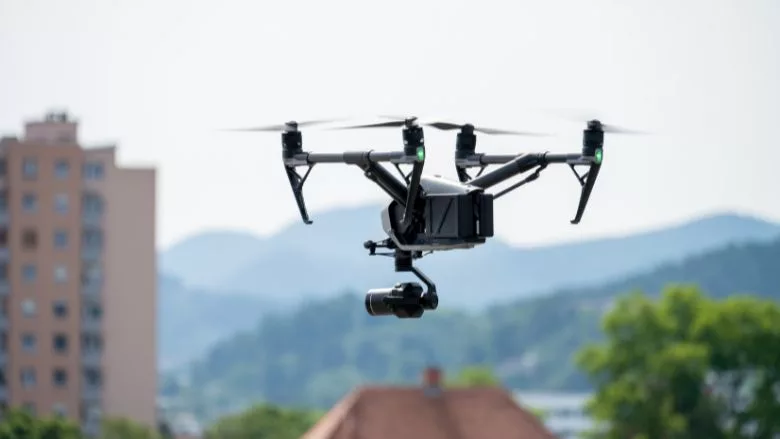
Drones are now essential tools in property restoration, enhancing safety and efficiency through aerial monitoring and precise data collection. They can quickly assess damage and navigate hazardous areas, significantly reducing the risk to restoration teams.
There are many ways advanced drone technology will be integrated into restoration workflows in 2026. Innovative applications are expected to further optimize processes, improve collaboration and enhance projects in the fields of restoration and remediation.
Related Reading
Future Drone Transformation, From Simple Cameras to Advanced Sensor Applications
The evolving restoration industry means drones will transition from basic aerial photography to sophisticated tools equipped with advanced sensor technologies. These innovations will significantly enhance workflows in 2026, facilitating faster assessments and more accurate project planning.
1. Lidar and 3D Modeling
Lower costs and smaller sensors, brought about by technological advancements, mean more drones will carry lightweight lidar scanners capable of generating high-resolution maps and collecting highly accurate 3D data of damaged structures.1
This technology enables restoration professionals to obtain precise measurements and quantity estimations of materials. The lidar point cloud paves the way for the direct creation of digital twins — virtual replicas that can assist in detailed project planning and execution.2
2. Multispectral and Hyperspectral Analysis
Drones will also feature multispectral and hyperspectral sensors. Multispectral photogrammetric point clouds can assess fire damage and identify hidden damage, while hyperspectral analysis can detect subtle material degradation and chemical or biological contamination.3 These sensors will provide insights into structural integrity that the naked eye often cannot detect, thereby enhancing the restoration process.
Drones already capture high-resolution imagery of rooftops, roof facades and hard-to-access areas, minimizing the risks and costs associated with manual inspections.4 However, these technological advancements will further transform restoration practices in unprecedented ways.
Looking for quick answers on restoration, remediation and cleaning topics?
Try Ask R&R, our new smart AI search tool.
Ask R&R →
3. Advanced Thermal Imaging
The evolution of thermal imaging will feature drones equipped with high-resolution radiometric sensors, rather than simple thermal cameras. These advanced sensors will become standard, enabling the rapid identification of moisture intrusion, air leakage and roofing delamination within building envelopes.5
These detectors, which incorporate infrared technology, will be used during property inspections. Teams can monitor the efficacy of drying equipment and evaluate insulation performance after restoration, ensuring homes are safe and energy-efficient.
AI-Powered Analytics Will Turn Raw Data Into Actionable Intelligence
Drones are already integral to many restoration workflows, but progress lies in utilizing artificial intelligence (AI) to transform the extensive data collected by advanced sensors into actionable insights. In the year ahead, AI-powered analytics promises to play a pivotal role in enhancing decision-making processes and operational efficiency throughout restoration tasks.
1. Predictive Damage Analysis
AI platforms will enable predictive damage analysis that goes beyond basic detection. These systems assess drone-collected data to identify potential structural failure points, model water or fire damage progression and automatically generate initial scopes of work.
Adopting this proactive approach enables restoration professionals to address issues before they escalate, thereby reducing repair costs and project timelines.
2. Automated Progress Monitoring
AI can also streamline project oversight by comparing daily drone scans against established project plans or digital twins. This enables it to generate automated progress reports, assess completed tasks and identify any deviations from schedules or quality standards.
Doing so will increase productivity substantially by enhancing accountability and aligning restoration teams.
3. Seamless Data Integration
In a new technological landscape, drone data will integrate directly with project management software and insurance claim platforms to establish a unified data ecosystem. This will reduce manual data entry, accelerate approvals and foster stakeholder collaboration, ultimately leading to more defined project execution and enhanced restoration outcomes.
By harnessing AI and its benefits, the restoration industry will navigate challenges more effectively than ever before.
Expanding Applications Across the Restoration Life Cycle
While the use of new drone technologies will assist during restoration projects in 2026, they are also invaluable tools throughout the process, enhancing efficiency, safety and accuracy at every stage. Their applications can span the entire life cycle, ensuring comprehensive oversight and effective management.
- Pre-restoration: Detailed site logistics and safety planning can use 3D models from drone scans.
- During restoration: Teams can monitor the integrity of temporary structures like roof tarps and shoring and use indoor drones for air quality monitoring in contained areas. They can also perform targeted application of antimicrobial agents or sealants in hard-to-reach spaces and use drones to assist with inspections.
- Post-restoration: Drones can provide final quality assurance scans for “as-built” records, verify that all repairs meet specifications and produce visual documentation for clients and insurance carriers.
Drone Integration Can Transform the Restoration Industry in 2026
In 2026, drone integration will likely transition from basic data capture tools to fully integrated partners in the restoration process, thanks to technological advancements in sensors and AI. This evolution can empower professionals to enhance efficiency, safety and decision-making throughout every project phase.
Embracing these technologies will reshape the restoration landscape, establishing new standards for success in the near future by driving innovation.
Sources
- https://pmc.ncbi.nlm.nih.gov/articles/PMC10383832/
- https://jipr.springeropen.com/articles/10.1186/s43065-025-00140-4#
- https://fireecology.springeropen.com/articles/10.1186/s42408-025-00375-2#
- https://www.jakenvironmental.com/aerial-drone
- https://iibec.org/publication-post/small-unmanned-aerial-system-applications-in-the-building-enclosure-industry-using-thermal-imaging-to-assess-building-performance-2/
Looking for a reprint of this article?
From high-res PDFs to custom plaques, order your copy today!