How the Restoration Industry Can Protect Against Blood Borne Pathogens

Photo credit: Dr_Microbe / iStock / Getty Images Plus via Getty Images
I have always believed that once a restoration company understands and implements basic procedures and work practices, they can expand their portfolio of services relatively easily and safely. Of course, that statement comes with many assumptions; some of which include training, documentation, and certification (just to name a few). There are basic safety and hygiene practices that cross over many different services; for instance:
- Preventing materials from contacting your skin
- Using respiratory protection to protect your lungs
- Preventing splashes into your eyes, nose, or mouth
- Proper donning and doffing to prevent PPE from cross-contaminating other areas or clothing
- Using controls and barriers to prevent contamination from spreading to other areas of a building
I believe this concept applies to restoration companies encountering blood borne pathogens (BBP) and performing biohazard cleanup services. In order to make my point, this two-part article is going to relate OSHA’s BBP regulations to work we commonly perform. The context of this information will start out simple with Part 1 and then cover more specifics in Part 2. I hope this will lay the basic groundwork and provide a mindset to help companies thinking about expanding into services that involve BBP’s.
Restoration Industry Exposure
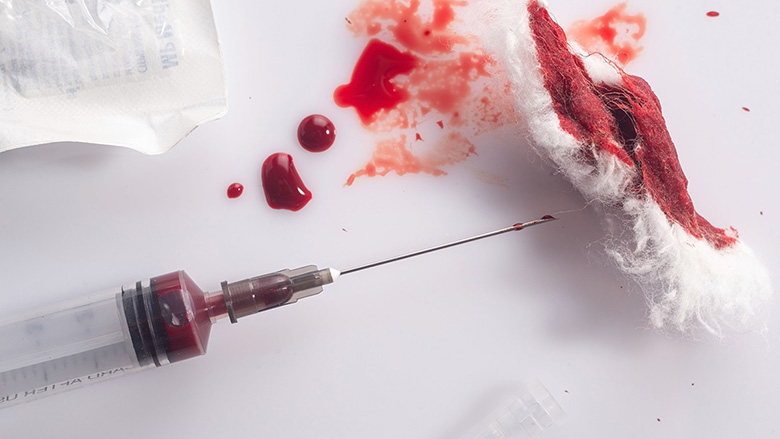
There are many ways a restoration tech can be exposed to BBPs. It can range from simply encountering blood in the office from a co-worker cutting themselves to the more complex task of cleaning up a crime scene. Some examples include:
- “Sharps”; needles, syringes, or scalpels encountered in client’s buildings or homes
- Dental or medical equipment encountered in medical buildings
- Blood encountered at the office or at jobsites
- Body fluids encountered at jobsites, including client’s bathrooms
Exposure can be at residential jobsites, commercial buildings, medical buildings, and even on a city street. Sometimes needles can be in carpet that restoration techs are removing (e.g. a resident may use needles as part of their daily medical requirements).
Common Pathogens
Most of us are well aware of pathogens that have become almost common place. The CDC identifies pathogens of “primary concern” being the following (1):
- Human immunodeficiency virus (HIV)
- Hepatitis B
- Hepatitis C
There are other materials that can also be an exposure risk; OSHA identifies Other Potentially Infectious Materials (OPIM’s) as the following (2):
- Any unfixed tissue or organ, living or dead
- Blood, cells, or tissue associated with HIV or Hepatitis B
- Body fluids, such as:
Note that I am discussing blood borne pathogens. Restoration techs can be exposed to pathogens and health hazards in other materials, such as wastewater and sewage. More specifically, OSHA does not consider wastewater and sewage to be BBP, unless they visibly contaminated with blood. (3)
Looking for quick answers on restoration, remediation and cleaning topics?
Try Ask R&R, our new smart AI search tool.
Ask R&R →
How Do BBP's Get Into the Body?
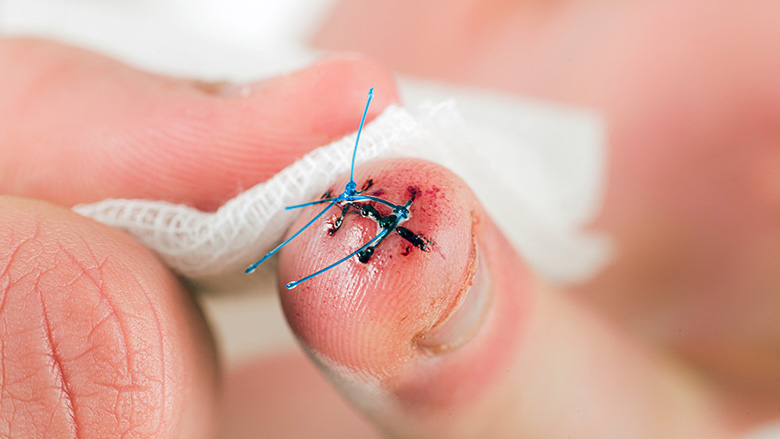
The Red Cross identifies 4 primary pathways for BBP’s to get into your body (4):
- Direct contact (e.g. blood or body fluid from one person splashing into the eye of another person)
- Indirect contact (A person’s hand/fingers touching a soiled dressing from an infected person)
- Respiratory droplet transmission (A person inhales a cough or sneeze from an infected person)
- Vector-borne transmission (A person’s skin is penetrated by an infected source, such as an insect)
Preventing Entry Into the Body
The Red Cross provides some great basic guidelines that Restorers can use to prevent infection (4):
- Avoid contact with blood and other body fluids
- Wear disposable gloves and protective coverings (mask, safety glasses, and suit) when there is potential contact
- Cover cuts, scrapes, or sores and remove jewelry before putting on gloves
- Change glove and protective coverings between jobs.
- Use proper donning and doffing practices and dispose of gloves/coverings directly into a trash bag and seal it.
- Wash hands immediately after handling potential BBP materials
- Use barriers when performing CPR.
As a general best management practice, I have always limited a tech’s exposure to pathogens and other health hazards when they have cuts, stitches, or other skin openings. An employer may want to reassign a tech with this condition to other work with less risk of exposure until the skin is healed.
I’ll stop here in order to keep this article short, I am going to cover the following topics in Part 2 next month:
- OSHA requirements
- Exposure control plans
- Training
- PPE
- Vaccines
Our work in the restoration industry has the potential to bring us into contact with materials and hazards that could negatively impact us for the rest of our lives. That holds true for working with potential blood borne pathogens. However, there are ample training and certification resources that will teach us how to avoid that negative impact! In fact, I encourage all restoration companies to get training, learn the skills, and implement work practices that protect technicians from BBP’s. Then use those skills and practices as building blocks to perfect and expand your services! In part 2 of this series, we will review those building blocks more — stay safe until then.
Reference:
- Centers for Disease Control and Prevention/The National Institute for Occupational Safety and Health (NIOSH), Bloodborne Infections Diseases: HIV/AIDS, Hepatitis B, Hepatitis C. https://www.cdc.gov/niosh/topics/bbp/default.html#:~:text=The%20pathogens%20of%20primary%20concern,blood%20and%20other%20body%20fluids.
- Occupational Safety and Health Administration, Safety and Health Topics, Bloodborne Pathogens and Needlestick Prevention. https://www.osha.gov/bloodborne-pathogens/hazards#:~:text=Other%20potentially%20infectious%20materials%20(OPIM)%20means%3A%20(1),with%20blood%2C%20and%20all%20body
- Occupational Safety and Health Administration, Standard Interpretations, Safety precautions, PPE, and immunizations for workers in waste water treatment facilities. https://www.osha.gov/laws-regs/standardinterpretations/2005-09-13
- The American National Red Cross, Online Resources, Bloodborne Pathogens Training, Preventing The Spread Of Bloodborne Pathogens. https://www.redcross.org/content/dam/redcross/atg/PDF_s/Health___Safety_Services/Training/PreventingSpreadBloodbornePathogensFactandSkill.pdf
Looking for a reprint of this article?
From high-res PDFs to custom plaques, order your copy today!