A Buyer’s Guide for Mold/Bacteria Job Site Insurance
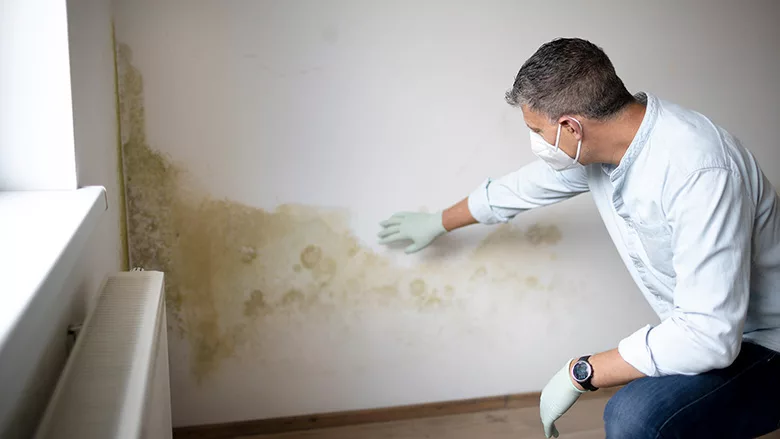
Photo credit: Epiximages/ iStock / Getty Images Plus via Getty Images
In response to an explosion of “toxic mold”* claims in 2000-2001, the insurance industry acted in unprecedented unison to universally get rid of all claims related in any way to mold. They didn’t stop at just excluding claims from mold; they threw bacteria into the exclusion as well. The folks that wrote the new exclusions had never heard of Category 3 water at the time. As a result, two decades later, seven out of 10 restorers today are fundamentally underinsured for the work they do. That is an absolute fact, and it is an unfortunate state of affairs.
There is no reason for the status quo. The needed liability insurance for a restoration firm is readily available and has been for over a decade. The information below is for the seven out of 10 firms that are going to work today underinsured. This article will help you figure out if you are one of the seven or part of the three.
In addition to excluding claims arising from exposing someone or something to mold or bacteria, for good measure, the insurance companies excluded all claims arising from a job site where remediation work involving mold or bacteria was taking place. In an extreme reading of the exclusion, burning down the house on a Category 3 water job is not a covered claim on a general liability insurance policy that has a fungi or bacteria exclusion attached to it. I know a restorer can avoid mold jobs; I do not know any that can avoid Category 3 water.
The fungi/bacteria exclusion endorsement always found in a commercial general liability insurance policy effectively contains a “you cannot be in the mold or Category 3 water remediation business” exclusion. If your general liability insurance policy is not in a package with contractors environmental liability insurance, you will have that mold/bacteria job site exclusion in your policy. About 70% of all restoration firms are being sold general liability policies with a mold and effectively a Category 3 water job site exclusion today. Insurance companies like to call mold fungi.
The resulting gaps in insurance coverage created by fungi/bacteria exclusions created a new market for the use of environmental insurance to fill the coverage gaps in commercial insurance programs.
All contractors working in the built environment now need to purchase a purpose-designed contractors environmental liability (CEL) insurance to fill the fungi/bacteria coverage gap in the traditional commercial general liability policy. But even with a CEL policy in place, seven out of 10 restorers will go to work today with these glitches in their liability insurance coverage:
- Even the best custom-designed CEL policy in the world will not cover a fire loss at a mold or Category 3 water job site. A CEL policy only insures losses arising from exposing somebody or something to mold or bacteria and the resulting damages from that exposure. A CEL policy is not a fix for the fungi or bacteria job site exclusion in a general liability insurance policy. A CEL policy will not cover burning down the house.
- CEL policies were not invented for restoration contractors. Some policies are not good at all for restoration firms. They are as good as using a screwdriver to drive a nail.
The mold exclusion on the GL policy eliminates insurance coverage for liability claims arising from the contractor’s premise, operations, products and completed operations for any claim even related to mold.
Looking for quick answers on restoration, remediation and cleaning topics?
Try Ask R&R, our new smart AI search tool.
Ask R&R →
A specially designed general liability + contractors environmental liability + professional liability package policy is the only way to fix what is essentially is a “you cannot be in the mold or Category 3 water remediation business” exclusion. These exclusions get routinely added to commercial general liability insurance policies today. If you do not have one of these package policies, you are one of the seven with glitchy liability insurance coverage. There is no doubt about it.
But even if you have one of these package liability insurance policies, you may still not be out of the woods. That package policy was originally invented to insure atomic bomb plant clean-up contractors. I know this because I invented the policy form for my clients at the time that were in the business of cleaning up the factories that built the first atomic bomb. The policy design works for the purpose for which it was intended. If you are reading this in the pages of R&R, I assume you are not cleaning up an atomic bomb plant. Those package policies need to be modified for fire and restoration contractor’s operations.
Contractors environmental liability insurance covers bodily injury, property damage and clean-up cost claims arising out of the contractor’s operations and completed operations, it also pays for defense costs within the limit of liability. Higher quality CEL policies will specifically address restoration costs to build back the damaged property to its pre-loss condition.
CEL policies also provide coverage for the release or escape of a broad range of other pollutants, including asbestos and lead, cleaning chemicals, carbon monoxide, or biocides that may not be covered in the general liability policy because of the pollution exclusion. Therefore, a firm that purchases a CEL policy actually has better insurance coverage than they did before mold exclusions were introduced.
For example, a GL policy has not covered asbestos-related claims since 1986. The insurance brokerage firm I founded insures thousands of restorers. Most of our really bad claims come from our restoration customers blowing asbestos fibers that they did not know were there, around in a structure on a water drying job. General liability insurance policies do not cover that. A CEL policy does, off the shelf.
Some of the common insurance policy provisions in various CEL insurance policies turn out to be totally inappropriate for the insurance needs of restoration contractors. A great example is a property damage to your work exclusion.
Property Damage to Your Work
This is a very common exclusion in CPL policies. It basically says your liability insurance will not pay for damage to the work you do. If you are a superfund contractor incinerating solvent-contaminated soil, excluding damage to the dirt you are burning is not important. Now apply the exclusion to a drying job. Water and high humidity in the walls and flooring of a building can be ambient throughout the entire structure. A poorly performed drying job will result in mold, and the damage is likely to be for the whole building, which may need to be demolished. Although it was not the original intent of the exclusion to eliminate property damage liability coverage on the entire job a contractor is working on, by default that is how most damage to your work exclusions read within the context of mold and drying work.
Evaluating the ramifications of this exclusion helps to know that 90% of all paid mold claims are property damage and clean-up claims; they are not bodily injury claims. It also is interesting to note some CPL policies do not have a damage to your work exclusion at all, while others modify the exclusion to provide insurance on the property you are working on if you damage it. A CPL policy without a property damage to your work exclusion could cover literally five times more claims scenarios for a drying contractor than a CPL policy with this exclusion, and the premiums are likely to be very similar between the two policies.
Unlike general liability insurance, CPL insurance policies are not standardized; they do not have to be approved by state insurance commissioners. The unregulated nature of rates and policy forms in CPL insurance creates a very complex insurance marketplace for the buyer and the insurance agents selling these policies. In stark contrast to general liability insurance there is no instruction manual on working with environmental insurance policies.
So why is it that after two decades of continuous availability of good functional insurance on restorers, seven out of 10 are fundamentally underinsured today for Category 3 water and mold projects? Worse yet, why are nine out of 10 firms working for the direct repair networks sold insurance policies that do not meet the insurance requirements in the contracts to work for those networks? What is the common denominator? Well-intentioned but uninformed insurance agents selling the policies they are used to selling even after 20 years. There is generally no training available anywhere in the U.S. for an insurance agent to learn about effects of fungi/bacteria exclusions on a restoration firm.
If you are one of the 70% of underinsured firms or one of the 90% of restores that do not have the needed insurance to work for a direct repair network, I advise reaching out to a specialist insurance brokerage firm for help. You need help.
*There is no such thing as toxic mold.
Looking for a reprint of this article?
From high-res PDFs to custom plaques, order your copy today!