Restoration logo
search
cart
facebook twitter linkedin youtube
  • Sign In
  • Create Account
  • Sign Out
  • My Account
Restoration logo
  • NEWS
  • PRODUCTS
    • New Products & Technologies
    • Submit Your Product
    • Interactive Product Spotlights
  • EDUCATION
    • KnowHow.
    • Podcasts
    • Trade Shows & Expos
    • Training & Certification
    • Webinars
    • Whitepapers
  • TOPICS
    • Water Damage
    • Fire & Smoke Damage
    • Mold
    • Contamination
    • Odor
    • Contents
    • Architecture
    • Catastrophe
    • Cleaning
  • BUSINESS
    • Managing Your Business
    • Insurance/Legal Matters
  • BUYER'S GUIDE
  • VIDEOS
    • Ask the Expert
    • TradeTalks
    • Video Channel
  • THE EXPERIENCE
    • Convention & Trade Show
    • R&R Special Issue
  • EMAG
    • eMagazine
    • Archive Issues
    • Contact
    • Advertise
  • SIGN UP
Contents Restoration

Q&A

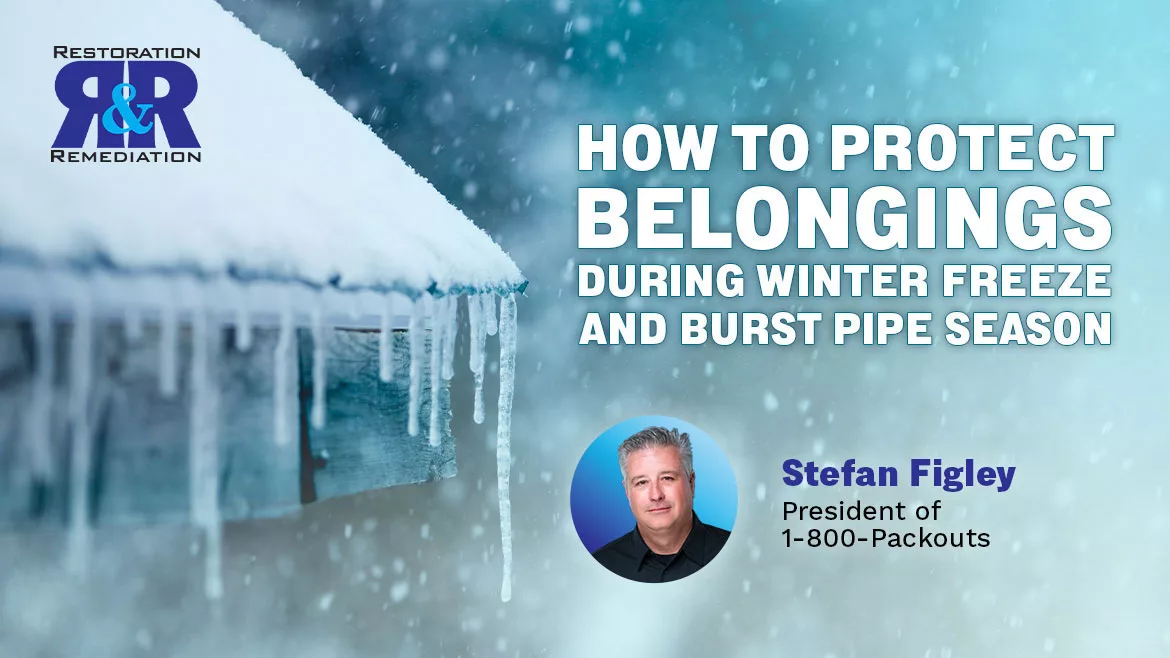
How to Protect Belongings During Winter Freeze and Burst Pipe Season

Stefan Figley shares tips for preventing damage and restoring items after cold weather events
By Kayla McGowan, Stefan Figley
Q&A: How to Protect Belongings During Winter Freeze and Burst Pipe Season
Background image: aetb/iStock / Getty Images Plus via Getty Images; Photo: Stefan Figley
December 11, 2025

In this special Q&A with Stefan Figley, President of 1-800-Packouts, we’re tackling key questions that arise during the winter season. We’ll cover everything from burst pipes to the impact of freezing temperatures on electronics and other belongings. With a prediction of above average and below average temperatures across the country, proactive planning is your strongest tool. Share these insights with your team and customers to help them get ahead of frozen pipes and damage to their belongings. Here’s what Stefan had to say about protecting belongings during winter emergencies.


Question: What types of belongings are most at risk during freeze events or burst pipes, and how should people decide what to stabilize or remove first?

Answer: Freeze events and burst pipes create a tricky mix of water damage and rapid temperature change. The most at-risk items tend to be anything porous or layered: think upholstered furniture, mattresses, rugs, clothing, paper goods and boxed storage. These materials soak up water fast and can hold it deep inside, which leads to swelling, staining, odor and mold once conditions warm up. Wood furniture and cabinetry are also vulnerable; they may warp, split or delaminate if water freezes in joints or veneers.

When prioritizing, start with safety and sentimental value. First, remove items that could become hazardous (anything near electrical sources, heaters or heavy saturated materials in unstable stacks). Next, focus on irreplaceables: photos, keepsakes, documents, heirlooms and unique artwork. After that, move to high-value items financially, like electronics, collectibles and specialty furniture. The goal is to stabilize what matters most before thawing accelerates the damage.


Q: When contents have been exposed to freezing temperatures, what early steps help prevent extra damage once items begin to thaw?

A: The key is controlled thawing and moisture control. If you can, keep the environment cool and stable rather than rapidly warming everything up. Fast thawing pulls moisture through materials too quickly, which can cause cracking, peeling finishes and permanent distortion. Avoid using direct heat on furnishings or paper items.

If items are wet and frozen, don’t force them apart or unfold them because that’s when fibers tear or surfaces delaminate. Let a qualified team handle separation and drying. Also, try to reduce humidity early. Even a small amount of thawed water trapped inside a sofa or closet box can create mold within 24–48 hours once temps rise.


Q: How can property owners prepare their belongings before winter to reduce the chance of freeze-related loss?

A: Think prevention and smart storage. Keep valuables and sentimental items off floors, especially in basements, garages, exterior closets and crawl-rooms. Plastic bins with tight lids are better than cardboard boxes, and labeling helps you act quickly if something happens.

If you’re leaving town, set your thermostat no lower than 55°F, open cabinet doors under sinks to keep pipes warmer and shut off the main water if possible. Finally, do a quick seasonal scan: move artwork or keepsake boxes away from exterior walls and windows and don’t store electronics in unheated areas where temperature swings are harsh.


Q:  What signs should people look for to determine whether contents can be restored or need to be replaced after a cold weather incident?

A: A lot can be restored, even when it looks rough at first. But warning signs include severe warping or splitting in wood, insulation swelling inside walls of furniture, persistent odor after initial drying, heavy rust or corrosion on metal components and paper items that are fused together with ink bleeding.

That said, don’t throw things out too early. Many items that seem “done,” like area rugs, upholstered chairs, framed photos or books, can often be professionally cleaned and stabilized if they’re handled quickly and correctly.


Q:  How do low temperatures affect electronics, artwork, documents or sentimental items during a water or freeze event?

A: Cold slows some damage but adds new risks. Electronics may survive initial wetting if power stayed off, but condensation during warm-up can short components. Artwork and photos are especially sensitive to freeze-thaw cycles...you’ll see cracking paint, stuck glass or paper buckling. Documents and keepsakes often look “fine” while frozen, then degrade rapidly as they thaw, especially if they’re stacked together. 


Q: What should people understand about how cold weather can complicate contents recovery timelines, and why early involvement of a qualified team helps prevent avoidable loss?

A: Cold weather creates a false sense of safety. Damage may look paused while items are frozen, but once thawing begins, everything accelerates from swelling to mold risk to odors. Also, drying a structure and contents in winter can take longer because outside air is cold and moisture removal is harder to control.

Bringing in a qualified contents team early helps in two huge ways: we stabilize items before thawing causes secondary damage and we triage correctly so you don’t lose restorable belongings unnecessarily. Early action almost always equals better outcomes and less heartbreak.


KEYWORDS: document restoration frozen/burst pipes packout

Share This Story

Looking for a reprint of this article?
From high-res PDFs to custom plaques, order your copy today!


Kayla mcgowan author

Kayla McGowan is the Editor-in-Chief of Restoration and Remediation (R&R) magazine, bringing nearly 10 years of marketing and communications experience in the restoration sector. With a solid foundation in content creation, editing, and social media strategy, Kayla respects the vital work of the industry. At R&R, she develops content that engages and informs restoration professionals and manages content strategy for The Experience Events, bridging the cleaning and restoration industries. Outside of work, Kayla is an avid foodie who loves exploring new culinary experiences. She enjoys spending time with her family and embracing the outdoors. Kayla is excited to connect with industry professionals and contribute to R&R’s ongoing success. Reach her at mcgowank@bnpmedia.com or 757-849-2461.

Stefan Figley is president of 1-800-Packouts, a leader in the contents and personal property restoration franchise industry since 2016 and part of the Five Star Franchising platform of home service brands. Figley has nearly 30 years of experience in the franchise and marketing industries, with a focus on brand growth. He has held executive and leadership positions with nationally recognized companies such as Terminix, Steamatic, Merry Maids and Jani-King International, as well as prominent international roles in the marketing industry.

Recommended Content

JOIN TODAY
To unlock your recommendations.

Already have an account? Sign In

  • mold remediation

    Fighting Mold and Bacteria Damage

    Successful mold remediation can be multidisciplinary,...
    Contamination Restoration & Remediation​
    By: Josh Woolen
  • certifications and licenses for restoration professionals

    Certifications and Licenses Every Restoration Company Needs

    Restoration companies need to make sure they have the...
    Restoration Training/Education
    By: Sharon Elzarat
  • a wall covered in moss and fungus

    Zero Tolerance for Toxic Molds: Essential Steps for Successful Remediation

    Understanding the importance of zero tolerance for toxic...
    Mold Remediation
    By: Michael A. Pinto CSP, SMS, CMP, RTPE, FLS, ERS and Kendra Seymour
You must login or register in order to post a comment.

Report Abusive Comment

Manage My Account
  • eNewsletter
  • Online Registration
  • Subscription Customer Service
  • Manage My Preferences

More Videos

Popular Stories

mold spores

Mold and Mental Health: The Dual Crisis Facing Indoor Environmental Remediation Teams

calculating profits

How Poor Documentation and Manual Billing Quietly Erode Restoration Profits

Ask the Expert - Margin vs. Markup: The Costly Confusion in Restoration

Why Understanding Markup, Margin and Overhead is Critical for Restoration Success

2025 Technician Award winner - Congratulations, Kaylin Glaspie!

Events

January 20, 2026

INTRCONNECT

Dive into the latest trends, innovations, and best practices shaping the future of property insurance and restoration.

April 27, 2026

RIA Convention & Expo

This event empowers professionals through world-class education, powerful networking, and access to cutting-edge tools and services.

View All Submit An Event

Poll

Technology Innovations

Which emerging technology do you believe will have the biggest impact on restoration work in the next 5 years?
View Results Poll Archive

Products

The Cleaning, Restoration, Inspection, and Safety Glossary

The Cleaning, Restoration, Inspection, and Safety Glossary

The Cleaning, Restoration, Inspection, and Safety Glossary.

See More Products
Prepare for CATASTROPHE with R&R!

Related Articles

  • Ask the Expert: Electrical Fires During Hurricane Season with Barry Rice

    Electrical Fires During Hurricane Season with Barry Rice

    See More
  • May 2025 Editor's Note: Prioritizing Mental Health During Catastrophe Seasons

    Prioritizing Mental Health During Catastrophe Seasons

    See More
  • Ask the Expert - Scaling with Purpose: How CRS Grew to 60 Locations in 3 Years

    Scaling with Purpose: How CRS Grew to 60 Locations in 3 Years

    See More
×

Stay ahead of the curve with our eNewsletters.

Get the latest industry updates tailored your way.

JOIN TODAY!
  • RESOURCES
    • Advertise
    • Contact Us
    • Directories
    • Store
    • Want More
    • Submit a Press Release
  • SIGN UP TODAY
    • Create Account
    • eNewsletters
    • Customer Service
    • Manage Preferences
  • SERVICES
    • Reprints
    • Marketing Services
    • Market Research
    • List Rental
    • Survey/Respondent Access
  • STAY CONNECTED
    • LinkedIn
    • Facebook
    • Instagram
    • YouTube
    • X (Twitter)
  • PRIVACY
    • PRIVACY POLICY
    • TERMS & CONDITIONS
    • DO NOT SELL MY PERSONAL INFORMATION
    • PRIVACY REQUEST
    • ACCESSIBILITY

Copyright ©2025. All Rights Reserved BNP Media.

Design, CMS, Hosting & Web Development :: ePublishing