Restoration logo
search
cart
facebook twitter linkedin youtube
  • Sign In
  • Create Account
  • Sign Out
  • My Account
Restoration logo
  • NEWS
  • PRODUCTS
    • New Products & Technologies
    • Submit Your Product
    • Interactive Product Spotlights
  • EDUCATION
    • KnowHow.
    • Podcasts
    • Trade Shows & Expos
    • Training & Certification
    • Webinars
    • Whitepapers
  • TOPICS
    • Water Damage
    • Fire & Smoke Damage
    • Mold
    • Contamination
    • Odor
    • Contents
    • Architecture
    • Catastrophe
    • Cleaning
  • BUSINESS
    • Managing Your Business
    • Insurance/Legal Matters
  • BUYER'S GUIDE
  • VIDEOS
    • Ask the Expert
    • TradeTalks
    • Video Channel
  • THE EXPERIENCE
    • Convention & Trade Show
    • R&R Special Issue
  • EMAG
    • eMagazine
    • Archive Issues
    • Contact
    • Advertise
  • SIGN UP
Water Damage RestorationMold Remediation

Thermal Cameras: Answers to Commonly Asked Questions From Restoration Pros
By Brent Lammert
thermal cameras
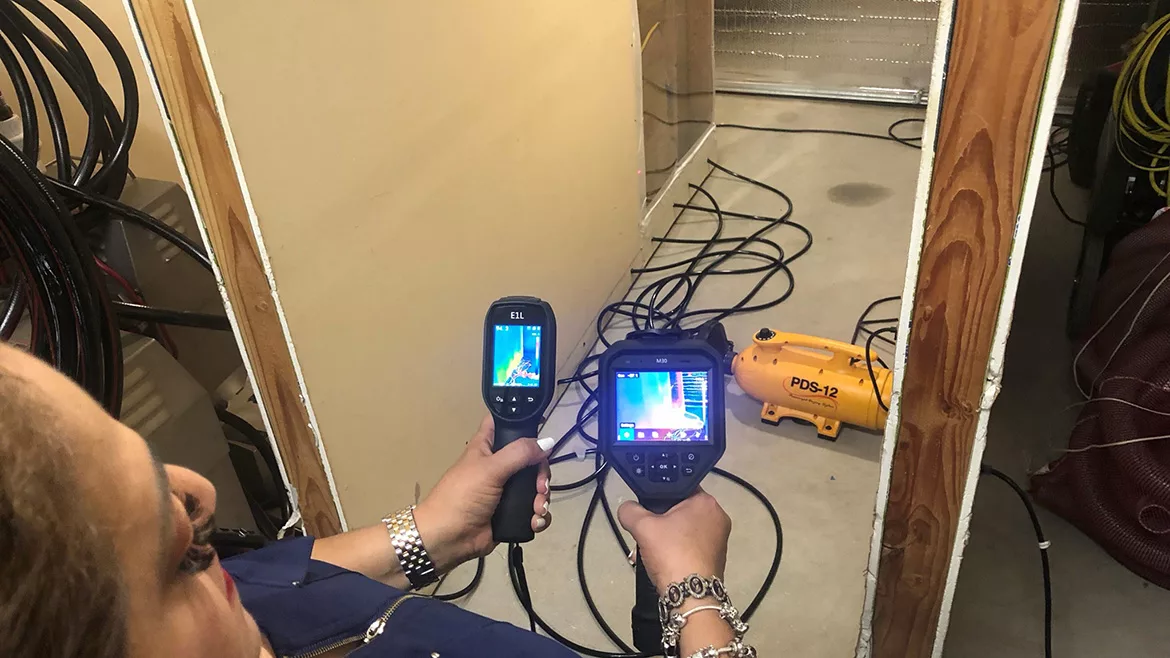
Photo credit: Reets Drying Academy

Photo credit: Reets Drying Academy

December 1, 2021

The worst day in the world for a homeowner is your call to action. Like a superhero, you put your skills and training to the test to make their world right again. Thermal imaging can and should be part of your go-bag, even if it won't give you X-ray Vision as they show in Hollywood movies. Here, I will provide answers to some commonly asked questions about thermal imaging and help you deploy this technology with your teams to save time, increase revenue and better serve your customers. 


How do thermal cameras work?

Thermal cameras see heat the way other cameras image light. The "light" for thermal cameras is the infrared wavelengths beyond visible light in the electromagnetic spectrum. Thermal cameras use a lens to focus the heat on individual pixels in an array on a detector. The temperature of each pixel in the scene is measured, and the camera applies a color palette to display the different temperatures to the user. Typically, white is the hottest and black or blue is the coldest in the scene. Images are stored as JPGs and viewed the same way you view photos from other types of cameras.


Sounds complicated. How difficult is it to see moisture?

Operating a thermal camera is intuitive for people since we naturally explore our world visually. We also have physics on our side with evaporative cooling. Wet materials will cool below ambient temperature, while dry areas will remain at ambient temperatures. Even a slight temperature difference is visible to an infrared camera and makes finding potentially wet areas straightforward. However, cameras only see heat and not moisture directly, so the best practice is to use a thermal camera to scan a large area and then confirm your findings with a moisture meter. The time required to determine the extent of moisture damage is dramatically reduced over traditional workflows.
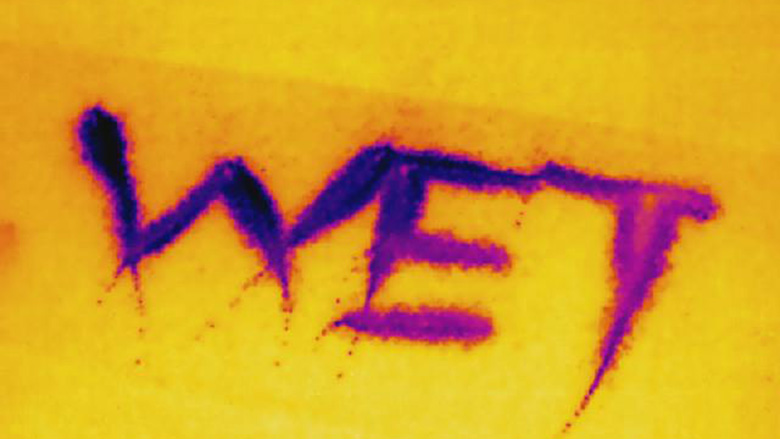
wet carpet
Example of a "wet" area on carpet.

Do blue areas on a thermal image mean "wet"?

No. Typically, blue in a thermal image will be a cooler area, but it could be cold and dry rather than wet.  Confirm with a moisture meter before you start tearing out drywall.


Can I see moisture damage below the surface, such as behind drywall or baseboards?

It's possible, just not like what's shown in the movies. Heat moves from warm to cold by conduction, convection or radiation. For this application, we rely on the conduction of heat to cold, wet areas.  Depending on the depth of the moisture and the material's conductivity, there will be a difference we can image even though the surface is completely dry.  
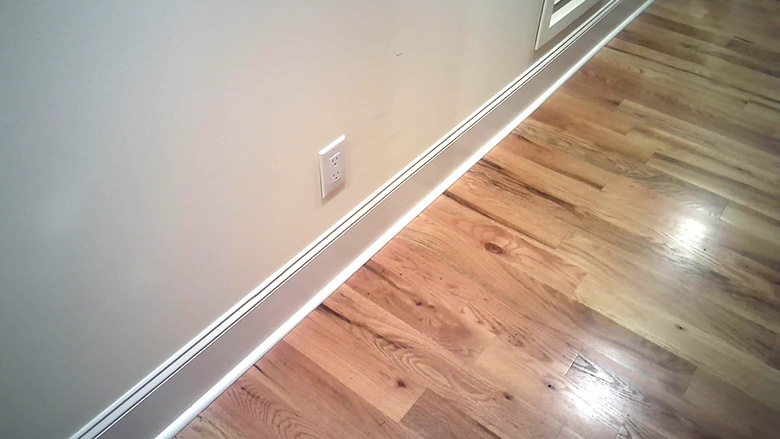
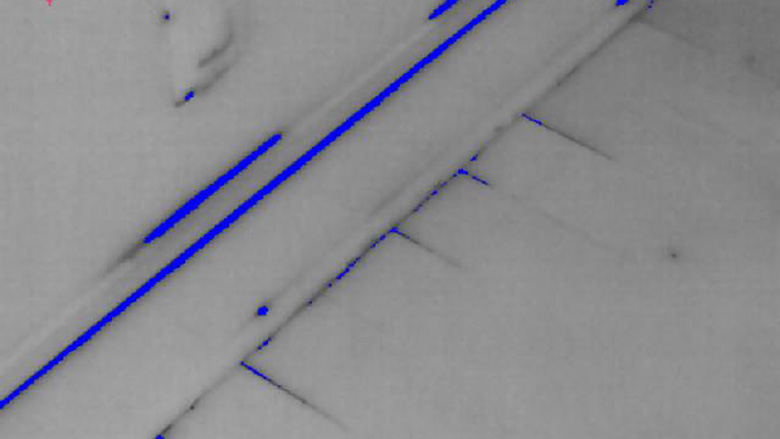
Water behind baseboard
Water behind baseboard with color alarm

Visual and thermal Images showing moisture behind a baseboard and beneath hardwood flooring.


Do I need specialized training for my technicians?

Most technicians will pick up a camera and begin exploring their world in a new way within minutes. With any tool, we unlock more value from the investment with training. We can choose to learn on the job or in a class. Classes range from quick, online tutorials to full certification training on a wide range of thermography applications. Some drying schools have incorporated a module on utilizing thermal imaging in their water restoration training classes.


Who on my team should use a camera?

Historically, thermal cameras were too expensive to be used by more than one person in an organization. Today, the cost of a camera is less than that of a quality moisture meter. Your first consideration now would be to ask yourself the question, "Who would benefit in their daily responsibilities by seeing moisture?" Estimators, sales, crew chiefs, and water damage technicians would all be able to complete tasks faster and communicate more clearly within the team, and with property owners and insurance companies by using a thermal camera. You might also consider if a person carries a moisture meter in their vehicle or tool bag, and make sure they have a camera. 


Are thermal cameras durable enough for daily field operations?

Absolutely! Cameras designed for technicians have ratings for six-foot drop tests, IP54 enclosures for dust and moisture, and multi-year warranties.  


The Bottom Line

Thermal imagers have proven their value in the restoration industry over the last two decades and transitioned from a fancy accessory to a must-have tool. The cost is often less than other standard instruments like moisture meters and psychrometers. The learning curve is quick since they are visually intuitive, and the ROI is usually paid for on the first job where it's deployed.

KEYWORDS: moisture detection and monitoring moisture mapping thermal imaging

Share This Story

Looking for a reprint of this article?
From high-res PDFs to custom plaques, order your copy today!

Brent lammert headshot

Brent Lammert is vice president of sales and marketing at HIKMICRO. He has over 20 years of experience in the thermal imaging industry with roles in sales, marketing and product management. He is passionate about developing strategic partnerships, optimizing user experience and creating value in organizations.

Recommended Content

JOIN TODAY
To unlock your recommendations.

Already have an account? Sign In

  • mold remediation

    Fighting Mold and Bacteria Damage

    Successful mold remediation can be multidisciplinary,...
    Contamination Restoration & Remediation​
    By: Josh Woolen
  • certifications and licenses for restoration professionals

    Certifications and Licenses Every Restoration Company Needs

    Restoration companies need to make sure they have the...
    Restoration Training/Education
    By: Sharon Elzarat
  • a wall covered in moss and fungus

    Zero Tolerance for Toxic Molds: Essential Steps for Successful Remediation

    Understanding the importance of zero tolerance for toxic...
    Mold Remediation
    By: Michael A. Pinto CSP, SMS, CMP, RTPE, FLS, ERS and Kendra Seymour
You must login or register in order to post a comment.

Report Abusive Comment

Manage My Account
  • eNewsletter
  • Online Registration
  • Subscription Customer Service
  • Manage My Preferences

More Videos

Popular Stories

Ask the Expert - Margin vs. Markup: The Costly Confusion in Restoration

Why Understanding Markup, Margin and Overhead is Critical for Restoration Success

mold spores

Mold and Mental Health: The Dual Crisis Facing Indoor Environmental Remediation Teams

calculating profits

How Poor Documentation and Manual Billing Quietly Erode Restoration Profits

2025 Technician Award winner - Congratulations, Kaylin Glaspie!

Events

January 20, 2026

INTRCONNECT

Dive into the latest trends, innovations, and best practices shaping the future of property insurance and restoration.

April 27, 2026

RIA Convention & Expo

This event empowers professionals through world-class education, powerful networking, and access to cutting-edge tools and services.

View All Submit An Event

Poll

Technology Innovations

Which emerging technology do you believe will have the biggest impact on restoration work in the next 5 years?
View Results Poll Archive

Products

The Cleaning, Restoration, Inspection, and Safety Glossary

The Cleaning, Restoration, Inspection, and Safety Glossary

The Cleaning, Restoration, Inspection, and Safety Glossary.

See More Products
Prepare for CATASTROPHE with R&R!

Related Articles

  • Kits offer quick answers to mold questions

    See More
  • Woman Working on Laptop While Reviewing Documents

    7 Questions Restoration Pros Should Ask When Considering an 831(b) Risk Management Strategy

    See More
  • Innovation in Restoration: From ATP Meters to IR Cameras

    See More

Related Products

See More Products
  • More-Answers---Part-2.gif

    More Answers Than You Have Questions About Carpet Cleaning Vol. 2

  • More-Answers---Part-1.gif

    More Answers Than You Have Questions About Carpet Cleaning Vol. 1

  • COVER pdf.jpg

    How to Get More Restoration Jobs in 14 Days... (ebook)

See More Products
×

Stay ahead of the curve with our eNewsletters.

Get the latest industry updates tailored your way.

JOIN TODAY!
  • RESOURCES
    • Advertise
    • Contact Us
    • Directories
    • Store
    • Want More
    • Submit a Press Release
  • SIGN UP TODAY
    • Create Account
    • eNewsletters
    • Customer Service
    • Manage Preferences
  • SERVICES
    • Reprints
    • Marketing Services
    • Market Research
    • List Rental
    • Survey/Respondent Access
  • STAY CONNECTED
    • LinkedIn
    • Facebook
    • Instagram
    • YouTube
    • X (Twitter)
  • PRIVACY
    • PRIVACY POLICY
    • TERMS & CONDITIONS
    • DO NOT SELL MY PERSONAL INFORMATION
    • PRIVACY REQUEST
    • ACCESSIBILITY

Copyright ©2025. All Rights Reserved BNP Media.

Design, CMS, Hosting & Web Development :: ePublishing