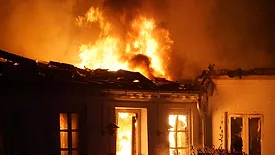
Fire damage goes far beyond removing soot and repairing visible damage. Learn about commonly overlooked contamination, fire suppression water damage, documentation, safety, and exceptional customer service.
It’s easy to underestimate protein fires because the contamination may not resemble “traditional” soot. Ryan Whitney breaks down how restorers can assess, follow pathways, properly document the loss, and build a more defensible restoration scope.
John Otero of 1-800 WATER DAMAGE shares his insights on the hidden dangers of wildfire smoke and how restoration professionals can help protect the indoor environment.
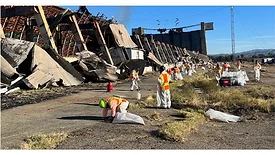
One year after the catastrophic blaze at the historic Marine Corps Air Station Hangar in Tustin, California, ATI Restoration reflects on its rapid and comprehensive response. Learn how the team tackled unprecedented asbestos contamination, ensuring community safety and restoring affected areas efficiently.
The oldest and most complex of the restoration disciplines, fire remediation work requires an understanding of how fire and combustion residues behave to effectively neutralize and return a structure to a livable state.Cole Stanton explores four fundamental chemistry subsets of fire damage and how each can impact restoration work.
Every fire has its own chemical makeup or DNA – the fuels that burned, the types of chemicals that have reacted or interacted, the duration of the fire, the intensity of the heat, the odors and gases the fire generates all contribute to the uniqueness and toxicity of structure fire environments.
Abby and Brent Thompson own and operate Paul Davis Emergency Services of the Golden Triangle, located in Starkville, Miss. They recently sat down with R&R to share tips on removal of the most common sources of odor they treat.