Taking Nicholas Hopkins’ career path proves no easy task. One needs to live in two cities hit by hurricanes, work as a drug counselor and get a master’s degree that entails studying historic methods for carpentry, masonry and metal work.
Watching a movie that was set in the wilds of the Rocky Mountains happened to remind me of a line from Rudyard Kipling’s The Jungle Book: “For the strength of the pack is the wolf, and the strength of the wolf is the pack.” I believe this sentiment to be true in business as well as in nature.
“Creating a clearly planned education and career path for your technicians will help with employee retention and improve the dedication and quality of your restoration efforts,” Lorne McIntyre writes. This article focuses on the role of a technician from day one to an RIA Certified Restorer and can be used as a guide to not only develop employees but attract more talented candidates.
Rather than begin the hiring process by looking at external factors such as unemployment rates or shifts in the perceived value of secondary education (things outside your control), it would be more beneficial to start the recruiting process by looking internally at both your company’s culture and the company’s leadership (things within your control). Chuck Violand highlights three critical areas to invest in.
Why the restoration industry is good for women, why women are good for the industry, and three intentional steps employers can take to make space for more women and other underrepresented groups to thrive both in the workforce and at the leadership level.
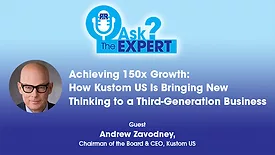
In this episode of Ask the Expert, Andrew Zavodney, chairman of the board and CEO, talks about Kustom’s investment in company culture, employee value proposition, corporate governance, M&A due diligence, transparency, accountability and scaling without private equity.
“By setting and sticking to your core values, the culture you have built and the standards for the quality of work you have established won't be compromised by changes to company size and makeup. These simple ideas have guided us as we've grown from a small operation into a national leader in disaster recovery,” Jeff Moore writes.
What do people, in general, want from employers? How are other industries treating employees and candidates? Answering these questions offers up ideas, lessons and competitive intel from beyond the world of restoration. After all, restoration businesses aren’t just competing against each other for talent.