In our industry, we face jobsite odor problems almost daily, and no matter how much experience we gain, how much training we get, or how many of these educational articles we read, controlling odors can still be a challenge. So, here’s a quick summary of the various odor control tools at your disposal and some tips and tricks I’ve picked up along the way to help you decide what tools to use and when to use them.
Enhanced product line-up now includes an EPA-registered disinfectant, an odor neutralizer, white and clear antimicrobial coatings, an indoor air quality knockdown product, a wettable peroxide cleaner and their legendary mold stain remover.
Every week, Annissa answers questions from R&R readers across the U.S. and Canada. In this special article, she sits down with R&R to answer some of our questions (and yours) about odor removal – and how she has truly become a master at odor remediation throughout her years in business.
Hydroxyl generators have been used for nearly a decade to eliminate smoke odors on countless projects around the world. However, because hydroxyls are so reactive and powerful, there are many other applications in the disaster restoration industry from which contractors are profiting.
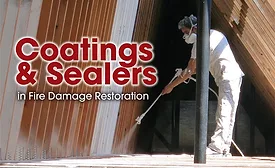
Coatings are an integral component of fire restoration, most crucially to prevent the recurrence of smoke odor. Coatings implemented post-fire are not finish paints, but can serve as primers while blocking stains and adhering to less-than-ideal surfaces.
In restoration, it is important you understand how to overcome tumaceous situations. Mastering the ability to remove an effluvious or fetid concern will turn you into an instant hero.