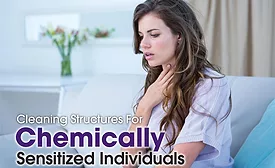
In the first part of this series, basic information was offered regarding the causes of chemical sensitization and the impact that such an experience has on a person’s life.
R&R recently chatted with Brian Bowen, co-owner of SERVPRO of Montgomery and several other locations, about a unique odor removal loss – and their unique, effective remediation approach. Here is what Brian had to say about the massive job, and what they learned in the process.
This research is the first to show that the accumulation and bacterial degradation of skin squames (cells that peel off from the skin surface) in air-cooling units is positively correlated to the complaints of urine-like smell in air-conditioned areas.
A company specializing in water and fire damage, as well as mold and biohazard removal, has won the North Coast Chamber of Commerce Business of the Year award.
Before we get into the “meat and potatoes” of this article, let me just say that this particular situation was bittersweet. This is a story of love, death, and how devoted a man was to his wife.
Odor removal is arguably one of the trickiest elements of the restoration process. Most damage is visible to the eye, and when it’s properly remediated, there is no argument the job is done.
Smell Zapper uses a proprietary formulation of non-pathogenic bacteria and enzymes to attack and consume the source of the odor not merely to cover it up. It’s safe to use on fabrics, carpeting and water safe hard surfaces like walls and ceilings.
Chemical use is commonplace in restoration and remediation projects involving water damage and microbial growth. Disinfectants, antimicrobials and deodorizers are often sold in both ready-to-use and concentrate formulations. They can be extremely effective when used according to their product label.